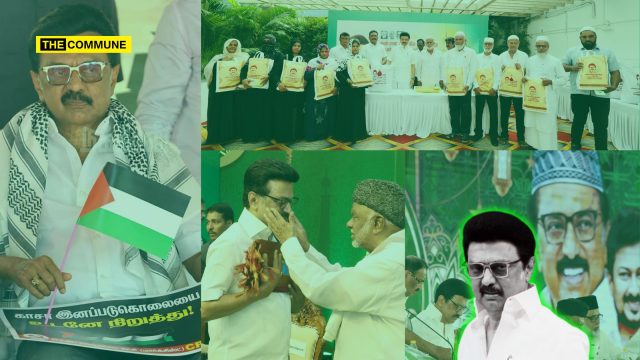
With the 2026 Tamil Nadu Assembly elections drawing near, the DMK appears to be reviving its well-worn strategy of minority appeasement. Chief Minister M.K. Stalin recently declared that the DMK has always stood by the Muslim community and will continue to protect their political rights. “If Muslims face trouble, the first political outfit that comes to your support is the Dravida Munnetra Kazhagam,” he stated clearly positioning himself and his party as the political guardian of Tamil Nadu’s Muslim population.
The DMK’s efforts to consolidate minority votes are not new. The party has often been accused of going to great lengths, including rebranding or downplaying serious charges against individuals from Muslim communities, to maintain electoral support. As election season heats up, a fresh series of government decisions has once again brought these allegations to the forefront.
Special Privileges For Muslims And Islamic Education
1. Overseas Education Scholarship Exclusively For Muslim Students
On 4 September 2025, the DMK government issued a Government Order allocating ₹3.60 crore for a scholarship program targeting only Muslim students pursuing higher studies abroad.
Each beneficiary will receive up to ₹36 lakh, with a cap of 10 students per year. While this was introduced as a welfare measure, critics view the timing and exclusivity as an attempt to secure votes under the guise of educational support.
ரூ.3.60 கோடி கல்வி உதவித்தொகை – அரசாணை வெளியீடு
இஸ்லாமிய மாணவர்கள் வெளிநாடுகளில் பட்ட மேற்படிப்பு பயில ரூ.3.60 கோடி கல்வி உதவித்தொகை
ஒருவருக்கு ரூ.36 லட்சம் வீதம், ஆண்டுக்கு 10 பேருக்கு வழங்க ரூ.3.60 கோடி நிதி ஒதுக்கீடு செய்து
தமிழக அரசு அரசாணை வெளியீடு#tamilnadu #education… pic.twitter.com/adqPCQ7jf1— Thanthi TV (@ThanthiTV) September 4, 2025
2. Urdu Promotion And Exemption from Learning Tamil
The DMK, which has long resisted the imposition of Hindi, seems to apply a different standard when it comes to Urdu. In 2015, during the Namakku Naame campaign, M.K. Stalin promised that if the DMK came to power, they would make Urdu compulsory in schools. Then, in 2019, Urdu linguistic minority students requested the state government to grant them an exemption from learning Tamil as a compulsory language. Members of the Urdu Protection Committee Tamil Nadu Trust, from Vaniyambadi, met with Chief Minister Edappadi K. Palaniswami and submitted a memorandum, asking for the reinstatement of a rule that was in place until 2006. This rule allowed Urdu-speaking students to be exempt from learning Tamil and instead study their mother tongue, Urdu, from Class I to X.
In 2023, the state’s Education Minister Anbil Mahesh, proposed exempting Urdu-speaking students from learning Tamil, sparking widespread backlash. The DMK had earlier supported similar demands in 2019.
While the Supreme Court later ruled that students from linguistic minorities can learn their mother tongue as an optional subject, critics saw the DMK’s stand as another case of selective accommodation.
3. Tamil Nadu State Urdu Academy
the same DMK government that has long opposed Hindi and other languages, established the Tamil Nadu State Urdu Academy (TNUA) in 2000 under the leadership of Chief Minister M. Karunanidhi. The objective of the Academy is to promote Urdu language and literature in Tamil Nadu, as well as to encourage Urdu scholars, poets, and students.
Since its inception, the Tamil Nadu State Urdu Academy has organized events in collaboration with the University of Madras (Department of Urdu, Arabic, and Persian) to support Urdu students, scholars, and poets. The Academy has awarded certificates, prizes, and accolades to Urdu language enthusiasts and has hosted numerous seminars and functions. In addition, the Academy has organized several Urdu Mushaires (Urdu debates and poetry sessions) in celebration of national holidays like Republic Day and Independence Day. During these events, prominent Urdu poets and scholars have been invited to perform and receive recognition for their contributions. Furthermore, the Tamil Nadu State Urdu Academy has successfully facilitated the translation of 11th and 12th-grade textbooks from English into Urdu.
4. Targeting Hindu Practices In School Textbooks
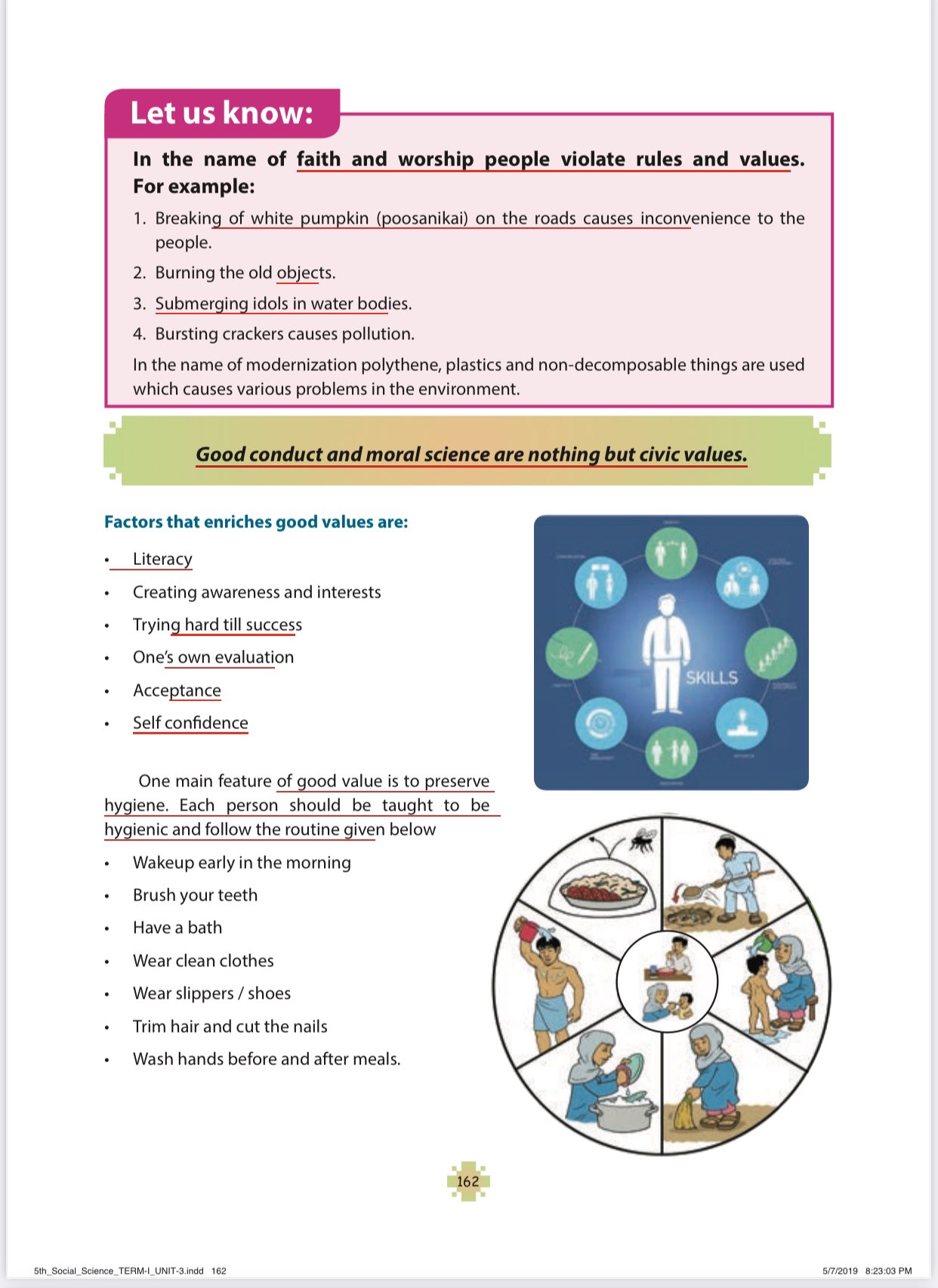
Immediately coming to power, the DMK pushed a nasty anti-Hindu bias and vicious state indoctrination of children of textbooks prepared and published by the Tamil Nadu government with 5th-grade Social Science book described traditional Hindu customs such as idol immersion, bursting crackers, and breaking pumpkins as environmentally or socially harmful practices.
In the chapter named Good Citizen, there is a box item on page 162 which says ‘breaking of white pumpkin’, ‘burning old objects’, ‘submerging idols in waterbodies’, and ‘bursting crackers’ are against the rules and values.
In Tamil Nadu, a pumpkin filled with turmeric, vermillion and few coins is broken on special occasions especially on Ayudha Pooja day during Navratri. It is also done when Hindus buy a new vehicle.
Old objects are burnt on Bhogi, a day before Pongal, the harvest festival of Tamil Nadu. Vinayagar idols are submerged in waterbodies during Vinayaka Chathurthi and crackers are burst during Deebavali.
By calling these as against ‘rules’ and ‘values’, the Tamil Nadu government seems to be insinuating hatred among children towards the Hindu faith and culture.
On the other hand, there is a pictorial representation in the same page which shows a burqa clad woman tending to a boy child and doing household chores. The boy child can also be seen wearing a skull cap. The text against the image shown is about what good hygiene and behaviour is.
Many on social media have questioned this blatant Hindumisia and minority appeasement. Some pointed out that even if one were to consider it from the perspective of environmental protection, it is outrageous to selectively target one particular religious community leaving out acts like public slaughter of animals, loud speakers that blares every day, cutting of trees, etc.
Hindu hatred & minority appeasement in 5th std social science text book provided by Tamilnadu Government. pic.twitter.com/A2XBJvVB4E
— Krishna Kumar Murugan (@ikkmurugan) August 23, 2021
இந்துக்களை தவிர
மற்ற மதத்தினர் அனைவரும் நல்லவர்கள் அமைதியானவர்கள்…
அது தான் இதுல வச்சிருக்கானுங்க 😂 https://t.co/40QSdw3S6O
— சுரேஷ் ஆராமுதன்🇮🇳 (@soupboy04) August 24, 2021
5. Including Prophet Muhammad’s Teachings, But Protest Against Including Hindu Texts
At a public event commemorating Prophet Muhammad’s 1500th birth anniversary in 21 September 2025, Stalin praised the Prophet as a universal thinker who preached love, peace, and equality. He stated that his teachings were already included in the school syllabus a claim made in response to a demand by SDPI leader Nellai Mubarak.
நபிகள் நாயகத்தின் 1500-ஆவது பிறந்தநாள் விழாவில் பங்கேற்று, உலகெங்கும் அன்பு பரவிட வேண்டும் – அமைதி நிறைந்திட வேண்டும் என்ற உணர்வை வெளிப்படுத்தினேன்.
சிறுபான்மை மக்களுக்கு இடர் வரும்போதெல்லாம், பாதுகாப்பு அரணாக என்றும் திராவிட முன்னேற்றக் கழகம் துணை நிற்கும்! pic.twitter.com/xJgkHJkQsC
— M.K.Stalin – தமிழ்நாட்டை தலைகுனிய விடமாட்டேன் (@mkstalin) September 21, 2025
Back in 2019, when decision was taken to include philosophy and Bhagavad Gita in its syllabus for Anna University engineering students, the MK Stalin had opposed the move and the DMK even conducted protests. “We will continue to protest until the university removes Bhagavad Gita from the syllabus. It is not a need for an engineering student,” Ezhilarasan who is now DMK MLA said.
Providing Special Privileges
6. Special Work Timing During Ramadan For Muslim Staff
In a controversial move, the Greater Chennai Corporation allowed Muslim employees to leave one hour early during the month of Ramadan from 2 March to 31 March 2025. The circular justified this by citing the need to facilitate religious observances.
On 26 February 2025, the Greater Chennai Corporation issued a circular stating, “To enable Muslim officials working in the Greater Chennai Corporation who observe fasting during Ramadan to perform the fasting related rituals, they are allowed to leave the office one hour earlier than regular office hours in the evening, instead of taking the lunch break, for a period of 30 days from 2 March 2025, to 31 March 2025.”
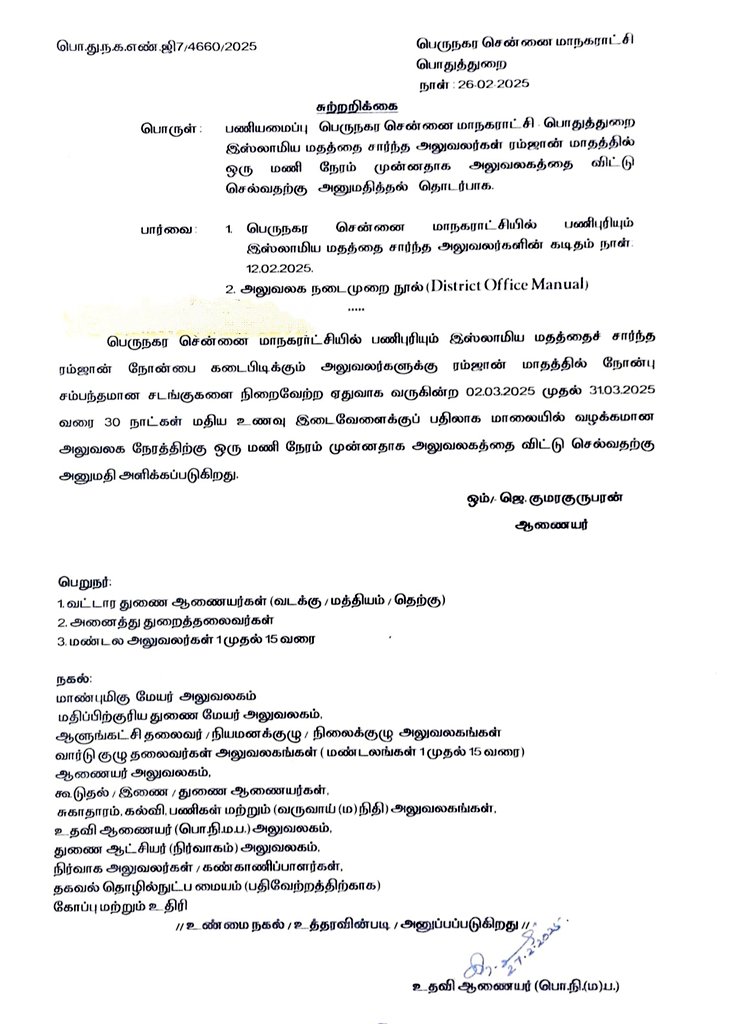
However, this has drawn sharp criticism from many quarters, who argue that similar religious accommodations are not made for Hindus during festivals such as Navaratri or Diwali, exposing a clear double standard in secular governance.
7. Construction Of A Second Haj House In Chennai
On 4 March 2025, the DMK government has allocated ₹65 crore to build a new Haj House in Nanganallur, despite an existing one already operating in Nungambakkam. This has raised questions about redundancy and the political motives behind the project.
Residents of the predominantly Hindu area have also expressed concerns about law and order, particularly given the area’s proximity to the airport, with some speculating about potential misuse related to smuggling activities. Critics have pointed out the stark contrast between this lavish spending and the neglected condition of many temples across the state.
சென்னை பெரியமேட்டில் ஏற்கனவே ஹஜ் கமிட்டிக்கான இல்லம் இருக்கும் போது நங்கநல்லூரில் ஹஜ் இல்லம் கட்ட வேண்டிய அவசியம் என்ன?யார் அப்பன் வீட்டு பணம் 65கோடி?பெரும்பான்மை மக்களின் வரிப்பணத்தில்!
தேர்தல் அறிக்கையில் கோயில்களுக்கு 1000 கோடி கொடுப்போம் சொன்னது என்னாச்சு?@hindumunnani_tn pic.twitter.com/AM4ciqFWt1— A.T.Elangovan (@elangovan_HM) March 4, 2025
8. Longstanding Policy Support For Muslims
Stalin has repeatedly emphasized the DMK’s role in granting internal reservations for Muslims, establishing the Urdu Academy, forming the Minority Welfare Board, and creating public holidays like Milad-un-Nabi. He also criticized political rivals for not standing by the Muslim community during controversies surrounding the CAA and triple talaq.
9. Proposal To Extend Quotas To Converts
In February 2024, CM Stalin announced in the Assembly that the government was open to extending reservations benefits to BCs and MBCs who had converted to Islam. This followed a similar DMK-backed 2023 resolution seeking constitutional amendments to allow quota benefits for Scheduled Castes who convert to Christianity. Critics cite a 2022 Madras High Court ruling which clearly stated that such benefits cannot be retained after religious conversion.
Opposing Laws
10. Opposition To Waqf Act Amendments
DMK leaders, including Kanimozhi and Dayanidhi Maran, voiced strong opposition to the proposed amendments to the Waqf Act, which they claimed would dilute Muslim autonomy. Kanimozhi’s remarks in Parliament included accusations about an alleged conspiracy to target mosques by declaring them historical sites a claim that drew a sharp rebuke for spreading misinformation.
Thoothukkudi DMK MP Kanimozhi disapproved of the bill, stating, “(The bill) is against the constitution, against federalism, against religious minority, and against human beings. It shuns justice in every possible way, this bill violates article 25 and 26 of the constitution which says, ‘we have right to follow a religion and have rights to manage religious affairs’. The bill allows non-Muslims to be a part of Waqf Board.” She then questioned, “Will it be possible for a Muslim or a Christian to be a part of a board which manages a Hindu temple, would you allow that?”
Kanimozhi also argued that the bill infringes upon Article 30 of the constitution, said, “It is a direct violation of Article 30 which deals with minorities to administer their institutions. This bill targets a particular religious group.”
Feeling emboldened by the lack of criticism following her speech, Kanimozhi began spreading falsehoods and was met with a stern rebuke in Parliament. Kanimozhi claimed, “We know already that many old mosques are in danger today. Suddenly, there is a PIL (filed). The people and archaeologists are sent there, and they discover that there was a temple before this. Then there is hate and division, followed by these issues (arise) among the people of the country.”
Her conspiracy theory in opposition of the Waqf Bill was swiftly rejected by members of the house, who were keen to prevent her from spreading further misinformation under the guise of appeasing Muslims.
Today, in the Lok Sabha, I expressed my strong opposition to the Waqf (Amendment) Bill, 2024, which is a blatant violation of Fundamental Rights provided for minorities in the Constitution of India. The Bill selectively targets the Muslims and undermines the secular foundation of… pic.twitter.com/c2TqxumkPi
— Kanimozhi (கனிமொழி) (@KanimozhiDMK) August 8, 2024
Similarly, DMK MP from Central Chennai, Dayanidhi Maran, said, “I don’t understand why they are continuously trying to irritate the Muslim community, trying to dominate them, trying to show that they are superior. This exercise looks like a land-grabbing exercise. Basically, this Government has not done anything good for the people but is trying to take revenge on the minorities.”
11. Opposing CAA-NRC
has been one of the most vocal opponents of the Citizenship (Amendment) Act, calling it unconstitutional and discriminatory towards Muslims. Under his leadership, the DMK organized statewide protests and even passed a resolution in the Tamil Nadu Assembly demanding the repeal of the CAA and NRC.
Sympathizing With Terrorists
12. Downplaying Of Terror Incidents & Release Of 1998 Coimbatore Blast Convicts
Following the Coimbatore car bomb blast incident, DMK leaders initially described it as a gas cylinder explosion. While even the Jamaat acknowledged it as an act of terror, DMK figures, including Mylapore MLA Velu and IT Wing member Isai, attempted to trivialize or politicize the incident, hinting it was orchestrated by the BJP for political mileage.
Mylai DMK MLA Velu downplayed the explosion in his post responding to Annamalai, said, ”Why these needless words. Those who incited the crime should be punished first, rather than the perpetrators. Entire Tamil Nadu knows who is the reason for this (alleged “cylinder blast”). Go to the butcher shop and put your head in there. Tamil Nadu will be peaceful.”
எதுக்கு இந்த தேவையில்லாத வார்த்தைகள்.குற்றம் செய்பவர்களைவிட குற்றம்செய்ய தூண்டியவர்களுக்கு தான் முதலில் தண்டனை வழங்க வேண்டும். அமைதியாக இருந்த தமிழகத்தை இப்படி யார் ஆக்கியது என்று இன்று தமிழ்நாடே பேசுகிறது.போய் கசாப்புகடையில தலைவச்சி படுங்க.தமிழகம் அமைதியா இருக்கும்.@arivalayam https://t.co/Be2pjmphWo
— Mylai Velu MLA தமிழ்நாட்டை தலை குனிய விடமாட்டேன் (@mylaivelu71) October 25, 2022
Similar to him, Isai, the State Deputy Secretary of DMK IT Wing, had shared a clip from Tamil movie Kadhalan in which the antagonist discusses with another man about creating a law and order situation through bomb blasts in order to topple the government.
இருக்குமோ?! 🧐 pic.twitter.com/7ooqTiOxJA
— இசை – தமிழ்நாட்டை தலைகுனிய விடமாட்டேன் (@isai_) October 26, 2022
This clip was shared by the DMK IT Wing leader suggesting that the Coimbatore blasts was a handiwork of the BJP. The tweet by Isai was retweeted by Mannargudi DMK MLA and the party’s IT Wing head TRB Rajaa.
Similar to the incident, the DMK government released three convicts involved in the 1998 Coimbatore blasts, shortly before the attack’s anniversary. The decision was perceived as another gesture aimed at appeasement rather than justice.
#WATCH | “இந்த உலகமே புதுசா இருக்கு”
– கால் நூற்றாண்டுக்கு மேலான சிறைவாசத்திற்குப் பின் வெளியே வந்த இஸ்ஸாமியர்கள் உருக்கமான பேட்டி#SunNews | #TNGovt | #Coimbatore pic.twitter.com/LcHPKEG2mY
— Sun News (@sunnewstamil) February 7, 2024
13. Permitting A Lavish Funeral For Al Umma Terrorist SA Basha
Thousands of Muslims, including Islamist Mobs, gathered in Coimbatore, Tamil Nadu for the funeral of the 84-year-old Syed Abdul Basha, the mastermind of the Coimbatore bomb blasts of 1998, at his funeral after he died on 16 December 2024.
14. Participating In Anti-Israel Protest, Doesn’t Condemn Hamas
On October 8, 2025, Tamil Nadu Chief Minister M.K. Stalin participated in an anti-Israel protest in Chennai, organized by the CPI(M), condemning Israel’s actions in Gaza. Stalin participated just a day after the second year remembrance of the barbaric Hamas terror attack on Israel, where over 1,200 innocent people were slaughtered and hundreds abducted. In his speech he didn’t condemn the horrific crime committed by Hamas.
Subscribe to our channels on Telegram, WhatsApp, and Instagram and get the best stories of the day delivered to you personally.