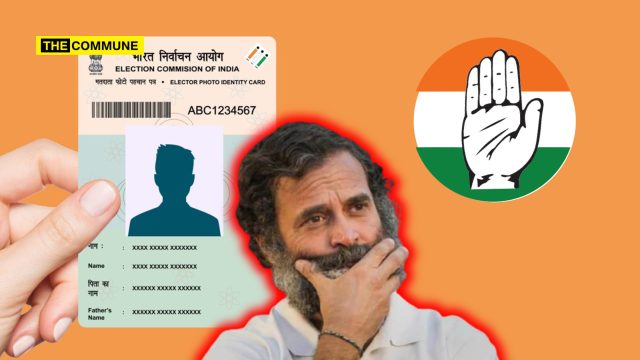
The Indian National Congress, once the unchallenged hegemon of Indian politics, has seen a dramatic and sustained decline in its electoral performance over the decades. A closer look at its vote share in Lok Sabha elections reveals a striking trend that coincides with a major electoral reform: the introduction of the Electors Photo Identity Card (EPIC), or Voter ID card, by the Election Commission of India starting in 1993.
The Era of Dominance: Pre-Voter ID (1951-1991)
For the first four decades of India’s independence, the Congress party was the central pole of Indian politics. Its vote share in Lok Sabha elections was not only high but also consistently robust:
1951: 44.99%
1957: 47.78%
1962: 44.72%
1967: 40.78%
1971: 43.68%
1977: 34.52% (Post-Emergency setback)
1980: 42.69%
1984: 49.1% (Sympathy wave after Indira Gandhi’s assassination)
1989: 39.53%
1991: 35.66%
During this period, the Congress crossed the 40% vote share mark seven times, showcasing its deep and widespread penetration across the Indian electorate.
The Inflection Point: Introduction of the Photo Voter ID
In 1993, the Election Commission of India initiated the monumental task of issuing Photo Voter ID cards to all eligible voters. This was a watershed reform aimed at curbing electoral malpractices like booth capturing, impersonation, and duplicate voting, which were rampant in many parts of the country.
The Era of Decline: Post-Voter ID (1996-Present)
The elections following the introduction of the Voter ID card tell a completely different story for the Indian National Congress:
1996: 28.8%
1998: 25.82%
1999: 28.3%
2004: 26.53% (Formed UPA govt despite lower vote share)
2009: 28.55% (UPA II victory)
2014: 19.31% (Historic low)
2019: 19.46%
2024: 21.19%
The difference is staggering. The Congress has not once managed to cross even the 30% vote share mark in the three decades since the Voter ID was introduced. Its average vote share plummeted from a dominant position to a struggling one.
Numbers Raise Questions
The stark contrast between pre- and post-EPIC vote shares raises an uncomfortable question: Was Congress’s high vote share in the decades before voter ID cards aided by electoral malpractice, such as booth capturing or other forms of manipulation?
While multiple factors affect electoral outcomes, the introduction of voter ID cards marked the end of a period of overwhelming dominance for Congress. Could this reform have exposed vulnerabilities in the party’s ‘traditional methods’ of mobilizing votes? The numbers seem to suggest so.
From commanding nearly half the national vote to struggling to cross one-fifth, Congress’s decline underscores both the changing electoral landscape and the possible impact of more transparent voting mechanisms.
Congress party's vote share in Lok Sabha elections:
1951: 44.99%
1957: 47.78%
1962: 44.72%
1967: 40.78%
1971: 43.68%
1977: 34.52%
1980: 42.69%
1984: 49.01%
1989: 39.53%
1991: 35.66%In 1993, the EC introduced Photo Voter ID cards.
After that…
1996: 28.8%
1998:…— Kiran Kumar S (@KiranKS) August 29, 2025
Subscribe to our channels on Telegram, WhatsApp, and Instagram and get the best stories of the day delivered to you personally.