


For decades, a favorite propaganda line of the Left and Congress ecosystem has been that Vinayak Damodar Savarkar bestowed upon himself the title Veer (brave) or Swatantryaveer (brave freedom fighter). According to this claim, Savarkar wrote his own biography under the pseudonym Chitragupta and slyly referred to himself with this honorific. This narrative has been gleefully repeated in Congress outlets like National Herald and then picked up by portals such as Wikipedia and the likes of The Wire & Scroll to brand Savarkar as vain and self-promoting.
But a closer look at the primary sources shatters this Goebbelsian lie.
The Origin of the Propaganda
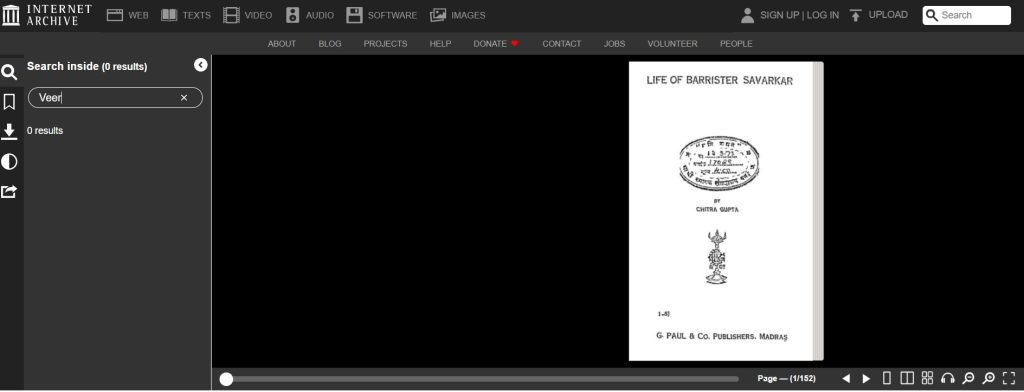
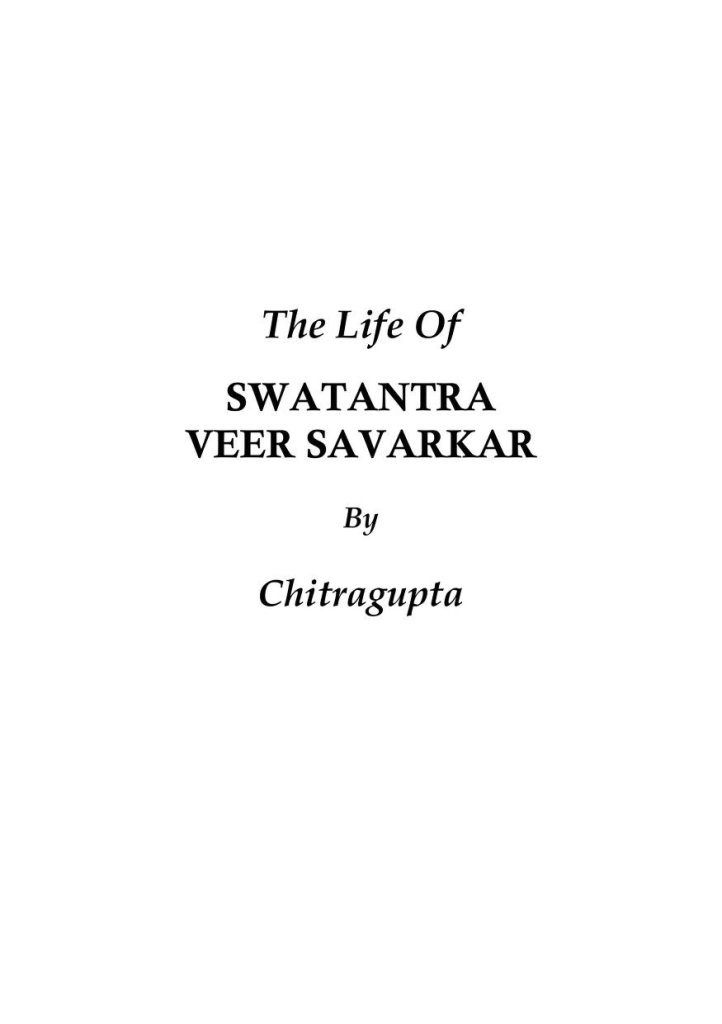
The entire accusation hinges on a single book: The Life of Barrister Savarkar, published under the pseudonym Chitragupta. Leftist commentators insist that Savarkar himself wrote this work, and in the process “crowned himself” Veer.
Yet the very text proves the opposite. The original edition makes no reference whatsoever to the title Veer or Swatantryaveer. Not once.

The only time such a title appears is in a much later edition, published in 1986, decades after Savarkar’s death. There, in the preface written by Dr. Ravindra Vaman Ramdas, one finds the speculation: “Who was this Chitragupta, the author of The Life of Barrister VD Savarkar? The pen-picture of Paris appears that Chitragupta is none other than Veer Savarkar.”

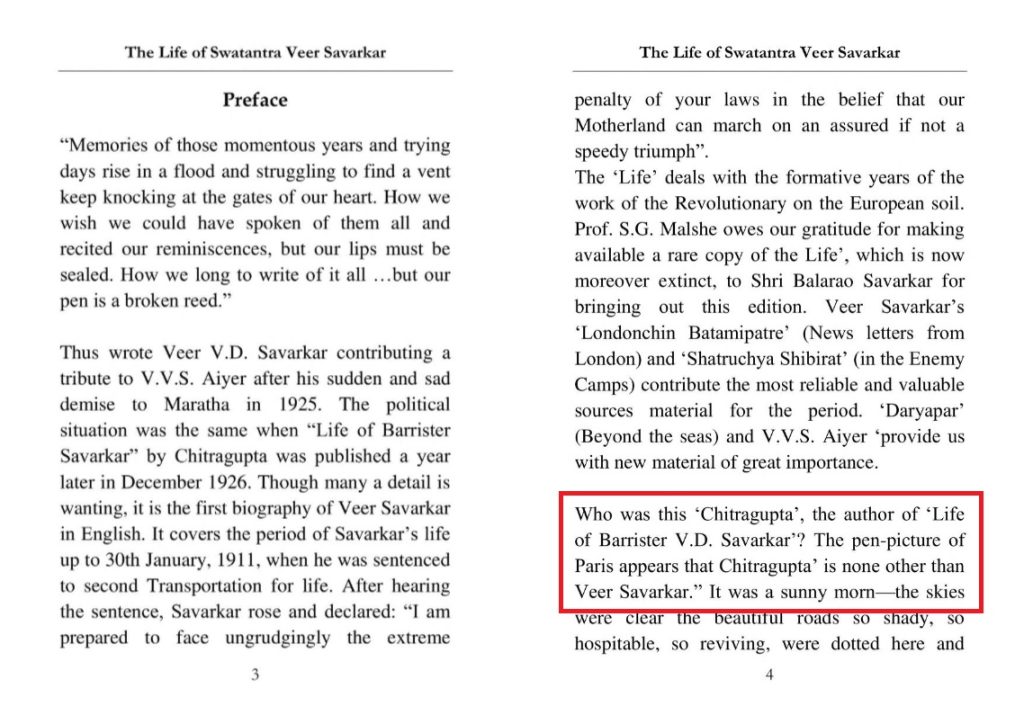

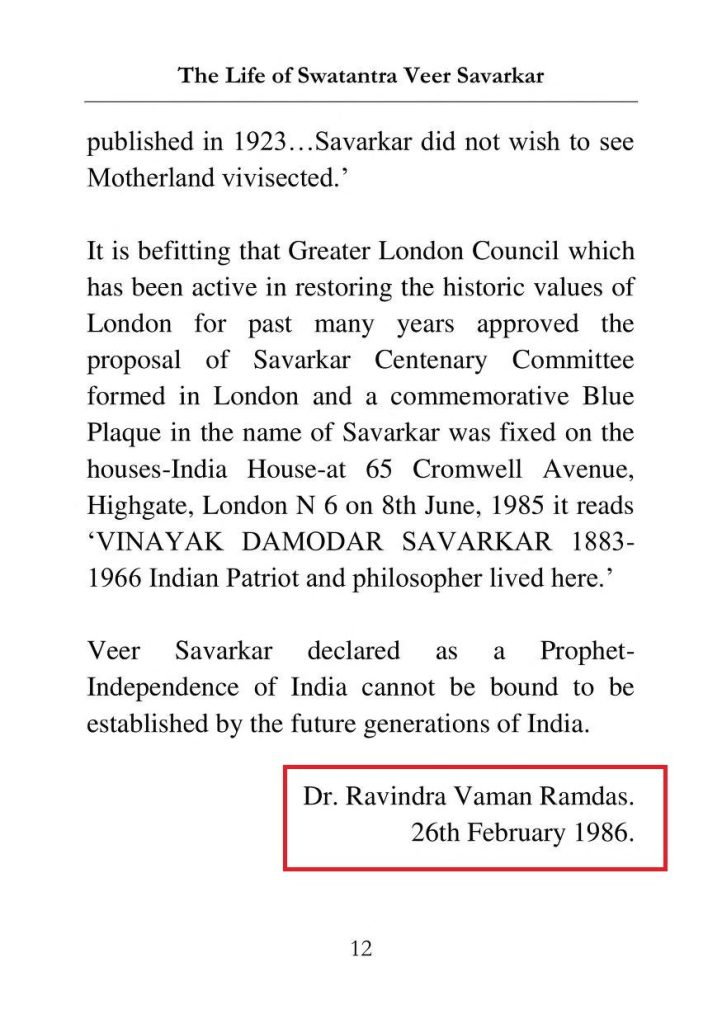
Additionally, Dr. Ramdas speculates that “Chitragupta” might have been Savarkar himself, (he uses the word ‘appears’) – this is his personal opinion, not a fact.
There is zero historical evidence that Savarkar wrote under this pseudonym. In fact, some scholars initially believed “Chitragupta” was C. Rajagopalachari, as the book was published in Madras (Chennai).
Evidence Proves Was Title Bestowed by Others
The propaganda also ignores the contemporary evidence that the title Swatantryaveer was already in circulation years before the Chitragupta biography.
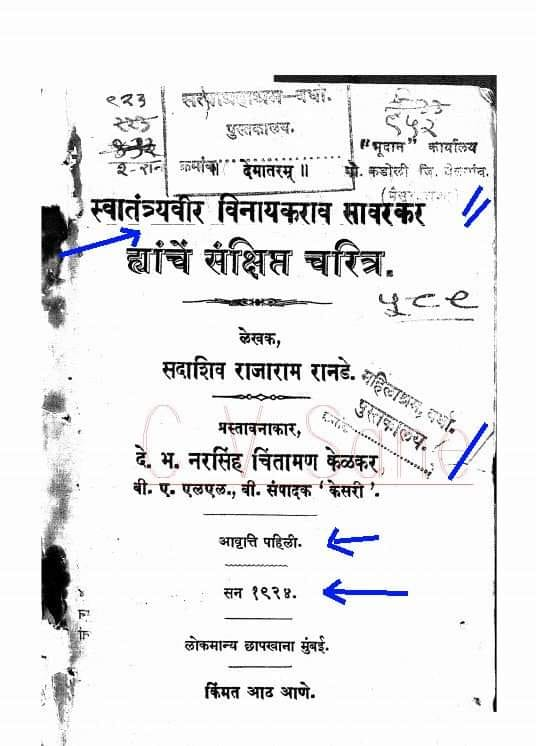
In February 1924, Balarao Savarkar’s Ratnagiri Parva (authored under the pseudonym Kavi Vaishampaayan) and Wamanrao Joshi, dramatist of Ranadundubhi, both referred to Savarkar as Swatantryaveer.
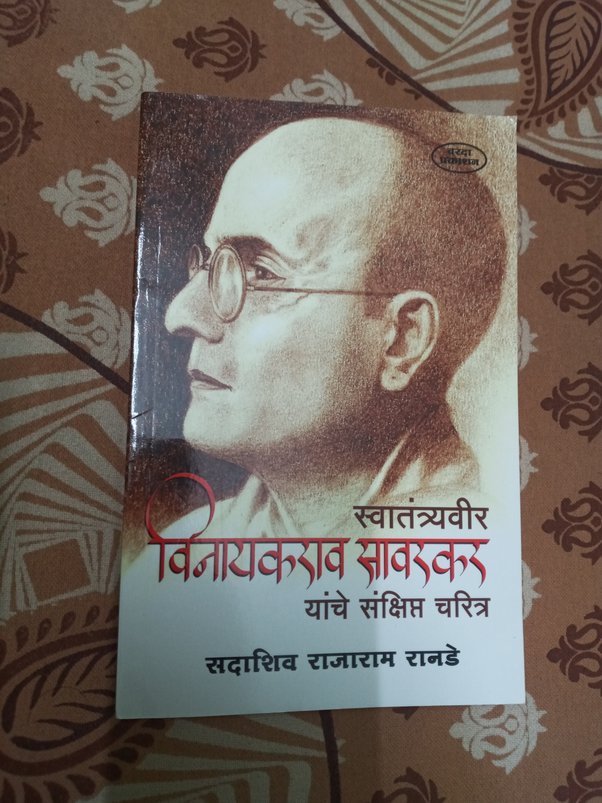
On 15 August 1924, a biography of Savarkar written by Sadashiv Rajaram Ranade, with a preface by N.C. Kelkar (Tatyasaheb – a prominent freedom fighter and associate of Bal Gangadhar Tilak), consistently uses the title Swatantryaveer page after page. This book was published immediately after Savarkar’s release from Ratnagiri jail, when he was under strict political restrictions.


The Ghadar Party, a revolutionary group active in the US and Canada, referred to Savarkar as a brave leader in their 1917 Urdu publications demanding his release from British imprisonment.
After the arrest of 27 years young master of indian revolutionaries at London in 1910, many of his core associates disappeared & continued Savarkar brothers “Abhinav Bharat” in the name of “Gadar party” in America.
Mouthpiece of 'Gadar Party' seeking immediate release of their… pic.twitter.com/15dhnr96uC
— Sameer Kasture (@sameer_kasture) December 24, 2024
Gadar party used title Veer for Savarkar for the first time. pic.twitter.com/xeFZ8VUGKM
— 𑘎𑘹𑘫𑘪𑘟𑘹𑘪𑘨𑘰𑘪 | केशवदेव (@keshavadevarao) March 25, 2024
The text reads, “Giving rebellious speeches at places like Nasik and Pune in India from January 1906 to May 1906
Since Veer Savarkar was in Europe during those days, a telegram was sent to London for him, and he was arrested at Victoria Station on 31 March 1910.
He was tried and finally a decision was given to send him back to India. Although according to English law, he could have been sent to India only in some way. His case should have been held in London. But who would listen to the pamphlets? The British themselves are law makers and give their own judgments. “Veer Savarkar” proved with a very strong argument that his case should be held in England only.
But no one listened to him. But the benefit of this was that his case was published in all the newspapers of Europe. The matter became international. The evils of the British rule in India started becoming famous in the whole of Europe. Finally, he was put on the ship “Moriya” to be sent back to India.
Seeing this cruelty, Veer Savarkar became very angry. He tried a few tricks, but nothing worked. When the ship reached Marseille, he got an idea and Savarkar went to the bathroom on the pretext of taking a bath. The guards were standing at every door unaware. Savarkar took off his clothes, applied soap on his body and came out forcefully from the small window.
– Savarkar teacher Guruvarya Chandrashekhar Sane”
This predates the Chitragupta biography by nine years, demolishing the claim that Savarkar invented the title for himself.
These written records demonstrate that the honorific was bestowed by peers and admirers, not by Savarkar himself.
How the Leftist Media Perpetuated the Lie
Despite clear evidence, left-leaning journalists and historians continued spreading misinformation. The most notorious ones include:
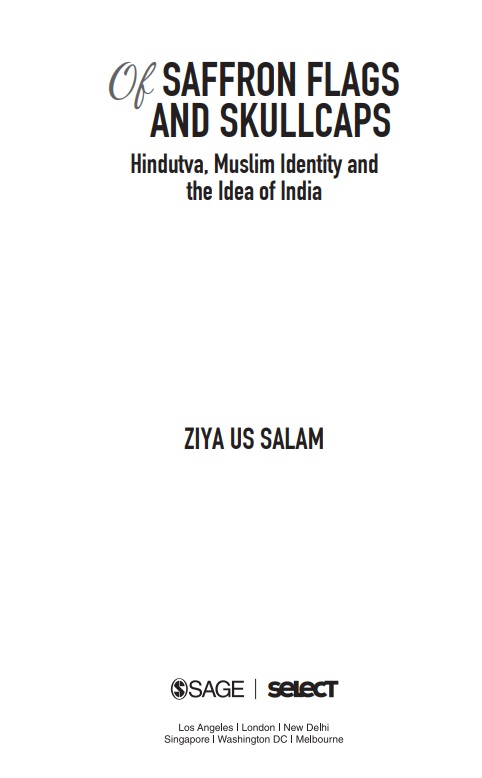
Ziya Us Salam (2018) – In his book Of Saffron Flags and Skullcaps, he vaguely claimed that Savarkar “is said to have added” the prefix ‘Veer’ himself, without providing any proof.

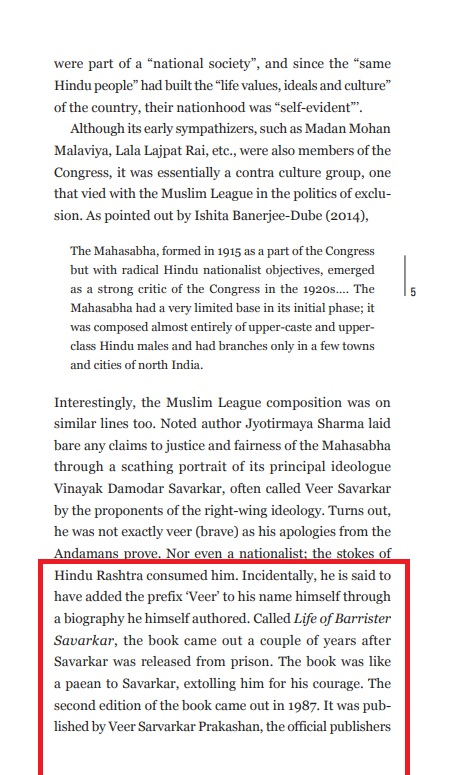

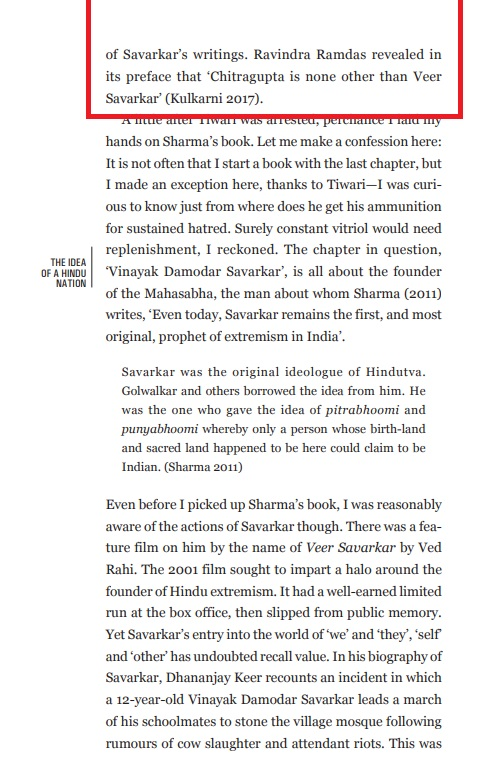

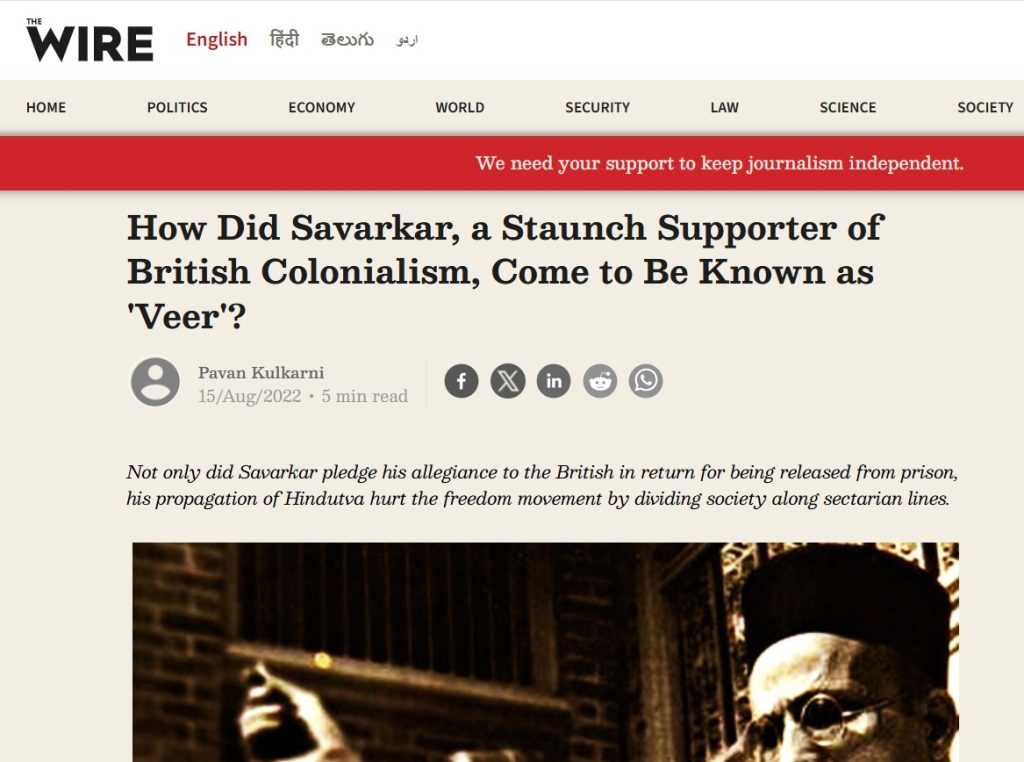
Pavan Kulkarni (The Wire, 2022) – Wrote an article titled “How Did Savarkar, a Staunch Supporter of British Colonialism, Come to Be Known as ‘Veer’?”, falsely asserting that Savarkar glorified himself in the Chitragupta biography. He writes, “A book titled Life of Barrister Savarkar authored by Chitragupta was the first biography of Savarkar, published in 1926. Savarkar was glorified in this book for his courage and deemed a hero. And two decades after Savarkar’s death, when the second edition of this book was released in 1987 by the Veer Savarkar Prakashan, the official publisher of Savarkar’s writings, Ravindra Ramdas revealed in its preface that “Chitragupta is none other than Veer Savarkar”.

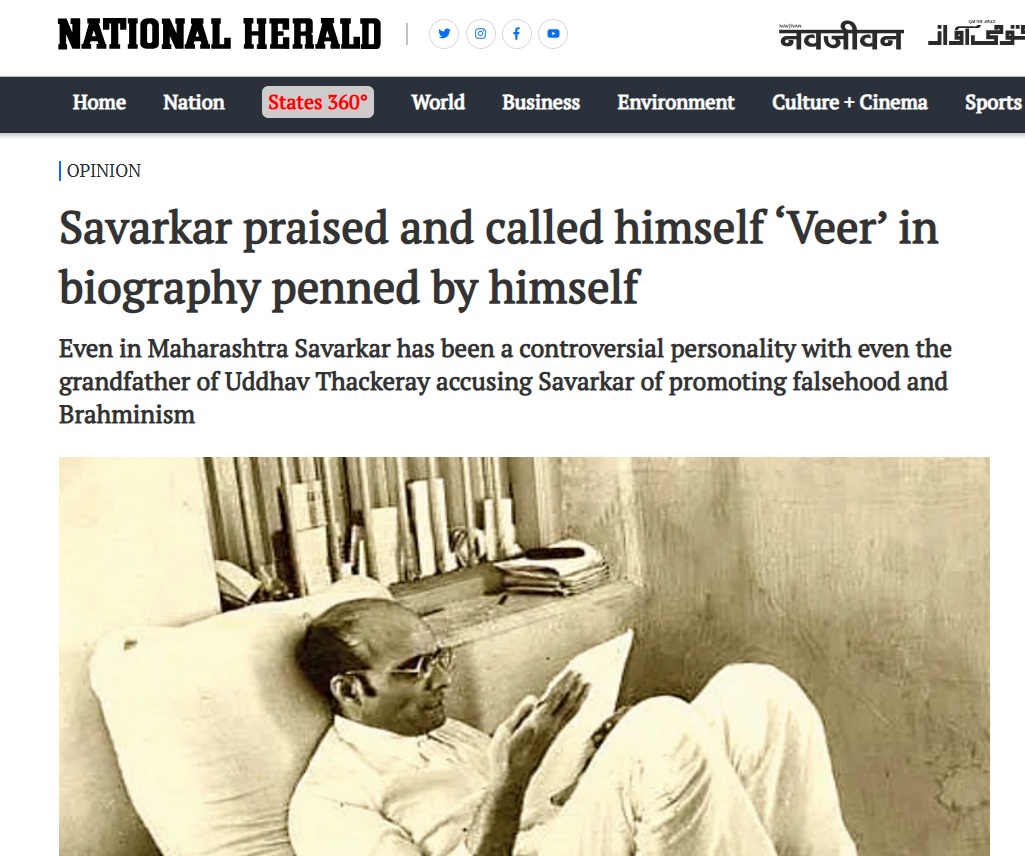
National Herald (2020) – Published an article by Raju Parulekar, who misquoted the book’s title as ‘The Life of Veer Savarkar’ (the original was ‘The Life of Barrister Savarkar’), further muddying facts.

Wikipedia’s False Citation – The Wikipedia entry on Savarkar uncritically repeats the claim, citing The Scroll and National Herald – neither of which provides primary evidence.
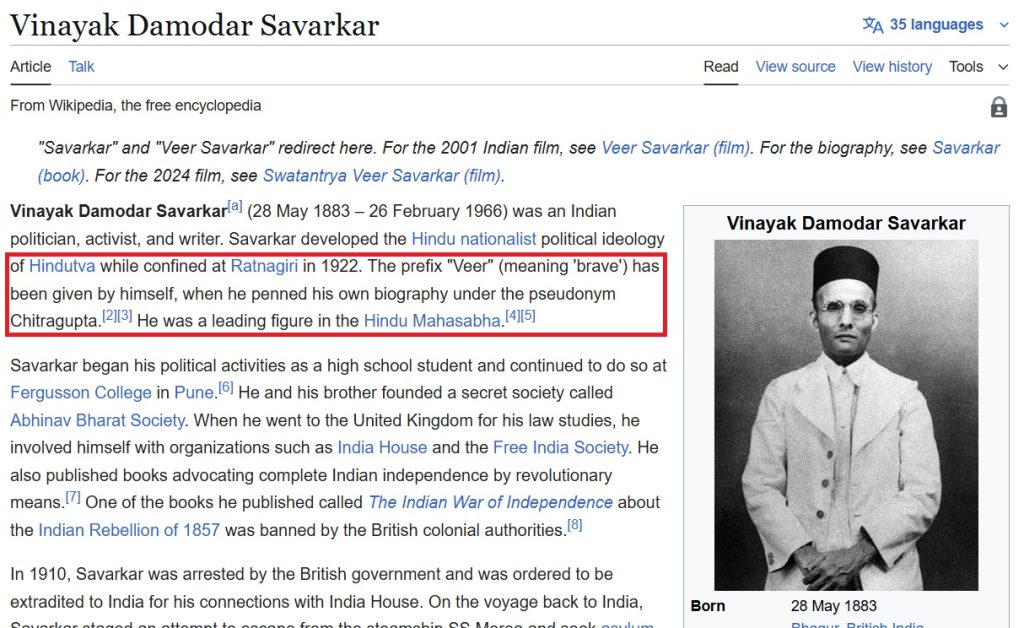

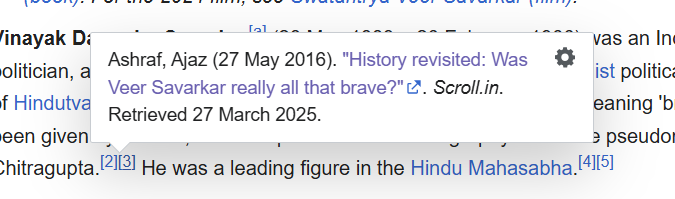
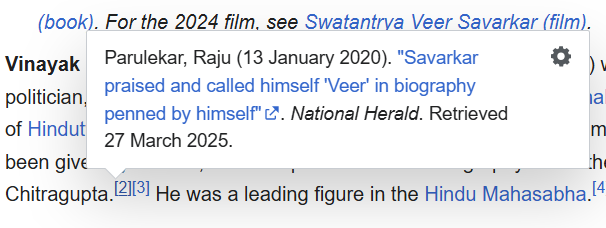


Despite the textual evidence, Leftist publications like National Herald, The Wire, Scroll, etc spun the story that Savarkar invented the title himself. Wikipedia and other portals lazily cite this secondary claim instead of examining the primary text.
The tactic is classic: repeat a distortion until it becomes accepted as “history.” What begins as a speculative remark in a 1986 preface is weaponised into a character-assassination tool, branding Savarkar as arrogant, vain, and self-glorifying.
The Left’s attempt to smear him with this falsehood only exposes their method: take a stray remark, twist it out of context, and repeat it endlessly until it masquerades as fact.
The truth is simple: Swatantryaveer was not self-assumed vanity – it was the recognition of a nation.
(This article was based on an X thread by Amit Schandillia)
Subscribe to our channels on Telegram, WhatsApp, and Instagram and get the best stories of the day delivered to you personally.