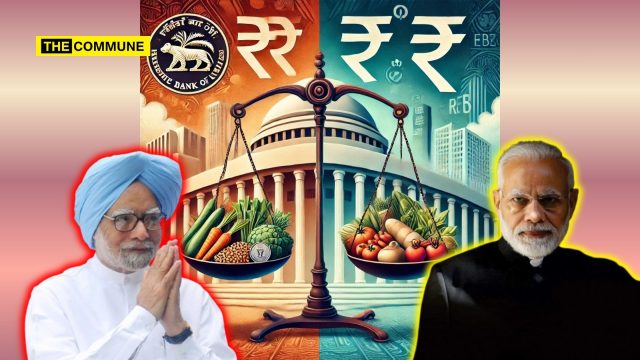
A 2012 video of former Union Home Minister is making the rounds on social media. In the video, he is seen saying, “… the point of view of the middle class that most of the people belong to, there are many other sections. Yes, food inflation is high. Sometimes, I have written about this once, we are prepared to pay ₹15 for a bottle of water but we will not bear ₹1 increase in price of a kilo of rice or a kilo of wheat. We are prepared to pay ₹20 for an ice-cream cone but won’t pay ₹1 more for a kilo of wheat or a kilo of rice.”
🚨 UPA-era FM Chidambaram once said People were ready to pay ₹15 for a water bottle but BALKED at a ₹1 HIKE on Rice 😳
— Classic example of Congress-era priorities. Today, INFLATION is at a record low. Yet they can’t cope🤡 pic.twitter.com/AbbhqbkKDy
— The Analyzer (News Updates🗞️) (@Indian_Analyzer) September 22, 2025
In 2012, Union Home Minister P. Chidambaram projected that India would soon return to a high growth trajectory, citing measures taken by the United Progressive Alliance (UPA) government to reboot the economy. At that time, India faced significant economic challenges, including high inflation rates and a sluggish growth outlook.
Inflation in 2012: A Pressing Concern
In 2012, India grappled with elevated inflation levels. For instance, the Wholesale Price Index (WPI) inflation stood at 7.52% in August 2012, indicating significant price pressures across the economy. In 2012, India’s annual inflation rate based on the WPI was 7.25% in June, 6.87% in July, and 9.65% in September.
The Consumer Price Index (CPI) inflation was also high, reflecting the strain on household budgets and the broader economy.
Economic Growth in 2012: A Mixed Picture
In 2011-12, the country achieved a GDP growth rate of 6.8%. However, Chidambaram admitted that a growth rate of 6.5% in 2011-12 was insufficient for a developing country like India, where millions of people remained in poverty. He stressed the necessity for higher growth rates, aiming for over 8% or even 9%, to create jobs and improve living standards.
Inflation in 2025: A Remarkable Turnaround
Fast forward to August 2025, and India has witnessed a significant decline in inflation rates.
The significant reduction in food prices, particularly vegetables, has alleviated the cost burden on consumers, leading to the lowest inflation rates in years. This improvement suggests that the measures implemented by the current government have effectively addressed the inflationary pressures that were prevalent during the UPA era.
In July 2025, retail inflation dropped to a record low of 1.55%, the lowest in over eight years, driven primarily by a significant reduction in food prices, including a 20.69% year-on-year decline in vegetable prices. This marks the first time in over six years that inflation has slipped below the Reserve Bank of India’s (RBI) target tolerance band of 2% to 6%.
The CPI inflation stood at a modest 2.07%, down from the highs of 2012. This decrease is attributed to various factors, including improved supply chains, effective monetary policies, and favorable global commodity prices.
The WPI inflation also reflected this positive trend, registering at 0.52% in August 2025. This indicates a stabilization in wholesale prices, contributing to the overall economic stability.
Economic Growth in 2025: Sustained Momentum
India’s economy has demonstrated robust growth in recent years. In August 2025, the core infrastructure sectors grew by 6.3%, marking the highest rate in 13 months. This growth was driven by strong performances in coal, steel, and cement production, signaling a recovery in key industrial sectors.
Additionally, the Reserve Bank of India (RBI) economists have supported a pause in policy rate adjustments, citing the recent decline in inflation and continued robust economic growth. This stance reflects confidence in the economy’s resilience and the effectiveness of current monetary policies.
The comparison between 2012 and 2025 indicates India’s remarkable economic transformation. From grappling with high inflation and sluggish growth under the UPA, the country has made significant strides toward economic stability and growth under the successive Modi governments.
(With inputs from NDTV)
Subscribe to our channels on Telegram, WhatsApp, and Instagram and get the best stories of the day delivered to you personally.