


Remember the time when the terrorist Burhan Wani was portrayed as a “headmaster’s son” or any other terrorist humanized as “fruit seller’s son”, right after the terror attack or when justice was served?
Well, if you had missed that, leftist rag The Wire will help you relive those days – they just added some extra toppings of sentiment to the Delhi Red Fort metro station blast terrorist Dr Umar Nabi – as a “hardworking student”, intelligent medico, – you name it, all the adjectives are there in the piece.
Dr Muzzammil was “kind and religious”! How touching, give them a Nobel Prize already!
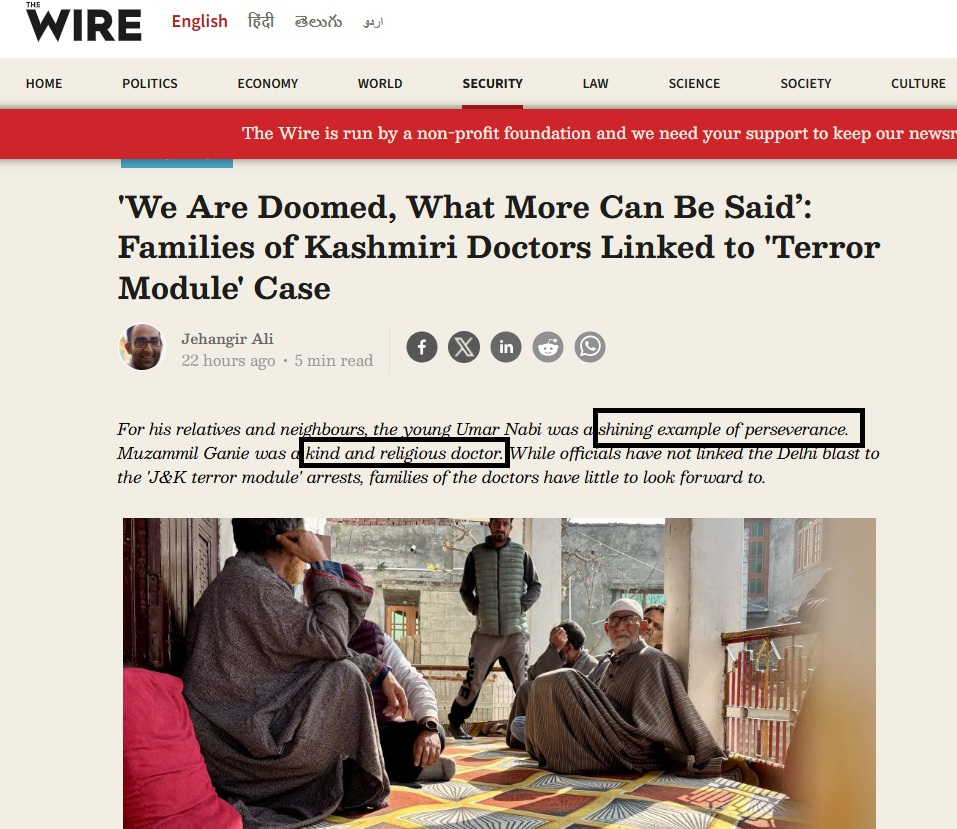

Just days after the deadly explosion near Delhi’s Red Fort metro station, a terror incident that killed more than a dozen people and triggered a nationwide investigation, one would expect the media to maintain sobriety, neutrality, and journalistic discipline. But The Wire, in its usual ideological exuberance, has produced something else entirely: a sentimental, tear-jerking homage to the main perpetrator – the one who triggered the blast.
The article reads less like reportage and more like a eulogy delivered at a memorial service, complete with sepia-toned nostalgia, family hardships, moral testimonials, and poverty-porn backdrops constructed to evoke sympathy. At a time when investigators are piecing together facts, The Wire appears to have already chosen its role: emotional defence attorney.
A Narrative of Persecution, Not Terrorism
Instead of focusing on the victims of the blast or the national security implications of a medically trained professional turning to terrorism, The Wire chooses to meticulously detail Nabi’s alleged poverty, his “tattered clothes,” and his “sheer perseverance.” The report transforms a suspected mass-murderer into a tragic hero – a “shining example” for his community who “correctly guessed a patient’s condition merely by how they looked.”
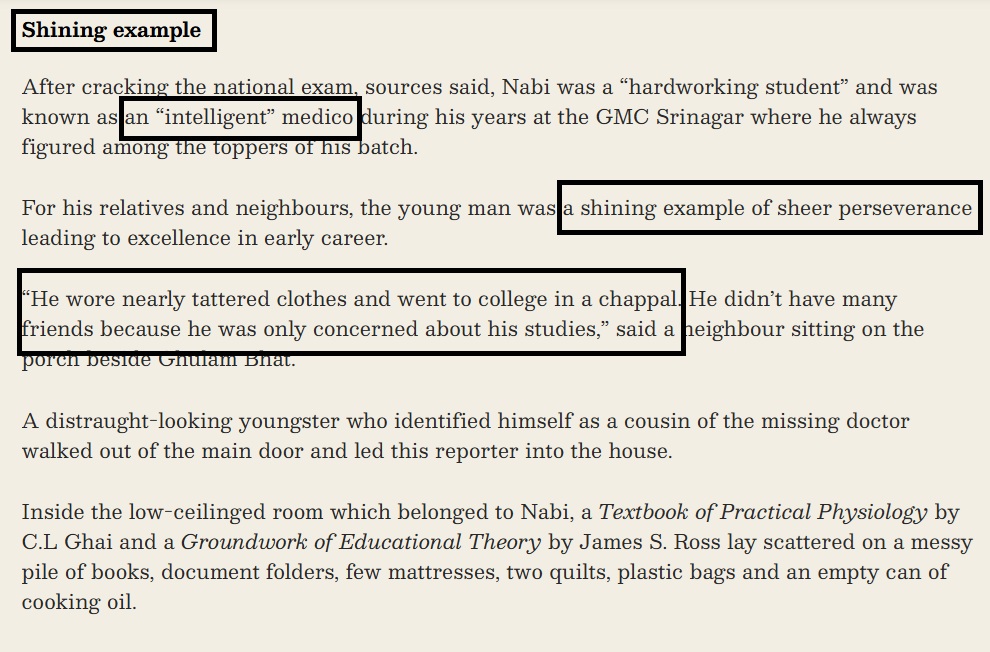

The language employed is deliberately emotive and exculpatory. The family’s situation is described as a “dream” turning into a “nightmare,” and their home is painted as a scene of pathetic destitution, with detailed descriptions of peeling plaster and grime. The piece frames the security forces’ investigation not as a necessary response to a deadly terror attack, but as a disruptive raid that left his belongings in “chaos.”
Ignoring the Victims, Center-Stageing the Perpetrator
This approach is a classic tactic of apologist journalism: shift the focus from the crime to the supposed socio-economic grievances of the criminal. The article expresses more outrage over the fact that the suspect’s family was questioned than over the 13 people killed in the blast. It amplifies the family’s unverified claims of innocence without providing a countervailing perspective from investigating agencies, beyond a cursory mention that officials have not confirmed the reports.
They also give a virtual tour of the house and piggyback on poverty porn to humanize him even further.
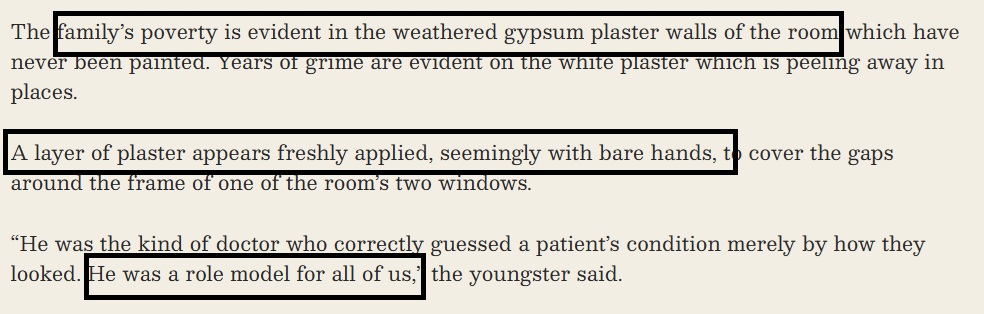

This man was a role model to the other kids and could diagnose his patients so well – yeah, the same human and kind doctor did not think twice about blowing himself up in a crowded signal in the heart of the national capital.
Similarly, the piece profiles another arrested doctor, Muzzamil Ganie, describing him as “kind and religious,” and unquestioningly parrots his family’s denial of the allegations. The devastating potential of a terror module involving educated professionals is glossed over in favor of a narrative that suggests these individuals are the real victims.
This approach is not accidental – it is the reason rags like The Wire exist. It is their modus operandi – elevate the accused through glowing personal anecdotes, portray families as devastated victims of state action and poverty, and surround the suspect with a moral halo built on poverty, hard work and virtue. In doing so, the publication presents an unambiguous narrative; not that the allegations are unverified, but that the accused are inherently incapable of wrongdoing because they are too intelligent, too kind, too poor, too devout, too “grounded” to ever be involved in violence. It is rehabilitation through rhetoric.
The climax of this sentimental framing arrives in the final scene of the article, when the suspect’s uncle, overwhelmed by grief, declares, “We are doomed. What more can be said?” For The Wire, this becomes the emotional full stop, the natural closure to a story built not around evidence but around empathy, despair and helplessness. It is the perfect final note for an article whose purpose appears not to inform but to influence.
Rather than reporting, the article offers rehabilitation by storytelling. Rather than facts, it offers moral certificates. At a moment of national grief, it chooses ideology over objectivity.
Subscribe to our channels on WhatsApp, Telegram, Instagram and YouTube to get the best stories of the day delivered to you personally.