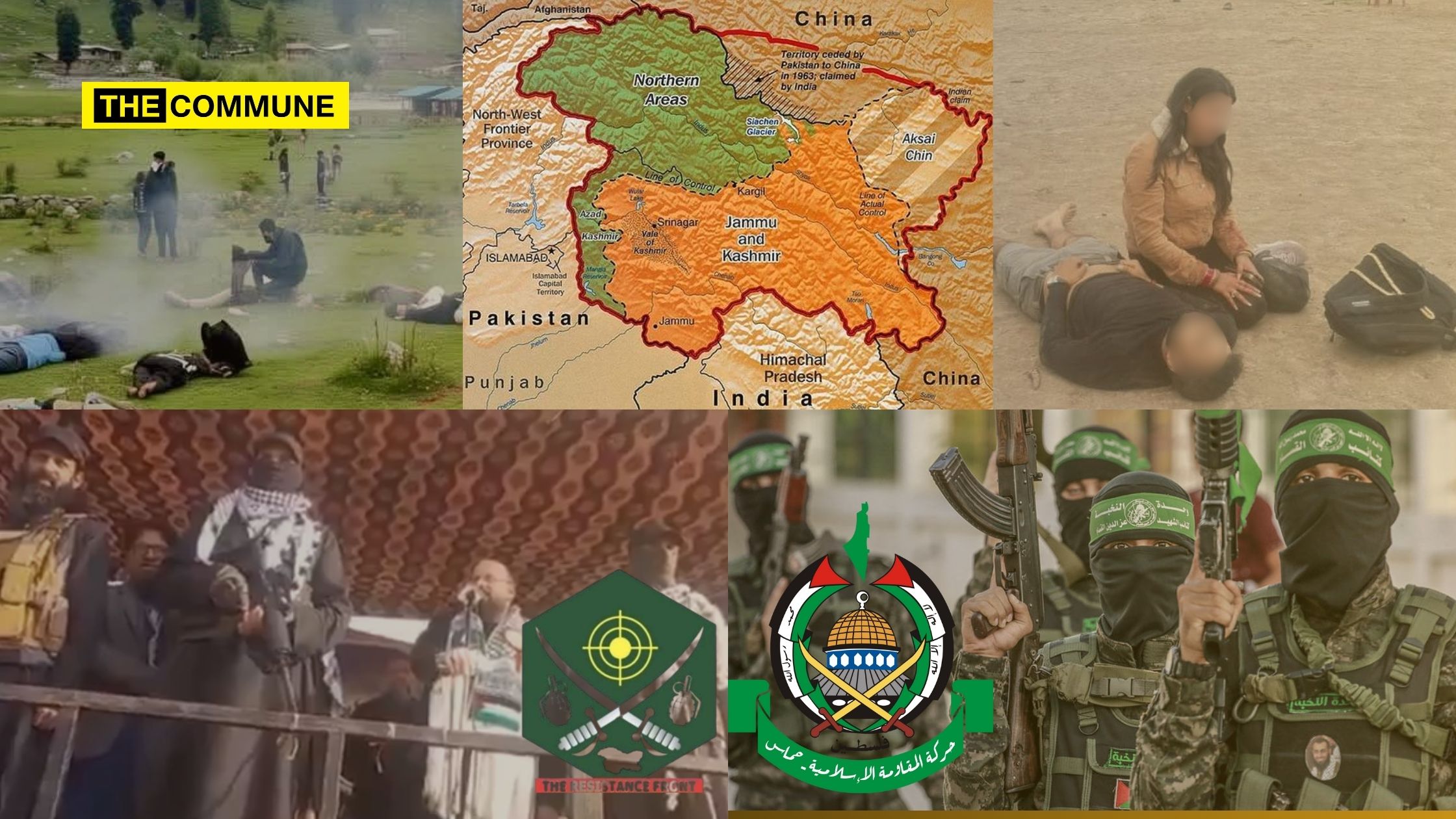
Indian intelligence agencies have traced the 22 April 2025 terror attack in Pahalgam to a growing alliance between Palestinian militant group Hamas and Pakistan-backed jihadist outfits, including Lashkar-e-Taiba (LeT), Jaish-e-Mohammed (JeM), and Jamaat-ud-Dawa (JuD). This emerging nexus, intelligence sources say, was formalized during a provocative conference held in Pakistan-occupied Kashmir (PoK) on 5 February 2025.
#WATCH | #HAMAS in #KASHMIR: #Pahalgam terror plotters attended a joint #Hamas-JeM-LeT rally in #Pakistan-occupied #Kashmir on Feb 5, 2025.
Held at Shaheed Sabir Stadium, the event marked Hamas’ first formal presence in PoK. Chilling threats were issued: “Blood will be spilled… pic.twitter.com/FImEufzPk2
— 🎙The Milli Chronicle (@millichronicle) May 1, 2025
The event, titled the Kashmir Solidarity and Hamas Operation Al-Aqsa Flood Conference, was held at the Shaheed Sabir Stadium in PoK and attended by high-ranking commanders of multiple jihadist groups. The conference marked the first formal appearance of Hamas in PoK, with its Iran-based envoy Dr. Khalid Al-Qadoumi in attendance alongside key figures from LeT, JeM, and the Jammu and Kashmir United Mujahideen (JKUM).
According to a classified assessment first accessed by The New Indian, operatives involved in planning the Pahalgam attack were present at the summit. The gathering served to consolidate ideological and operational ties between Islamist groups in South Asia and Hamas, with a focus on replicating the Gaza model of asymmetric warfare in Kashmir. The summit reportedly established a collaborative framework for future joint operations.
Prominent commanders at the event included Talha Saif, brother of JeM chief Masood Azhar, senior field operatives Asghar Khan Kashmiri and Masood Ilyas, and several Lashkar leaders. The event was marked by aggressive calls for intensified militancy in Jammu and Kashmir and threats of violence against India.
In the days leading up to the February 5 summit, a coordinated propaganda campaign was launched by the Pakistan Markazi Muslim League, which released a provocative video glorifying Islamist separatists and slain terrorists including Burhan Wani and Manan Wani. The video featured funeral footage and chants linking the Kashmir conflict to the Palestinian cause, with slogans like “Pak ki Azadi, Kashmir ki Azadi”, aimed at radicalizing youth and inciting rebellion.
Security analysts believe this hybrid propaganda model, blending emotive imagery with militant messaging, is designed to foster communal polarization and attract global sympathy by linking the Kashmir conflict with the internationally resonant Palestine-Israel issue.
The Pahalgam attack itself was described by intelligence sources as meticulously planned and executed by highly trained Pakistani terrorists. The ambush targeted Hindu pilgrims and tourists, confirming the communal intent of the operation. Victims were reportedly interrogated about their religion before being executed, signaling a shift toward explicitly faith-based targeting.
Three key operatives have been identified as masterminds behind the Pahalgam strike:
- Saifullah Kasuri (alias Saifullah Khalid), a senior Lashkar commander with ties to founder Hafiz Saeed and designated by the U.S. Treasury Department. He has played a leading role in LeT’s political front, Milli Muslim League (MML), which has been used to mask militant operations behind a civilian facade.
- Abu Musa (alias Musa Kashmiri), a former ISIS affiliate known for planning attacks on foreign nationals and later aligning with LeT to focus on Indian security personnel and non-local civilians.
- Rizwan Hanif, a senior JKUM commander based in Rawalakot, PoK, believed to have overseen infiltration logistics and arms procurement for the Pahalgam operation.
The Inter-Services Intelligence (ISI) agency of Pakistan is reportedly coordinating the evolving Hamas-LeT alliance. According to intelligence assessments, the ISI is attempting to reposition the Kashmir conflict in global discourse by framing it through the lens of the Palestinian struggle. This strategy is intended to provoke pan-Islamist sentiment, increase foreign media attention, and destabilize Indian-administered Jammu and Kashmir through communal violence and radicalization.
Indian military and intelligence officials have raised concerns that Pakistan-based groups are increasingly adopting Hamas-style guerrilla tactics and propaganda techniques. This includes the use of social media to incite violence and emotionally manipulate young recruits.
The convergence of Hamas’s ideological framework with the operational networks of Pakistan-backed jihadist outfits marks a new chapter in the region’s terror dynamics. Indian security officials have flagged this as the onset of a dangerous phase of cross-continental hybrid warfare, blending local insurgency with global jihadist narratives.
As security agencies continue to investigate the Pahalgam attack, counterterrorism experts are calling for a reassessment of India’s internal security strategy, emphasizing the need to counter not only cross-border infiltration but also ideological warfare being waged online and across political forums.
(With inputs from The Milli Chronicle)
Subscribe to our channels on Telegram, WhatsApp, and Instagram and get the best stories of the day delivered to you personally.