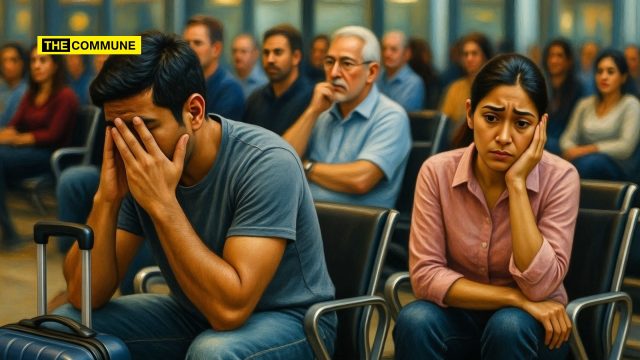
The recent wave of airline cancellations in India, particularly involving a private airline, has left thousands of passengers stranded, frustrated, and emotionally drained. While operational challenges and regulatory compliance were the root causes, the psychological toll on passengers is an equally critical issue, one that often goes unnoticed.
Emotional Fallout
Air travel is inherently stressful. It involves planning, financial investment, and emotional anticipation. When cancellations occur suddenly, passengers experience a loss of control, which is a primary trigger for anxiety.
Many reported symptoms such as:
- Acute stress including Racing thoughts, irritability, and physical tension,
- Anxiety attacks due fear of missing crucial events – job interviews, weddings, medical appointments,
- Depressive feelings like helplessness and hopelessness during prolonged delays,
- Anger and aggression leading to escalating conflicts at airports due to poor communication.
These reactions are not mere inconveniences; they can have lasting effects. For frequent travelers, repeated disruptions may lead to travel-related PTSD (Post Traumatic Stress Disorder), making future journeys emotionally taxing.
Psychologically, uncertainty is one of the hardest states for the human mind to endure. When passengers receive inconsistent or no information, their stress amplifies. The crowded, chaotic environment of airports during such crises further compounds the problem, creating a perfect storm for emotional breakdowns.
Recommendations for Airlines
As a psychologist, I believe airlines can, and should, play a proactive role in mitigating mental health risks during disruptions. Here’s how:
There should be a transparent communication by providing real-time updates through SMS, apps, and public announcements. Use empathetic language – acknowledge inconvenience and offer reassurance.
As a part of emotional support systems, deploy trained staff in psychological first aid at airports. Create quiet zones with comfortable seating, hydration, and Wi-Fi for stranded passengers. Offer mental health helplines for those experiencing acute distress.
Key aspect is having well trained staffs in terms of equipping frontline employees with stress management and de-escalation skills. Encouraging active listening and empathy in passenger interactions.
Airlines must work on methodology as compensation with care – beyond refunds, provide wellness vouchers for food, hotel stays, or lounge access. Communicate these benefits clearly to reduce feelings of helplessness.
As a long-term strategy they should collaborate with mental health professionals to design crisis response protocols. Conduct post-crisis surveys to understand psychological impact and improve systems.
Closing Thoughts
Airlines often focus on operational recovery during disruptions, but mental health recovery is equally vital. A passenger who feels cared for, even in crisis, is more likely to remain loyal. In an era where customer experience defines brand reputation, integrating psychological well-being into crisis management is not just compassionate, it’s strategic.
Dr K Janakiraman is a psychologist & behavioral scientist.
Subscribe to our channels on WhatsApp, Telegram, Instagram and YouTube to get the best stories of the day delivered to you personally.