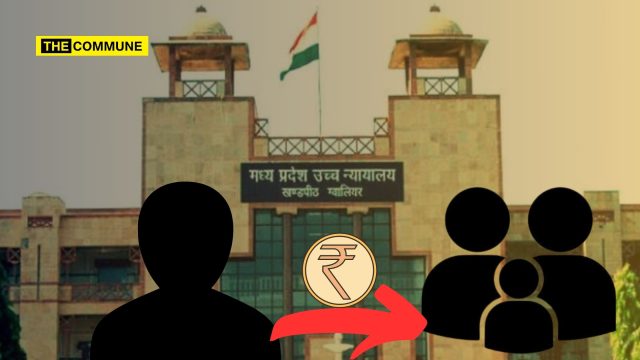
A widely circulated video captured at the Madhya Pradesh High Court has ignited severe backlash around the Indian family law. The undated and unverified clip features Justice Devnarayan Mishra deliberating on whether a non-biological father can be legally required to pay maintenance for a child under Section 125 of the Criminal Procedure Code, 1973.
The key question under scrutiny: Can a man who is not the child’s biological father be held liable for maintenance if the child is born within a subsisting marriage? An advocate in the court asked: “Does an illegitimate child have the right to maintenance under Section 125?” The judge’s response albeit curt was: “Yes… yes.”
#MenAreNotATMs #JusticeForMen #EndMisandry
This case is a CLASSIC EXAMPLE of how INDIAN LAWS are DESIGNED to PUNISH MEN for the CRIMES of WOMEN! A man is FORCED to pay maintenance for a CHILD that is NOT EVEN HIS, because his WIFE committed ADULTERY and had someone else's baby!… pic.twitter.com/Y51jUvwKJl
— VOICE FOR JUSTICE (@OfVoice8691) July 25, 2025
Legal Backdrop: Section 125 and Supreme Court Precedent
Section 125 explicitly mandates that a man may be ordered to support his “legitimate or illegitimate” minor child, regardless of the marital status or finances.
This interpretation aligns closely with a January 2025 Supreme Court ruling, clarifying that where a marriage continues and access between spouses remains, a husband is presumed the legal father even if not biologically related. In this landmark judgment, a bench led by Justices Surya Kant and Ujjal Bhuyan reaffirmed the presumption of legitimacy under Section 112 of the Indian Evidence Act, which heavily favors the husband’s paternity unless non-access is proven.
As Justice Kant explained, Section 112 aims to avoid intrusive investigations into a child’s parentage requiring anyone contesting legitimacy to prove they had no possible physical access to the spouse during conception.
In the Kerala case at the center of that ruling, the mother admitted the child was fathered by another man. She later divorced, sought to change the child’s surname, and claimed maintenance from the biological father. When a local court ordered DNA testing, the individual resisted on grounds of privacy. Ultimately, the Supreme Court upheld his right to refuse, emphasizing the balance between a person’s privacy rights and a child’s interest in knowing biological lineage. The Court revoked the DNA test order, stressing that forced testing could infringe on dignity and personal reputation.
Social media has erupted over the court’s tone and the perceived unfairness in the video. Critics argue it reflects a gender and class bias, highlighting how the legal system can discount the rights of women and children especially when motherhood falls outside traditional norms.
Subscribe to our channels on Telegram, WhatsApp, and Instagram and get the best stories of the day delivered to you personally.