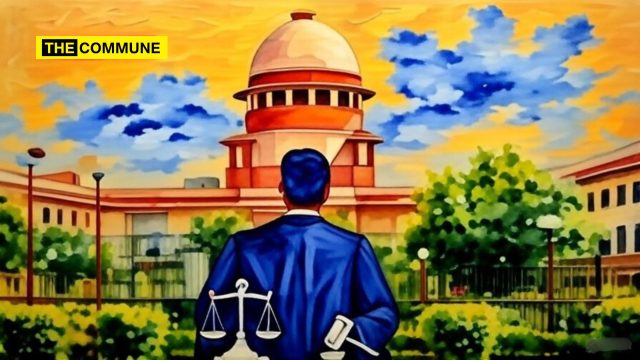
Over the past week, the judiciary has doled out such gems of judgements that would make Hindus gape in horror. Let’s examine 6 such judgements, or rather, gems of judiciary, delivered by courts in the country that could make one wonder if we really live in a democracy with a “thriving” judiciary.
Judgement 1 – Acquitted all the accused in 2006 Mumbai local train bomb blasts
On 21 July 2025, the Bombay High Court on Monday acquitted all 12 men previously convicted for the 2006 Mumbai train blasts that killed 187 people, calling the case a textbook example of investigative and prosecutorial failure, despite claims that the accused were linked to banned terror outfits like SIMI and Pakistan-based Lashkar-e-Taiba. The bench observed that the prosecution “utterly failed” to prove that the accused committed the crime and criticized the Maharashtra ATS for not even identifying the type of bombs used. The court found the evidence unreliable, confessions likely obtained under torture, and key witness testimonies lacking credibility. With this judgement, the courts proved that no one killed the 187 people.
Judgement 2 – A tainted judge, Yashwant Varma, is still “Justice Varma”
In a striking courtroom exchange on 21 July 2025, Chief Justice of India BR Gavai reprimanded Advocate Mathews J Nedumpara for referring to Delhi High Court judge Yashwant Varma, embroiled in a cash recovery controversy, simply as “Varma.” Nedumpara, seeking urgent listing of his petition demanding an FIR against Justice Varma, was interrupted by CJI Gavai, who insisted, “He is still Justice Varma. How do you address him? Have some decorum. You are referring to a learned judge. He is still a judge of the Court.” Nedumpara replied, “I don’t think that greatness can apply to him. Matter has to be listed.” CJI snapped back, “Don’t dictate to the Court.” The clash highlighted the judiciary’s internal contradiction, insisting on ceremonial respect for a judge under serious scrutiny. Despite allegations and a pending writ filed by Justice Varma himself, the Court remained firm on maintaining titles and decorum, even as Nedumpara argued that “an FIR has to be registered.”
Judgement 3 – Preventing release of Udaipur Files movie
The Supreme Court on 21 July 2025 extended its stay on the release of the film Udaipur Files, effectively halting its release despite the Central government’s approval of six mandated cuts. A bench of Justices Surya Kant and Joymala Bagchi ruled that the stay would continue until Thursday, demanding that the filmmakers implement the Centre’s revisions, including removal of dialogues, a name change, and deletion of a scene, before considering release. The Court’s repeated intervention is seen to amount to suppressing artistic expression, particularly as the Centre, after expert review, had accepted the film with changes. While Solicitor General Tushar Mehta warned that further curbs could infringe on the filmmaker’s constitutional rights under Article 19(1)(a), the Court allowed petitioners to file objections to the Centre’s order itself. Despite meeting regulatory conditions, the film remains blocked, raising serious concerns about preemptive censorship and judicial overreach into certified artistic content.
Judgement 4 – Quashed FIRs against Indians sheltering foreign Tablighi Jamaat members during COVID lockdown
On 18 July 2025, the Delhi High Court quashed 16 FIRs against 70 Indian nationals accused of sheltering 190 foreign Tablighi Jamaat members during the 2020 COVID-19 lockdown. The court ruled that there was no evidence the accused violated lockdown rules or knowingly spread the virus. It held that the charges under IPC Sections 188, 269, and 270, the Epidemic Diseases Act, and the Disaster Management Act lacked legal basis, noting the absence of proof that any accused were COVID-positive or had defied official orders. The court further observed that the accused were stranded due to the sudden lockdown and had no means to leave the mosques. Despite serious allegations and earlier claims by authorities linking the Markaz gathering to the virus’s spread, the court concluded that no prima facie case was made out, describing the charges as exaggerated and unsupported by evidence. All cases were dismissed, effectively absolving the accused.
Judgement 5 – Told Hindus how to worship at Tirumala temple
On 21 July 2025, the Supreme Court declined to hear a writ petition seeking a direction to the Tirumala Tirupati Devasthanams (TTD) to use only indigenous cow milk for Lord Venkatesh’s worship at Tirupati. A bench of Justices M.M. Sundresh and N. Kotiswar Singh expressed disinterest in the plea, prompting the petitioner to withdraw it. Justice Sundresh remarked, “There are much more important issues than this. The true love for God lies in serving fellow living beings, and not in these things.” When the petitioner cited Agamashastras differentiating cow types, Justice Sundresh responded, “A cow is a cow,” and added, “God is the same for everybody, human beings and others also.” When told it was an essential religious practice, the judge replied, “Any ritual you do is an indication for your love of God, nothing beyond,” and quipped, “Now you will say, the Tirupati laddu has to be indigenous.”
Judgement 6 – Cannot have Nama Sankeerthanam sessions at home without Collector nod
The Madras High Court barred the use of a residential property in Chromepet for Nama Sankeerthanam sessions unless prior permission is obtained from the Chengalpattu Collector. Justice N. Anand Venkatesh issued the order while hearing a plea from resident Prakash Ramachandran, who alleged that his neighbor allowed the Global Organisation for Divinity (GOD) to conduct devotional chanting, disturbing others. The respondents defended the sessions, citing spiritual benefits and Article 25 rights. However, the judge said, “The same will apply here too. Except the change in the name of God, all other things are the same. How can you have Nama Sankeerthanam without Collector’s nod?” Emphasizing public peace, he added, “Peace is the best prayer and silence is the greatest prayer. The day people realise this truth, they will not disturb others by indulging in loud and noisy ways of praying to God.” The Chitlapakkam police inspector was directed to enforce the order.
(Based on the tweet of Nupur J Sharma)
Subscribe to our channels on Telegram, WhatsApp, and Instagram and get the best stories of the day delivered to you personally.