


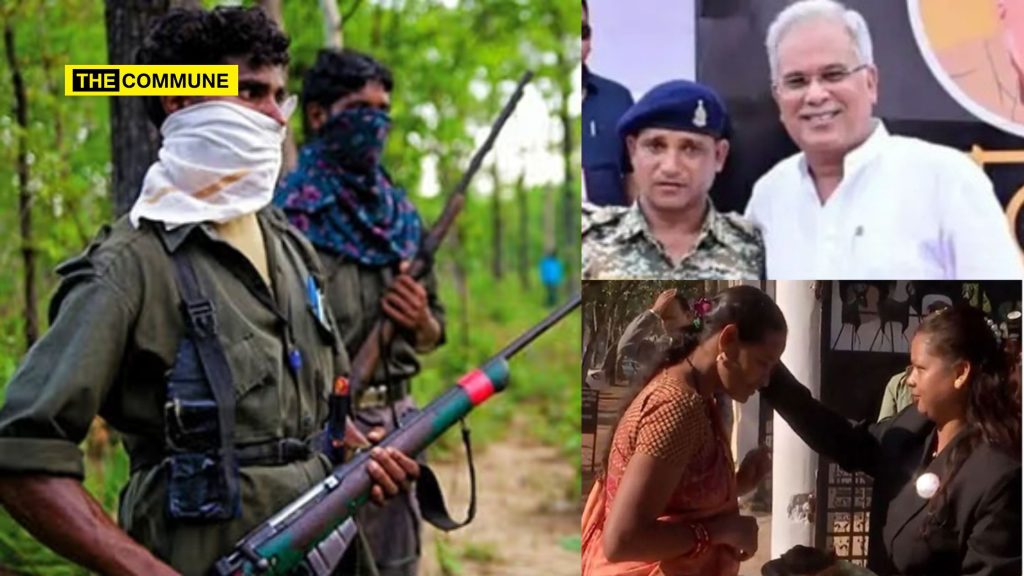
The Government of India, through the Ministry of Home Affairs, has implemented a range of policies to rehabilitate surrendered Naxals, offering monthly stipends, fixed deposits, and financial incentives for surrendering weapons. These measures, particularly active in states like Chhattisgarh, Maharashtra, and Andhra Pradesh, have led to significant numbers of surrenders and successful reintegration into mainstream society.
This report highlights ten notable cases between 2016 and 2025 where surrendered Naxals were successfully rehabilitated into productive roles, including as Indian Police Service (IPS) officers, Members of Parliament, home guards, and cooks in public institutions.
Chhattisgarh has emerged as a leading state in rehabilitation efforts, recording over 985 Naxal surrenders in 2025 alone under its revised rehabilitation policy. These individuals have been absorbed into various sectors, reflecting the success of the program.
Maharashtra has reported 502 surrenders over the last decade, with rehabilitation programs facilitating employment, education, and reintegration into civilian life. Andhra Pradesh, which pioneered such programs as early as 1997, has seen more than 7,000 Naxals lay down arms, with at least 2,500 of them fully rehabilitated and employed through government-supported schemes.
These efforts underscore a broader national strategy that aims not only to weaken the insurgency but also to restore the lives of those who once took up arms, turning them into contributors to society.
In this report, we take a look at 10 surrendered naxals who are now employed in respectable positions.
#1 From Naxalite To IPS & Gallantry Awardee: Sanjay Potam’s Inspiring Journey
Former Naxalite commander Sanjay Potam, also known as Badru, was awarded the President’s Medal for Gallantry for the third time in January 2025. Once a DEC member managing the Sukma-Dantewada border for Naxals, Potam surrendered in 2013 and is now a senior IPS officer. Grateful for his transformation, he urges others to abandon violence, saying there’s no future in Naxal ideology. His wife, also a former Naxalite, now works as a government peon. Potam’s story reflects hope, renewal, and the potential for change in Bastar, a region long affected by insurgency and underdevelopment.
#2 From Maoist To DRG Inspector
Madkam Mudraj, a former Maoist commander turned District Reserve Guard (DRG) inspector, met Chhattisgarh CM Bhupesh Baghel during a public outreach in Konta. Mudraj shared how surrendering changed his life, saying he now carries a gun to protect, not harm. He spoke of his guilt during his Naxal days and how development in Bastar inspired his transformation. His wife, also an ex-Maoist, surrendered with him. Now, their children attend English-medium schools—once unimaginable. Thanking the CM, Madkam requested a handshake, which Baghel warmly accepted, praising his return to peace and service.
#3 From Maoist Commander to Security Guard: Dhananjay’s Redemption
Dhananjay alias Sudhir, once a top Maoist commander in Odisha’s Malkangiri district, surrendered in 2019 after witnessing the destruction caused by Naxals. He joined the group at 15, rising to lead the Gumma Area Committee with a ₹5 lakh bounty. Disillusioned by violence and mistreatment, he embraced peace. Now working as a private security guard, Dhananjay benefits from state rehabilitation schemes. Similar stories of transformation include former Naxals like Joymati Vanjan, Shankar Markade, and Bima Sodi, who left armed struggle behind for stable roles as constables, home guards, and cooks, demonstrating a path from violence to normalcy.
#4 From Forced Rebel To Police Constable: Joymati Vanjan’s Journey
Joymati Vanjan, once a Maoist cadre in Chhattisgarh’s Bijapur district, surrendered after being forced into Naxalism in the early 2000s. Involved in multiple attacks on security forces, she realized the futility of violence and laid down arms, later joining Chhattisgarh Police as a constable. Vanjan, along with other former Maoists like Shankar Markade, Bima Sodi, and Soni Markani, left the movement due to disillusionment, fear, and discrimination. Many now work in police, as home guards, cooks, or private security. Their stories reflect the success of rehabilitation efforts and the possibility of transformation from violence to peaceful livelihoods.
#5 Ex-Naxalite Kameshwar Baitha Becomes MP from Jail
Kameshwar Baitha, once a feared zonal commander of the outlawed Maoist Communist Centre of India (MCCI), transformed from insurgent to lawmaker. Representing Jharkhand Mukti Morcha (JMM), he won the 2009 Lok Sabha election from the Naxal-hit Palamu constituency while lodged in Sasaram Jail, facing 46 criminal charges. Baitha, accused of multiple attacks on police in Bihar and Jharkhand, was arrested in 2005. Despite his past, the Patna High Court permitted him to take oath as a Member of Parliament. His journey from Naxalism to politics symbolizes a dramatic personal and political shift in insurgency-affected regions.
#6 Ex-Maoist Commander Bima Sodi Now Protects Homes As A Guard In Odisha
Bima Sodi, once a CPI (Maoist) local commander leading a 12-member squad, surrendered after eight years in the insurgency. A native of Malkangiri, Odisha, Sodi cited disillusionment, discrimination, and the senseless violence of the movement as reasons for leaving. He now works as a home guard, earning ₹18,000 per month. Sodi highlighted that while top Maoist leaders hail from Andhra and Telangana, local tribal cadres like him bore the brunt of combat. His story reflects a broader trend of former Maoists renouncing violence to reintegrate into society and pursue peaceful, stable lives.
#7 From Rebel To Cook: Soni Markani’s Peaceful New Life
Soni Markani, a former CPI (Maoist) cadre from Sukma, Chhattisgarh, joined the insurgency in 2002 and surrendered in 2016. Disillusioned by violence and the lack of future in the Maoist movement, she chose peace and now works as a cook in Malkangiri, earning ₹8,500 a month. “The Maoists have no future. Violence is against humanity,” she said, adding, “At least I am happy now.” Her transformation mirrors that of other surrendered Maoists across Odisha and Chhattisgarh, many of whom now live normal lives under state rehabilitation schemes, rejecting the bloodshed they once participated in.
#8 From Rebel To Policeman: Shankar Markade’s Transformation
Shankar Markade, once a dreaded Naxalite with a ₹5 lakh bounty, has joined the Chhattisgarh Police after surrendering in 2023. A tribal from a poor background, Markade gave up his studies early and was involved in several violent attacks, including the destruction of a corporate plant. Now reintegrated into society, he expressed gratitude for his new role: “The SP gave me a job. I feel better as part of the mainstream.” His story, along with others like Joymati Vanjan and Sandhya, reflects a broader shift, as hundreds of former Maoists embrace peace under government rehabilitation efforts.
#9 From Naxalite To Defender of Peace: Jaymati Banjam’s New Life Fighting Naxalism
Jaymati Banjam, a 35-year-old ex-Naxalite with a ₹5 lakh bounty, is now a member of the District Reserve Guard (DRG) in Chhattisgarh. Disillusioned by the hypocrisy of Maoist leaders, she surrendered and joined the fight against Naxalism. Union Home Minister Amit Shah, during a meeting with 30 former Naxals, praised such reintegration, asserting Naxalism will end by March 2026. With falling death tolls and rising surrenders, the government’s rehabilitation push is yielding results. Former cadres like Dhananjay and Bhimasodi now advocate peace, development, and urge remaining Naxals to abandon violence and return to mainstream life.
#10 Ex-Maoist Leader Jampanna Now Advocates Peaceful Dialogue
G. Narasimha Reddy, formerly Jampanna, a central committee member of the CPI (Maoist) for 17 years, surrendered in 2017 and now leads the Peace Dialogue Committee, urging the government to engage Maoists in non-violent talks. Reflecting on fellow Maoist leader Basavaraju, killed in an encounter, Jampanna shared insights into his simplicity, fitness, and dedication. A former NIT Warangal student, Basavaraju educated cadres and opposed over-reliance on technology. Once revolutionary comrades, Jampanna now champions peaceful conflict resolution, calling for an end to violence and highlighting the human side of insurgent lives once driven by ideology.
Subscribe to our channels on Telegram, WhatsApp, and Instagram and get the best stories of the day delivered to you personally.