


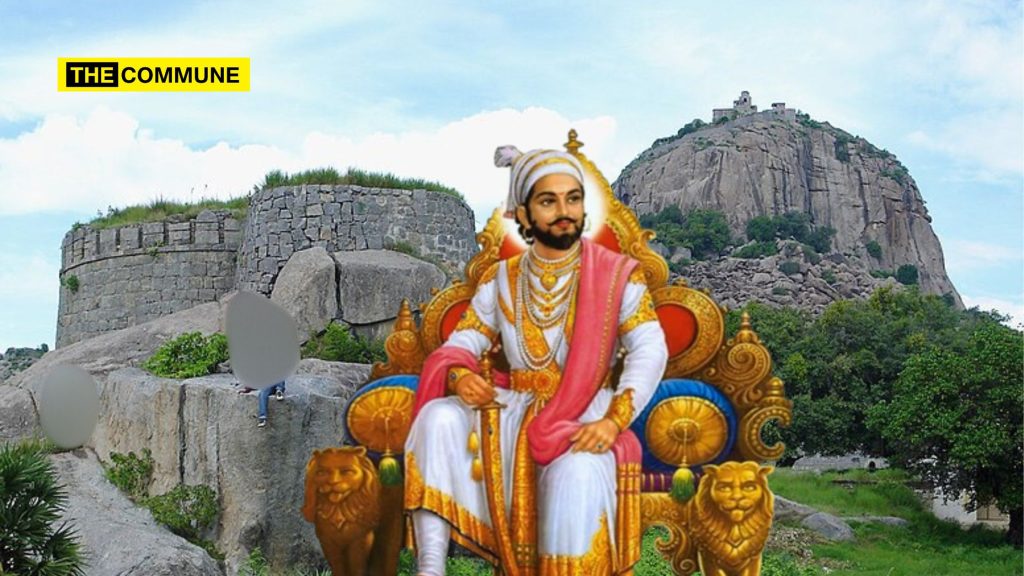
The recent UNESCO recognition of Gingee Fort on 12 July 2025, as part of the “Maratha Military Landscapes of India” has triggered backlash from Dravidianist media outlets, particularly NewsTamil24x7. The recent coverage sought to cast Gingee Fort primarily as a symbol of Tamil identity rather than acknowledging its prominent historical association with Chhatrapati Shivaji Maharaj and the Marathas.
In its news segment, the outlet questioned, “Is Tamil identities being sacrificed? Is the Central BJP government distorting history? Is Gingee Fort a Maratha fort?”
It then pushed a narrative crediting local Tamil rulers like Senjiyar Ko Kadavan of the Kadava dynasty and Anandha Kon of the Idaiyar lineage as the true architects of the fort. However, historical records paint a far more nuanced and comprehensive picture.
தமிழர்களின் அடையாளம் தாரைவார்ப்பு..? வரலாற்றை திரிக்கும் மத்திய பாஜக அரசு..? செஞ்சிக்கோட்டை மராத்தியர் கோட்டையா..?#Gingeefort #Gingee #Villupuram #Unesco #Worldheritage #Gingeefortissue #Marathi #Tamilheritage #TamilNews #NewsTamil #NewsTamil24x7 pic.twitter.com/G57ec16eV3
— News Tamil 24×7 (@NewsTamilTV24x7) July 16, 2025
Historical Layers Of Gingee Fort: A Multi-Dynastic Legacy
The history of Gingee Fort traces back to the 9th century, when it was initially constructed by the Chola dynasty. Some historical accounts suggest that the Kon dynasty may have laid the earliest foundations even before the Cholas. Over time, the fort underwent several phases of expansion and fortification, with significant contributions from the Kurumbar chiefs, the Vijayanagara Empire, the Bijapur Sultanate, and later, the Marathas under Chhatrapati Shivaji Maharaj, who captured it in 1677 AD.
Throughout its history, the fort changed hands multiple times, reflecting the region’s turbulent political landscape. Among its most prominent custodians were the Nayaks, who ruled from the 16th to the 18th century. They transformed the fort into a powerful citadel by constructing key structures such as the Kalyana Mahal, Ranganatha Temple, and Venkataramana Temple, and further enhanced its defenses by building the Krishnagiri and Chandrayandurg citadels on nearby hills.
Nicknamed the “Troy of the East” and the “Fortress of a Thousand Pillars,” Gingee Fort is an architectural and strategic marvel. It spans three fortified hillocks Rajagiri, Krishnagiri, and Chandrayandurg each interconnected by strong defensive walls. Within the complex are granaries, temples, palaces, water tanks, bastions, and other military installations that reflect both its tactical significance and its engineering sophistication.
The fort faced numerous invasions and sieges over the centuries from the Deccan Sultanates, Mughals, and Marathas, to the French and British. A defining moment in its history came during Shivaji Maharaj’s southern campaign in 1677, when he laid siege to the fort. Recognizing its formidable defenses and strategic value, Shivaji eventually captured it in 1684 AD, reportedly calling it the “most impregnable fortress in India.” He then appointed his son, Rajaram, as the fort’s governor.
The Marathas controlled Gingee until 1698, when it was seized by Zulfikar Khan, a general of Mughal Emperor Aurangzeb. The fort later came under French control in 1750, serving as a military base. By 1761, the British had taken over, dismantling parts of the fort, including its cannons, before eventually abandoning it.
Though Gingee Fort passed through the hands of several rulers including the Nayaks, Mughals, French, and British its capture and use by Shivaji Maharaj remains a particularly significant chapter, marking it as a vital stronghold in Maratha military history.
Why Gingee Fort Is Strongly Linked to Shivaji Maharaj and the Marathas
1. Shivaji’s Southern Campaign (Dakshin Digvijay) 1676–77:
As part of his southern expedition, Chhatrapati Shivaji Maharaj captured Gingee Fort from the Bijapur Sultanate in 1677. Recognizing its tactical advantages natural defenses, elevated terrain, and massive fortifications he fortified it further and integrated it into the expanding Maratha military landscape.
2. “Most Impregnable Fortress”: Shivaji Hailed
Shivaji reportedly hailed Gingee as the “most impregnable fortress in India”, impressed by its strength and layout. The British later likened it to Troy due to its formidable structure.
3. Turned the Fort into Formidable Military Outpost:
According to historians, Chhatrapati Shivaji seized Gingee Fort from the Bijapur Sultanate in 1677, turning it into a formidable military base. The following year, in 1678, Jesuit missionary Andrew Breira documented Shivaji’s substantial fortification work, noting that the improvements were so expertly executed that they would have earned the admiration of even European military engineers. These strategic upgrades later played a crucial role in enabling the Marathas to withstand a seven-year-long Mughal siege.
4. Maratha Capital in Exile (1690–98):
After Shivaji’s passing, the fort gained critical prominence again when his son Rajaram Maharaj, along with Tarabai, escaped the Mughal siege in Maharashtra and took refuge in Gingee in 1689. For eight years, from 1690 to 1698, the fort served as the de facto capital of the Maratha Empire. From there, they coordinated resistance against Aurangzeb’s Mughal forces, ensuring the Maratha legacy endured.
5. UNESCO Recognition in 2025:
The fort’s recent inscription as part of the “Maratha Military Landscapes” directly affirms its strategic and historical value under the Maratha Empire. This listing does not diminish the site’s earlier histories, but it clearly acknowledges the Maratha chapter as central to its military and cultural legacy.
Dravidianist Response: Revisionism Or Regional Insecurity?
Despite Gingee’s well-documented Maratha significance, Dravidianist outlets like News Tamil 24×7 have attempted to spin the recognition as a “North Indian hijacking of Tamil history.” This reaction reflects a broader trend where any acknowledgment of contributions from non-Dravidian rulers, especially those linked to Hindu or pan-Indian identities, is framed as cultural appropriation.
But history is not a zero-sum game.
While it’s true that Gingee Fort saw rulers from multiple dynasties Cholas, Nayaks, Mughals, French, British, and more it is factually inaccurate and politically motivated to downplay the role of Shivaji Maharaj, whose strategic foresight ensured Gingee’s pivotal role in safeguarding the Maratha Empire during its most vulnerable years.
A Shared Legacy, Not an Erased One
Gingee Fort’s inclusion in UNESCO’s list as part of the Maratha Military Heritage does not erase its Tamil roots it elevates its pan-Indian importance. Rather than seeing this as a threat to Tamil identity, it can be recognized as a celebration of India’s layered, interconnected history, where Tamil kings built, and Maratha rulers preserved and fortified.
Attempts to politicize this recognition only serve to divide, not enrich our understanding of a remarkable monument that has stood the test of time and empire.
Subscribe to our channels on Telegram, WhatsApp, and Instagram and get the best stories of the day delivered to you personally.