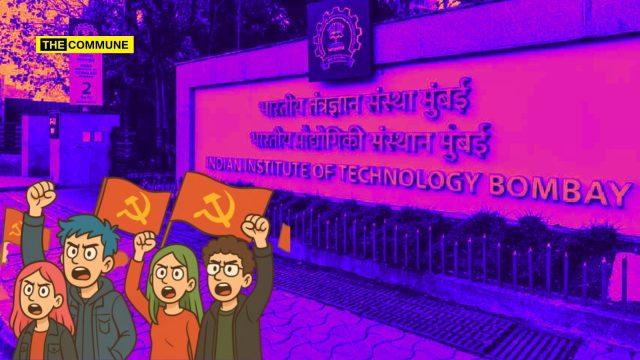
The Indian Institute of Technology Bombay (IIT-B), one of the nation’s premier educational institutions, has found itself repeatedly embroiled in controversy over the past six years. A pattern of incidents involving certain faculty members, student groups, and hosted events has sparked intense public and political backlash, with accusations of promoting anti-Hindu and anti-India sentiments.
This report details 14 such instances, from 2019 to 2025, that have raised serious questions about the academic and political environment within the institute, often leading to official inquiries, cancellations, and widespread condemnation.
#1 The “Pyramid Of Capitalist India” Poster (2025)
In September 2025, a workshop co-hosted by IIT-B featured a poster depicting PM Modi, Amit Shah, and Yogi Adityanath under the caption “WE FOOL YOU.” It also portrayed the army and police as “WE SHOOT AT YOU.” The institute swiftly distanced itself, claiming no prior knowledge of the provocative imagery, and condemned the content. It removed its name from all event materials, halted its association, and launched an investigation into how the event was approved, amid widespread national outrage. However, the fact remains that the event was co-organized by New Political Economic Initiative of IIT-Bombay which has ties to Ford Foundation.
#2 The Ford-Funded NPEI Initiative (2025)
The New Political Economic Initiative (NPEI) at IIT-B, led by UK citizen Prof. Anush Kapadia, faced scrutiny for its research. Backed by a $4 million Ford Foundation grant, the initiative was accused of pushing political propaganda, such as an unsourced claim about Maharashtra’s beef industry employing lakhs. Critics questioned the academic rigor of its outputs and the appropriateness of such externally funded programs operating within a government-funded technical institute. The involvement of foreign funding in sponsoring politically sensitive academic projects has raised concerns about external influence on India’s publicly funded institutions. NPEI has consistently promoted the idea that Indian democracy is in decline, framing its work in ways that align with Western think-tank narratives critical of the Modi government.
#3 Praise For MIT Pro-Palestine Speech (2025)
In June 2025, Professor Anupam Guha from the public policy department praised a controversial MIT graduation speech that was strongly pro-Palestine, calling the student’s actions “admirable” and courageous.
Professor of Humanities (Policy Studies) at IIT Bombay. Our IITs have become trash due to humanities departments.
I repeat once again: defund humanities from IITs. Save IITs. pic.twitter.com/RpfthiHkwT
— Harshil (હર્ષિલ) (@MehHarshil) June 3, 2025
His public endorsement of the speech, which was critical of Israel, drew significant criticism from those who felt it legitimized a one-sided narrative against a key Indian ally.
#4 Fuelling Anti-CAA Protests (2025)
Professor Anupam Guha was again at the center of controversy in January 2025 for his active role in amplifying anti-CAA (Citizenship Amendment Act) protests.
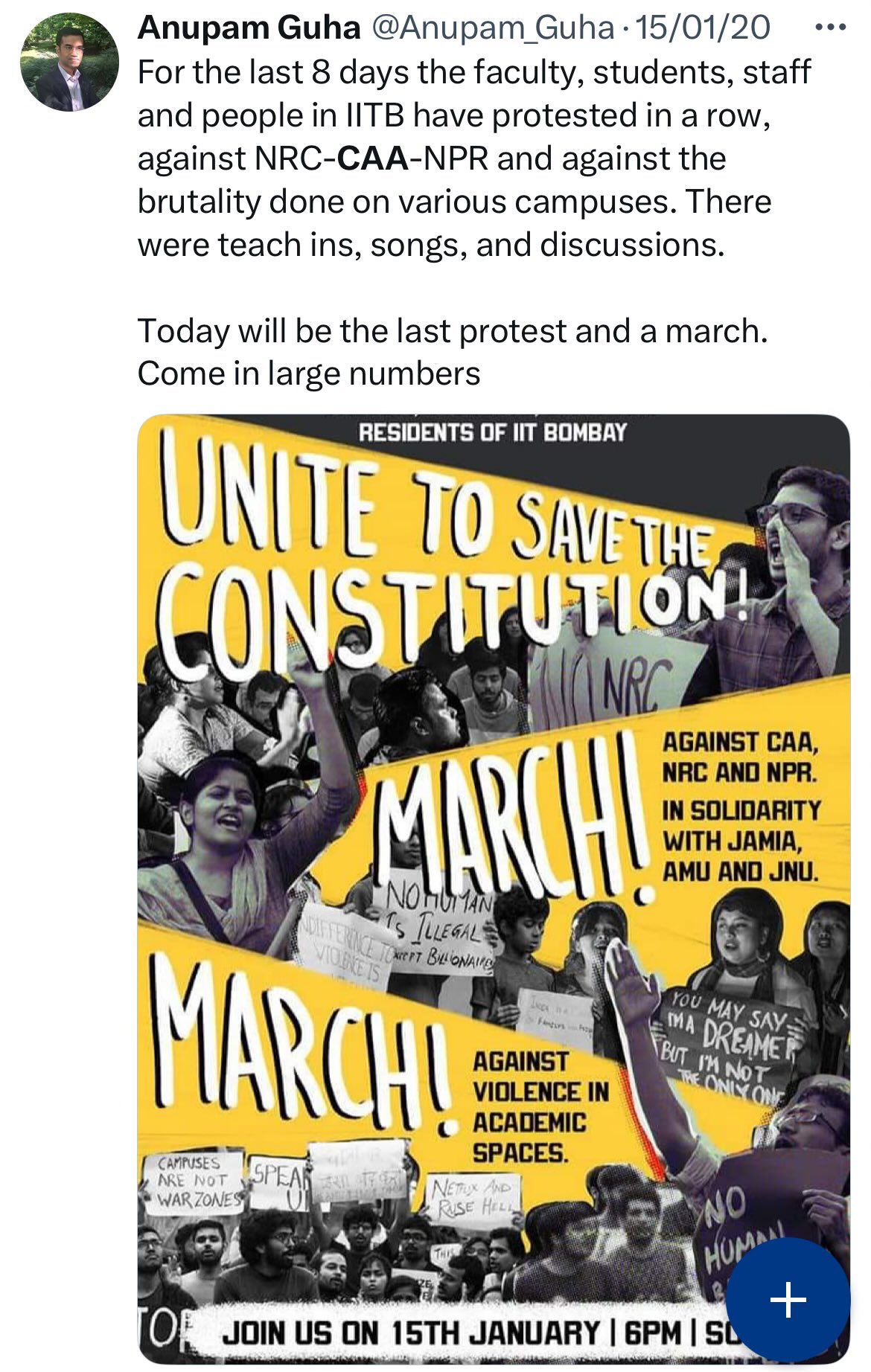
Despite being a government employee, he used his platform to urge people to protest against the law and was accused of amplifying separatist voices, particularly concerning Kashmir, thereby challenging the state’s sovereignty.
#5 Inviting A Rape Accused And Terror Sympathizer For Diwali (2024)
IIT-B faced massive student protests and public fury in October 2024 for inviting filmmaker Mahmood Farooqui, who was previously convicted (later acquitted) in a rape case, as the chief guest for its Diwali celebrations. The outrage was compounded by his past signing of a mercy petition for 26/11 terrorist Ajmal Kasab. Bowing to pressure, the institute cancelled the event.
#6 Cancelled Talk By Achin Vanaik (2023)
In November 2023, IIT-B invited Professor Achin Vanaik, known for his pro-Palestine and anti-Hindu views, for a talk. After student protests over his past comments glorifying suicide bombing and criticizing Hindutva, the institute cancelled the event citing “unforeseen circumstances,” highlighting the tension between free speech and inflammatory rhetoric on campus.
#7 Lecture Glorifying Palestinian Militants (2023)
Professor Sharmishtha Saha invited Sudhanva Deshpande, who during a lecture in November 2023, glorified Palestinian militants Zakaria Zubeidi and Ghassan Kanafani, the former being a member of a group specializing in suicide bombings. The lecture, which called for armed rebellion, occurred on the same day the Vice President of India was on campus, creating a stark contrast.
#8 Equating Vegetarianism to Militancy (2023)
In an October 2023 op-ed, Professor Suryakant Waghmare equated upper-caste vegetarianism to “militancy,” accusing it of enforcing social hierarchy. He dismissed environmental reasons for the diet, linking it instead to “cow nationalism” and discrimination, sparking outrage for its sweeping generalization and derogatory characterization of a common cultural practice.
#9 Published Research Paper On OpIndia (2023)
A research paper from IIT-B’s Ashank Desai Centre, authored in part by an Alt News staffer, analyzed Opindia’s content. The May 2023 paper concluded the portal fostered “anti-Muslim narratives,” a finding critics dismissed as biased, given the author’s association with a far-left fact-checking website itself accused of political partiality and shielding Islamists.
#10 PhD Student’s Anti-Hindu Remarks (2023)
A February 2023 video showed PhD student Amarkant Thakur insulting Hindus and Lord Ram on campus, blaming “Brahminical society” for mistreating Dalits and claiming “Jai Shri Ram” chants perpetuated caste hierarchy.
View this post on Instagram
The incident, which occurred in the presence of security, raised questions about campus discourse and respect for religious sentiments.
#11 Rally Supporting Sedition Accused (2020)
On Republic Day 2020, left-leaning student groups held a “Reclaim the Republic” rally supporting Sharjeel Imam, accused of sedition for speeches calling to “break India,” and demanding the release of UAPA-booked activists. The event showcased a strong political faction within the student body aligning with individuals accused of threatening national integrity.
#12 Calling Article 370 Abrogation “Illegitimate” (2019)
In August 2019, Professor Anupam Guha endorsed an article branding the historic, Parliament-passed abrogation of Article 370 as “constitutionally illegitimate.”
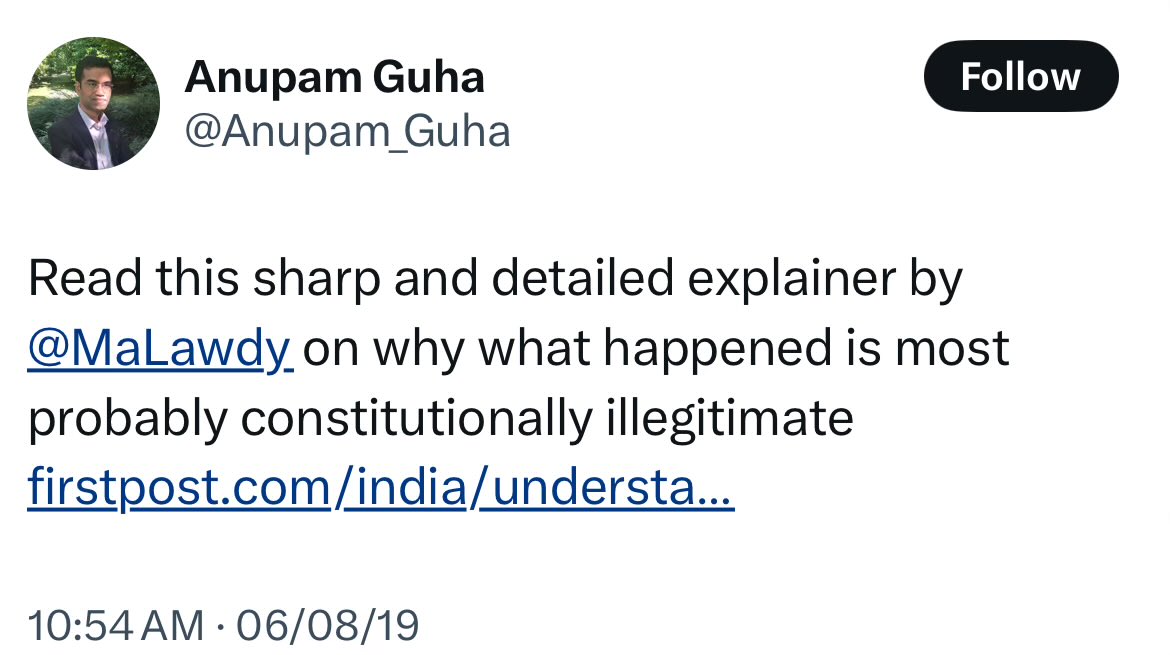
His public challenge to a central government policy and a subsequent Supreme Court validation sparked accusations of overstepping academic boundaries into political activism against national interests.
#13 Sterlite Protest “Martyrs” Tweet (2019)
During the violent Sterlite plant protests, Professor Guha posted that “capitalism cannot function without state terrorism” and referred to those who died as “martyrs.”
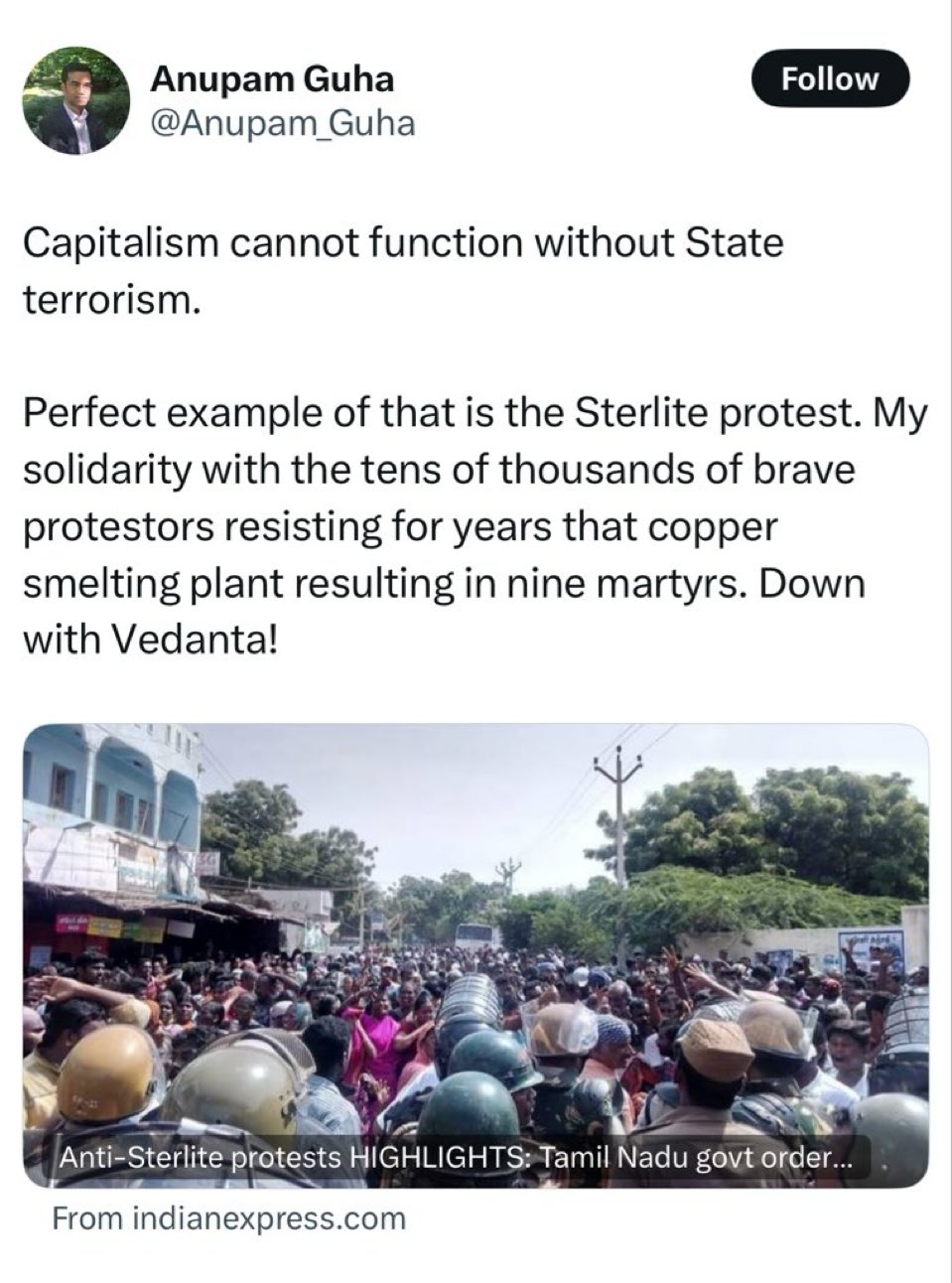
His comments were seen as justifying violent protest and blaming state forces, ignoring the complex circumstances of the clashes that led to the fatalities.
#14 Management School’s Handle Posts Anti-BJP Tweet, Later Claims It Was “Hacked” (2019)
In April 2019, the official Twitter account of IIT-B’s management school posted a tweet claiming Hinduism and Hindutva are different and that people in West Bengal were “not stupid enough to vote for BJP.”
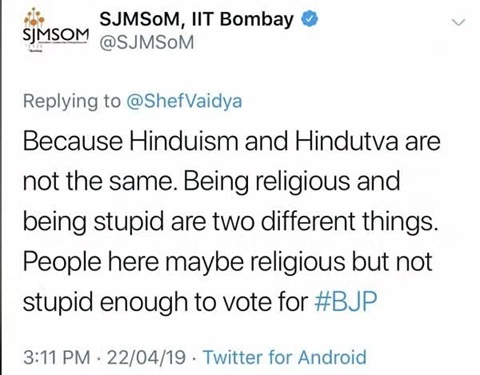
The school later claimed the account was hacked, but the incident damaged its reputation and revealed the highly charged political undercurrents within the institute.
#15 IIT B Prof Mocked Hindu Practices And Promoting Anti-India Narratives
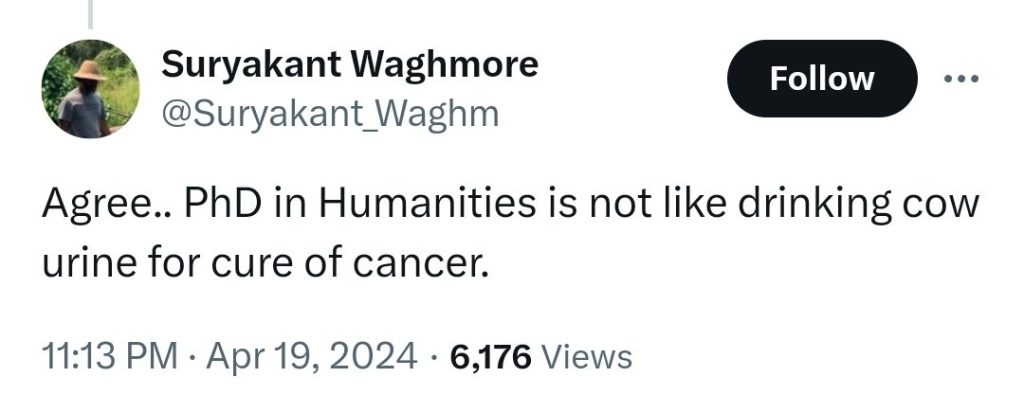
Humanities Professor Suryakant Waghmore’s disdain for Hindu traditions is well-documented. He once compared a PhD in humanities to “not drinking cow urine for cancer cure,” mocking Hindu beliefs.
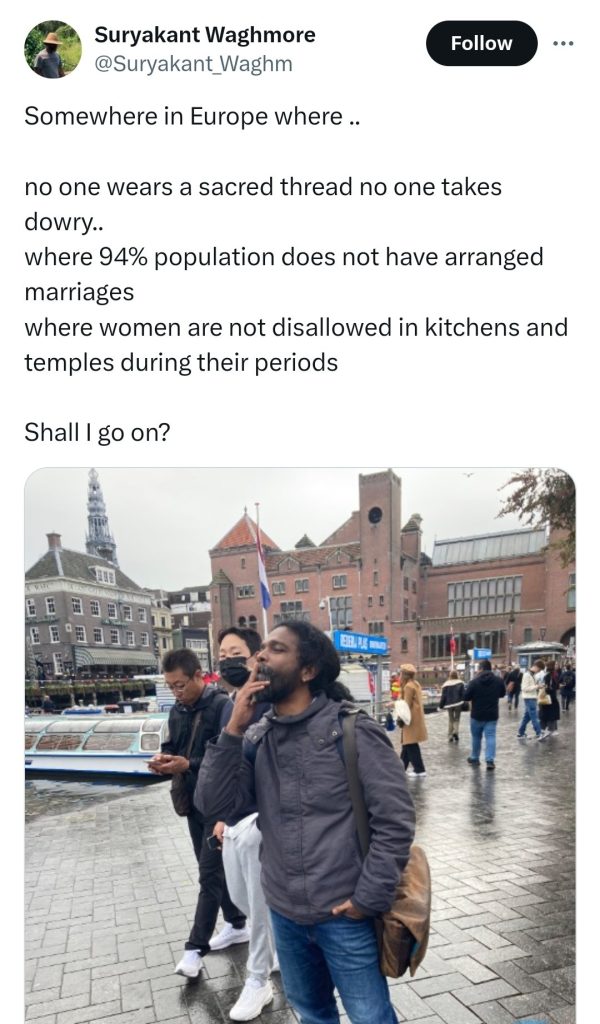
He posted a photo from Europe with the caption, “Somewhere in Europe where… no one wears a sacred thread, no one takes dowry… where 94% of the population does not have arranged marriages, where women are not disallowed in kitchens and temples during their periods. Shall I go on?”
His research paper “The Dominant Victim” argues that upper-caste Hindus claim “imagined victimhood” to overshadow Dalit struggles.
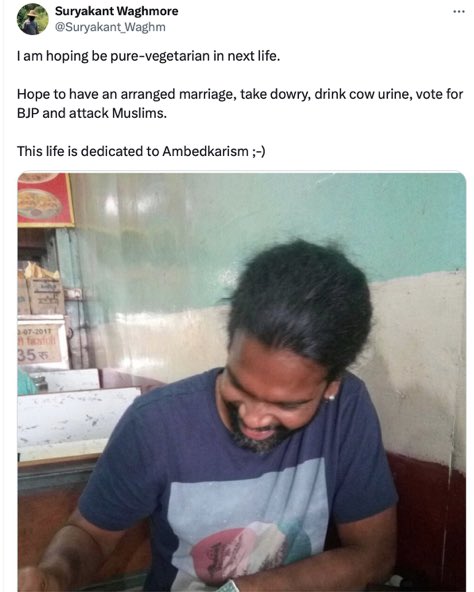
His social media posts and public interviews regularly attack vegetarianism and Hindu practices. In a widely circulated post, he wrote, “I am hoping to be pure vegetarian in next life. Hope to have an arranged marriage, take dowry, drink cow urine, vote for BJP and attack Muslims. This life is dedicated to Ambedkarism.”
#16 Allegations of Bias
In 2024, IIT Bombay’s PhD entrance exam included a question on Hindutva, which many saw as an attempt to screen out Hindu applicants.
IIT Bombay, in their Phd entrance exam asked a provocative question on Hindutva.
it's ok to study Hindutva but asking that question in a screening test is basically making sure only Hindu haters will be selected.
Blatant discrimination on taxpayer money 🤑 @iitbombay pic.twitter.com/K3PFIvJw1g
— Eminent Intellectual (@total_woke_) September 14, 2025
When students protested, Waghmore mocked them by posting a video of himself dancing, further fueling accusations of unprofessionalism.
@iitbombay who is this chutiya Suryakant Waghmore ?
Recently IIT Bombay held Phd entrance test in which they asked about Hindutva. This is clearly an attempt to deny entry to Hindus. When some students called out this blatant partisanship, this video was his reply. pic.twitter.com/hMK1eYjb6X
— Bhole (@Bholenath) May 21, 2024
#17 Double Standards Of ‘Secularism’
IIT Bombay faced criticism over its contradictory stance on food segregation after the administration was seen facilitating elaborate meal arrangements for Ramadan while previously “refusing” its approval for vegetarian-only tables, calling it “exclusionary and casteist.”
An internal email sent by the General Secretary (Health Advisory HA) on behalf of “Ramadan volunteers” informed students about Sehri (pre-dawn meal) arrangements for those observing the fast. Hostels were divided into zones for easy access, and meals would be delivered to female hostels based on headcount. Students interested in availing of the facility were asked to register.
Today #IITBombay students rec'd a mail about the amazing fasting preparation for #Ramadan. Entire Humanities department had a collective orgasm.
The same professors and some left students had had a fit when a mere six tables were reserved for those eating vegetarian food. Anyone… pic.twitter.com/IDcrUjSlLl
— Eminent Intellectual (@total_woke_) February 9, 2025
However, this move ignited accusations of selective religious favoritism. IIT-B buckled under pressure for a decision to allocate just a few tables for vegetarian students.
In 2023, posters marking “vegetarians only” seating areas appeared in a hostel mess, triggering outrage from the Ambedkar Periyar Phule Study Circle (APPSC). The posters were torn down, and RTI inquiries later confirmed that IIT-B has no official policy allowing separate eating spaces. The administration followed up with a warning email, declaring that no student had the right to designate areas for specific food preferences.
Even though the vegetarian-only tables were open to all castes and religions, the move was labeled “discriminatory” and “a Brahminical imposition.” Some activist students even went as far as to deliberately consume non-vegetarian food at those tables in protest.
Yet, the same faculty and student groups that opposed vegetarian tables have raised no objections to Ramadan-specific dining arrangements. This has led to allegations that IIT-B selectively enforces its so-called secular principles—opposing dietary preferences linked to Hindu and Jain traditions while bending over backward to accommodate Islamic practices.
This extends beyond seating arrangements. While vegetarian tables were deemed casteist, halal food remains unquestioned on campus. Critics argue that if separate tables for vegetarians were seen as divisive, then so should halal-only meat, which actively excludes non-Muslim butchers. However, IIT-B faculty and leftist student groups remain silent on this inconsistency.
Subscribe to our channels on Telegram, WhatsApp, and Instagram and get the best stories of the day delivered to you personally.