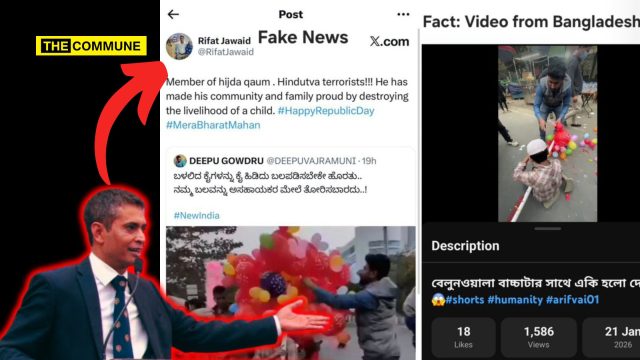
A fresh controversy has erupted around ‘journalist’ Rifat Jawaid, a former BBC contributor who has repeatedly courted outrage for incendiary social media posts and controversial reporting practices, after he was caught circulating a false communal narrative based on a misleading video.
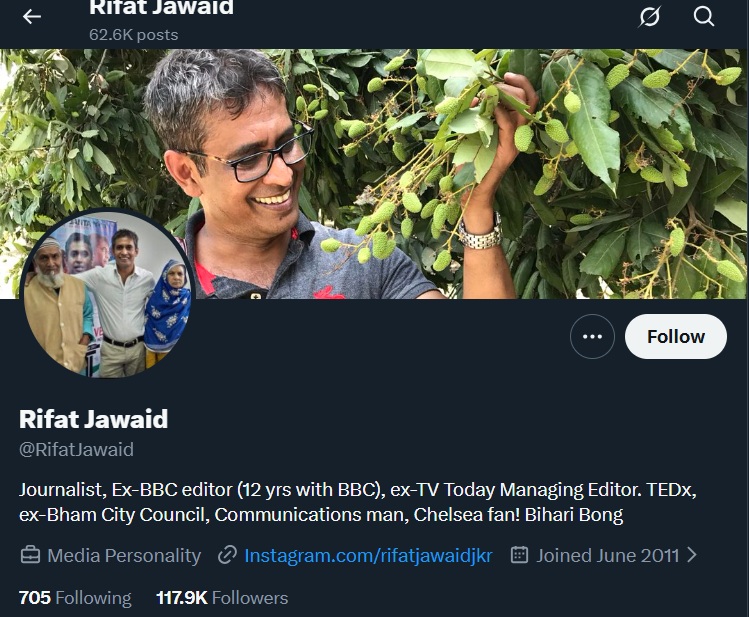
The episode began after a video surfaced online claiming that a Muslim boy selling balloons in India had been assaulted. Sharing the clip on X, Rifat Jawaid alleged communal violence and wrote, “Member of hijda qaum. Hindutva terrorists!!! He has made his community and family proud by destroying the livelihood of a child.”
However, it later emerged that the video in question was not from India but from Bangladesh. Once this fact became public, Jawaid quietly deleted the post. He issued no clarification, correction, or apology, drawing criticism from users who accused him of deliberately pushing a false narrative to stoke communal outrage. The incident has renewed scrutiny of the kind of reportage and framing Jawaid may have engaged in during his long association with the BBC.
Meet Journalist Rifat Jawaid.
He worked at BBC for 12 years.After a video claimed that a Muslim boy selling balloons was assaulted, Rifat Jawaid posted: “Member of hijda qaum. Hindutva terrorists!”
When it emerged that video was from Bangladesh, he quietly deleted it. No… pic.twitter.com/AY0Fm3oMqu
— Anshul Saxena (@AskAnshul) January 26, 2026
Pattern of Controversies and Allegations
The balloon-video episode is not an isolated instance. Over the years, Rifat Jawaid, who runs the pro-Aam Aadmi Party platform Janta Ka Reporter, has been repeatedly accused of misinformation, communal polarisation, and activist-driven reporting.
In September 2022, Jawaid accused an individual he identified as an “AAP fan” of calling his children “suicide bombers” for wearing Islamic attire. Sharing screenshots on social media, Jawaid wrote, “You need more proof? This AAP scum from @ArvindKejriwal’s party calls my 8-year-old daughter and 11-year-old son ‘suicide bombers’ because they wore Islamic dress for madrasah classes.” Subsequent scrutiny showed that the profile he cited was later locked and no longer carried any reference to the Aam Aadmi Party, raising questions about the accuracy and framing of his claims.
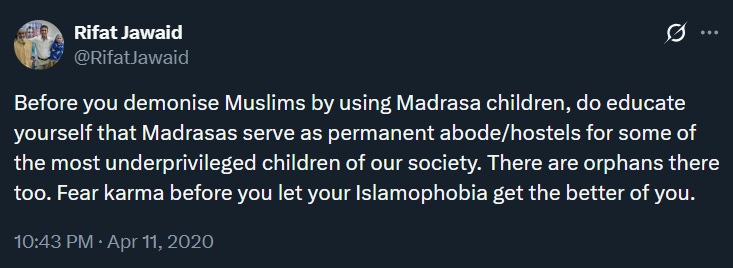
Jawaid has also been a vocal defender of madarsas, repeatedly downplaying concerns raised about radicalisation. In a 2020 post, he argued, “Before you demonise Muslims by using Madrasa children, do educate yourself that Madrasas serve as permanent abode/hostels for some of the most underprivileged children of our society.”
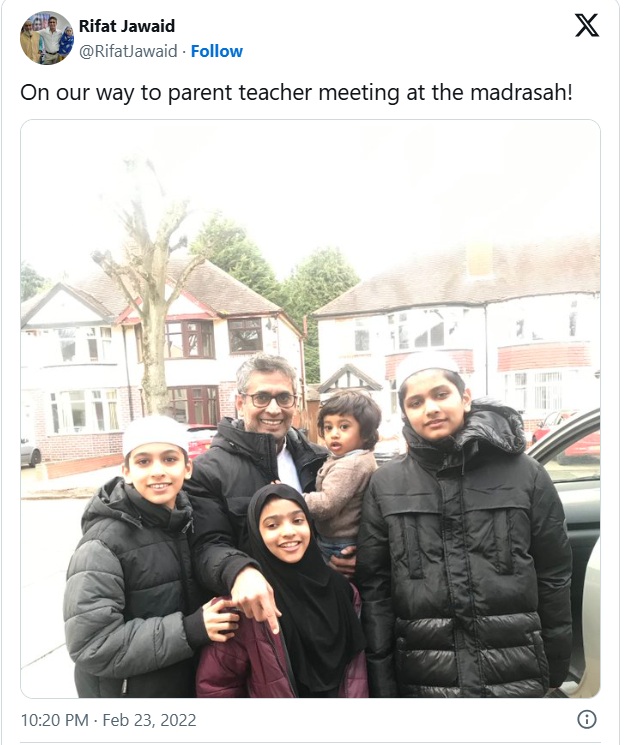
He has frequently shared images of his own children attending madarsas, presenting this as a rebuttal to criticism.
Jawaid’s social media activity has also brought him into direct confrontation with political leaders. In one high-profile spat, Naresh Balyan, an AAP MLA, publicly criticised Jawaid after the journalist labelled the Indian Army as “cowards” in a now-deleted tweet.
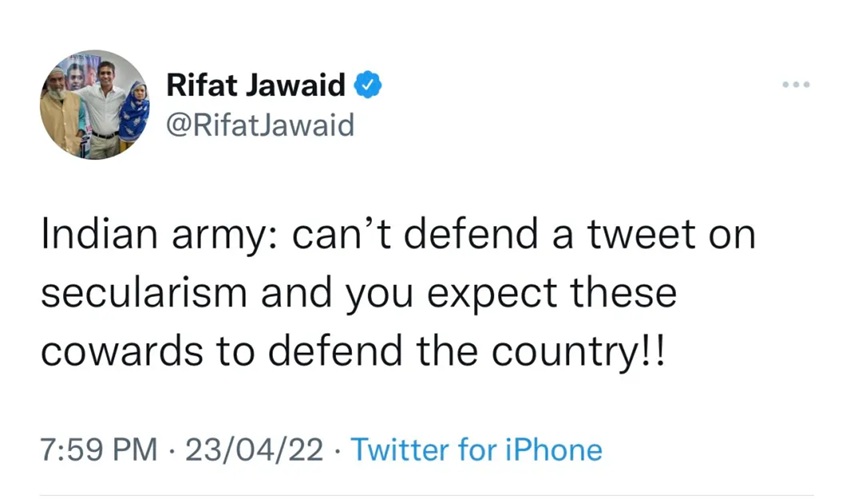
The comment sparked outrage, with Balyan calling the remark an insult to soldiers who had laid down their lives for the country.
Earlier, during the hijab controversy in Karnataka in 2022, Janta Ka Reporter referred to students chanting “Jai Shri Ram” as “terrorists,” a description that was later quietly edited after backlash.
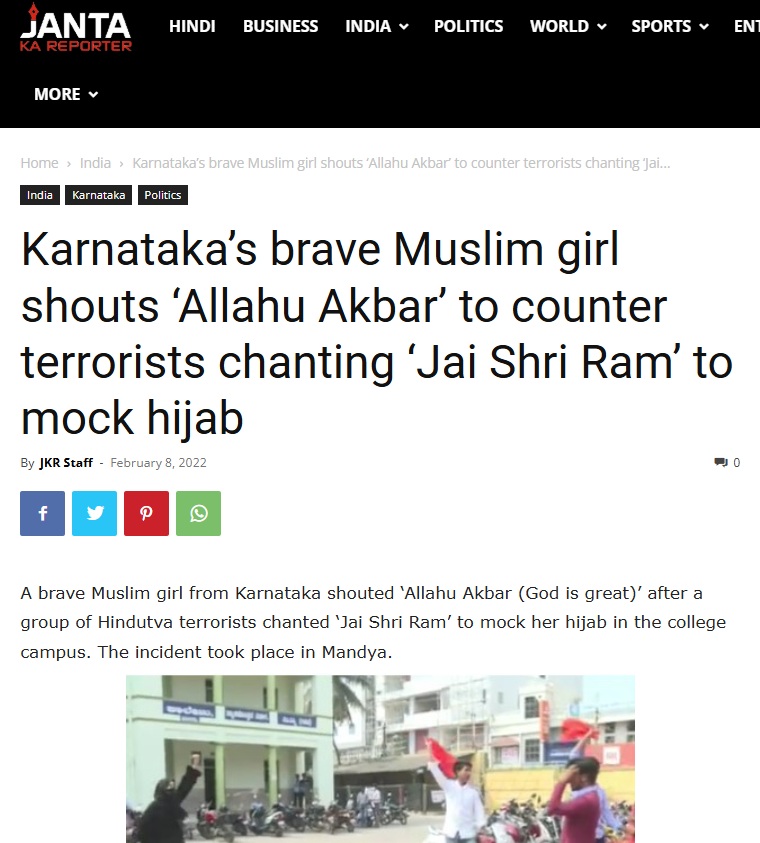
Archived versions of the article show that the headline and framing were altered only after the issue gained traction on social media.
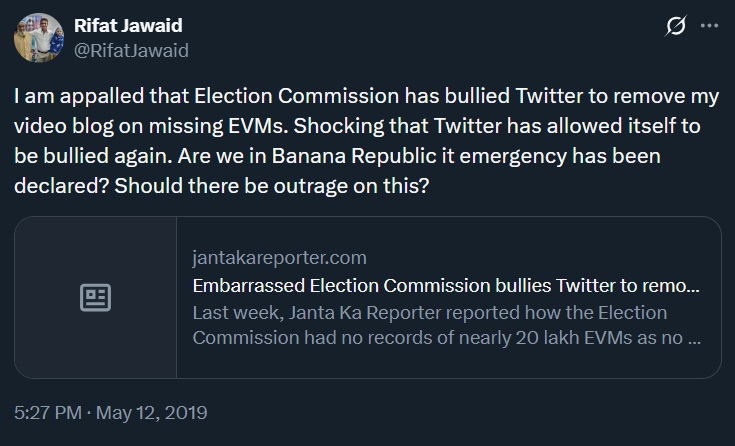
Jawaid and Janta Ka Reporter have also been accused of peddling fake news related to electronic voting machines (EVMs). In 2019, the portal published claims that 20 lakh EVMs had gone missing, a report that was later officially refuted by the Election Commission of India. While other outlets that carried similar claims issued clarifications or took down their reports, Jawaid accused the Election Commission of “bullying” social media platforms into removing his content.
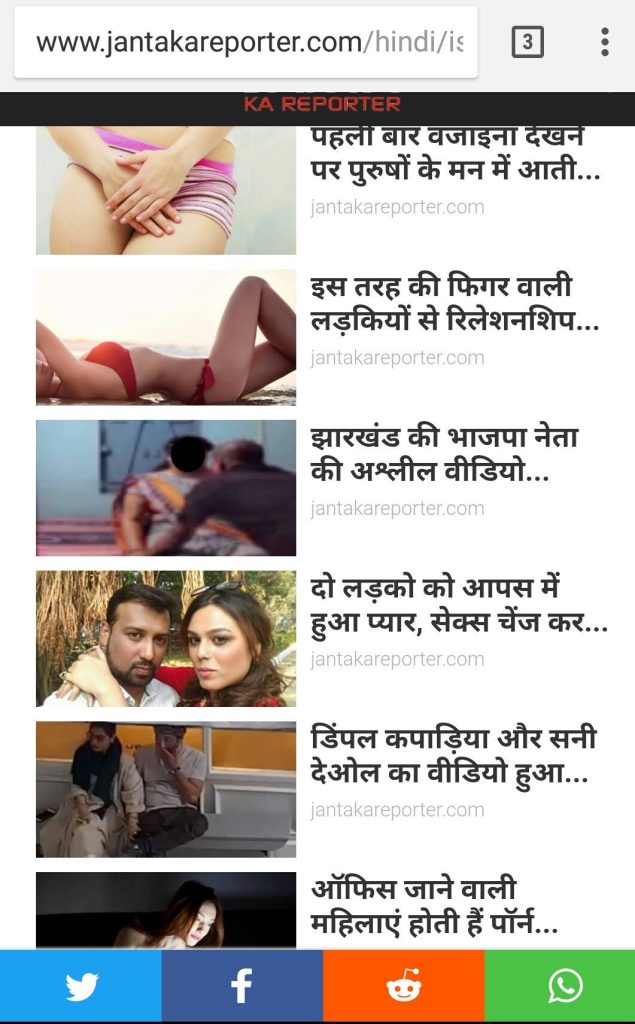
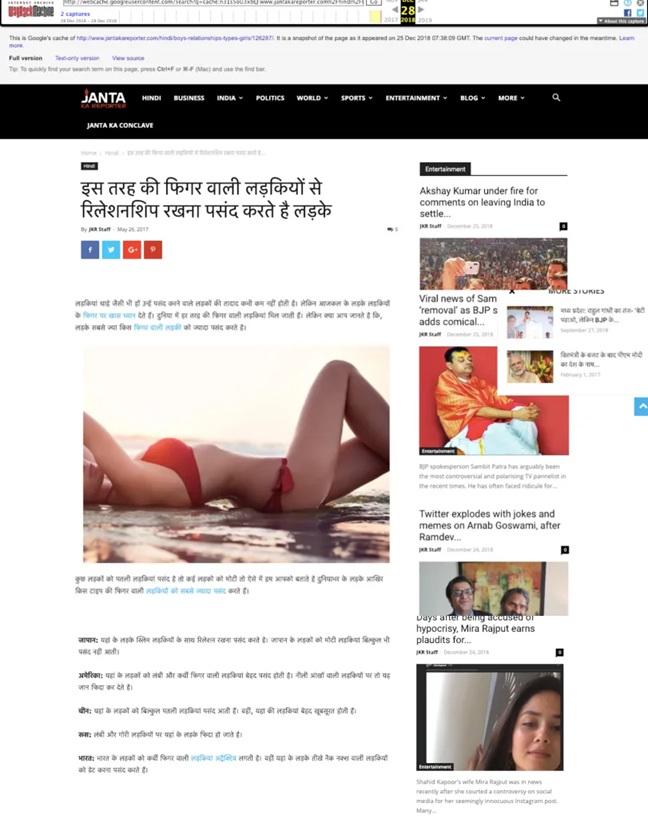
The website has further drawn criticism for allegedly publishing soft-porn and sexually explicit content to drive traffic. Screenshots and cached versions of deleted articles reveal sensationalised and explicit material, prompting questions about journalistic ethics, particularly as the platform has been promoted by political leaders as a credible news source.
Jawaid’s reporting consistently advances a narrow ideological agenda, often portraying Indian institutions, the military, and Hindu religious expressions in a negative light. He has previously targeted public figures such as actor Naseeruddin Shah for commenting on Islamic extremism, accusing him of being a “non-practising” Muslim and questioning his right to speak on religious reform.
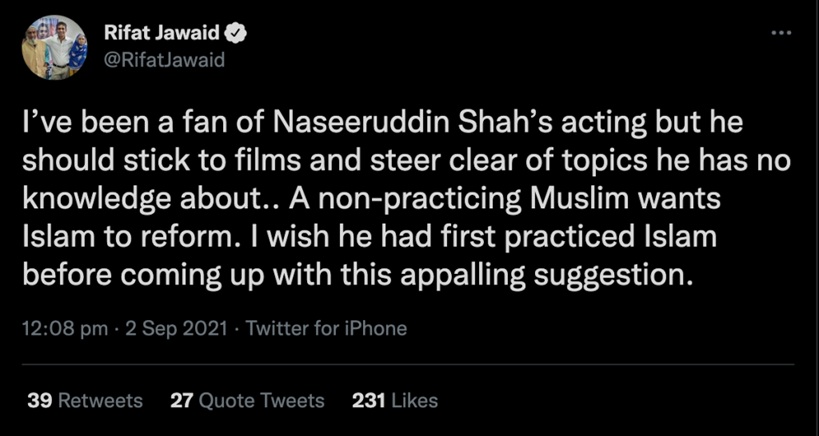
From labelling Indian Army personnel as “cowards” to repeatedly amplifying unverified or false claims with communal overtones, Jawaid’s record has led observers to question whether his work represents journalism or activism masquerading as news.
The latest Bangladesh-video episode has once again placed Rifat Jawaid’s credibility under the scanner.
Subscribe to our channels on Telegram, WhatsApp, and Instagram and get the best stories of the day delivered to you personally.