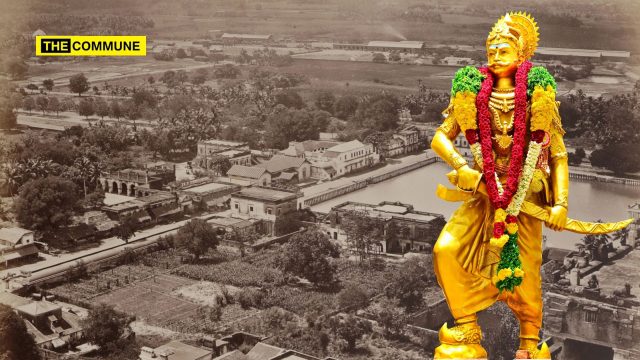
On 14 December 2025, Vice President C.P. Radhakrishnan released a commemorative postage stamp honouring Emperor Perumbidugu Mutharaiyar II, also known as Suvaran Maran, marking a significant recognition of one of ancient Tamil Nadu’s most formidable rulers. The stamp release at the Vice President’s Enclave in New Delhi drew dignitaries including Union Finance Minister Nirmala Sitharaman, Deputy Chairman of Rajya Sabha Harivansh, and Minister of State for Information and Broadcasting Dr L Murugan, underlining the national importance of honouring this towering historical figure.
A Ruler of Remarkable Vision and Military Prowess
Emperor Perumbidugu Mutharaiyar II belonged to the illustrious Mutharaiyar dynasty, which held dominion over the central regions of Tamil Nadu during the 7th to 9th centuries CE. His reign, spanning nearly four decades from Tiruchirappalli, represents one of the most significant periods in medieval Tamil history – a time when administrative sophistication, military genius, and cultural refinement converged to shape South Indian civilization.
The Emperor’s name itself – Perumbidugu, meaning “Great Thunder”, reflects the formidable respect and awe he commanded during his lifetime. His reputation was not built on conquest alone; it was grounded in a balanced approach to statecraft that valued justice, prosperity, and the arts with equal measure.
Administrative Stability and Territorial Expansion
Vice President Radhakrishnan, in his address at the stamp release, highlighted that Mutharaiyar’s reign was marked by administrative stability, territorial expansion, cultural patronage, and military prowess. Unlike many rulers who relied solely on martial might, Emperor Perumbidugu Mutharaiyar II demonstrated a sophisticated understanding of governance, establishing systems of administration that ensured not merely the consolidation of power, but the stability and prosperity of his realm.
His unwavering commitment to justice became a hallmark of his rule, and Prime Minister Narendra Modi emphasised this quality in his remarks following the stamp release, noting that the Emperor was “endowed with remarkable vision, foresight and strategic brilliance” and acted “with determination in establishing justice.”
Patron of Infrastructure and Agricultural Transformation
One of the most enduring legacies of Emperor Mutharaiyar II lies in his visionary approach to irrigation and agricultural development. The irrigation works initiated during his reign fundamentally transformed the Tiruchirappalli region, converting it into a granary and bringing unprecedented prosperity to the people.
Inscriptions found across multiple locations in Tamil Nadu including Senthalai, Narthamalai, and areas along the northern banks of the Cauvery, bear witness to his contributions to temple endowments and irrigation infrastructure. These stone records, silent echoes from over a millennium ago, testify to the Emperor’s conviction that a ruler’s true wealth lay in enriching the lives of his subjects through resource management and public works.
A Champion of Tamil Culture and Literature
Beyond the battlefield and the administrative chamber, Emperor Perumbidugu Mutharaiyar II earned recognition as a great patron of Tamil culture and literature. His court became a space where poets, scholars, and artisans flourished, contributing to the vibrancy of Tamil intellectual and artistic traditions during the medieval period.
The Vice President observed that the Emperor’s reign occupies a distinguished place in South Indian history, precisely because it represents an era when cultural sophistication and martial capability reinforced rather than competed with each other. This duality—the warrior-king who also refined the arts—makes Mutharaiyar II a unique figure in Tamil annals.
Living Memory in Folklore and Tradition
Even today, nearly twelve centuries after his death, Emperor Mutharaiyar II remains alive in the collective memory of Tamil Nadu through folk songs and temple festivals in districts such as Tiruchirappalli, Pudukottai, and Thanjavur. These living traditions represent the deepest form of historical continuity, not preserved merely in scholarly texts, but woven into the cultural fabric of millions of ordinary people who keep his memory and legacy alive through ritual, song, and oral narrative.
Significance of the Stamp Release
The release of a commemorative postage stamp is more than a philatelic event; it represents a deliberate act of national recognition and historical rebalancing. Vice President Radhakrishnan framed the stamp release as part of a broader government initiative to identify and honour Tamil kings, leaders, and freedom fighters who have not received adequate historical recognition.
In the context of India’s journey towards “Viksit Bharat” (Developed India), the Vice President articulated a crucial point: recognising overlooked historical figures and civilisational heroes helps restore the nation’s cultural pride and provides the youth with exemplars of visionary leadership. Emperor Perumbidugu Mutharaiyar II, in this framing, becomes not merely a historical curiosity, but a living lesson about what effective, just, and culturally conscious governance can achieve.
Prime Minister Modi, in his response to the stamp release, called upon the nation, particularly the younger generation, to study and learn from the extraordinary life and legacy of this ancient Tamil emperor, whose contributions to administration, justice, and culture continue to inspire generations across the subcontinent.
Conclusion
The release of the commemorative postage stamp honouring Emperor Perumbidugu Mutharaiyar II is a fitting tribute to a ruler whose four-decade reign set benchmarks for administrative excellence, military acumen, cultural patronage, and public welfare. From his transformative irrigation works that shaped agricultural prosperity to his cultivation of Tamil letters and temple patronage, Mutharaiyar II exemplified the ideal of the enlightened monarch who viewed power not as an end in itself, but as a means to elevate the wellbeing and dignity of his people.
In honouring this emperor through a national stamp, India acknowledges not only a pivotal chapter of Tamil Nadu’s history, but affirms that the values he embodied – justice, vision, cultural stewardship, and commitment to public welfare, remain eternally relevant to the project of nation-building.
Subscribe to our channels on WhatsApp, Telegram, Instagram and YouTube to get the best stories of the day delivered to you personally.