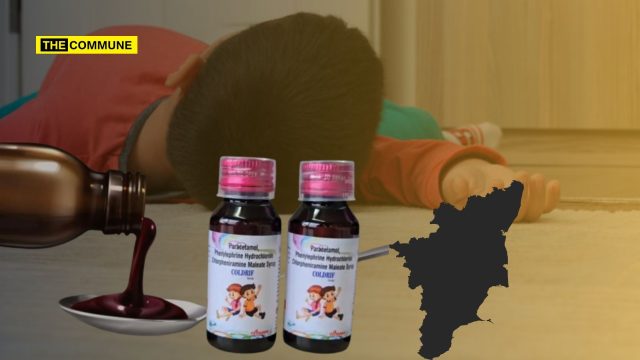
A deadly cocktail of administrative apathy and gross regulatory failure within the Tamil Nadu Food and Drug Control Department has led to a national tragedy, with at least 20 children in Madhya Pradesh and Gujarat dying after consuming a toxic cough syrup manufactured in a filthy, unlicensed facility in Kancheepuram that operated unchecked for 14 years.
The manufacturer, Sresan Pharmaceutical Manufacturer, held a valid drug licence since 2011, granted by the Tamil Nadu drug control authorities. Despite mandatory annual inspections required under the Drugs and Cosmetics Rules, the unit was allowed to function in “patently unhygienic conditions” until the deaths of children in MP’s Chhindwara district forced an inspection, revealing a staggering 364 critical and major violations.
A Killer Syrup Concocted In Filth
The inspection, triggered only after a letter from Madhya Pradesh’s drug controller, painted a horrifying picture of the manufacturing unit. The report detailed a “shoddy and neglected state” where medicines were stored in corridors, and filling, labelling, and dedusting occurred in areas without air handling units, posing a severe risk of contamination.
Equipment was found to be rusty, cracked, and leaking. The unit lacked basic pest control measures, a purified water generation system, or proper cleaning procedures. Most critically, the company purchased a non-pharmaceutical grade of propylene glycol, a key raw material, without any invoice, bypassing the most fundamental safety protocols.
Lab tests later confirmed the Coldrif solution manufactured here contained 48.6% diethylene glycol (DEG), an industrial chemical that causes acute renal failure when ingested. This toxic substance is what led to the deaths of the children.
Systemic Collapse And Unanswered Questions
The scale of the failure has exposed a complete breakdown of regulatory oversight. Former state drug controller M Bhaskaran questioned, “If they could list so many issues after a single inspection, why was the unit allowed to function?” He pointed out that the proprietor, G Ranganathan, was a known offender, booked in the late 80s for selling a syrup under the ‘food supplements’ category without a valid drug licence.
Furthermore, the national regulator, the Central Drugs Standard Control Organisation (CDSCO), had previously warned states about the improper use of propylene glycol, specifically highlighting the risk of contamination with deadly DEG. Despite these red flags, Tamil Nadu’s drug inspectors failed to act.
“The state drugs control department said there were no cases pending against him. That’s because ‘no one kept track or inspected the premises,’” Bhaskaran stated, highlighting the sheer negligence.
A Facility Of Horrors
A visit to the sealed facility on the outskirts of Chennai revealed a scene of hurried abandonment. Inside the dingy building, stacked plastic jars, stained floors, and snaking hoses were found. Windows were blocked with makeshift barriers. In the backyard, among ash and debris, lay half-burnt labels of other syrups and discarded bottles, alongside blue barrels of “Liquid Glucose.”
The Tamil Nadu Drugs Control Department has since pasted show-cause notices on the unit’s walls, accusing the firm of grave violations and “misbranding,” as the syrup labels failed to carry a mandatory warning against use in children below four years.
National Outcry And Demands For Accountability
The tragedy has sparked national outrage. A Public Interest Litigation (PIL) has been filed in the Supreme Court seeking a CBI investigation into the deaths and a court-monitored probe into the regulatory failures that allowed the circulation of substandard drugs.
While the Madhya Pradesh government has filed a case against Sresan Pharma’s proprietor, the Tamil Nadu health department is yet to initiate action against its own drug inspectors, whose primary duty was to prevent such a disaster. Experts and the PIL have demanded the suspension of manufacturing licenses and criminal prosecution against those responsible for the loss of young lives.
This incident stands as a grim indictment of the Dravidian model government’s claims of efficient administration, revealing a deadly lapse in a department tasked with protecting public health, a failure that has exacted the ultimate price from families hundreds of miles away.
(With inputs from Indian Express)
Subscribe to our channels on Telegram, WhatsApp, and Instagram and get the best stories of the day delivered to you personally.