


Image Source: The Hindu
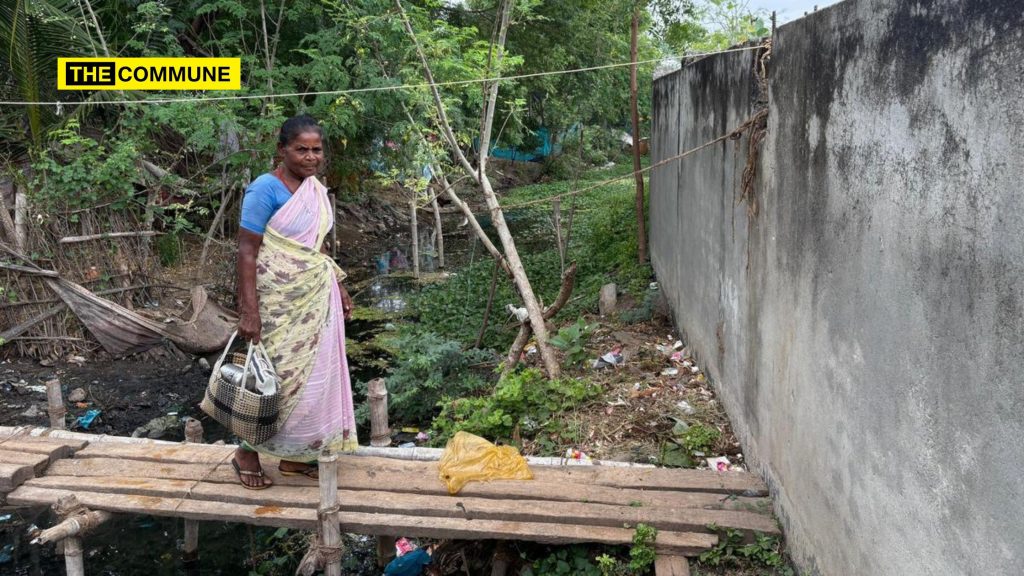
A 200-metre-long wall built across a traditional pathway in Valangaiman Town Panchayat, Tiruvarur district, has triggered allegations of caste-based discrimination, with Scheduled Caste residents claiming they have been cut off from access to schools, workplaces, and public facilities.
The wall, nearly 10 feet high, was erected about three years ago at Kovilpathu in ward 14, bordering Pathiripuram in Virupachipuram panchayat. Together, the two settlements house over 1,000 Dalit families, who say the blocked pathway forces them to walk an extra kilometre via the main road. Residents said more than 800 schoolchildren are directly affected.
The disputed road, a straight two-kilometre stretch, was traditionally used for generations to reach schools, rice mills, a government hospital, and the police station. Most families in the area work as daily-wage labourers, and residents said the longer route has added both time and financial burdens to their lives.
“Earlier there was a small opening in the wall, but after a theft incident it was completely closed. This was our lifeline,” said local residents, adding that even a public park being developed nearby will be inaccessible to them because of the blockade.
Local activists have alleged that dominant caste groups support the wall to keep Dalits out of the new real estate layout. “This is an untouchability wall in all but name,” said a member of the Tamil Nadu Untouchability Eradication Front.
The developer, J. Jekabar Ali, has denied the allegations. “This is patta land belonging to me, not a common pathway. If the Revenue Department officially approaches me, we will respond,” he said.
A peace committee meeting convened in September 2024 by the then Valangaiman Tahsildar had recorded that a wooden footbridge once existed across a B-channel for public use and called for a Public Works Department survey to verify encroachment. It also suggested that land acquisition could be initiated by the Adi Dravidar Welfare Department if needed. The resolutions, however, remain unimplemented.
Current Tahsildar K. Om Sivakumar said he had written to the Special Tahsildar (Adi Dravidar Welfare) to inspect the site. “Preliminary inquiries suggest the pathway has not been in active use for some time. We will wait for the survey report,” he said.
District Revenue Officer B. Kalaivani said she would inquire into the issue, while police officials described it as a private property dispute, stating no untouchability complaint had been received so far.
Past Instances Of Such “Untouchability Walls” In TN
In Dravidian model Tamil Nadu, the news of such ‘untouchability walls’ is not new. Here are a few:
July 2021: A 9-foot-high, 150-meter-long wall was built by farm owners in Kalkandar Kottai, Trichy, allegedly to separate their land from a Dalit colony. Protesters, including local CPM members, claimed it was an “untouchability wall” erected because the owners planned to sell the land for real estate and wanted to segregate the community. Local civic officials confirmed no permission was given for the wall and promised to investigate.
February 2024: Dalit residents of Sevur, Tiruppur, alleged a one-kilometer wall was built by dominant-caste residents to block a public road, forcing them to take a 2 km detour. The local panchayat president confirmed the wall was illegally built on a common pathway and had issued a demolition notice, which was ignored. The dominant-caste residents’ association denied allegations of untouchability, claiming the wall was for safety and crop protection. The district collector ordered an inspection to verify land records.
August 2025: In Muthuladampatti, Karur, a 200-foot-long, 10-foot-high wall was constructed by the Thottia Naicker community on government land (poramboke). Arunthathiyar (SC) residents allege it is a “wall of untouchability” built to block their access to predominantly caste-Hindu areas, despite their complaints to revenue officials. The construction led to protests and peace talks, but no resolution was reached. Caste Hindus claim the wall was for “safety and security” from outsiders.
(With inputs from The Hindu)
Subscribe to our channels on Telegram, WhatsApp, and Instagram and get the best stories of the day delivered to you personally.