


Once seen as a southern benchmark in public education, Tamil Nadu’s learning outcomes have witnessed a steep and worrying decline, according to the PARAKH Rashtriya Sarvekshan 2024.
The survey, conducted in December 2024 by the National Assessment Centre, PARAKH (Performance Assessment, Review and Analysis of Knowledge for Holistic Development), is a nationwide initiative under the National Education Policy (NEP) 2020. Its objective is to assess students in Grades 3, 6, and 9 on competencies in language, mathematics, science, and social sciences across 781 districts in 36 States and UTs.
A total of 2.1 million students from over 74,000 schools participated in the survey, with 2.7 lakh teachers and school leaders also responding to detailed questionnaires. Tamil Nadu saw 1,13,553 students take part in the assessment. However, the state failed to make it into the top 10 for any grade level assessed, trailing below the national average in every major competency evaluated.
The national-level assessment has revealed that Tamil Nadu now trails behind even states traditionally perceived as lagging like Uttar Pradesh (UP), Bihar, and Madhya Pradesh (MP) in several core learning and institutional indicators.
The decline is evident across grades, subjects, social groups, and teaching standards.
Tamil Nadu’s Learning Outcomes In Decline
Let’s take a look at the learning outcomes for Tamil Nadu.
Below National Average In All Subjects
Across all three assessed grades, Grade 3 (Foundational), Grade 6 (Preparatory), and Grade 9 (Middle), Tamil Nadu’s average performance was consistently below the national average in every core subject: Language, Mathematics, Science, and Social Science.
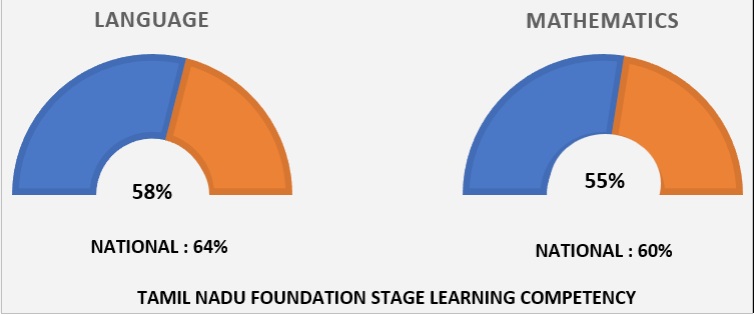

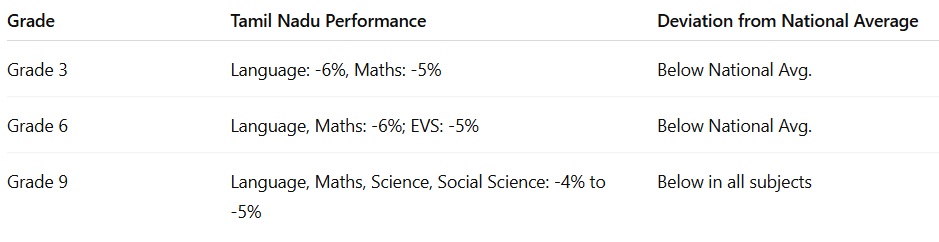

In contrast, the “Hindi” belt or BIMARU states such as UP, Bihar, MP, performed better.
Uttar Pradesh exceeded national averages in foundational numeracy and literacy (Grade 3).
Madhya Pradesh scored above or equal to the national average in Mathematics in Grades 6 and 9.
Bihar showed growth in Language and Science scores, narrowing the gap significantly with southern counterparts.
District-Level Underperformance
None of Tamil Nadu’s districts featured among the top 50 districts nationally in any grade. However, multiple TN districts were among the bottom 50:
- Grade 3 Low Performers: Ranipet, Ramanathapuram
- Grade 6 Low Performers: Tirupathur, Vellore, Ramanathapuram
- Grade 9 Low Performers: Cuddalore, Tirupathur, Tiruvannamalai, Nagapattinam, Ariyalur
States like Punjab, Kerala, and even Madhya Pradesh and Uttar Pradesh had multiple entries in the top-performing districts list.
National Comparison And High Performers
The top-performing states offer a stark contrast:
- Grade 3: Punjab led across both language and mathematics.
- Grade 6: Kerala emerged as the top performer.
- Grade 9: Punjab again topped the charts.
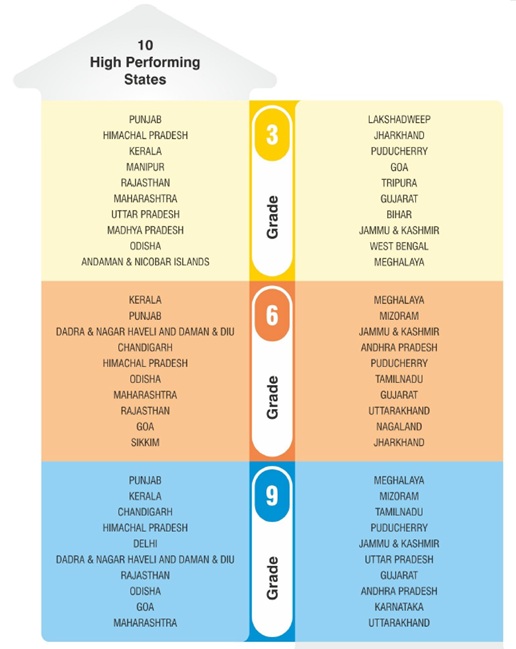

Among government schools specifically:
- Language proficiency (Grade 3): Punjab, Himachal Pradesh, Kerala, Uttar Pradesh, and Maharashtra stood out.
- Mathematics proficiency (Grade 3): Punjab, Himachal Pradesh, Kerala, Uttar Pradesh, and Dadra & Nagar Haveli and Daman & Diu were top performers.
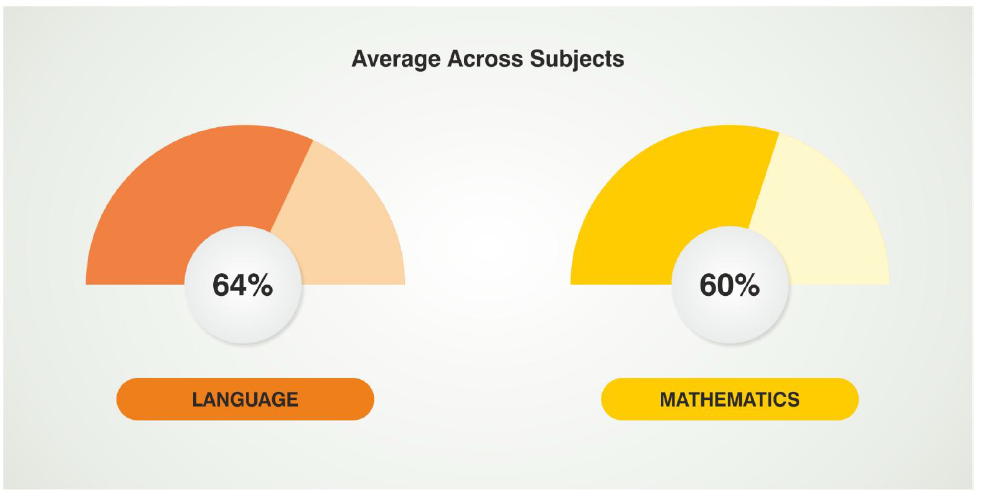
Here are some national averages:
Assessing Preparatory Stage Competencies (Grade 6)
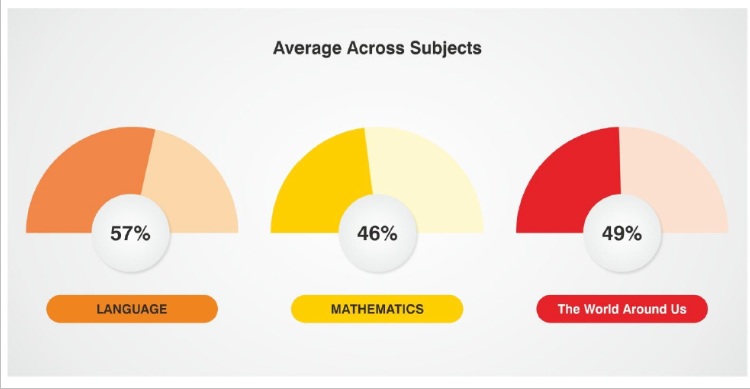


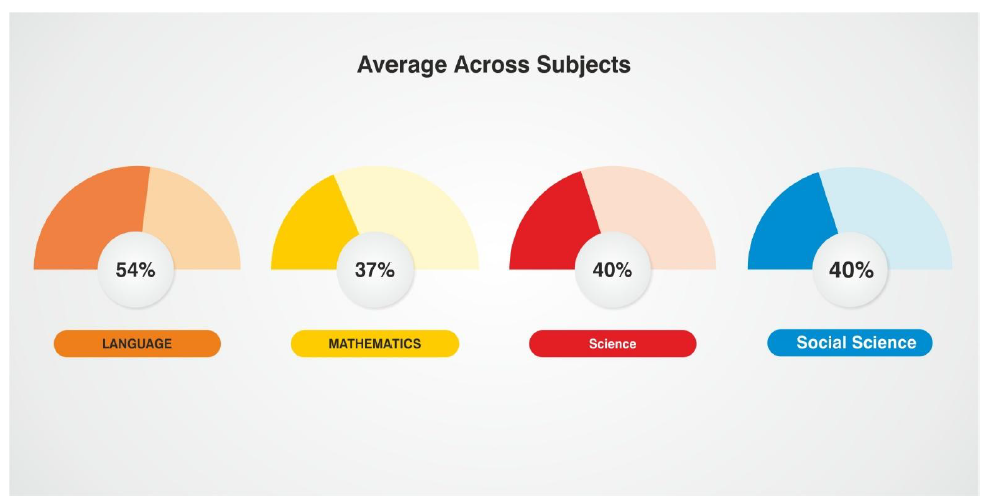
Assessing Middle Stage Competencies (Grade 9)

Structural Weaknesses and Systemic Gaps
Let us now take a look at the foundational weaknesses and gaps.
Foundational Competency Deficits
Less than 50% of Tamil Nadu’s Grade 3 students could perform basic reading or numeracy tasks, indicating deep-rooted foundational gaps.
In contrast, UP and MP students demonstrated better foundational competency with more than 60% proficiency in several indicators.
Declining Performance by Grade 9
Tamil Nadu’s students showed steep learning attrition by Grade 9:
- Math competency scores dropped to ~33–37%
- Science understanding was limited to 36–38%
- Social Science and Civics averaged below 40%, pointing to weak conceptual comprehension
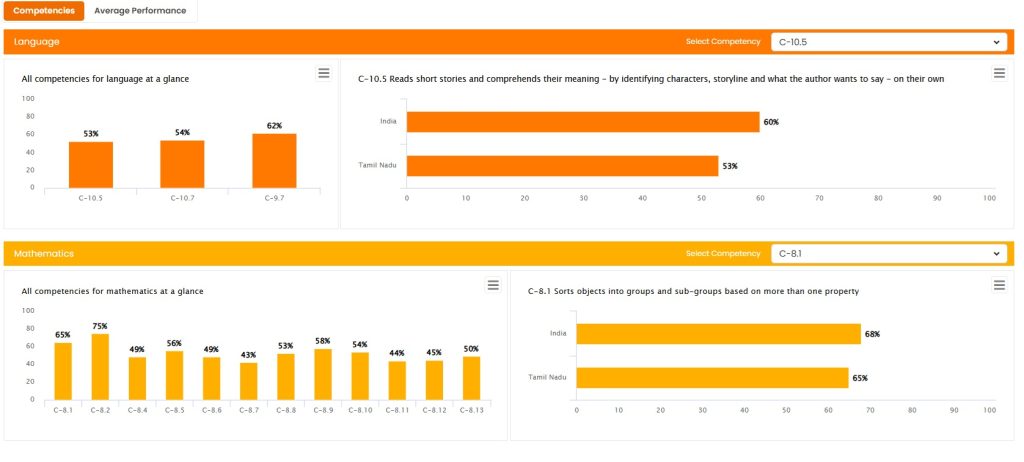

These metrics indicate a failure to transition from rote learning to conceptual application.
Teacher Preparedness and Pedagogy
Only 25% of teachers in Tamil Nadu underwent professional development in the last year among the lowest in India.
Less than 50% of teachers used toy-based learning or project-based assessment, lagging behind even northern states that have adopted NEP 2020-aligned practices.
ICT-based training participation was also below par compared to Madhya Pradesh and Bihar, which invested in EdTech post-COVID.
Inclusion, Well-Being, and Infrastructure Concerns
Let’s take a look at some of the other problematic areas.
CWSN Neglect
Only 28% of schools in Tamil Nadu had appropriate learning materials for Children With Special Needs. Assistive technologies were available in just 17% of schools.
Mental Health and SEL Deficits
17–25% of TN students reported feeling unsafe or anxious in school.
Low availability of counsellors, anti-bullying policies, and SEL practices worsens the learning environment.
Manodarpan, the national SEL initiative, remains poorly implemented in TN.
Digital and Skill Education Gap
Only 38% of students had access to a tablet/laptop at home.
Only 29% of Grade 9 students had enrolled in skill-based education, despite the state’s push for industry-linked education.
Let’s now take a look at how TN compares to a few peers such as UP, Bihar, and MP.
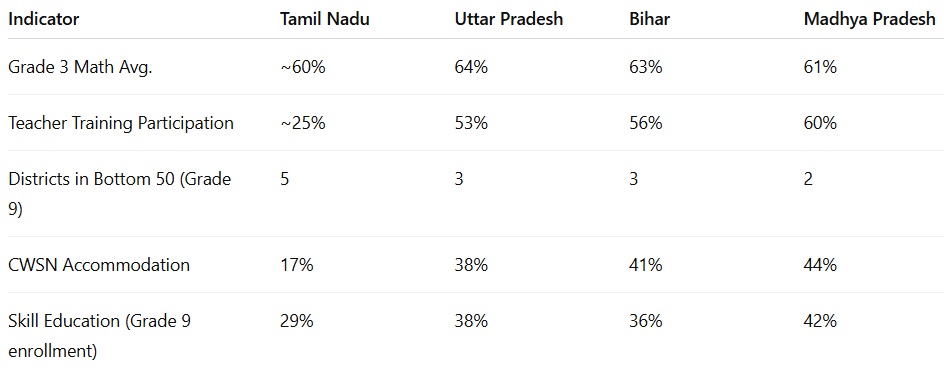

Tamil Nadu’s ideological resistance to NEP 2020 has arguably cost it crucial learning reforms. States like UP, MP, and Bihar, which have aligned their pedagogy, teacher training, and assessment with NEP’s competency-based framework, are now reaping benefits, as reflected in the PARAKH survey.
Even Kerala, while critical of some NEP aspects, adopted assessment reforms and SEL integration faster than Tamil Nadu.
Consistent Underperformance Pattern
Tamil Nadu’s underperformance follows a pattern observed in the previous National Achievement Survey (NAS). In response, the DMK-led government launched initiatives such as the #EnnumEzhuthum scheme to address foundational literacy and numeracy gaps. However, the recent PARAKH results suggest that these interventions have yet to produce meaningful outcomes.
Critics have pointed to the Dravidian Model’s politicisation of NEP 2020, arguing that opposition to the central education policy has come at the cost of addressing core learning outcomes. Commentators have also drawn parallels to the #NaanMudhalvan scheme, launched to boost skill development and placements for youth, which has similarly been criticised for lacklustre training and poor placement results.
Some Recommendations for Tamil Nadu
- Statewide Foundational Literacy Mission: Target Grades 1–5 with accelerated learning modules and diagnostic tools.
- Mandate Annual Teacher Training: Focus on digital tools, NEP-compliant pedagogy, and inclusive classroom management.
- District-Level Action Plans: Decentralize data-driven planning with accountability to improve district outcomes.
- Invest in SEL and Mental Health: Recruit trained counsellors, implement Manodarpan fully, and integrate SEL in pedagogy.
- Rebuild Public Trust in Education: Launch a “Back to Basics” campaign to refocus on core competencies and teacher-led reform.
- Adopt Competency-Based Assessments: Move away from rote learning models toward outcome-based frameworks as per NEP.
The findings from PARAKH 2024 deliver a wake-up call for Tamil Nadu. While its education model has historically emphasized access and inclusion, access without learning is no longer tenable. Without urgent systemic reforms and a reorientation toward competency-based, inclusive, and data-driven education, Tamil Nadu risks falling behind not just in national rankings but in securing the future of its students.
Subscribe to our channels on Telegram, WhatsApp, and Instagram and get the best stories of the day delivered to you personally.