


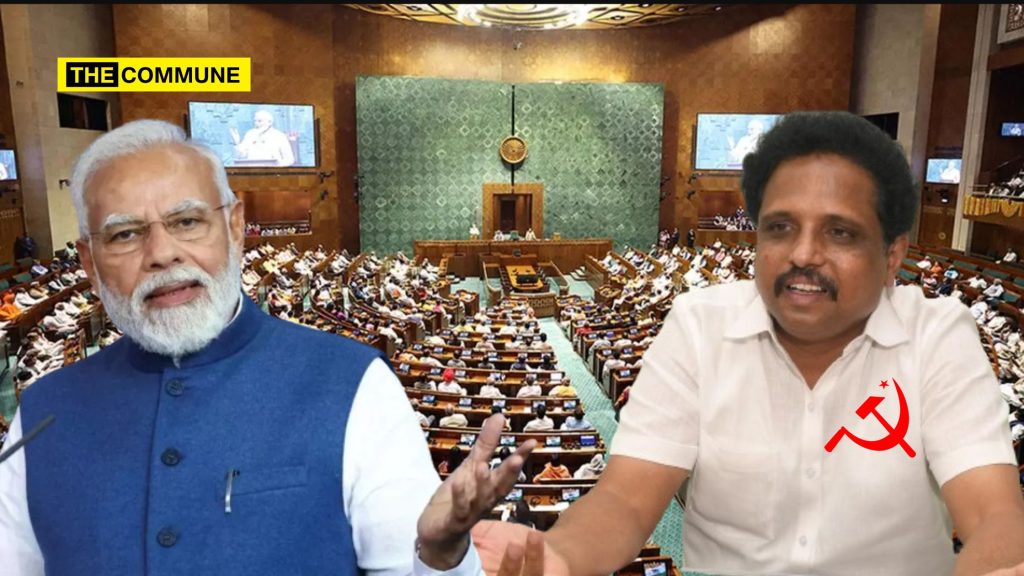
While the Narendra Modi-led central government has actively promoted regional languages from incorporating them into competitive examinations to expanding their use in Parliament, CPIM MP from Madurai, Su. Venkatesan has claimed that such linguistic inclusivity is a result of efforts by parties like his, which are supportive of the so-called “Dravidian Model”. However, this assertion has drawn criticism for misrepresenting ongoing initiatives spearheaded by the central government.
In a post on social media, Su. Venkatesan stated, “The Official Languages Committee of the Parliament is continuously working to Hindify the entire nation. But we, those who fight for language equality, are continuously fighting to Indianize the Parliament. The first stage of that is the right to speak in one’s mother tongue. The next stage is the right to have translations in all languages, no matter which language one speaks. Now, the parliamentary proceedings documents are available in all languages. Great joy. It is not a coincidence that this facility is not available for Sanskrit.”
நாடாளுமன்ற ஆட்சி மொழிக்குழு நாடு முழுவதும் இந்திமயமாக்க இடைவிடாது பணியாற்றிக் கொண்டிருக்கிறது.
ஆனால் மொழி சமத்துவத்துக்காக போராடுபவர்கள் நாடாளுமன்றத்தை இந்திய மயமாக்க இடைவிடாது போராடி வருகிறோம்.
அதன் முதல் கட்டம் தாய் மொழிகளில் பேசும் உரிமை
அடுத்த கட்டம் எந்த மொழியில்… pic.twitter.com/DUh7C4dy6m
— Su Venkatesan MP (@SuVe4Madurai) July 21, 2025
However, contrary to his implication, the Lok Sabha has been steadily expanding multilingual access under the direction of Speaker Om Birla. In February 2025, the Lok Sabha introduced translation services for six new languages: Bodo, Dogri, Maithili, Manipuri, Urdu, and Sanskrit. This expanded the number of supported regional languages in Parliament from 10 to 16, reinforcing the government’s commitment to India’s linguistic diversity.
By March 2025, simultaneous interpretation was available in 18 languages during Lok Sabha sessions, making it one of the most linguistically inclusive platforms in the country surpassing even the number of commentary options for IPL matches. Live proceedings are now accessible in languages including Assamese, Bengali, Gujarati, Kannada, Malayalam, Marathi, Odia, Punjabi, Tamil, Telugu, Hindi, English, and more. Additional languages like Kashmiri, Konkani, Nepali, Sindhi, and Santhali are also in the pipeline.
Each language booth is staffed with trained interpreters, working in pairs due to the demanding nature of real-time translation. While some languages, such as Sanskrit and Urdu, have not yet been included in the YouTube livestream feed, backend interpretation is already in place.
Given these documented developments, it is misleading to credit leftist or Dravidian parties alone for these advancements. The narrative appears to be a political maneuver aimed at stickering on central government efforts, rather than an honest acknowledgment of the groundwork laid through national policy.
Subscribe to our Telegram, WhatsApp, and Instagram channels and get the best stories of the day delivered to you personally.