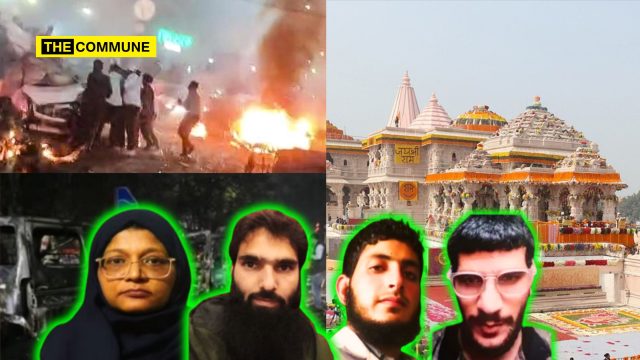
Indian security agencies have foiled a sophisticated, multi-pronged terror plot of an “unprecedented scale” planned by a Jaish-e-Mohammed (JeM) “white-collar” module, aimed at triggering serial explosions and a chemical attack across several cities, with the symbolic hoisting of a saffron flag at Ayodhya’s Ram Temple as a primary target.
The elaborate plan, which investigators have described as a “spectacular attack” akin to the 26/11 Mumbai strikes, unravelled following the premature detonation of a car bomb near Delhi’s Red Fort on 10 November 2025, which killed 12 people. The blast exposed a sprawling network of radicalised professionals, including doctors.
The Ayodhya Poison/Bombing Plot and Delhi Carnage Plan
The investigation, now led by the National Investigation Agency (NIA), revealed that the module a chemical attack in Ayodhya. In a chilling plot, the suspects, including a Hyderabad-based doctor, planned to use the lethal biochemical weapon Ricin to poison prasad (religious offering) at the Ram Temple in Ayodhya. The attack was timed for 25 November 2025, the date scheduled for the hoisting of a saffron flag atop the temple.
It is also reported that the suspects disclosed that they had gathered and intended to use a mixture of ammonium nitrate and RDX.
Interrogation of arrested suspects of the Delhi car blast case and examination of seized diaries, phones and coded notes reveal that the module planned synchronised attacks at six to seven locations across Delhi NCR on December 6, the anniversary of the Babri Masjid demolition – The module planned multiple vehicle-borne improvised explosive device (VBIED) explosions across the national capital, followed by assault rifle firing.
Senior security officials said the accused explicitly told interrogators that December 6 was chosen to “avenge Babri” and trigger maximum communal unrest.
Targets identified included:
- Railway stations
- Metro hubs
- Malls
- India Gate
- Religious sites
The plan reportedly included detonating an explosive device in Ayodhya, with officials saying the attack was foiled just in time, preventing a potential “26/11-style multi-site assault.”
Five-Phase Plan Exposed
The module’s strategy, pieced together from detainee statements and seized documents, followed a structured five-stage model:
- Formation of a JeM–Ansar Ghazwat-ul-Hind module led by radicalised doctors and a moulvi.
- Procurement of chemicals and ammunition from Nuh and Gurugram.
- Manufacture of chemical IEDs and reconnaissance of high-value targets.
- Distribution of IEDs among members across Delhi NCR.
- Execution of coordinated bombings on December 6.
Officials said the initial plan was for August 2025 but was postponed after logistical delays.
The Turkey-Hatched Conspiracy and the Module
The plot was allegedly hatched in Turkey in 2022. The Red Fort bomber, identified via DNA tests as Dr. Umar Un Nabi, a Kashmiri doctor from Al-Falah University, was acting on instructions from a Turkey-based handler using the codename ‘Ukasa’.
The Crackdown That Triggered the Blast?
The module’s exposure began after JeM posters surfaced in Srinagar’s Nowgam area in mid-October. This led to a chain of arrests, including Dr. Muzammil Ahmad Ganaie in Faridabad, from whom a massive cache of 2,900 kg of explosives was seized. This seizure panicked the module, causing Dr. Umar to execute the Red Fort blast prematurely before the larger plan could be activated.
Realising the network was compromised, Umar allegedly abandoned the December 6 timeline and detonated the i20 prematurely in Old Delhi before the device was fully assembled. DNA testing has since confirmed Umar’s identity.
High-Level Response and Nationwide Hunt
Following the blast, Home Minister Amit Shah chaired high-level meetings and handed the case to the NIA. A nationwide hunt has been launched for the remaining members of the module and the missing vehicle. The probe has exposed a sophisticated cross-state network involving medics, a cleric, and radicalised operatives, averting what could have been one of the most devastating terror attacks in recent years.
(Source: Times of India & NDTV)
Subscribe to our channels on WhatsApp, Telegram, Instagram and YouTube to get the best stories of the day delivered to you personally.