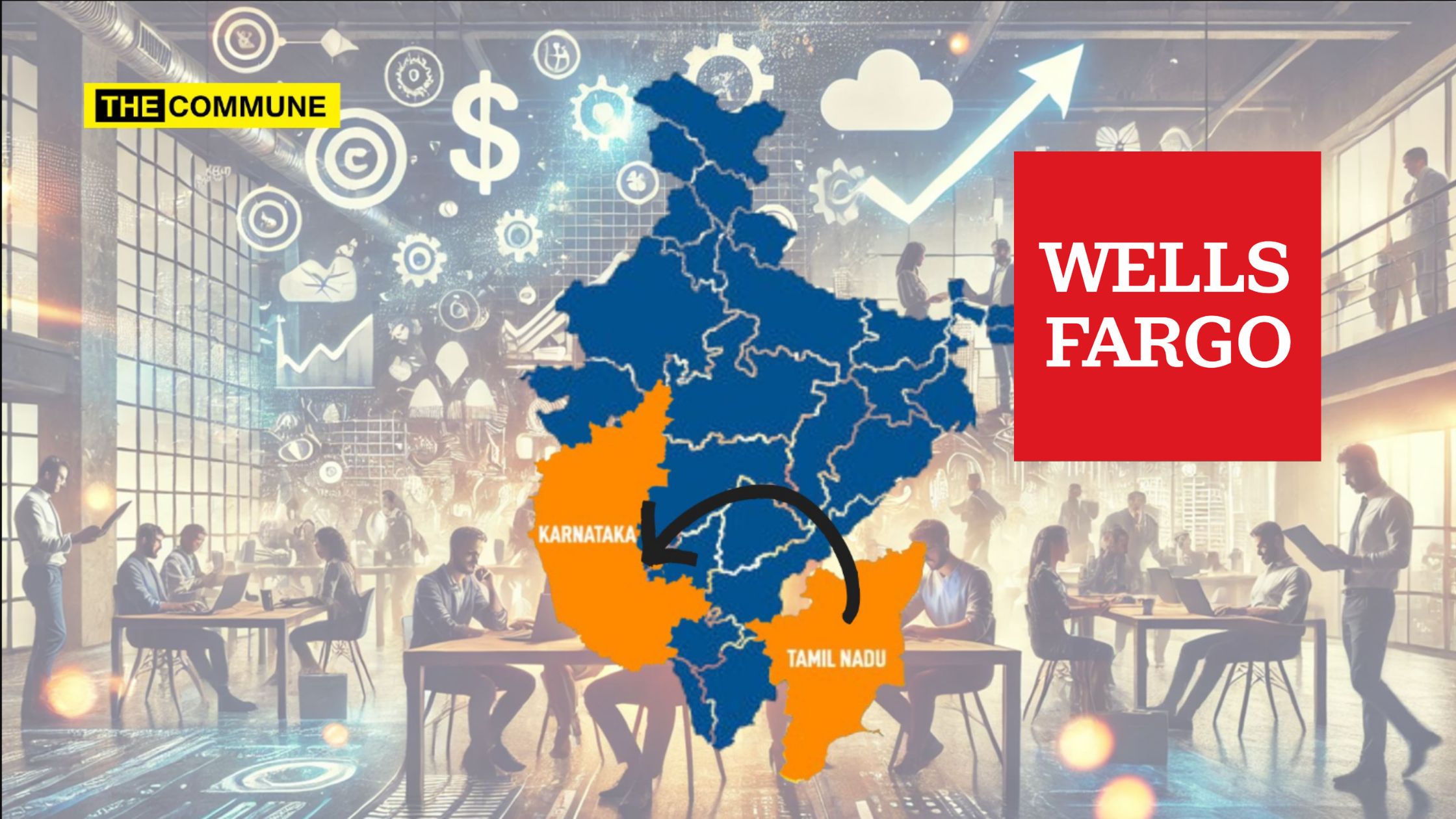
In another major setback for Tamil Nadu’s much-promoted “Dravidian model” of governance, American financial giant Wells Fargo has announced the closure of its Global Capability Centre (GCC) in Chennai. The operations will be relocated to Bengaluru and Hyderabad by the fourth quarter of FY27, offering employees the option to move or seek opportunities elsewhere. This marks the third significant shift of business operations out of the state, raising serious questions about Tamil Nadu’s ability to retain investment and talent.
This decision follows similar exits by startups like Wheelocity and Arcana, both of which moved their headquarters to Bengaluru. These moves reflect a deeper concern: Tamil Nadu’s startup ecosystem is struggling to foster innovation, risk-taking, and enterprise at the scale seen in competing states.
Wells Fargo’s Strategic Shift and Chennai’s Image Problem
In an internal communication reviewed by Moneycontrol, Wells Fargo’s regional head Uday Odedra stated that the decision to exit Chennai is part of a global strategy to consolidate operations and provide better career opportunities in Bengaluru and Hyderabad. The company currently employs approximately 10,000 people across its Indian offices, with some employees reportedly beginning to explore new job options rather than relocating.
Despite official explanations tying the move to global planning, social media buzz points to deeper concerns—including Chennai’s perceived insularity, limited social infrastructure, and challenges in attracting talent compared to Bengaluru’s vibrant startup ecosystem.
Why Are Businesses Leaving Tamil Nadu?
Despite government claims of being an attractive destination for investment, Tamil Nadu faces systemic challenges in its entrepreneurial landscape. The state’s ecosystem is often criticized for underfunding, lack of risk appetite, and insufficient support for high-growth, consumer-focused ventures.
Take Wheelocity, for example. Initially headquartered in Coimbatore, it started as a B2B supplier for quick commerce companies such as Swiggy Instamart and Zepto. In 2024, the company pivoted toward a B2C strategy targeting rural markets, backed by a $15 million funding round. To execute its expansion plans—reaching 10 million consumers in 20,000 towns and villages—it moved operations to Bengaluru, citing better access to capital, infrastructure, and growth opportunities.
Arcana, another tech startup, also transitioned its core operations—engineering, support, and product development—to Bengaluru, signaling the deepening trust deficit in Tamil Nadu’s startup environment.
A Sluggish Ecosystem and Funding Gap
According to industry experts and recent data, Tamil Nadu’s startup space suffers from slower growth trajectories compared to hubs like Bengaluru. A report by Venture Intelligence noted that venture capital investments in the state fell by 44% in 2024, hitting their lowest since 2020, even as funding rebounded elsewhere in India.
Arun Natarajan, founder of Venture Intelligence, says the lack of local investors and a risk-averse culture are core challenges. Unlike Bengaluru, Tamil Nadu lacks successful B2C role models like Swiggy or Zepto that attract major capital. Instead, the state has found moderate success in B2B sectors such as enterprise software and fintech.
Despite being India’s second-largest economy by gross national income, Tamil Nadu has produced relatively few unicorns, with just over 250 startups crossing Series A funding and fewer than a dozen becoming billion-dollar companies.
Evolving Mindsets, But Too Slowly
According to Anicut Capital’s Balamurugan, the ecosystem must diversify beyond traditional tech and fintech to include sectors like manufacturing and automotive tech, with room for high-risk ventures. Without a willingness to allow failure, the state cannot build the kind of innovation-driven economy that thrives in uncertainty.
StartupTN CEO Sivarajah Ramanathan argues that while the state has a lower startup failure rate, alternative metrics such as profitability and debt-based funding should also be considered. He noted that in the past six months, ₹90 crore in cumulative funding had been facilitated by the government, though more work is clearly needed.
A Broader Warning Sign
The relocation of major companies and promising startups from Tamil Nadu reflects more than individual business decisions—it signals a warning about the state’s diminishing appeal to innovators, entrepreneurs, and global firms. As China’s tech capital, Bengaluru continues to attract both domestic and international investment, Tamil Nadu risks being left behind unless it makes significant structural and cultural changes to its startup support mechanisms.
(With Inputs From Money Control)
Subscribe to our channels on Telegram, WhatsApp, and Instagram and get the best stories of the day delivered to you personally.