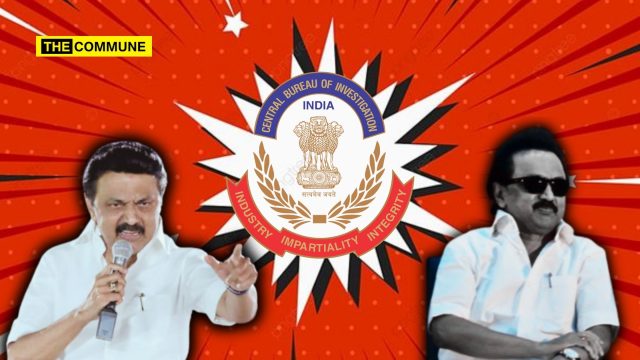
Investigation into the Karur stampede which killed 41 people on 27 September 2025 during a TVK rally has been handed over to the CBI as per the recent Supreme Court order.
Despite demands for an impartial probe from grieving families and political parties, the ruling DMK initially resisted a CBI investigation, insisting on state-appointed mechanisms, criticized as fear of independent scrutiny. With the apex court now placing the case under CBI supervision monitored by a retired Supreme Court judge, it is worth examining instances where the DMK’s demand for CBI probes has shifted depending on whether it was in power or in opposition.
When In Opposition, Demand CBI Enquiry
During the AIADMK regime (2011-2021), the DMK, as the principal opposition party, consistently demanded CBI investigations into numerous cases involving alleged corruption, administrative failures, and custodial violence. MK Stalin, as Opposition Leader, repeatedly called for central agency probes, positioning himself as an advocate for transparent investigations. Here is a comprehensive list of cases where DMK demanded CBI enquiry:
Gutka Scam (2017-2018)
The Madras High Court ordered a CBI probe on 25 April 2018, into the multi-crore gutka scam following a petition by DMK MLA J. Anbazhagan. MK Stalin, as Opposition Leader, strongly welcomed the court order and demanded the resignation of Health Minister C. Vijaya Baskar and DGP T.K. Rajendran for a fair probe. Stalin stated, “If the case has to be probed fairly, health minister C Vijaya Baskar and director general of police T K Rajendran must resign. In fact, we demand the resignation of the Palaniswami government”. He further said the public was aware about the gutka case and the high court had transferred it to CBI as it felt that probe by the DVAC would not be fair. After CBI raids in September 2018, Stalin demanded that the Governor sack the Health Minister and DGP if they did not quit on their own. He questioned why these officials had not been arrested while the bribe-giver and intermediaries were arrested by CBI.
Thoothukudi (Sterlite) Police Firing (2018)
On 29 May 2018, following the police firing that killed 13 protesters at the anti-Sterlite agitation, Stalin demanded action against senior police officials. DMK wrote to the Chief Secretary on 29 May 2018, demanding a CBI probe into the police firing.
Stalin stated that “the South Zone Inspector General, Deputy Inspector General of Nellai (Tirunelveli) range and all other officers who are involved should be booked for murder. They should be immediately suspended, and action should be taken against them”. When the Madras High Court ordered a CBI investigation on 12 August 2018, DMK “hailed” the court order.
Moulivakkam Building Collapse (2014-2016)
After the 28 June 2014 building collapse at Moulivakkam that killed 61 people, the then-DMK Treasurer MK Stalin filed a PIL in the Madras High Court seeking a CBI probe into the incident. Stalin insisted on a CBI probe, citing several statutory relaxations made by officials permitting the multi-storeyed building. He alleged that the builder had clout and nexus with some state ministers and that due to the “blessing” of the ministers, there was no inspection at all since 2011 by any planning or enforcement authorities.
On 28 June 2016, Stalin reiterated his demand for CBI investigation, arguing that the final report filed without completion of investigation required proper probe. He also led a well-attended rally of DMK workers and met the Governor on 12 July 2014, submitting a petition demanding a CBI inquiry.
Highway Tender Scam (2018)
The Madras High Court ordered a CBI probe on 11 October 2018, into corruption charges against Chief Minister Edappadi Palaniswami (EPS) made by DMK leader R.S. Bharathi. The DMK alleged that EPS, while heading the highways department, had allotted contracts worth Rs 4,800 crore allegedly based on favoritism to firms owned by his relatives.
The court transferred the case to CBI stating it was in the interest of transparency in the investigation. DMK organizing secretary R.S. Bharathi had approached the Directorate of Vigilance and Anti-Corruption (DVAC) alleging discrepancies in the allotment of contracts for five highway projects.
Jayalalithaa’s Death (2017)
MK Stalin on 24 September 2017, urged the Centre to order a CBI probe into the death of former Chief Minister J. Jayalalithaa. He stated, “Given the fact that the Centre had helped in providing treatment, it has the responsibility to undo the mysterious knots in connection with her death. So, it must order a CBI probe immediately”.
Stalin characterized the one-member judicial commission appointed by the Tamil Nadu government as “just eyewash” and insisted that “if the Palaniswami regime was truly interested in going into the ‘mysteries’, it should prefer a CBI investigation”. He demanded that British expert Richard Beale and AIIMS doctors be brought under the ambit of the investigation.
Stalin also demanded the resignation of Chief Minister K. Palaniswami and his cabinet to facilitate a fair probe by CBI. He maintained this demand consistently, calling for CBI inquiry multiple times in 2017.
Tuticorin Custodial Deaths – Jayaraj and Bennix (2020)
Following the alleged custodial deaths of father and son P. Jayaraj (59) and J. Bennix (31) on June 22-23, 2020, in Sathankulam, Thoothukudi district, Stalin stated on 26 June 2020, that DMK would seek a CBI probe if the state government failed to carry out a proper investigation.
Stalin questioned, “Chief minister Edappadi K Palaniswami, who takes care of the home department, must answer how the duo died under police custody”. He said the AIADMK government was trying to “cover up” the truth. The case was eventually transferred to CBI, which arrested police officers involved.
Pollachi Sexual Assault Case (2019)
After the Pollachi sexual assault scandal broke in February 2019, where a gang sexually assaulted and blackmailed numerous women, there was widespread demand for CBI investigation. The AIADMK government transferred the case to CBI on March 12, 2019. Thoothukudi MP Kanimozhi alleged that one of the accused in the Pollachi sexual assault case had close ties to a minister from the ruling AIADMK, claiming the party sought to protect the accused. Speaking at Grama Sabha meetings in Kovilpatti, Kayathar, and Kazhugumalai, she credited DMK pressure for shifting the case to the CBI and called for an expedited investigation to ensure justice for the victims.
Cognizant Bribery Case (2019)
On 18 February 2019, after US courts fined Cognizant Technology Solutions $25 million for bribing Tamil Nadu officials to secure building permits for its Chennai development center, Stalin demanded a CBI probe.
Stalin said, “The company has told the US court that it had to pay Rs 26 crore as a bribe during construction of KITS Campus in Chennai to get electricity connection and environment clearance”. He demanded the DVAC should take help of CBI and Interpol to collect relevant documents and bring those involved to books.
Smart City Project Chennai (2018-2020)
Stalin called for a CBI probe into project tenders issued for implementing the Smart City mission, alleging nepotism by Municipal Administration Minister SP Velumani. He questioned how a tender worth Rs 149 crores was given to an inexperienced company.
Stalin demanded action against Minister SP Velumani and other bureaucrats by setting up a CBI ‘special inquiry committee’. He also raised questions in 2020 about the transfer of an official monitoring projects worth Rs 12,000 crore, including Smart City projects, asking whether the Chief Minister was ready to face a CBI probe.
NEET Impersonation Scam (2019)
On 3 October 2019, Stalin demanded a CBI probe into the National Eligibility cum Entrance Test (NEET) impersonation scam to bring out the truth. He alleged that the government was a “mute spectator” and announced a CB-CID probe for an “eye wash”. Stalin said as per reports, over 50 candidates might have secured admission through foul means like impersonation, and the scam allegedly involved officials and middlemen from not only Tamil Nadu but other states as well.
Cash for MLA Sting Operation (2017)
After a sting operation in June 2017 purportedly showed AIADMK MLAs admitting that bribes were offered in gold and money to support the Sasikala faction during the trust vote, Stalin demanded a CBI probe. On 13 June 2017, after the Speaker refused to allow discussion on the issue, DMK staged a walkout from the Tamil Nadu Assembly. Stalin told reporters, “I raised matter in assembly and sought explanation from the 2 MLAs in the sting. Also demanded a CBI probe, but we were evicted”.
DMK also met the Governor on 17 June 2017, seeking the Palaniswami government’s dismissal and a CBI probe based on the sting operation. However, the Madras High Court on 29 June 2017, dismissed Stalin’s petition demanding CBI and DRI probe in the “Cash for vote” MLA sting.
Other Demands for CBI Probe
Stalin also demanded CBI probes in several other cases during his time in opposition, including:
- Delhi medical student death (2017): Stalin demanded CBI enquiry into the death of a Tamil Nadu medical student found dead in Delhi.
- Sekhar Reddy’s case (2019): Stalin demanded CBI probe into alleged payments by mining baron Shekhar Reddy to Tamil Nadu ministers and officials.
- Central projects worth Rs 17,000 crore (2020): Stalin challenged CM Palaniswami to order a CBI probe into projects funded by the Centre.
When In Power, Oppose CBI Enquiry
As the DMK came to power, they have opposed CBI inquiry for most of the cases that by its own nature, demand one.
Karur Stampede Case (2025)
The most recent and prominent case involves the tragic Karur stampede during TVK leader Vijay’s rally on 27 September 025, which claimed 41 lives. Initially, the Madras High Court refused a CBI probe and ordered an SIT investigation. When the Supreme Court subsequently ordered a CBI investigation on October 13, 2025, the DMK strongly opposed it.
DMK MP and advocate P. Wilson stated that the Supreme Court’s order was only interim, and they would file counter affidavits. The DMK characterized the CBI probe as politically motivated, alleging that “TVK has surrendered to the BJP” and claiming that “BJP waited for this opportunity”. DMK supporters portrayed this as Vijay “falling into the control of the BJP”.
Kallakurichi Hooch Tragedy (2024)
When 67 people died after consuming illicit liquor in Kallakurichi in June 2024, and the Madras High Court ordered a CBI probe in November 2024, the DMK government moved the Supreme Court to challenge this order. Law Minister S. Regupathy stated that the government opposed the CBI probe to ensure “victims get justice quickly,” arguing that transferring the case to CBI would delay proceedings. The DMK argued that 24 people had been arrested and the Goondas Act was slapped on 17, claiming the CB-CID investigation was progressing correctly.
DMK organizing secretary R.S. Bharathi defended the party’s position by stating, “The DMK never sought a CBI probe” and reminded critics that when they had sought an inquiry in the highway tender scam, it was the court that ordered CBI investigation, not their request.
Armstrong Murder Case (2024-2025)
When the Madras High Court ordered a CBI probe into the murder of BSP Tamil Nadu president K. Armstrong on 24 September 2025, the DMK government appealed to the Supreme Court against this decision. The Tamil Nadu government, represented by Senior Advocate Siddharth Luthra, argued that the Madras High Court had quashed a “comprehensive chargesheet running into 7,411 pages and arraying 30 accused persons” in a “casual manner”. The government contended that the high court was “swayed by extraneous considerations, including media narratives and prevailing political circumstances”. While the Supreme Court partially stayed the order quashing the chargesheet, it allowed the CBI investigation to continue.
Lavanya Suicide Case (2022)
In one of the most controversial cases, when the Madurai Bench of the Madras High Court on 31 January 2022, ordered a CBI probe into the suicide of 17-year-old student Lavanya, the DMK government filed a Special Leave Petition in the Supreme Court challenging this order.
The petition was filed by the Tamil Nadu government through the DGP, arguing against transferring the case from state police to CBI. However, the Supreme Court on 13 February 2022, refused to interfere with the High Court’s order, dealing a “huge setback” to the DMK government. The High Court had criticized both the local police and the Education Minister for their statements ruling out the conversion angle before proper investigation, stating the SP “probably forgot the virtues of silence”.
Idol Theft Cases (2018)
When the AIADMK government in 2018 transferred all idol theft cases from the court-appointed investigator IGP Pon Manickavel’s idol wing to the CBI, DMK working president M.K. Stalin strongly opposed this move.
Stalin stated, “When we demanded CBI probe into various other scams, the government refused. Why in this case the government wants to transfer the cases hurriedly to the CBI?”. He characterized the transfer as “politically motivated” and accused the government of running a “non-cooperation movement” against Manickavel. Stalin urged the government to drop the move and allow Manickavel to continue the court-monitored probe.
Kodanad Heist-cum-Murder Case (2019-2023)
Though DMK held protests and called for investigation into the 2017 Kodanad estate case, they notably did not transfer it to CBI after coming to power in 2021. When opposition leader Edappadi Palaniswami demanded the case be handed over to CBI, the DMK government maintained the investigation with CB-CID instead.
The case involved the murder of a security guard at former Chief Minister Jayalalithaa’s Kodanad estate bungalow. Despite completing “90% of the probe,” the DMK shifted it from state police to CB-CID in September 2022 rather than transferring to CBI. In 2024, Chief Minister Stalin stated the case would be probed “with support of Interpol,” but resisted CBI involvement.
Withdrawal of General Consent to CBI (2023)
The most significant institutional step taken by the DMK government against CBI jurisdiction came on 14 June 2023, when Tamil Nadu withdrew its general consent for CBI investigations in the state. This decision came hours after Enforcement Directorate arrested DMK minister V. Senthil Balaji in a money laundering case. The move meant that CBI would henceforth need prior permission from the Tamil Nadu government before conducting any investigation in the state.
Chief Minister Stalin criticized the BJP government at the Centre for adopting “backdoor tactics” against political opponents and condemned the ED searches in the state secretariat. The DMK characterized this as protecting federalism and preventing misuse of central agencies. Tamil Nadu became the tenth (later eleventh) Indian state to withdraw general consent to CBI, joining West Bengal, Rajasthan, Kerala, Punjab, Telangana, Jharkhand, Chhattisgarh, Mizoram, and Meghalaya.
Subscribe to our channels on Telegram, WhatsApp, and Instagram and get the best stories of the day delivered to you personally.