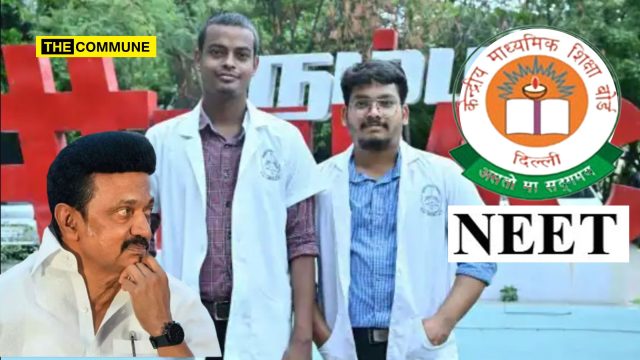
While the DMK and the Dravidian ecosystem frequently criticized NEET claiming it disadvantages rural and government-school students many of those very students credit the exam with enabling their medical education.
Thanks to a 7.5% quota introduced by the AIADMK government in 2020 for students from government schools (from Class VI to XII), 2,818 students are currently studying medicine under this reservation. Before NEET, fewer than 20 government-school students in Tamil Nadu secured medical seats each year, with 99% of places being dominated by private-school graduates.
After the quota was established, 435 students from government schools enrolled in medical colleges during the 2020–21 year, with the state covering their tuition, accommodation, books, and other fees.
நாங்கள் எல்லாம் டாக்டராக 'நீட்' தேர்வே காரணம்: 7.5 சதவீத ஒதுக்கீட்டில் சேர்ந்த மாணவர்கள் பெருமிதம்https://t.co/XaH1t9jm5v pic.twitter.com/a3QiSiNJuF
— Dinamalar (@dinamalarweb) July 7, 2025
Now in their one-year mandatory internships, many of these students credit NEET and the quota system with transforming their lives. One final-year MBBS student, Jeevithkumar from D.Vadipatti in Theni district, shared, “I scored 548 in both Plus Two and NEET in 2019, but still didn’t secure a seat. After coaching, I scored 664 in 2020. Under the quota, I ranked first and got into Chennai Medical College. The government is funding my entire course.”
He added, “Training at my government school was inadequate, which is why I sought private coaching. While the situation seems better now, the government should improve its infrastructure so future students can compete without leaving the public system.”
Another student, Narasimhan from Chennai, whose father is an auto-rickshaw driver, echoed this sentiment, “In 2019, I scored 220 in NEET, then improved to 508 in 2020 under the quota and joined medical college. Without NEET and the quota, my dream would have remained out of reach. I’m thankful for this policy.”
Officials from the Directorate of Medical Education confirmed that despite initial resistance such as a refusal from the then-Governor the quota was enacted through an emergency ordinance and has since been upheld across administrations.
The reservation has now expanded beyond medicine to extend 7.5% quotas in engineering, veterinary, AYUSH, law, and agriculture studies, with thousands of government-school students benefiting. Thanks to government-funded tuition and support costs, these students can focus fully on their studies.
(With inputs from Dinamalar)
Subscribe to our channels on Telegram, WhatsApp, and Instagram and get the best stories of the day delivered to you personally.