


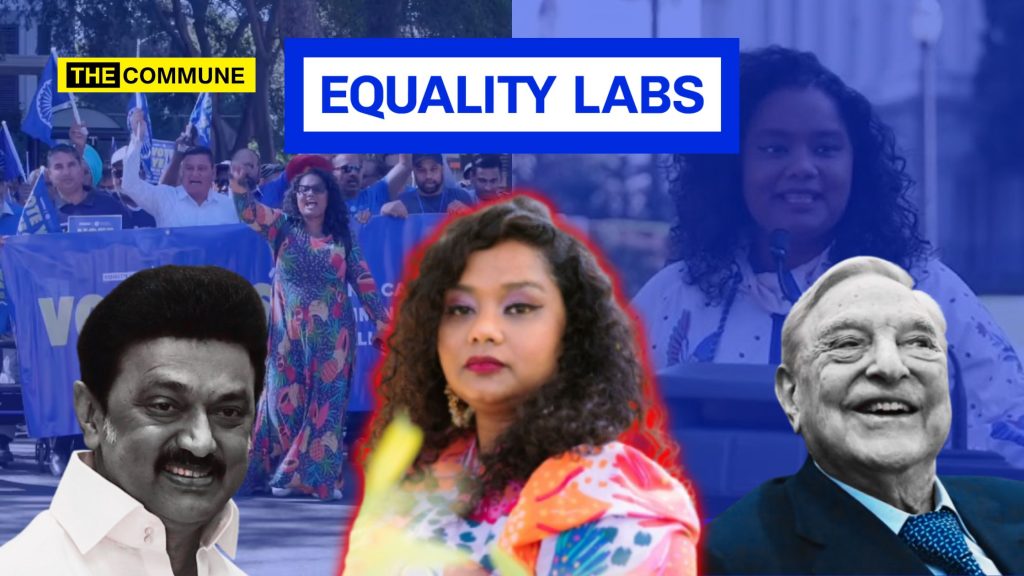
In October 2025, the DMK government in Tamil Nadu announced its decision to confer the prestigious Vaikom Award for Social Justice on Thenmozhi Soundararajan, a US-based ‘activist’ whose organization has documented ties to Khalistani extremists and anti-India networks. The same Soundararajan who runs Equality Labs.
Though publicly positioned as a Dalit-rights and civil-rights collective, the organisation has been repeatedly flagged by researchers for its alliances with groups such as the Indian American Muslim Council (IAMC), Hindus for Human Rights (HfHR), and OFMI, all of which later formed the Alliance for Justice and Accountability (AJA), a coalition whose structure mirrors recommendations once issued by Pakistan’s Senate for creating NGO fronts to lobby against India.
Equality Labs’ credibility has been further questioned due to its reported association with individuals like Huma Dar, a Pakistani national with links to the Pakistani Army, and its founder’s past collaboration with Gurpatwant Singh Pannun of Sikhs for Justice, a pro-Khalistani outfit designated for extremist activity in India.
The organisation has also generated controversy through its influential DEI training programmes and its role in the Cisco caste-discrimination case – both of which drew sharp criticism from Hindu organisations and U.S. researchers for promoting divisive rhetoric and amplifying allegations that were later dismissed for lack of evidence.
Equality Labs: A Ghost Organization with Major Backing
Equality Labs — founded by Thenmozhi Soundararajan and Bangladeshi national Sharmin Hossain, — has been active since 2014 but was formally registered only in 2022, first in Delaware (File No. 6687031) in March and later in California (File No. 202251715748) in July. Although the organisation presents itself as a “civil rights” group and raises funds for nonprofit initiatives, it is structured as a for-profit entity that sells caste-equity training services to corporations, academic institutions, and government bodies. The group also advocates for ‘caste-related policy changes’ while simultaneously offering paid training on the same issues.
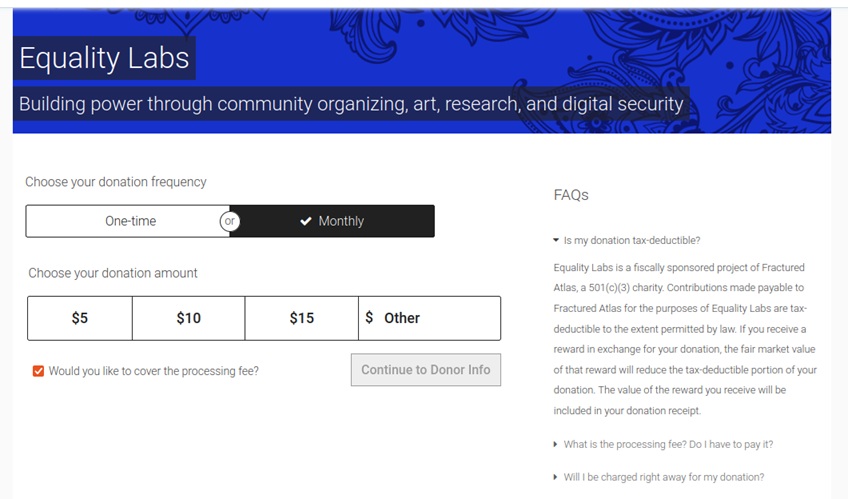

This arrangement allows Equality Labs to receive tax-deductible donations and large grants without the regulatory and administrative burden of maintaining its own non-profit status. Fractured Atlas, in turn, assesses an 8% administrative fee on all donations directed to Equality Labs.
Equality Labs has been the recipient of significant funding from a consortium of major American philanthropic foundations, whose grants are funneled through Fractured Atlas.
In her own website, Thenmozhi says that she founded an entity called “Third World Majority” (a media related entity) soon after graduation from UC Berkeley.
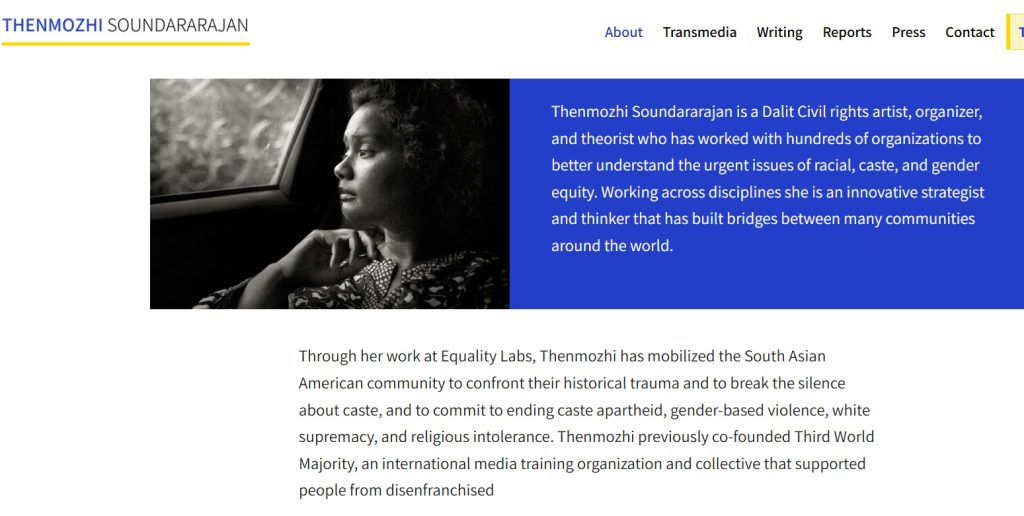

She goes on to add that in 2003, she was featured in Utne Reader as “Top Visionaries Under 30”.
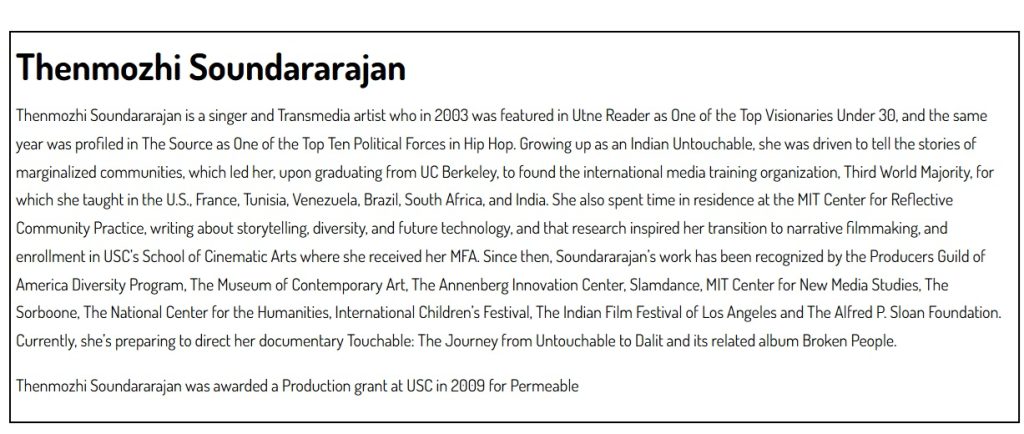

Until 2015, Thenmozhi was known only as a media artiste, documentary film maker etc. Only in 2015, was ‘Equality Labs’ founded (if at all founded). Note that in 2014, she was touring India along with AIDMAM and made a documentary about it (which was later shown in all US cities, where the duo spoke).
Following the Money: A Consortium of Foundation Funders
Documented grants from foundation tax filings (Form 990s) reveal a steady flow of funds to Equality Labs:
Luminate Group: Equality Labs received $50,000 from the Luminate Group in 2017, routed through Fractured Atlas Inc., a New York–based nonprofit that provides fiscal sponsorship and fundraising infrastructure for arts and activist projects. The grant, meant to support work on “ending caste apartheid” and combating Islamophobia and religious intolerance, was channelled via Fractured Atlas because Equality Labs is not a registered 501(c)(3) entity and relies on fiscal intermediaries for funding.
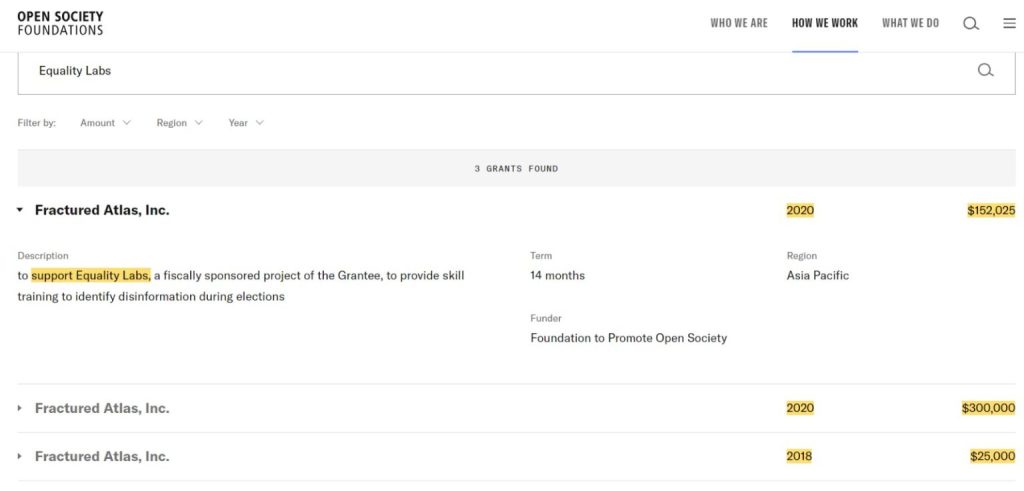
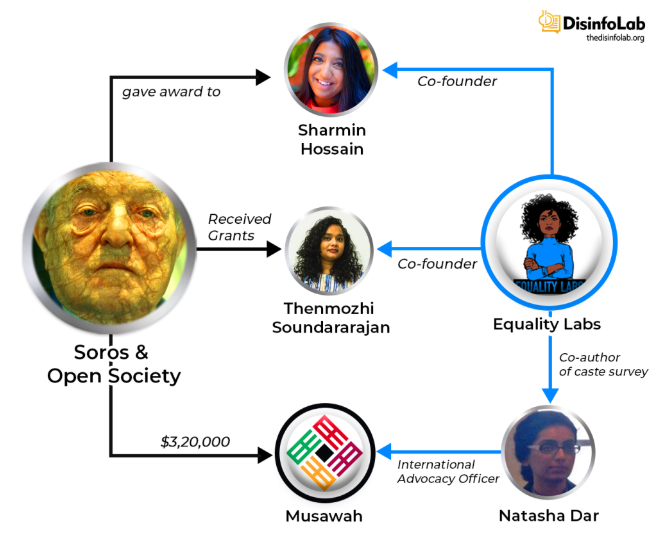
Open Society Foundation: Equality Labs became a significant recipient of Open Society Foundations (OSF) funding beginning in 2018. After securing seed support from the Luminate Group in 2017, the organisation received a USD 25,000 OSF grant in 2018 routed through its fiscal sponsor, Fractured Atlas. The funding was designated for Equality Labs’ survey on caste-based discrimination in the United States – the same report the organisation published on 19 March 2018.

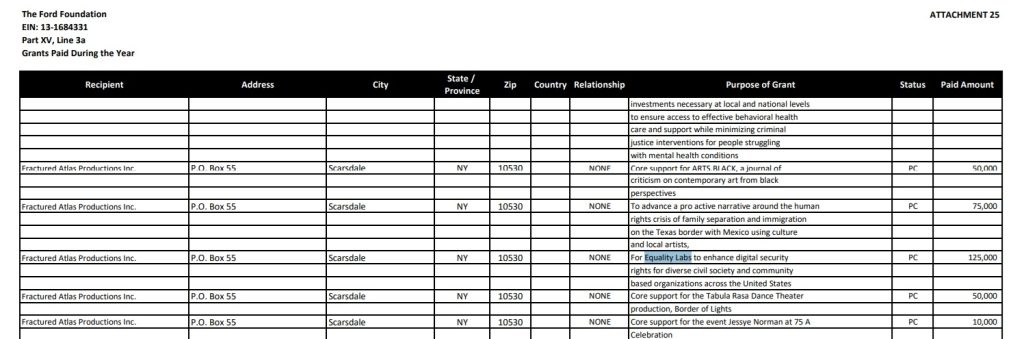
The Ford Foundation: Granted $39,500 in 2019 and $125,000 in 2020.

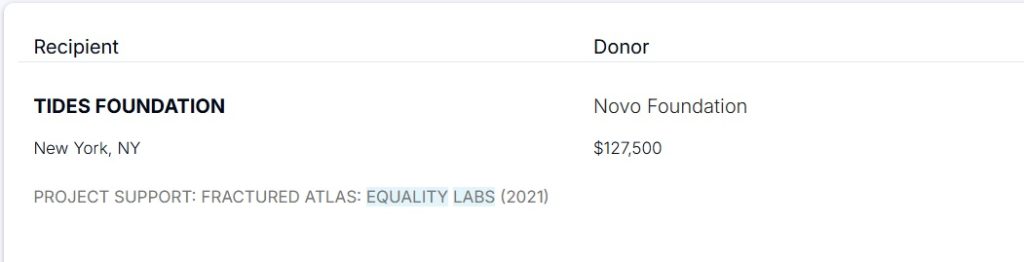
The Novo Foundation: Provided $175,000 in 2019, with the grant managed through the Tides Foundation.




They also received $127,500 in 2021.

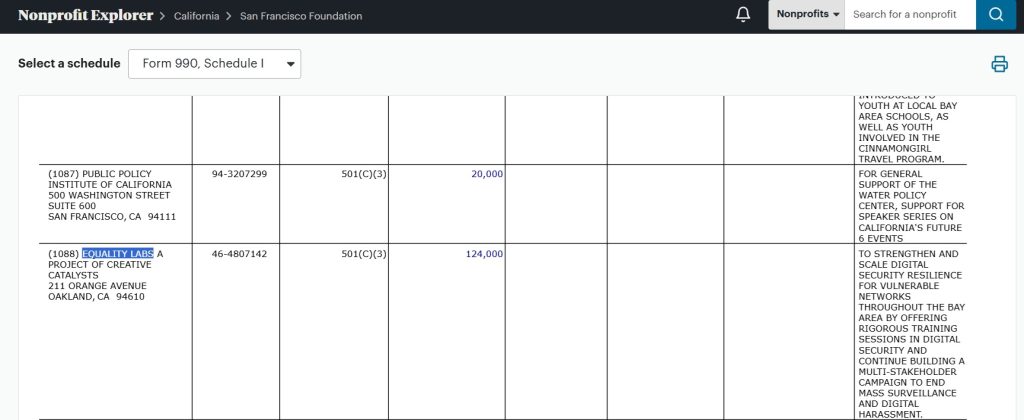
The San Francisco Foundation: Awarded $124,000 in 2018 for “self-defense for activists in the digital age.”

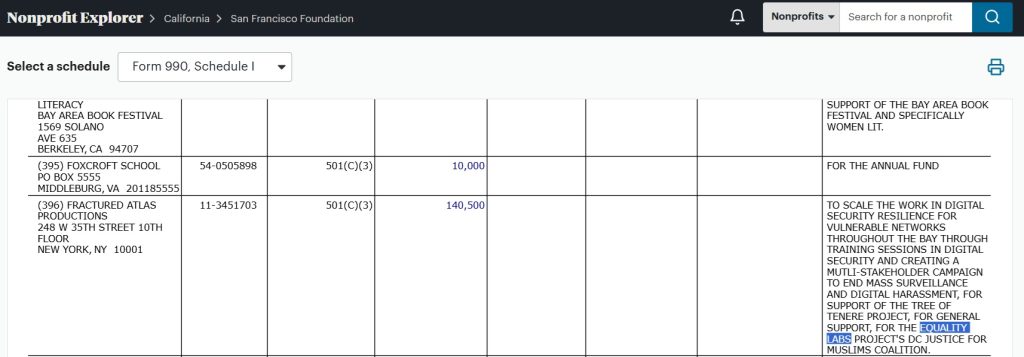
The previous year, they also received $140,500 from the same organization via Fractured Atlas.

The Nathan Cummings Foundation: Granted $50,000 in 2019.


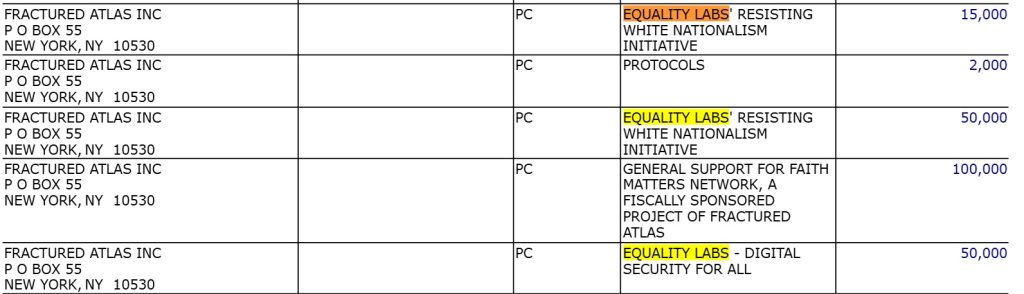
Then till the year 2023, it has consistently received grants via Fractured Atlas, as below:







The General Service Foundation: Provided a substantial $110,000 in 2019.


It also received funds in the years 2021 and 2023.



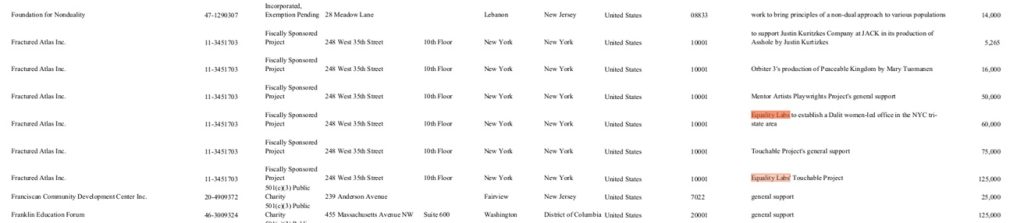
The Tides Foundation: Served as an early seed funder, granting $60,000 in 2017 specifically to help Equality Labs “establish a Dalit women-led office in the NYC tri-state area.”

New York Women’s Foundation: $20,000 in 2018, explicitly naming Equality Labs.


Weissberg Foundation: $16,000 in 2018.

Hidden Leaf Foundation: $5,000 in 2019.

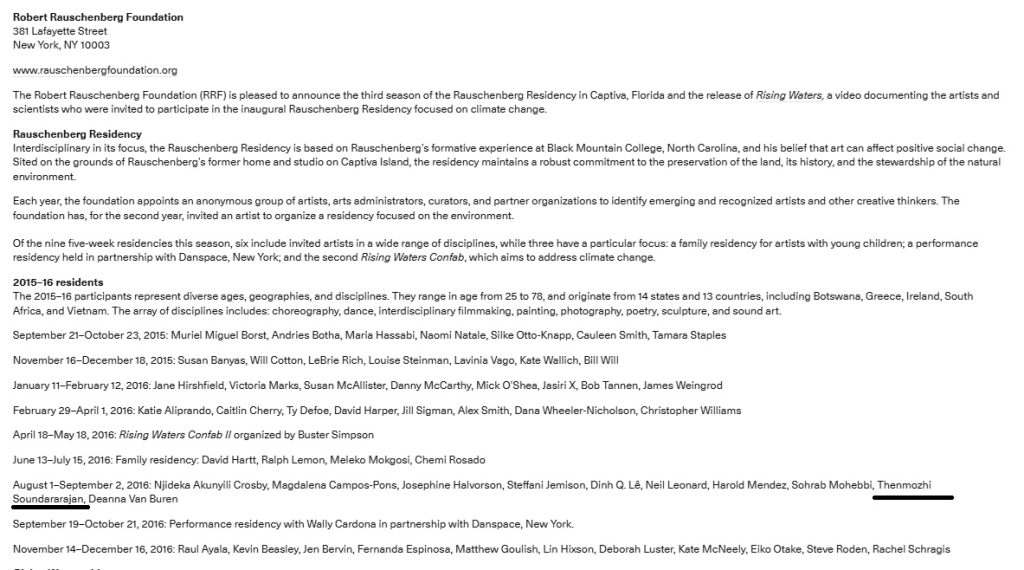
Additionally, co-founder Sharmin Hossain received $39,500 in 2016 from George Soros’s Open Society Foundations for a separate project (Historical Memory Project), while Thenmozhi Soundarrajan received smaller amounts from OSI and a fellowship from the Robert Rauschenberg Foundation.

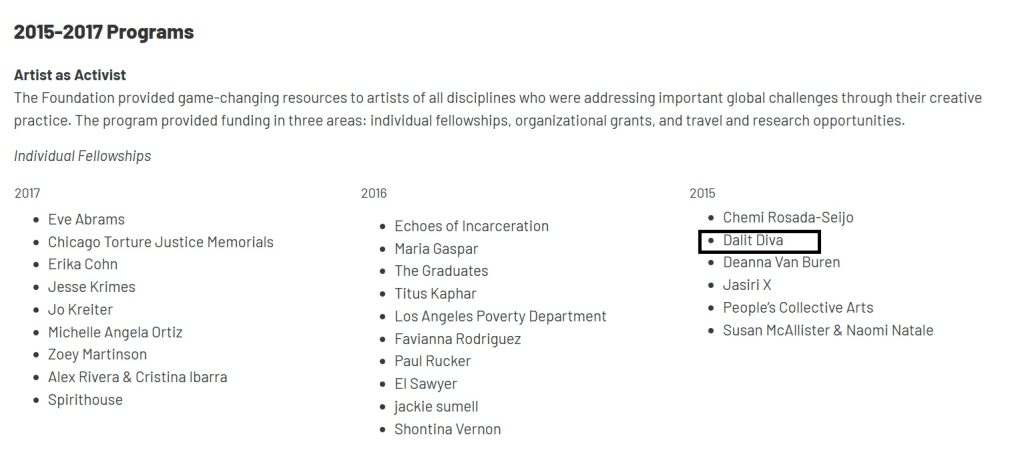
Soundararajan has also received some other independent grants and fellowships as below:
GrayCenter For Arts & Enquiry University of Chicago
Robert Rauschenberg Foundation

Since 2018/19, Equality Labs is being funded via Fractured Atlas (FA), a 501c(3).
Wikipedia on Fractured Atlas says “Fractured Atlas’s fiscal sponsorship programs allows non-commercial art-related projects to be supported through grants and tax-deductible donations without the project having to maintain independent 501(c)(3) status.
The Indian Nexus: Ties to NCDHR and AIDMAM
Let us now take a look at Thenmozhi Soundararajan’s activist roots back to long-standing collaborations with Indian NGOs, primarily the National Campaign for Dalit Human Rights (NCDHR), which operates in India under the FCRA name ‘Swadhikar’. This takes us to a The Guardian article, which was probably her first “report” on Dalits in 2015.
A key wing of NCDHR, the All India Dalit Mahila Adhikar Manch (AIDMAM), is identified as an early and consistent collaborator. As early as 2014, AIDMAM’s social media accounts tagged Thenmozhi’s handle, “dalitdiva.” The two were partners in a “Dalit Self Respect Yatra” across India, which was documented by Thenmozhi and later showcased in a tour across the United States in 2015, sponsored by organizations like the Association for India’s Development (AID-USA).
The Tides connection is particularly significant due to its extensive history of funding FCRA-registered NGOs in India. Tides’ Foreign Contribution (FCRA) disbursements can be traced to Indian organizations over more than a decade.
2006 – None
2007 – None
2008 – India HIV/AIDS Alliance, Indian School of Business
2009 – Mobile Creches, Parivaar, Operation Smile India
2010 – Naz Foundation, Parivaar, Bharti Foundation, Public Health Foundation of India
2011 – India HIV/AIDS Alliance, Samarpan Foundation
2012 – Vikas Society for Peoples Development, Samarpan Foundation
2013 – Street Survivors India, India HIV/AIDS Alliance, Samarpan Foundation
2014 – Apne Aap Women Worldwide (FCRA license cancelled in 2022, on violation; Unkil Project), Goonj
2015 – Apne Aap Women Worldwide (FCRA license cancelled in 2022, on violation; Unkil Project), PHFI, Swadhikar/NCDHR (Paul Namala)
2016 – Sama -Resource Group for Women & Health, Centre for Health and Social Justice, Control Arms Foundation of India Trust
2017 – Navdanya Trust (LOL), Popular Education & Action Centre (PEACE), (Anil K Chaudhary), Naz Foundation, Goonj, Sama-Women & Health, Swadhikar/NCDHR
2018 – PEACE, Naz Foundation, Sustainable Environment & Ecological Development (SEED), Goonj, Centre for Health & Social Justice, Samarpan Foundation, Central Square Foundation (Ashish Dhawan)
2019-Naz Foundation, Goonj, Swadhikar/NCDHR, CSF
2020 – Swadhikar/NCDHR received 1.1 Crore from Tides Foundation, towards ‘Dalit Women Empowerment’
While initially focused on health and women’s groups, a notable shift occurred in 2015, when Tides began funding Swadhikar – National Campaign for Dalit Human Rights (NCDHR).
This funding to NCDHR, led by founder Paul Divakar Namala, continued in 2017, 2019, and 2020, with a sum of 1.1 Crore INR (approximately $140,000) granted in 2020 alone for ‘Dalit Women Empowerment.’ This establishes a clear financial link between a primary funder of Equality Labs in the US and a major Dalit rights organization in India.
Paul Divakar Namala was a Board Member of Amnesty-USA in 2016.
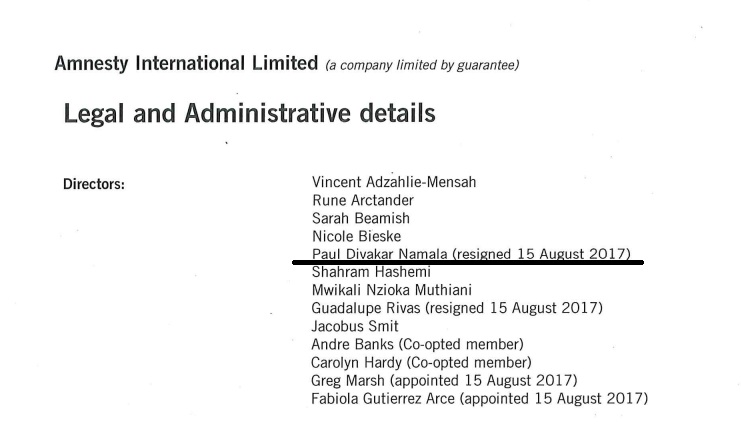

In 2018, a new 501c(3) was started called ‘The Inclusivity Project’. Paul Divakar Namala is its executive Director.
The partnership was highlighted on international stages, including a 2014 appearance by Thenmozhi and AIDMAM’s then-General Secretary, Asha Kowtal, at the “Women in the World Summit” in New York, moderated by NBC’s Cynthia McFadden.
Long before Equality Labs was founded, Thenmozhi was deeply embedded in the Dalit rights movement through her collaboration with the All India Dalit Mahila Adhikar Manch (AIDMAM), a project of the NCDHR. As early as February 2014, AIDMAM’s X handle (@dalitwomenfight) was publicly engaging with Thenmozhi’s handle (@dalitdiva).
The Asha Kowtal Nexus and the “Self-Respect Yatra”
A key figure bridging the US and Indian spheres is Asha Kowtal, the former General Secretary of NCDHR. In 2014 and 2015, Kowtal and Thenmozhi were inseparable collaborators:
In 2014, they spoke together at an event in New York City organized by the South Asia Solidarity Initiative (SASI), founded by Prachi Patankar. Patankar is the daughter of the late Gail Omvedt and is now the Director of Social Justice at the JM Kaplan Fund, which had a revenue of $67 million in 2019.
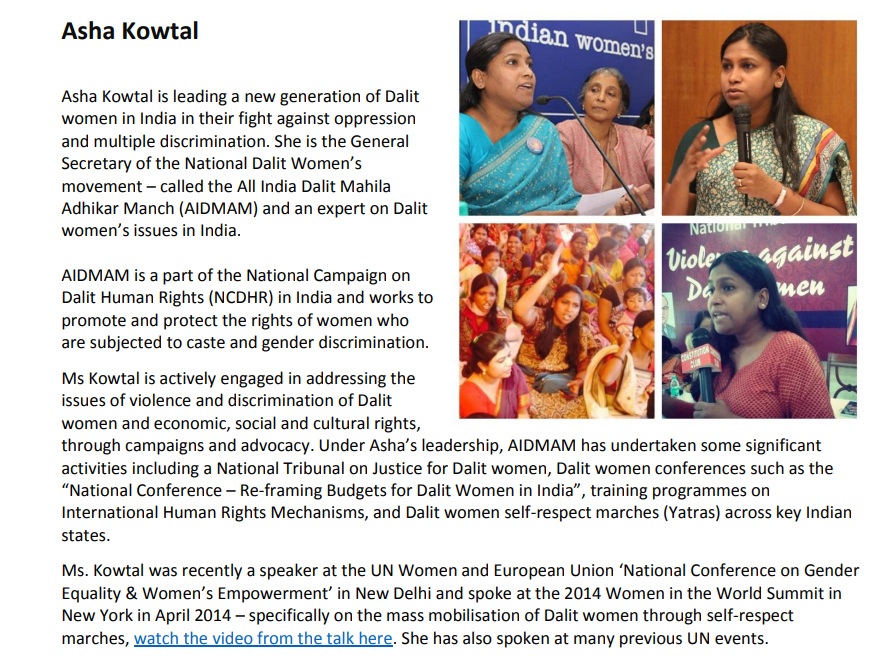

In September 2014, they were featured at the high-profile Women in the World Summit in New York, moderated by NBC’s Cynthia McFadden. Thenmozhi’s documentary on a “Dalit Self-Respect Yatra” in India was screened, and both activists spoke.
At the 2014 Women in the World Summit, patroned by Hillary Clinton, actress Uma Thurman introduced a segment featuring Asha Kowtal and a documentary by Thenmozhi Soundararajan. The session, moderated by NBC investigative correspondent Cynthia McFadden, included brief remarks from Asha, while the majority of the discussion was led by Thenmozhi. The full conversation is available across four video segments.
In 2015, Kowtal led a “Dalit Self-Respect Yatra” across the United States, starting at the University of Pennsylvania. She was accompanied by Thenmozhi, and the tour’s sponsors included the Association for India’s Development (AID-USA).
This pre-2015 collaboration demonstrates that the core network and activist agenda of Equality Labs were active years before the organization began receiving substantial grants through Fractured Atlas.
Additional Actors: Sanghapali Aruna and Jai Bhim International
The investigation also uncovered details on Sanghapali Aruna (full name Sanghapali Aruna Komana), another activist associated with the “Smash Brahminical Patriarchy” slogan. Aruna is a Director of Jai Bhim International (EIN: 26-3130349).
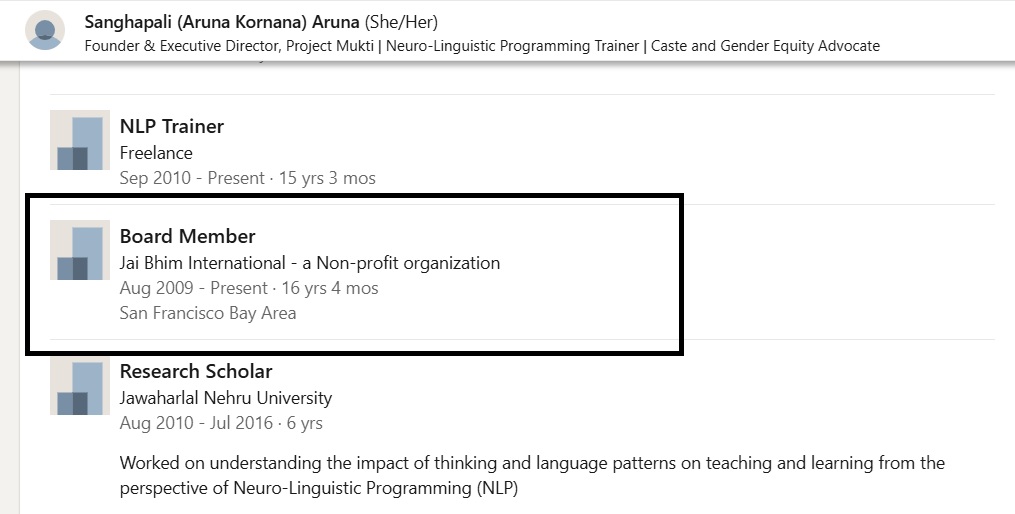

The organization is a registered 501(c)(3) that receives funding from entities like Fidelity Investments and the Harold Gullivan Jr. Family Foundation.


This indicates a broader, multi-organizational ecosystem operating in the same sphere.
A Coordinated, Well-Funded Ecosystem
The evidence compiled in this report paints a clear picture.
Equality is a project fiscally sponsored by Fractured Atlas, which skims an 8% fee from all donations.
It is funded by millions of dollars from major US foundations, with the Tides Foundation acting as its seed funder.
There is a direct financial link between this funding stream and Indian FCRA NGOs, specifically the NCDHR, via the Tides Foundation.
The founders and key figures of Equality Labs have had long-standing, deep organizational ties to NCDHR and its leaders like Asha Kowtal and Paul Divakar Namala, dating back to at least 2014.
This network, from funders like Ford and Novo, through fiscal conduits like Tides and Fractured Atlas, to the Equality Labs and its formally recognized partner NCDHR in India, represents a sophisticated and well-financed transnational activist pipeline. The legal and financial structures indicate problems with accountability, transparency, and the flow of foreign funds into specific social and political movements in India.
Equality Labs — A Missionary-Backed Dalitstan Experiment in Balkanizing India?
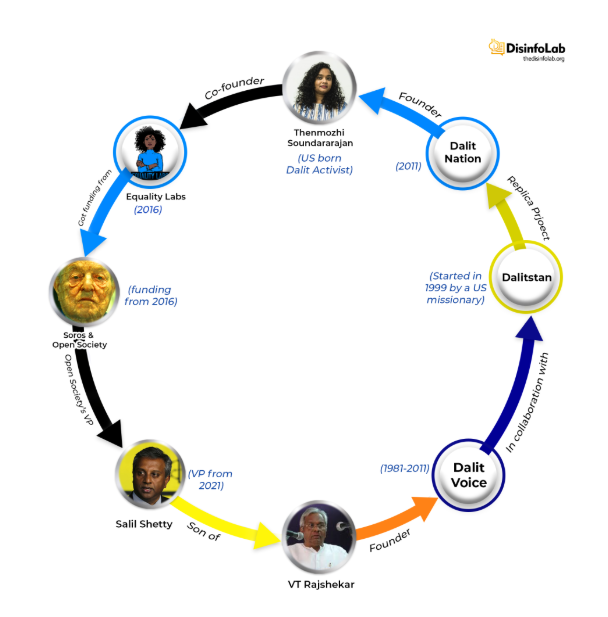
Dalitstan was a US-based initiative launched in 1999 by American citizens, primarily devout Christians, who envisioned the division of India into multiple separate territories, including a Dalit homeland. Key figures behind the project included Kermit Northcutt, Debra Schwartz, George Schwartz, Helen Eklund, and Andy Moore. The organisation functioned as a platform to promote separatist narratives while seeking Indian collaborators to lend legitimacy to its agenda.
Helen Eklund, who registered and led the Dalitstan website, and Kermit Northcutt, a member of the missionary-linked Antioch Christian Academy in Mississippi, exemplify how international religious networks were involved in backing the project. The initiative highlights a pattern of foreign actors attempting to influence Indian social and political issues by exploiting existing societal divisions.
To expand its reach, Dalitstan recruited prominent Indian Dalit voices. One notable collaborator was VT Rajshekar, founder of the now-defunct magazine Dalit Voice in Bangalore. Rajshekar, a journalist with a long career at Indian Express, was known for his anti-establishment writings and faced multiple arrests under TADA and the Sedition Act. Dalitstan used his work to bolster its separatist messaging.
The content promoted by Dalitstan targeted multiple fault lines within India, including Khalistan, Kashmir, and Dravidstan, framing the country as fragmented and oppressed. The project serves as an early example of how foreign-backed initiatives have sought to manipulate caste and regional tensions to advance separatist and anti-India objectives.
DisinfoLab’s “Cost of Caste” report argues that an older online project called “Dalitstan,” which pushed separatist and Balkanizing narratives about India, was later “rebooted” as Dalit Nation and then “metamorphosed” into Equality Labs, now funded by Western philanthropies. This report frames Equality Labs’ caste survey, US lobbying, and networks as part of a broader geopolitical “Breaking India” strategy.
What DisinfoLab Found
A detailed investigation by DisinfoLab titled “The Cost of Caste: Equality Labs, Caste Binary & BLM” highlights that Equality Labs operates as part of a foreign-funded, politically motivated advocacy network, rather than a grassroots civil-rights organisation. Key findings include:
Imported Caste-Apartheid Narrative
Equality Labs’ framework transplants the U.S. Black–White racial binary onto India, constructing a rigid “Dalits vs. Upper Castes” narrative designed for international audiences.
This oversimplifies Indian caste realities and amplifies conflict for political and funding purposes.
Flawed 2018 Caste Survey
Relied on self-selecting online respondents and unverified submissions.
Contained pre-scripted questions designed to produce predetermined results.
Formed the evidence base for DEI programs, corporate caste policies, and legal cases like Cisco.
Foreign-Funded Advocacy Pipeline
Operates through Fractured Atlas to avoid nonprofit compliance.
Funded by OSF, Ford, Luminate, Tides, Novo, San Francisco, Nathan Cummings, and others.
Receives millions annually, creating a politically leveraged lobbying apparatus.
Links to Anti-India Lobby Groups
Collaborates with IAMC, OFMI, HfHR, and the Alliance for Justice and Accountability (AJA), mirroring structures recommended by Pakistan for anti-India advocacy.
Transnational Ecosystem
Combines ideological narratives, flawed surveys, foreign funding, allied Indian NGOs, and media amplification to project India as a caste-apartheid state globally.


Political, Not Social-Justice, Objectives
Operates as a political lobbying outfit rather than a community-led reform group.
Targets U.S. policy, corporate behaviour, academic discourse, and global media narratives.
DisinfoLab concludes that Equality Labs functions as a central node in a coordinated transnational pipeline, shaping perceptions of caste in India while evading transparency and regulatory scrutiny.
Last Word
The DMK government’s decision to honour Thenmozhi Soundararajan signals more than a misguided award—it legitimises an organisation whose funding, alliances, and activism are deeply enmeshed in foreign-backed networks. Equality Labs, far from being a grassroots Dalit-rights group, operates as a well-funded lobbying outfit built on flawed surveys, ideological imports, and collaborations with groups repeatedly flagged for anti-India activity.
What emerges is not social justice but narrative engineering. By celebrating Equality Labs, the state is not uplifting marginalised voices—it is endorsing an agenda shaped abroad and aimed at recasting India through a divisive, destabilising lens.
Subscribe to our channels on WhatsApp, Telegram, Instagram and YouTube to get the best stories of the day delivered to you personally.