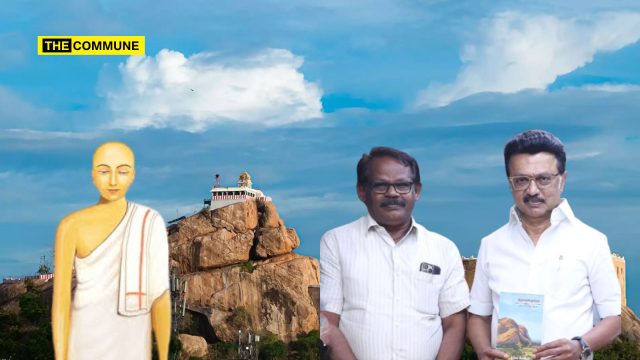
Claims made by DMK government’s ‘Sollin Selvar’ awardee Surya Xavier regarding the origin of the name Tiruchirappalli and its alleged Jain roots have triggered a debate, with historians and textual references contradicting several aspects of his narrative.
In a video clip circulating widely on social media, Surya Xavier asserts that the name “Tiruchirappalli” is derived from a Jain monk named “Chira” who established a palli (monastery), and that the town’s history reflects a transformation from a Jain centre to a Shaivite space. He further links several Tamil words such as pallikoodam and pallivasaal to Jain origins and claims that early religious and educational traditions in the region were rooted in Jain institutions.
He says, “Trichy city today Trichy is a city – Chira, a Jain monk’s name. That monk Chira lived in a palli, so Chira Munivar’s palli -Sira Palli, that’s Tiruchirappalli. This history 2000 years ago, a place where Jains lived. At that time, Trichy wasn’t a town; it was a big open field, a battlefield. But how much pride this town has, I’ll tell you. Trichy has a very big pride. Go to Uraiyur town, to the temple there. I’ve recorded all the inscriptions of that temple here. All histories are inscribed in that temple – how this place was 1000-2000 years ago. There’s an inscription in the Uraiyur temple. When you go there, there’s one more thing: an elephant bent like this, a rooster as if it is going to peck – they call it Kozhiyur. Its history, you have to go way back before that, very far back. Let that be. But it was a Jain area, Jains lived there. Because Jains lived in that area, they stayed only in hills, Jains stayed in hills, they taught dharma. Back then, no schools existed. We have four words: palli like that, one; pallivasaal like that, one; palliyarai like that, one; pallikoodam like that, one. Do you know where all these came from? All from Trichy people – they gave them. All are identities given by Trichy people. That’s the pride Trichy has. Why do I say that? Palli is the name for where Jains stay. They are Digambaras – they don’t wear cloth, sky-clad, wearing directions as clothing, so known as Digambaras. Jains, in the world, monastic renunciation in religion now Christian padres do it. Understand one thing: ‘padiri’ is also a Jain name. Tamil Nadu everywhere, 2000 years ago, there were Padiri Kudi. In Madurai, there’s a town Aritappatti. Aritappatti hill – what was its earlier name? Do you know? Padiri Kudi. Padiri is the name for Jain monks. But who first introduced monastic renunciation in religion? Jains. The place they stayed was called palli. What do they do? They try to teach and tell the people in that town – teach lessons. Because students came to that place to study, it got the name pallikoodam. Pallikoodam is different, kalvi koodam is different. ‘Education’ came after white people came. Before that, there were only pallis: Samana Palli, Bouddha Palli, Ashivagam Palli – like that, palli only. There, same place, that Jain monk’s eating and resting place, meaning Jain bedding places were there, beds all there. Now if you go, you can see at Malai Kottai – it’s called palliyarai. Pallivasaal – that also from Trichy, where else? Tomorrow morning, do you know where Tamil Nadu’s first pallivasaal is? India’s first pallivasaal is in Kodungallur, Kerala. But Tamil Nadu’s first pallivasaal – where do you know? It’s in your Trichy. From AD 729, first pallivasaal right in this Trichy city. Where do you ask? Near Main Guard Gate – here there’s a place, next to Main Guard Gate, Kallu Palli, a stone (kallu) palli exists. That’s the Kallu Palli – that’s Tamil Nadu’s first pallivasaal. That pallivasaal is not owned by Muslims, owned by Jains. Because it was owned by Jains, when Arab traders came to Uraiyur port town – traders came then. Traders ask for a place to pray. Jains allocate that palli to them. Therefore, it became Kallu Palli. So, ‘pallivasaal’ – the word pallivasaal was given to Tamil Nadu, given to Islam by Trichy’s Jains. We must say this with pride – how much history there is, look.”
சமண முனிவர் “சிரா” பள்ளி அமைத்து மக்களுக்கு கல்வியும் மருத்துவமும் வழங்கிய ஊர் “சிராப்பள்ளி”, மரியாதை நிமித்தமான ‘திரு’ சேர்ந்து “திருச்சிராப்பள்ளி” ஆனது.
சமணப்பள்ளி சைவ கோயிலாக மாறியதில் அடங்கியிருக்கிறது பார்ப்பனிய ஆதிக்க வரலாறு pic.twitter.com/lbMKWKBWf0
— ஆதினி (@aathini_twitz) April 9, 2026
Historical Explanation
According to traditional accounts and Shaivite literature, the older name of the region is “Thirisirapuram”, associated with a legend in which Lord Shiva is believed to have vanquished a demon named Thirisiran. This association is reflected in classical Tamil usage and naming conventions.
The name also appears in connection with the noted Tamil scholar Mahavidwan Meenakshisundaram Pillai, who used “Thirisirapuram” as a prefix, indicating its historical currency in Tamil literary tradition.
Further, Shaivite saint Appar refers to the deity of the hill as “Sirappalli Kundrudaiyan”, linking the place name directly to Shaivite worship rather than a Jain monastic origin.
Use of the Term “Palli”
Experts also contest the claim that the term palli is exclusively Jain in origin. Classical Tamil literature shows broader usage.
The Sangam-era text Maduraikkanchi refers to palli in the context of Brahminical religious spaces, indicating that the term was used generically for places of residence, rest, or worship across traditions, not limited to Jain institutions.
Literary and Archival Evidence
Archival and published Tamil works further reinforce the Shaivite association of the region.
However, historical and literary sources cited by scholars challenge these assertions.
Similarly, early 20th-century Tamil scholarly publications, including works from 1914, record the historical naming conventions and religious associations of the area, contradicting the claim of a singular Jain-origin narrative.
இவரும் இந்த மாதிரிப் புளுகியே காலத்தை கடத்துகிறார். அந்த ஊரின் பெயர் திரிசிரபுரம். திரிசிரன் என்ற அசுரனை சிவபெருமான் அழித்ததாகத் தொன்மம். அதனால்தான் தமிழறிஞர் மகாவித்துவான் மீனாட்சிசுந்தரம் பிள்ளையின் முன்னால் திரிசிரபுரம் என்றே குறிப்பிடப்பட்டிருக்கும். இது சிவபெருமானுக்கு உரிய… https://t.co/3K0dMBW1tS pic.twitter.com/WqCcb1803K
— 𑀓𑀺𑀭𑀼𑀱𑁆𑀡𑀷𑁆 🇮🇳 (@tskrishnan) April 10, 2026
While historians acknowledge that Jain communities did have a presence in parts of Tamil Nadu including hill regions, the sweeping claim that Tiruchirappalli’s name and identity originate solely from a Jain monk lacks corroborative evidence from established literary and epigraphic sources.
Scholars note that multiple religious traditions coexisted in ancient Tamilakam, that place names often evolved through layers of linguistic and religious influences and singular-origin claims require strong inscriptional or archaeological backing.
Subscribe to our channels on WhatsApp, Telegram, Instagram and YouTube to get the best stories of the day delivered to you personally.