


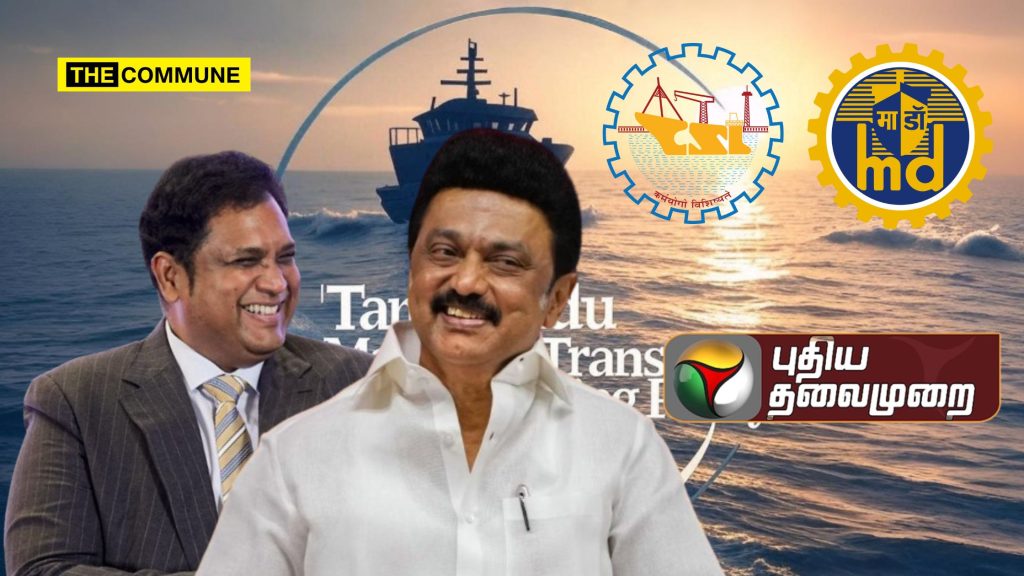
In a familiar pattern, the ruling DMK government in Tamil Nadu has once again attempted to re-brand a central government driven initiative as its own, this time in the shipbuilding sector. The latest instance involves the announcement of two major investments by central Public Sector Undertakings (PSUs) Cochin Shipyard Limited (CSL) and Mazagon Dock Shipbuilders Limited (MDL) to set up greenfield shipyards in Tamil Nadu with a combined investment of ₹30,000 crore. However, the DMK, backed by sections of the Dravidianist media, has been quick to position the development as a result of its own policies and leadership.
On 20 September 2025, Tamil Nadu’s Industries Minister TRB Rajaa announced the MoUs via his X account, describing it as “massive news” for the state’s shipbuilding industry. He stated that the agreements as a key milestone under the upcoming Tamil Nadu Maritime Transport Manufacturing Policy 2025, emphasizing that they would generate over 55,000 jobs and mark the state’s emergence as a “global hub for shipbuilding and maritime innovation.”
MASSIVE NEWS for the Ship Building industry in TamilNadu 🌊🚢🛳️
At the TN Rising – Thoothukudi Conclave, the Honourable @CMOTamilnadu @mkstalin avargal announced a dedicated company to promote shipbuilding in the State. Early this month, SIPCOT and VoC Port signed an MoU for the… pic.twitter.com/uprRBShyEX
— Dr. T R B Rajaa (@TRBRajaa) September 20, 2025
In his statement, Rajaa credited Chief Minister M.K. Stalin and said the move aligned with the DMK’s development vision. Following this, Stalin himself posted on social media, invoking Tamil maritime history and asserting that the “Dravidian Model” was steering southern Tamil Nadu onto the global shipbuilding map.
சங்கப்பாடல்கள் சொல்லும் கப்பற்கலையில் தமிழரின் பெருமைமிகு வரலாற்றை!
இப்போது, தூத்துக்குடியில் 30 ஆயிரம் கோடி ரூபாய் முதலீட்டில், 55 ஆயிரம் பேர் வேலைவாய்ப்பு பெறும் வகையில் இரு கப்பல் கட்டும் தளங்கள் அமையவுள்ளன.
தென் தமிழ்நாட்டின் வளர்ச்சிக்குப் புதியதொரு அடித்தளமாக இவை அமையும்!… https://t.co/s0LaSYXaTY pic.twitter.com/3w8mtWYp3R
— M.K.Stalin – தமிழ்நாட்டை தலைகுனிய விடமாட்டேன் (@mkstalin) September 21, 2025
Predictably, DMK-simping media outlets like Puthiya Thalaimurai amplified this narrative, presenting the announcement as a direct achievement of the state government. One headline read, “Contract worth ₹15,000 crore: Minister Raja.”
ரூ.15,000 கோடியில் ஒப்பந்தம்: அமைச்சர் ராஜா#ShipBuildingindustry | #ThoothukudiConclave | #Thoothukudi | #TNGovt | #TRBRajaa pic.twitter.com/suGx2ajGn8
— PttvOnlinenews (@PttvNewsX) September 20, 2025
The Reality: A Modi Govt-Led Initiative Under National Maritime Vision
Contrary to the narrative being peddled by the DMK and its ecosystem, these projects are part of the Government of India’s broader maritime strategy, specifically the Maritime Amrit Kaal Vision 2047. The MoUs were signed between the Ministry of Ports, Shipping and Waterways (MoPSW) and the Tamil Nadu government through its investment promotion agency, Guidance Tamil Nadu, with the centre’s active involvement.
Cochin Shipyard Limited, which built the Indian Navy’s first indigenous aircraft carrier INS Vikrant, will invest ₹15,000 crore in a commercial shipyard, creating 10,000 jobs initially. MDL, known for building Scorpene-class submarines and frontline destroyers like the Visakhapatnam-class, will invest an equivalent amount to establish a shipyard employing over 45,000 people.
Both entities are central PSUs under the Ministries of Defence and Shipping, respectively. Their strategic decision to establish shipbuilding infrastructure on India’s east coast specifically in Thoothukudi district is driven by national maritime priorities, including security and trade.
Union Government’s Role Highlighted at Signing Ceremony
The MoUs were formally exchanged on 19 September 2025 at an event organized by the Ministry of Ports, Shipping and Waterways in Bhavnagar, Gujarat. The ceremony was attended by Union Minister Sarbananda Sonowal, further confirming the central government’s role in initiating and facilitating these massive investments.
Yet, in Tamil Nadu, the DMK has attempted to shift the spotlight toward its own governance, despite the projects being aligned with central government frameworks. Critics have pointed out that the DMK is merely piggybacking on the Centre’s plans while attempting to appropriate credit for political mileage ahead of elections.
Social Media Pushback: DMK’s Credit Grab Draws Ridicule
The DMK’s attempt to take ownership of the shipbuilding projects has triggered significant backlash on social media. Users have mocked the party’s habitual “sticker politics,” accusing it of slapping its label on any initiative with potential visibility or public appeal, regardless of who conceived or executed it.
This episode follows a familiar pattern where central government projects in Tamil Nadu be it in infrastructure, defence, or manufacturing are rebranded locally as “Dravidian model achievements” for narrative-building purposes. However, in the digital age, such attempts are increasingly met with scrutiny and resistance from the public.
As the 2026 state elections approach, the line between genuine state-led development and opportunistic political branding is becoming increasingly blurred at least in the way it’s being projected by the ruling establishment in Tamil Nadu.
Clearly funded Rs 30,000 crore by the Central government.. Thank you honorable Prime Minister @narendramodi 🙏 pic.twitter.com/gpIPTt8quZ
— ThatIndianGuy.. (@krishnaitsmyn) September 23, 2025
Did you know that the ₹30000 crore investment in the ship building sector announced yesterday by the Tamil Nadu Government is investment being made by 2 Public sector undertakings of the Government of India? (Cochin Shipyard and Mazagon Dockyard)
Did the State Govt. thank…
— Sumanth Raman (@sumanthraman) September 22, 2025
ஸ்டிக்கர் ஓட்டுறது
வெட்கமே இல்லாம ஓட்டுறதுதட் இஸ் கருணாநிதி கட்சிக்காரன்
— Sanghi Prince 🚩 (@SanghiPrince) September 22, 2025
It's a Central Government project. It's an initiative promoted by PM Modiji for Tamil Nadu.
Sit down, you dumeel clowns.#StickerCM
— Mrs Palakkadan 🇮🇳 (@Lotus2021) September 23, 2025
அது வேற ஒன்னும் இல்ல மத்திய அரசின் two shipyards, 35 ஆயிரம் கோடி தமிழ்நாட்டுல invest பண்ணுது,
Mazagon Dock is PSU, managed by ministry of defence with GOI!
Cochin Shipyard also an another psu owned by India with major stakes!வழக்கம் போலவே another ஸ்டிக்கர் and cut copy paste… pic.twitter.com/B9IjrB1PsB
— ராஜாதி ராஜா (@Raja_NIA_) September 21, 2025
மத்திய அரசு திட்டம் மேல் திராவிஷ sticker
குஜராத்தில் MoU sign செய்யப்பட்டது. அதையும் சொல்லுங்க pic.twitter.com/TY2dWKlLnU
— ஹரிஷ் தமிழன் (@Raja_MSV_fan) September 22, 2025
Its also under Maritime Amritkaal vision 2047. Not a sole Tamilnadu achievement. Try to post a legitimate content. pic.twitter.com/xvwiyg46RK
— Leo Tejas🦁 (@leo862402) September 21, 2025
கொஞ்சம் கூட வெட்கம் இல்லாமல் மத்திய அரசின் திட்டங்களை ஏதோ இவர்கள் செய்தது போல தங்களுக்கு தானே புகழாரம் சூட்டிக் கொள்ளும் இந்த கேவலமான ஒரு செயலை தமிழில் கேவலமாக குறிப்பிட வார்த்தைகளே இல்லை ஒட்டுமொத்த கேவலத்தின் அடையாளம் இந்த கேடுகெட்ட திராவிடம்….
— Siva ….Gopal Siva (@GopalSiva15) September 22, 2025
Cochin Shipyard Limited (CSL) is primarily owned by the Government of India, which holds 72.86% of the equity share capital as of March 31, 2024…என்ன டா இது…மாப்பிள்ளை நிங்க தான் ஆனா போட்டு இருக்க சட்டை யாரது அத சொல்லுங்கள்….
— Rajesh BCA,MBA,LLB (@Rajesh44138628) September 21, 2025
Sir why dravidan model stickers to even central government shipyards ? Will the same apply to 10 liquor factories run by your close associates Sir ?? are not they giving jobs to thousands of doctors and nurses ? Are not these Liquor factories giving jobs to crematoriums ?
— Krishnamoorthy (@kriveltech2) September 22, 2025
Subscribe to our channels on Telegram, WhatsApp, and Instagram and get the best stories of the day delivered to you personally.