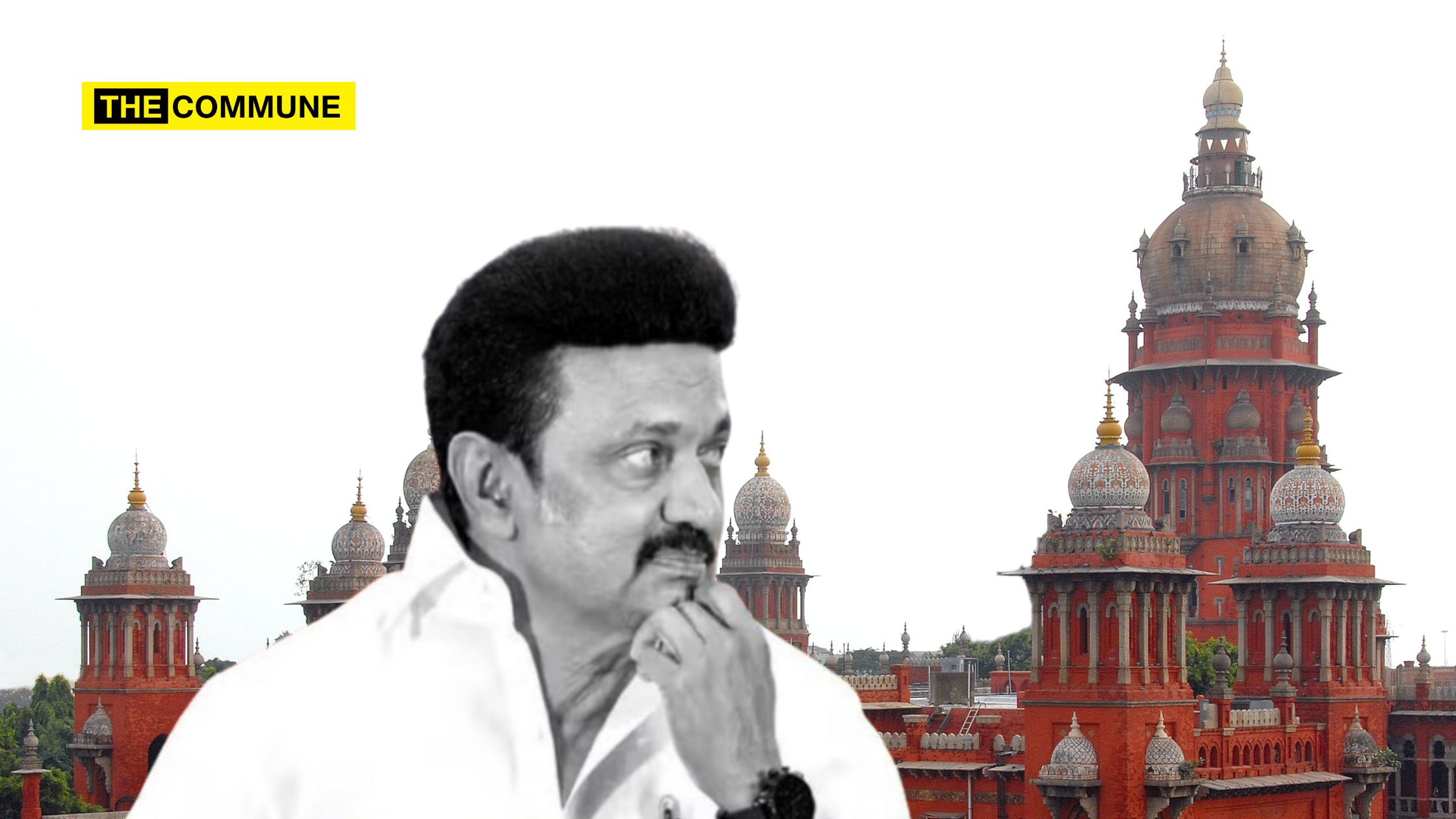
In 2023, the DMK set up a one-man commission in the aftermath of the disturbing Nanguneri incident in Tirunelveli district where two Scheduled Caste students were attacked by students from an intermediate caste.
Retired Madras High Court judge Justice K. Chandru submitted the report in June 2024 to CM Stalin and recommended “significant” changes to eliminate caste indicators in Tamil Nadu schools.
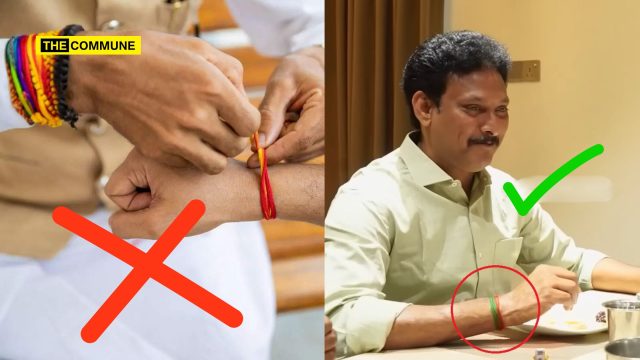
The recommendations included banning coloured sacred wrist threads, rings, and forehead marks – tilak that signify caste and removing caste-related names from schools. Point 8B states, “Students should be prohibited from wearing any coloured wristbands, rings, or forehead marks (Tilaka). They must also refrain from coming to school on bicycles painted with reference to their caste or exhibiting any caste-related sentiments. Failure to comply with these rules must result in appropriate action being taken, in addition to advising their parents or guardians.”
Cut to 2026. The DMK Education Minister Anbil Mahesh Poyyamozhi is seen giving interviews at his home to various YouTube channels in the backdrop of the upcoming Assembly elections in TN.
In one such interview given to Galatta channel, he is seen eating food served by his wife. What catches a layman’s eye are the coloured (probably religious) threads on his wrist.
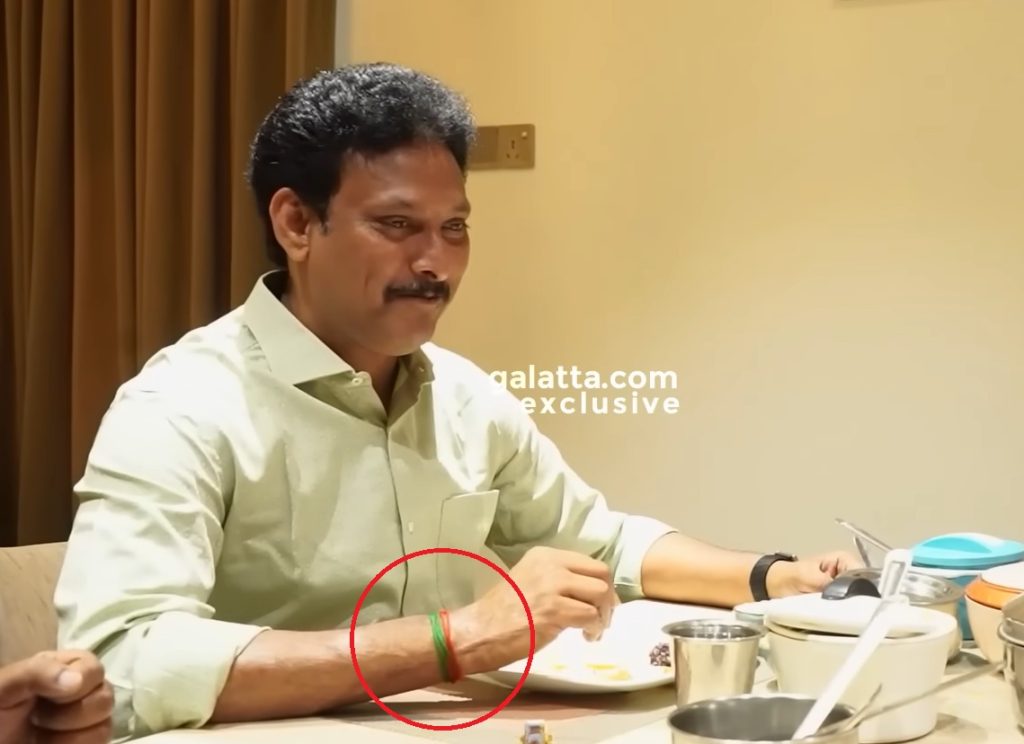
These are the same threads that fall within the broader category of visible identifiers discussed in the Chandru Committee’s recommendations on caste markers in school spaces.
The contrast is difficult to ignore.
Here is a state-appointed panel recommending that students be discouraged and potentially prohibited from wearing coloured wrist threads, rings, and tilak in the interest of reducing caste signalling within educational institutions. Yet, the state’s own School Education Minister, who would ultimately be responsible for implementing or overseeing any such policy shifts, appears publicly wearing similar wrist threads without hesitation.
If sacred threads and similar identifiers are viewed as markers requiring regulation in school environments, questions naturally arise when senior policymakers themselves continue to display the same symbols in public life.
The Dravidian movement historically advocated the removal of caste identifiers including surnames as part of a broader social reform agenda. The measures targeting religious symbols risk conflating faith expression with caste assertion. Instead of erasing identity markers, educational interventions should focus on social awareness, anti-discrimination sensitisation, and accountability mechanisms within schools.
And it is the same party whose scion Udhayanidhi Stalin, also the Deputy CM of the state called for eradication of Sanatana Dharma. In a conference titled “Abolish Sanatanam Conference” in September 2023, he had said, “Mosquitoes, dengue, flu, malaria, corona – we should not oppose these things. They’ve to be eradicated completely. Same is the case with Santanam (Hinduism). Our first work should be to abolish/eradicate Sanatanam instead of opposing it. So, my appreciations to you all for giving an apt title to the meeting.”
As of now, the Chandru Committee report remains advisory in nature. The Tamil Nadu government has not issued any formal order implementing a ban on sacred threads, tilak, or related identifiers in schools.
Subscribe to our channels on Telegram, WhatsApp, and Instagram and get the best stories of the day delivered to you personally.