


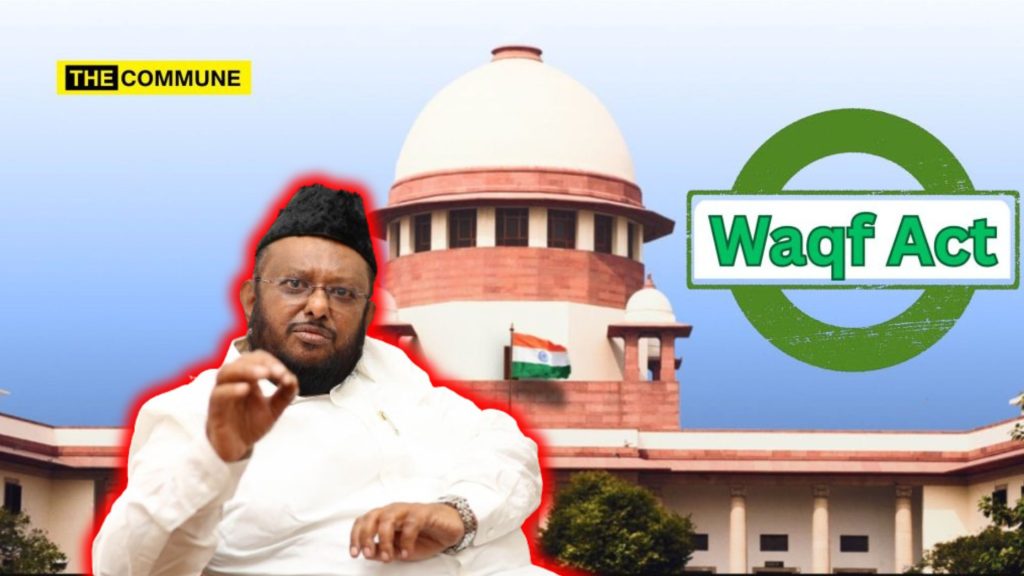
MH Jawahirullah S.M.O., President of the Manidhaneya Makkal Katchi (MMK) and DMK ally, has strongly criticised the interim judgment of the Supreme Court on the Waqf Amendment Act 2025, calling it a “wrong verdict recognising several adverse amendments.”
In a statement, Jawahirullah highlighted that the Court’s order fails to stay numerous provisions that, according to him, violate the fundamental rights of Muslims. He expressed concern over the Court allowing only a limited number of non-Muslims on the Central and State Waqf Boards, calling it “discriminatory.”
While welcoming certain aspects, such as the stay on the rule requiring proof of five years of following Islam for creating a Waqf and protections against confiscation of Waqf properties during legal disputes, he criticised the judgment for leaving significant sections unaddressed. He specifically noted that Sections 104, 107, and 108, which pertain to non-Muslims creating Waqfs, recovery of encroached Waqf properties, and Waqfs of emigrants were omitted from consideration, potentially allowing state governments to appropriate Waqf properties.
Jawahirullah described the interim order as “alarming” and warned that it gives state authorities undue power to define who qualifies as a Muslim eligible to create Waqfs. He called on the Supreme Court to provide full protection to Muslim religious endowments and prevent misuse of state power over Waqf properties.
In a post on his official X handle, he wrote, “Waqf Amendment Act Verdict: Wrong Verdict Recognizing Adverse Amendments
A statement issued by the President of the Humanity People’s Party, Professor M.H. Jawahirullah S.M.O.
The interim judgment given by the Supreme Court in the case related to the Waqf Amendment Act 2025 is a wrong verdict recognising several adverse amendments. This verdict is not in a way that provides complete satisfaction.
There were 44 amendments passed by the Union BJP government in Parliament. (In reality, 115 amendments were made, including 33 additions, 45 substitutions and 37 deletions). These 44 absurd amendments have not been fully taken into account and only a few amendments have been taken into account in this verdict.
Although the Supreme Court has stayed some sections of the Waqf Amendment Act in the Supreme Court verdict, it is very disappointing that several sections that violate the fundamentals of the Constitution have not been given an interim stay.
The Supreme Court in its judgment has stated that a maximum of 4 non-Muslims can be members of the Central Waqf Commission out of 22 members and a maximum of 3 non-Muslims can be members of the State Waqf Boards out of 11 members. This order is discriminatory. When non-Muslims cannot become members of the Hindu Religious Endowments Department or the Sikh Gurudwara Management, it is discriminatory to include non-Muslim members only in the Waqf Board.
The Supreme Court has temporarily stayed the amendment rule that requires a person to prove that he has been following Islam for at least 5 years to make a Waqf. It is welcome that the Supreme Court has said that this rule is not necessary for the creation of a Waqf. But it has not stopped there and has stated that the ban will continue until the state governments formulate rules on who is a Muslim who follows Islam and is eligible to make a Waqf. It gives the state governments the right to define who is a Muslim who follows Islam. This has created a risk that only Muslims who are favored by the state government will be able to make waqf.
What is welcome in the judgment
-The Supreme Court’s judgment that when a dispute arises regarding waqf properties and it is a case in court, they cannot be confiscated or changed in official records until the final judgment is reached is welcome.
-The court has also banned the section that said that the right to waqf property should be proven based on the statement of a government official.
-It is also welcome to clarify that no government official can personally decide who is eligible to create a waqf.
-The Supreme Court has ordered that when an investigation is underway regarding a particular waqf, it will not be considered as a waqf and no waqf property should be confiscated or its records should not be changed until the final judgment is reached.
The court’s interim judgment on waqf by user is very alarming.
The Supreme Court’s view is that mosques, which have been in use for centuries, have posed a great danger to burial grounds.
The Supreme Court’s statements in paragraphs 143 to 152 of the interim order have further complicated the issue.
-Section 104, which allowed non-Muslims to make Waqfs
-Section 107, which stated that the Limitation Act, 1963, would not apply to the recovery of encroached Waqf properties
-Section 108, which contained special provisions regarding Waqf properties of those who had left the country
All three sections were deleted in the amendment act. It is very disappointing that the Supreme Court did not mention these three deleted sections in its judgment. The interim judgment did not mention Sections 107 and 108, which will help some anti-Muslim state governments to appropriate Waqf properties until the final judgment is delivered……..”
வக்ப் திருத்தச் சட்டம் தீர்ப்பு: பாதகமான திருத்தங்களை அங்கீகரிக்கும் தவறான தீர்ப்பு
மனிதநேய மக்கள் கட்சியின் தலைவர் பேராசிரியர் எம் எச் ஜவாஹிருல்லா ச.ம.உ. வெளியிடும் அறிக்கை
வக்ப் திருத்தச் சட்டம் 2025 தொடர்பான வழக்கில் உச்சநீதிமன்றம் வழங்கியுள்ள இடைக்காலத் தீர்ப்பு பாதகமான…
— Jawahirullah MH (@jawahirullah_MH) September 16, 2025
Subscribe to our channels on Telegram, WhatsApp, and Instagram and get the best stories of the day delivered to you personally.