


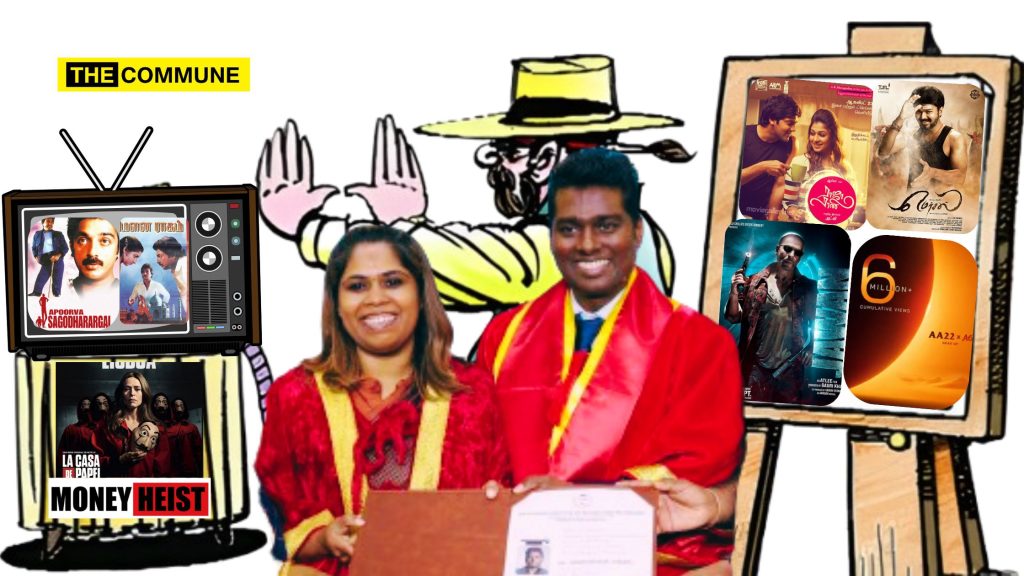
Recently, director Atlee was awarded an honorary doctorate by Sathyabama University. During the ceremony, he took the opportunity to address a longstanding controversy that has followed him throughout his career—the accusation that his films are often copied from other works. Confronting the criticism head-on, Atlee firmly denied the allegations, claiming that his movies are not imitations but are instead drawn from his personal life and real experiences.
He stated, “Generally audience says my films are copied but I’m telling the truth today. It is all inspired by my life. For example, character Raayappan from Bigil was inspired by JPR sir. You have given me this doctorate, I promise I will make you proud and make our country proud.”
However, his remarks didn’t go down well with many on social media. Netizens quickly took to various platforms to mock his justification, criticizing what they saw as an unconvincing and evasive explanation.
இயக்குநர் அட்லிக்கு டாக்டர் பட்டம்
சென்னை சத்யபாமா பல்கலை.யில் கௌரவ டாக்டர் பட்டம் பெற்ற திரைப்பட இயக்குநர் அட்லி #Atlee #Director #thanthitv pic.twitter.com/veieR2pCOx
— Thanthi TV (@ThanthiTV) June 14, 2025
Even Congress MP Karti Chidambaram had commented about it saying that the awarding of honorary doctorates must stop.
This “Honorary Doctorates” custom must stop. And those with these conferred doctorates must refrain from using the Dr. prefix. https://t.co/rnpxiFisJj
— Karti P Chidambaram (@KartiPC) June 14, 2025
For instance, Raja Rani faced criticism for allegedly borrowing heavily from Mouna Ragam, while another hit movie Mersal was compared to Aboorva Sagodharargal for similarities in its storyline. Even the fight scenes in Jawan drew comparisons to 7aam Arivu, with not just visual similarities but also near-identical narrative setups and context.
Another example is the goal practice scene in Bigil, which was closely compared to a similar moment in a volleyball-themed film—both featuring the message: “Don’t play for yourself, play for the team.” A scene from Chak De! India, starring Shah Rukh Khan, also echoed this sentiment.
After contributing to this creative decline in the Tamil film industry, director Atlee transitioned to Bollywood with Jawan, using Shah Rukh Khan as the scapegoat for his trial. The film borrowed heavily from several Tamil movies. The opening scene of Jawan, for example, mirrors that of Mr. Romeo, where the hero leaps off a cliff, falls into a waterfall, suffers injuries, loses his memory, and is nursed back to health by a tribal community. This plotline seems to parallel elements from Apocalypto as well as the tribal nurse him with ants. Additionally, the movie features red and blue pill symbolism, reminiscent of The Matrix.
Atlee’s inspirations weren’t limited to films—he also appears to have drawn from Netflix’s Money Heist. In Jawan, Nayanthara’s character is positioned similarly to the main police investigator in Money Heist, Raquel Murillo, playing a law enforcement figure who gradually becomes more entangled with the heist itself. The climax of Jawan also appears to be a patchwork of elements borrowed from various sources, including Money Heist and Atlee’s own earlier film Theri.
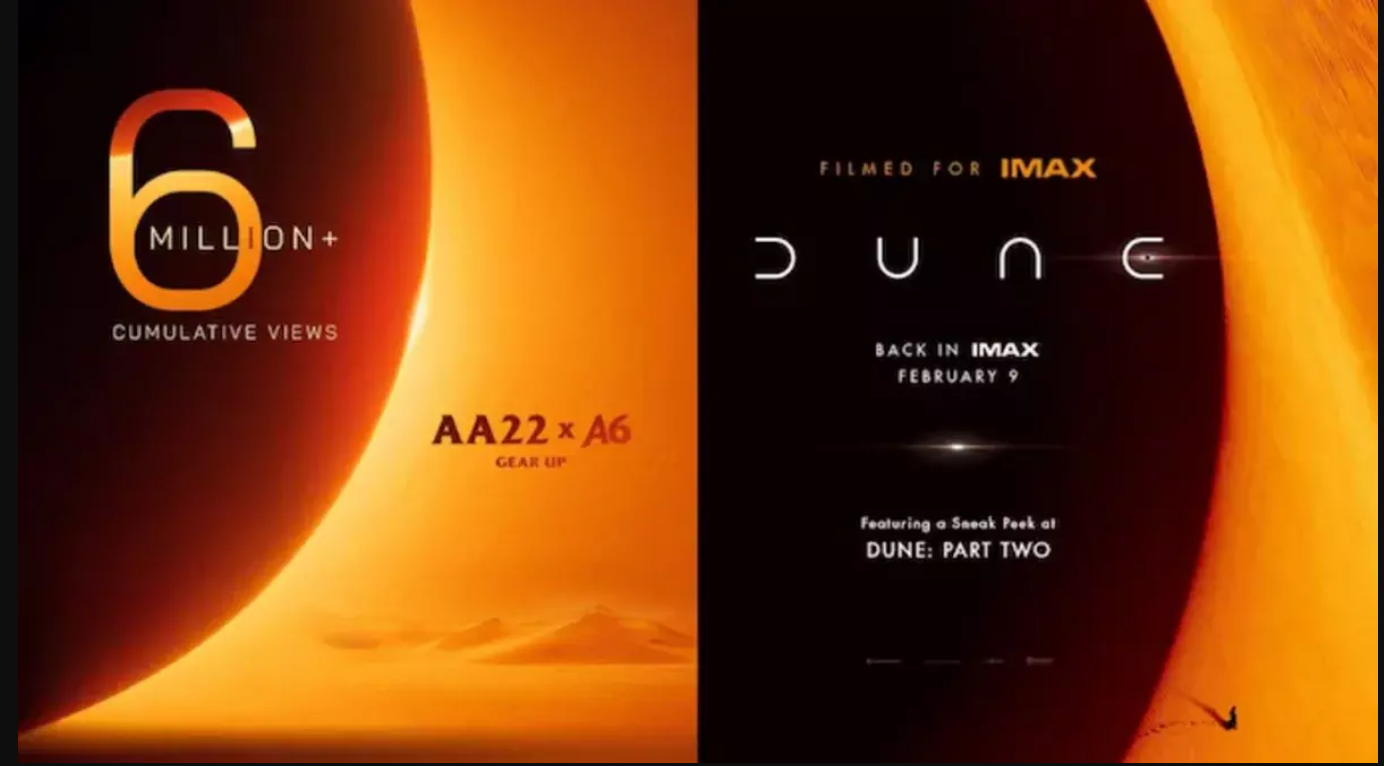
Not only this, but Atlee’s upcoming film with Allu Arjun, tentatively titled AA26, has already stirred controversy—this time over alleged plagiarism involving its promotional material ‘poster’. The project was officially announced on Allu Arjun’s birthday, generating major buzz among fans. Alongside the announcement, a behind-the-scenes teaser was released, showcasing glimpses of the film’s ambitious scale, with heavy use of VFX and robotics. The teaser quickly went viral, crossing six million views, prompting producer Sun Pictures to unveil a celebratory poster. However, the new poster drew immediate comparisons online for its striking similarity to the IMAX promotional poster for the 2021 re-release of Dune. In Atlee’s version, the original crescent shape formed by a sand dune is replaced with the curve of a planet, while the desert theme remains largely unchanged—leading many to accuse the makers of repackaging rather than reimagining.

In today’s digital age, where audiences are quick to analyze and dissect films online, such similarities are almost immediately spotted and widely ridiculed. Yet, despite the overwhelming evidence of these repeated patterns, Atlee continues to dismiss the accusations of copying. Instead, he deflects the criticism by labeling these clear imitations as mere “inspirations.”
Subscribe to our channels on Telegram, WhatsApp, and Instagram and get the best stories of the day delivered to you personally.