


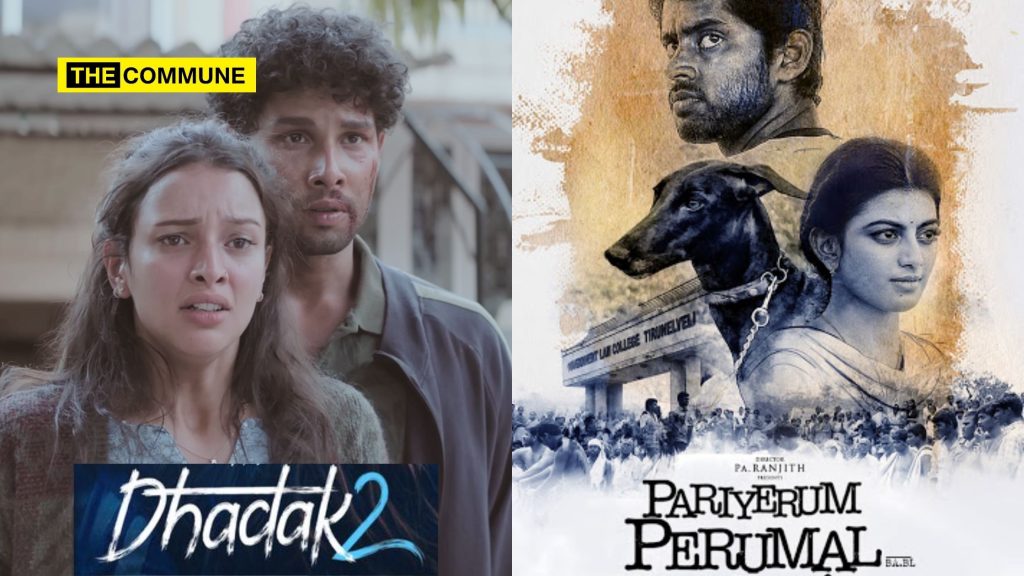
Bollywood’s latest attempt at woke filmmaking, Dhadak 2, is not just a failed remake of the critically acclaimed Tamil film Pariyerum Perumal, it is a deliberate, manipulative distortion of the original’s powerful message against caste violence. Instead of faithfully adapting the story of Dalit oppression that was set in rural Tamil Nadu, the filmmakers have shamelessly twisted the narrative to vilify Brahmins, turning a nuanced social drama into a lazy, agenda-driven propaganda piece.
A Dishonest Remake That Betrays The Original
Pariyerum Perumal was a searing, authentic portrayal of caste oppression, where the protagonist, a Dalit law student, faces systemic violence and humiliation at the hands of dominant intermediate castes (OBCs). The film’s strength lay in its unflinching realism; it showed caste as it exists on the ground, not as some urban elite fantasy.
The strength of Pariyerum Perumal’s director Mari Selvaraj lies in his honest storytelling that steers clear of inciting hatred. He resists the temptation to villainize any community by deliberately avoiding caste markers—be it through names, symbols, or traditional cues.
But Dhadak 2 guts the soul of the original and replaces it with a caricature. The villains in this version are no longer the actual oppressors (Thakurs, Yadavs, or other dominant castes who historically wield power in North India) and instead, they are turned into Brahmins, a soft target that Bollywood loves to demonize without consequence.
Brahmin-Bashing: A Cowardly Cop-Out
The film is out and out a Brahmin bashing one – it starts out by indicating who the male lead is, which community he is from. Then he is shown to be studying in a college where he is surrounded by people with Brahmin surnames. Let’s come back to reality for a bit – which government institution do you see so many Brahmin students? Reservation has eaten up so many bright students that you will only see other dominant castes in any institution. Either the film must have been shown to be set way back in time or must show the reality of who occupies the seats in government institutions.
The decision to replace the original oppressors with Brahmins reeks of intellectual dishonesty and political cowardice. In reality, Dalits in North India face violence primarily from dominant OBCs and feudal castes like Thakurs, not Brahmins, who have little political or social power in rural oppression today. But showing dominant influential castes as villains would invite real backlash, so the filmmakers take the easy way out which is blatant propaganda.
There is also a scene where they try to show meat-eating Brahmins mingling with non-meat-eating Brahmins – trying to call out the so-called hypocrisy.
A Messy, Half-Baked Narrative
Beyond its manipulative politics, Dhadak 2 is simply a bad film. The storytelling is inconsistent, the emotional beats feel forced, and the social message is diluted by unnecessary subplots. Siddhant Chaturvedi’s suffering as Neelesh lacks the raw intensity of Kathir’s performance in the original. A few brutal scenes land, but the film never sustains the tension.
Worst of all, it fails where Pariyerum Perumal succeeded – by turning caste oppression into a simplistic “evil Brahmins vs. noble Dalits” fairy tale, rather than a complex, systemic issue. The original showed how caste violence is perpetuated by multiple layers of society; this remake reduces it to cheap villainy.
Final Verdict: Exploitative & Cowardly
Dhadak 2 is an irresponsible film that weaponizes caste politics for shallow sensationalism. By distorting reality and scapegoating Brahmins, it does a disservice to the very cause it pretends to champion. If Bollywood truly wanted to make a “powerful political statement”, it would have had the guts to show the real oppressors. Instead, it took the path of least resistance, peddling hatred against a community that is already a favorite punching bag of the elite.
Subscribe to our channels on Telegram, WhatsApp, and Instagram and get the best stories of the day delivered to you personally.