


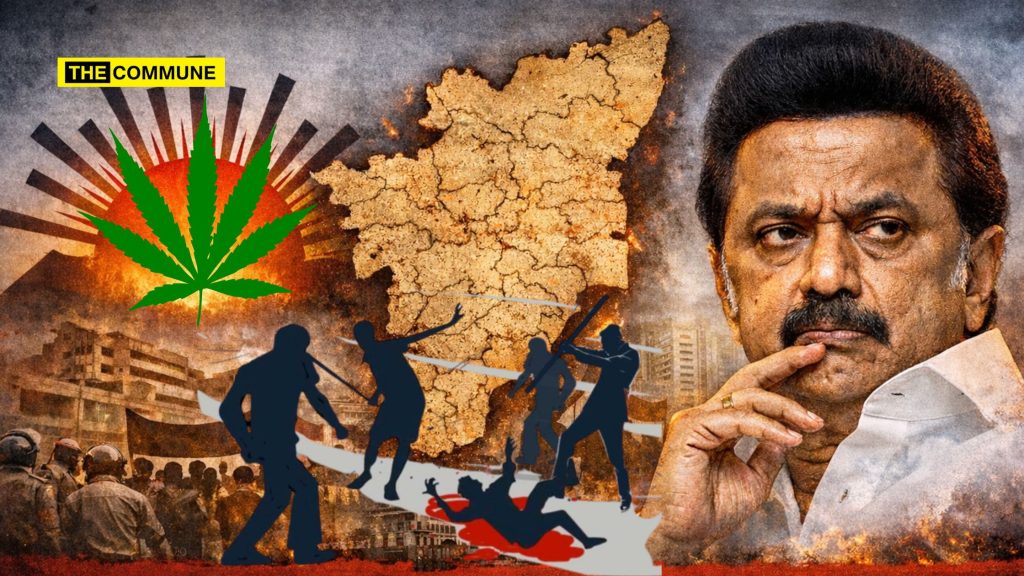
It has been 4.5 years since the ‘Dravidian Model’ DMK government came to power and what have the citizens of the state enjoyed? Did the so-called Dravidian Model do wonders to the state in any way? Let us take a look at 12 major failures that have defined the DMK government’s record for the year 2025.
#1 Sanitation Workers/Teachers/Nurses Protest
In its 2021 manifesto, the DMK promised to regularise sanitation workers and curb privatisation, restore the Old Pension Scheme for government staff and teachers, and give permanent appointments to contract nurses and other health workers. Protesters from all three groups now accuse the government of reneging on or only partially fulfilling these written commitments.
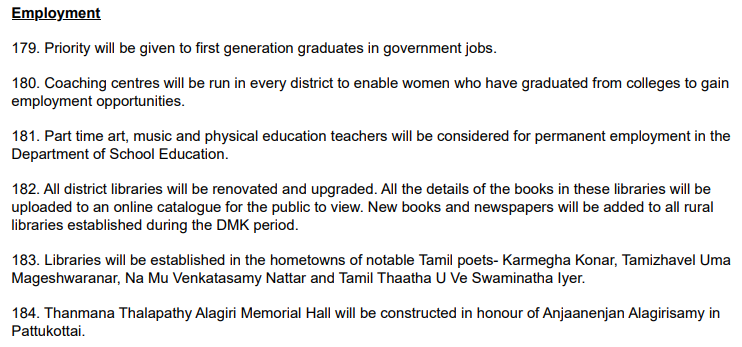




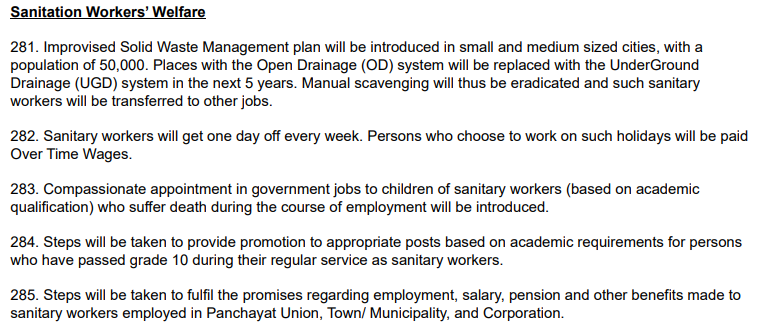
However, till date nothing has been delivered. This has led to intense protests by the teachers, nurses and the sanitation workers.
In 2025, Chennai saw a series of intense labour agitations as nearly 2,000 mostly Dalit conservancy (sanitation) workers camped outside Ripon Building from August 1 protesting the decision to privatise solid‑waste management in Zones 5 and 6, fearing loss of wages, benefits and chances of regularisation after years on temporary NULM contracts; for 13 days they held a peaceful sit‑in while garbage accumulated in Royapuram and Thiru Vi Ka Nagar until, following a Madras High Court order, police cleared the site in a midnight operation by rounding up around 800–1,000 workers and detaining them in marriage halls, even as teachers across Tamil Nadu staged hunger strikes and strikes through March, November and December demanding scrapping of the contributory pension scheme and restoration of the old pension system for government staff, and more than 7,000 contract nurses launched a December hunger strike in Chennai seeking regularisation, reversal of terminations and pay parity, facing detentions during overnight sit‑ins before authorities announced that 1,000 of them would be made permanent and others absorbed in phases, prompting a temporary withdrawal of the week‑long agitation while thousands remained on contract and vowed to continue campaigning for secure jobs and full benefits.
#2 Thirupparankundram Karthigai Deepam Issue
In December 2025, the Madurai Bench of the Madras High Court directed that the traditional Karthigai Deepam lamp be lit at the Deepathoon pillar on Thiruparankundram hill and ordered the police to provide protection, but the state administration instead imposed curbs on access to the hill and did not facilitate the ritual as ordered, leading to contempt proceedings and sharp judicial criticism that the order had been wilfully ignored. During the same month, authorities allowed the Santhanakoodu flag‑hoisting connected to the Sikandar Badusha dargah festival on the same hill to go ahead under heavy police bandobast, deploying hundreds of personnel and escorting participants even as local residents who sought permission to climb the hill to light a lamp were detained and removed.
#3 KN Nehru Cash-For-Jobs Scam
The Enforcement Directorate (ED) in October 2025 alleged a large-scale cash-for-jobs scam in Tamil Nadu’s Municipal Administration and Water Supply (MAWS) Department, claiming bribes of ₹25–35 lakh were collected per post to manipulate recruitment. In a letter sent to the Tamil Nadu police chief under the PMLA, the ED urged a formal probe into appointments to 2,538 posts, including engineers and inspectors, for which over 1.12 lakh candidates had applied. The agency said the racket surfaced during searches linked to True Value Homes, connected to Minister KN Nehru’s brother. A 232-page dossier submitted by the ED details the alleged modus operandi, names of intermediaries, digital evidence, and around 150 beneficiaries.
#4 TN Becoming Ganja Hub
In 2025, ganja remained a major part of Tamil Nadu’s drug problem, even as police data and reportage showed a shift toward synthetic narcotic tablets among young users. Official figures noted that while ganja seizures had fallen from over 28,000 kg in 2022 to about 21,424 kg in 2024 and a few thousand kilos in early 2025, seizures of diverted pharmaceutical tablets exploded from around 62,750 in 2022 to about 1.4 lakh in 2024, with over 24,000 tablets seized in just January–February 2025, suggesting that tighter policing of ganja has pushed peddlers and consumers toward more potent pills. At the same time, major busts such as a 564‑kg haul in Ramanathapuram, a 320‑kg seizure near Chennai, and repeated arrests of students and youths across districts highlighted how Tamil Nadu still functions both as a consumption market and a transit route for cannabis.
#5 Law & Order
Right from the start of the year, one common instance that had been a sore point for the ruling DMK, was regarding the deterioration of law and order in the state. Attacks on migrant workers, gang-rapes of women, children, assault, youth-gang violence and knife attacks in urban and semi-urban areas, and multiple incidents of sexual violence and harassment, and voyeurism in hostels were frequently encountered in news media. Crimes against women have risen 50–65% in recent years, and politically connected offenders in drug and sexual‑crime cases assume they can act with impunity are said to have turned law and order, especially drugs and women’s safety, into one of the sharpest political fault lines of 2025.
#6 Collapse Of Education System & Infrastructure
Despite the DMK government projecting Kalviyil Sirantha Tamil Nadu as a flagship achievement, multiple national assessments paint a sharply different picture of learning outcomes in the State. Findings from ASER 2024, NAS 2021, and PARAKH 2024 consistently show Tamil Nadu performing below the national average in foundational literacy, numeracy, mathematics, science, and language across Grades 3, 6, 8, and 9. Large proportions of students struggle with basic reading, arithmetic, and conceptual understanding, with learning levels declining sharply by higher classes. Tamil language proficiency itself remains weak, undermining claims of linguistic and cultural strength. Several northern and central states, including Uttar Pradesh, Madhya Pradesh, Bihar, and Rajasthan, have outperformed Tamil Nadu in recent cycles. Critics note that repeated state schemes aimed at bridging learning gaps have not delivered measurable improvement, while resistance to NEP-aligned reforms has coincided with widening foundational deficits.
#7 Infrastructure, Administration, And Safety
Beyond academics, government schools face persistent infrastructure and administrative failures. Repeated roof, wall, and ceiling collapses in newly built or renovated schools across districts, overcrowded classrooms, school closures due to zero enrolment, and severe shortages of teachers and headmasters have raised concerns over student safety and governance. Numerous incidents point to breakdowns in oversight: contaminated mid-day meals, students made to perform manual labour, neglect of sanitation, and prolonged delays in completing school buildings. Schools have also witnessed cases of caste-related clashes, substance abuse, and a disturbing rise in sexual harassment and assault complaints involving staff and outsiders, many registered under the POCSO Act. Instances of religious activities and alleged proselytisation in government or aided schools have further triggered controversy. Taken together, these developments indicate systemic stress across infrastructure, staffing, welfare schemes, and student protection mechanisms.
7. Junior Kupanna Vs Google MoUs
Recent MoU announcements have sharpened criticism of the DMK government’s economic priorities, particularly when contrasted with neighbouring Andhra Pradesh. While Andhra Pradesh signed a multi-billion-dollar MoU with Google to build a hyperscale AI-driven data centre and anchor a long-term technology ecosystem, Tamil Nadu has publicly showcased far smaller deals, including a ₹100-crore MoU with a regional restaurant chain promising around 300 jobs. Such announcements, dominated by food and beverage brands and modest service-sector investments, signal limited ambition at a time when frontier technologies, high-skill employment and digital infrastructure are driving future growth. For a state with a large pool of engineering and IT talent, the emphasis on low-scale, low-technology MoUs is seen as a missed opportunity to attract transformative, ecosystem-shaping investments.
#8 YouTubers/Netizens Targeted/Arrested
The Chennai City Police in Spetember 2025 registered cases against 25 social media accounts for allegedly spreading false information related to the Karur stampede that claimed 41 lives, warning that strict legal action would follow against content causing panic or public disorder. In a press release, police said baseless rumours were being circulated online despite the government taking steps to manage the aftermath of the tragedy. The move comes amid criticism that voices critical of the ruling government are being selectively targeted. In recent months, YouTubers Felix Gerald, Savukku Shankar, Maridhas and retired police officer Varadharajan have faced arrests or action. BJP leaders and activists were also detained in separate incidents in 2025 over speeches, social media posts, protests, and corruption allegations, raising concerns over curbs on dissent.
#9 Kidney Trafficking Scandal
2025 also was witness to the shocking kidney trafficking scandal. The scandal put DMK MLA-linked Dhanalakshmi Srinivasan Hospital, a major private healthcare chain in Tamil Nadu, under intense scrutiny over allegations of illegal organ transplants involving trafficked kidneys from poor women. It was reported that more than 90 women, largely daily wage earners from Namakkal district, were allegedly lured with payments of ₹5–10 lakh and subjected to transplants using forged Aadhaar cards and fabricated medical records. The racket is alleged to have been brokered by M. Anandan, a DMK party worker, who was absconding. The case drew political attention due to the hospital’s links to DMK MLA Kathiravan, son of the group’s founder, raising accusations of institutional protection and regulatory evasion. Authorities from the health, revenue and police departments are probing the network, while officials acknowledge that fear and stigma are preventing several victims from coming forward.
#10 Karur Tragedy
The Supreme Court’s intervention in the Karur stampede case amounted to a serious indictment of the DMK government’s handling of the tragedy. The court found that the Tamil Nadu administration had irreparably damaged public confidence by allowing senior police officials to publicly defend their subordinates even before investigations were complete, creating a reasonable apprehension of bias. It also noted political overtones in the grant of permissions for rallies and highlighted administrative failures in crowd management. Citing a breakdown of institutional credibility, the court suspended the state-appointed enquiry commission and police probe, transferred the investigation to the CBI, and placed it under independent supervision. The order reflected the court’s conclusion that the state machinery was incapable of delivering an impartial and credible investigation into the deaths of 41 people.
#11 Startups Leaving TN
2025 saw a growing number of companies shifting operations out of Tamil Nadu. This has drawn attention to structural weaknesses in the state’s startup ecosystem. The decision by Wells Fargo to close its Chennai Global Capability Centre and relocate operations to Bengaluru and Hyderabad follows earlier exits by startups such as Wheelocity and Arcana. Industry data shows venture capital funding in Tamil Nadu declined sharply in 2024, even as investment recovered nationally. Analysts attribute the trend to limited local seed capital, a relatively risk-averse entrepreneurial culture, and a shortage of high-growth consumer-sector role models. As a result, founders increasingly look to Bengaluru for access to capital, talent, and faster-scaling ecosystems, raising concerns about Tamil Nadu’s ability to retain startups and innovation.
#12 Attacks On Migrant Workers
A series of incidents reported through 2025 has highlighted growing safety concerns for migrant workers in Tamil Nadu across multiple districts. Migrant labourers from Odisha, Assam, Uttar Pradesh and West Bengal have been victims of armed assaults, sexual violence, fatal workplace accidents and mob unrest. In Sivaganga, two Odisha workers were brutally attacked with weapons by an intoxicated gang. In Tiruttani, minors assaulted a migrant with sickles and filmed the attack, while in Coimbatore a worker from Kolkata died after being beaten during a roadside dispute. In Tirunelveli, an Assam woman was gang-raped by a labour agent and minors after attempting to quit her job. Protests over unsafe work conditions in Chennai’s industrial belt have also turned violent, underscoring persistent vulnerabilities faced by migrant workers in the state.
Overall, the year 2025 was a year of failure of the Dravidian Model, a dark year for the people of Tamil Nadu and the citizens of the state were not witness to any form of ‘vidiyal’.
Subscribe to our channels on Telegram, WhatsApp, and Instagram and get the best stories of the day delivered to you personally.