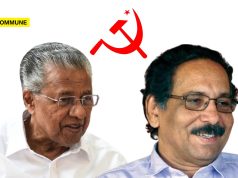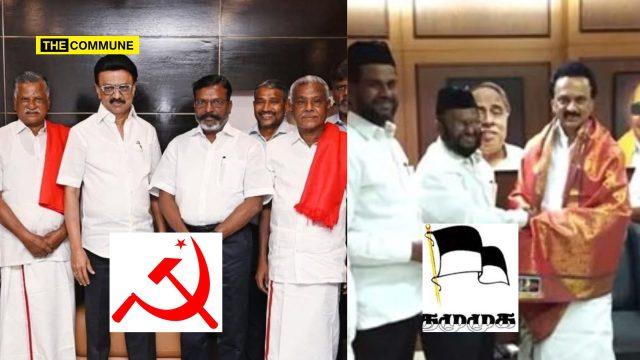
A 28-year-old document from the Justice P.R. Gokulakrishnan Commission of Inquiry into the 1998 Coimbatore serial bomb blasts has resurfaced, exposing a glaring contradiction at the heart of Tamil Nadu’s Left politics – the Communist Party of India (Marxist) once demanded the outright ban of Tamilaga Muslim Munnetra Kazhagam (TMMK), the very organisation whose founder, M.H. Jawahirullah, is today their electoral ally in the DMK-led front ahead of the 2026 Tamil Nadu Assembly elections.
On 25th April 1998, barely months after the devastating serial bomb blasts rocked Coimbatore on February 14, killing 58 people and injuring hundreds, CPI(M)’s Thiru K.C. Karunakaran, District Secretary, appeared before the Gokulakrishnan Commission. In a signed written submission, he explicitly demanded: “Tamizhaga Muslim Munnetra Kazhagam should be banned.”
Communist party (Marxist) appeared before commission on enquiry about Coimbatore bomb blast
Recommended banning Tamilaga Muslim Munnetra Kazhagam (TMMK) Headed by Jawahurilla during 1998 calling it as terrorist organisation
Today same CPI(M) is in alliance with Jawahurilla 😂 pic.twitter.com/Tq6CqJ72kU
— Yuvaraj Ramalingam (@YuvarajPollachi) March 17, 2026
CPI(M) was, in effect, treating TMMK as a communally dangerous organisation with suspected links to the terror network responsible for the serial bomb blasts that day.
TMMK was founded in 1995 by M.H. Jawahirullah, who led the organisation as its president. In 2009, Jawahirullah launched Manithaneya Makkal Katchi (MMK) as the political wing of TMMK, transitioning into direct electoral politics. He currently serves as MLA from the Papanasam constituency.
Fast-forward to today: CPI(M), TMMK, and Jawahirullah’s MMK are all sitting comfortably inside the DMK-led Secular Progressive Alliance for the 2026 state elections. CPI(M), which once raised its voice before a judicial commission demanding TMMK’s dissolution for allegedly stoking communal fire, is now negotiating seat shares in the same coalition as that organisation’s founder.
The shift does not appear to reflect any clearly articulated ideological evolution, but rather a pragmatic electoral recalibration framed in terms of “secular unity.” CPI(M)’s earlier position, recorded before a judicial commission probing a major terror attack, now stands in contrast to its present alliance choices, raising questions about the consistency and durability of its stated principles.
Subscribe to our channels on WhatsApp, Telegram, Instagram and YouTube to get the best stories of the day delivered to you personally.