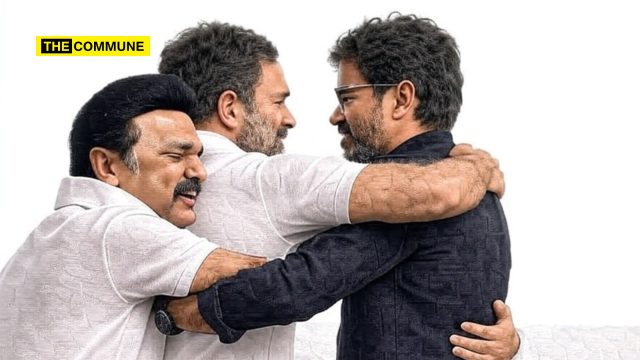
Speculation is mounting that the Indian National Congress may be considering a dramatic political realignment in Tamil Nadu, potentially abandoning its long-standing alliance with the Dravida Munnetra Kazhagam (DMK) in favor of a new partnership with actor-politician Vijay’s Tamilaga Vettri Kazhagam (TVK) for the 2026 state elections. This potential shift comes amid growing tensions between the Congress and DMK, with multiple Congress leaders publicly demanding a greater share of power and seats, while TVK positions itself as a viable alternative to established Dravidian parties.
The political temperature in Tamil Nadu has risen significantly following the tragic Karur stampede at a TVK rally that claimed 41 lives, which unexpectedly opened new channels of communication between national opposition leader Rahul Gandhi and fledgling politician Vijay. As traditional alliances show signs of strain and new players emerge, Tamil Nadu’s political landscape appears poised for potentially significant transformation ahead of the crucial 2026 assembly elections.
Growing Strains in the DMK-Congress Alliance
The tensions between the Congress and DMK in Tamil Nadu have always been pretty visible. Former Tamil Nadu Congress Committee (TNCC) chief KS Alagiri has been vocal about Congress’s “legitimate right” to demand more Assembly seats and a substantial share in governance, arguing that the party’s significant vote bank warrants proportional representation.
The friction escalated when Congress’s Tamil Nadu in-charge Girish Chodankar reportedly made a bold “fifty-fifty demand” at a party meeting in Tirunelveli, seeking 117 Assembly seats out of Tamil Nadu’s 234 constituencies and pushing for a coalition government arrangement. This demand represents more than double the 25 seats Congress contested in the 2021 elections, signaling an unprecedented power grab within the alliance.
Congress Legislature Party Leader S Rajeshkumar further intensified the standoff by expressing doubts about DMK’s electoral prospects and demanding that Congress MLAs be given ministerial berths in any future government. “If the Congress has to grow in Tamil Nadu, we need to be a part of the government, so that we can make a difference in the lives of the people directly,” Rajeshkumar declared.
As regards the Karur stampede, Congress MP Chidambaram’s public criticism of the government’s handling of the stampede has been seen by political observers as particularly significant. “There is fault from all sides. Every party should rectify their fault in the upcoming events,” Chidambaram stated, effectively distancing Congress from the DMK government’s administrative lapses.
His son Congress MP Karti Chidambaram also laid the blame on the government machinery for the tragedy.
Internal party sentiment reflects frustration with being kept “at an arm’s length” by the DMK government, with some Congress functionaries noting the stark contrast with the accessibility enjoyed during former Chief Minister M. Karunanidhi’s tenure.
Historical Context of Seat-Sharing Tensions
The current tensions around seat-sharing arrangements are not entirely new but appear to be intensifying as elections approach.
In the 2024 Lok Sabha elections, the Congress was allocated only 10 seats (9 in Tamil Nadu and 1 in Puducherry) under the DMK alliance, the same number it contested in 2019.
Congress leaders have pointed to historical precedents, noting the party contested 48 seats in 2006, 63 in 2011, and 41 in 2016, making the current allocation of 25 seats in the 2021 Assembly elections seem comparatively limited.
The public sparring between allies has become increasingly visible, exemplified by the confrontation between Congress MP Jothimani and DMK leader V. Senthil Balaji over alleged defection engineering, with Jothimani warning that the Congress would “never accept such disrespect” in the name of coalition.
The Karur Stampede and Rahul Gandhi’s Phone Call – More Than Condolences?
The tragic stampede at a TVK event in Karur unexpectedly created an opening for political engagement between the Congress and TVK. In a notable development following the Karur tragedy, Congress leader Rahul Gandhi reached out to TVK chief Vijay. While the call to Stalin appeared routine, Gandhi’s direct conversation with Vijay has sparked intense speculation about deeper political consultations.
Sources within Congress circles suggest that the call went beyond mere condolences, with Gandhi reportedly discussing the broader political situation in Tamil Nadu and expressing concern about the administrative failures that led to the tragedy. The timing of this outreach, when Vijay was facing his first major political crisis, is being interpreted as a strategic move to build bridges with the TVK leadership.
Rahul Gandhi’s personal call to TVK chief Vijay to express condolences over the stampede casualties, while also speaking to CM Stalin about the same incident, has been interpreted by political observers as a significant gesture.
The timing of this communication is particularly notable given the existing strains in the DMK-Congress relationship and Congress’s simultaneous demands for a greater political share.
Strategic Calculations for Both Parties
A potential Congress-TVK alliance would offer strategic advantages to both parties.
For Congress, partnership with TVK could provide the opportunity for more substantial seat allocation and potentially greater influence in governance, addressing the party’s current grievances with the DMK arrangement. The fact that over 25,000 people gathered for his rally, more than double the permitted crowd, showcased his mass following, while the administrative failures highlighted the need for experienced political partners.
Congress leaders reportedly see this as an opportunity. Sources suggest that Congress could offer TVK the administrative expertise and national political connections that the fledgling party lacks, while TVK provides the mass base and electoral appeal that Congress desperately needs in Tamil Nadu
For TVK, an alliance with Congress could provide organizational support and access to a statewide network, potentially compensating for the party’s newcomer status in electoral politics.
AICC General Secretary KC Venugopal, who has been handling Tamil Nadu affairs, is reportedly among those advocating for exploring alternatives to the DMK alliance. Sources indicate that Venugopal believes the Congress-DMK relationship has reached a saturation point where further growth is impossible.
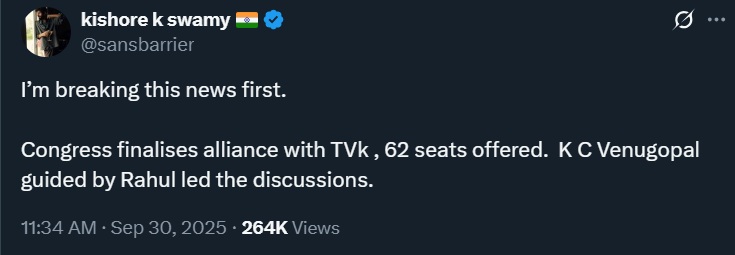
The speculation gained further traction when unverified social media reports claimed that “Congress finalises alliance with TVK, 62 seats offered” with “KC Venugopal guided by Rahul led the discussions”. While these reports remain unconfirmed, the timing coincides with increased political activity following the Karur tragedy.
Some analysts suggest that Congress may be using the potential TVK alliance as leverage in negotiations with DMK, with one noting “they will make noises like this to use it as a bargaining chip to get more seats, but they won’t leave”.
The Complex Road Ahead – Navigating Existing Alliances and Commitments
Any potential realignment would require careful navigation of existing political arrangements. The Congress-DMK alliance operates within the broader I.N.D.I bloc framework at the national level, complicating any outright separation in Tamil Nadu.
DMK has been the linchpin of opposition alliances in Tamil Nadu for decades, making a complete Congress departure a significant strategic shift with potential ramifications beyond state politics.
Timing and Strategic Considerations
With elections approaching, all parties face critical strategic decisions. For the Congress, the calculation involves balancing the desire for greater influence in Tamil Nadu against the potential risks of abandoning an established, successful alliance for an untested partnership.
For TVK, the decision involves whether maintaining its stance as an independent alternative outweighs the potential benefits of alliance with a national party.
The coming months will be crucial, with Congress leader Manickam Tagore noting that seat negotiations would typically take place in “January-February” ahead of the elections.
A Political Gambit in the Making
The Karur tragedy has irrevocably shifted the tectonic plates of Tamil Nadu politics. For the Congress, long stifled within the DMK alliance, the crisis presented a stark choice: remain a junior partner in a dwindling arrangement or gamble on a new force with palpable public momentum. The calculated phone call from Rahul Gandhi to Vijay was less a condolence and more a political signal, opening a backchannel that bypasses the DMK entirely.
While public commitments to the I.N.D.I. bloc persist, the underlying logic has fractured. The Congress’s vocal demands for a greater share of power are no longer just bargaining chips; they are the prerequisites for survival, and the DMK appears unwilling to meet them. TVK, meanwhile, offers untapped potential and the promise of a partnership where the Congress could wield real influence.
The established DMK-Congress alliance, once a constant of the state’s politics, is now a vessel cracking under pressure. The events in Karur exposed its structural weaknesses, creating an opening that both the Congress and TVK seem compelled to explore. Whether this realignment culminates in a formal pact or remains a powerful tool of negotiation, one truth is now inescapable: the road to 2026 no longer runs through a stable two-party alliance, but through the uncertain and opportunistic terrain shaped by tragedy and ambition. The old marriage is, if not over, then openly and profoundly broken.
Subscribe to our channels on Telegram, WhatsApp, and Instagram and get the best stories of the day delivered to you personally.