An electoral victory is never the result of any single factor. It is a complex convergence of party organisation, candidate quality, caste equations, financial muscle, campaign strategy, the strengths and flaws of opponents, leadership appeal, welfare promises, and the prevailing political mood.
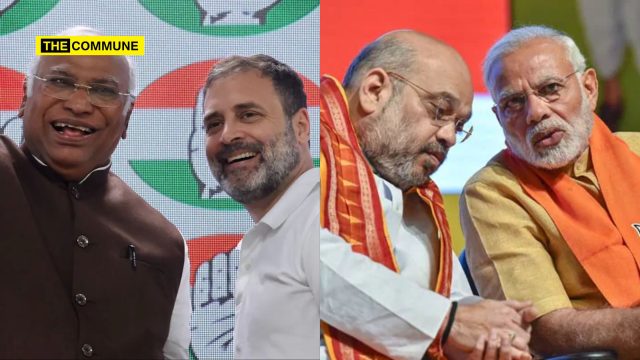
Yet the DMK, Congress, and similar parties refuse to confront this reality. Every defeat is blamed on EVMs, vote theft, or imaginary conspiracies. They know the truth. Dishonest messaging for political survival has become second nature. But even if they posture outside, shouldn’t they at least introspect within? Congress doesn’t even attempt that.
By contrast, the BJP keeps winning because it follows a clear formula rooted in discipline, strategy, and constant evolution.
1. Learning From Defeats
Critics mock the BJP for operating in “election mode” 24×7, 365 days. Ironically, that is exactly why they keep winning. The party immediately studies every loss, fixes weaknesses, rebuilds alliances, and begins preparing for the next victory.
Take Karnataka. Months before the election, Congress launched an aggressive campaign. Freebie politics became an advantage for them, especially when PM Modi publicly criticised such giveaways. Internal issues — the Yediyurappa factor, and the alliance breakdown with Kumaraswamy — hurt the BJP. Yet BJP’s vote share did not fall, which itself was a strategic advantage.
And the BJP learned. It realised that freebies could no longer be ignored. So in the next big contest — Madhya Pradesh — Shivraj Singh Chouhan launched and implemented a women-centric welfare scheme well before voting. Congress’s “freebie brahmastra” was neutralised. BJP retained power by securing alliances and beginning the campaign months in advance.
After losing Himachal and Karnataka to welfare politics, the BJP adjusted. The same formula worked in Maharashtra, Haryana, and now in Bihar, where Nitish Kumar’s women-oriented scheme became a decisive factor in the thumping victory.
2. Replacing Unpopular Candidates
Another BJP trademark is ruthlessly replacing candidates who have lost public goodwill. This shields the party from anti-incumbency despite long years in power.
Congress simply cannot do this. In many states the same exhausted faces repeatedly contest and repeatedly lose, ensuring the party’s continued decline.
3. Caste Representation Done Strategically
BJP’s social engineering is a political case study. The party ensures broad caste representation in both tickets and leadership positions. This inclusive structure consolidates votes and prevents resentment.
Few parties match this level of granular social outreach.
4. Strengthening Alliances
A major reason for BJP’s 2023 Karnataka defeat was the absence of a BJP–JDS tie-up. The day the assembly results were declared, BJP began repairing that relationship. The result? A strong showing in the subsequent parliamentary election.
Similarly, bringing Nitish Kumar and Chandrababu Naidu back into the NDA was a masterstroke — the Modi government today rests on their support.
In Bihar, the earlier split with Chirag Paswan hurt the NDA. This time, BJP brought him back, gave him a Cabinet berth, and allocated 29 seats to his party. The result is the sweeping mandate we see today.
Even smaller tactical moves matter. In the previous election, actor Sharan Singh campaigned against the BJP-Nitish alliance and contributed to their losses. This time he campaigned for the NDA. Such invisible micro-strategies often shape outcomes.
There are many such examples. But they all underline one point: learning from mistakes is the foundation of BJP’s victories.
Now ask: has Congress done even one of these things?
Congress does not respect state parties, yet depends entirely on them. In alliance after alliance, regional partners end up carrying Congress’s burden.
No wonder AAP, Trinamool and others avoid Congress when it comes to state elections.
In Bihar too, many voters believe Tejashwi Yadav might have won an even bigger mandate had he not allied with the Congress.
Congress has become a burden — electorally and organisationally.
Congress – A Party In Decay
No power in Tamil Nadu since 1967
No power in West Bengal since 1977
No organisational presence in Odisha
No comeback possible in Maharashtra
The party has no leadership pipeline, no strategy for growth, no ability to retain talent. Leaders like Sharad Pawar, Jyotiraditya Scindia, Himanta Biswa Sarma — the list runs into hundreds — all walked out after being ignored and humiliated.
Himanta, once a Congress minister, was made to wait outside offices. Today he is BJP’s Chief Minister in Assam.
This arrogance flows from the top. Congress today functions with a royal mindset. Rahul Gandhi behaves like a crown prince who believes everyone exists to serve him, that the nation must lift him to the Prime Minister’s chair.
With no leadership qualities, no mass connection, no consistency, no oratory, and no strategic thinking, he remains incapable of delivering victory. His only achievement is a long political career without a single major achievement.
The Verdict In Bihar
Congress can blame EVMs, the Election Commission, or imaginary conspiracies.
But those who fool themselves cannot fool the people.
Indian voters reward humility, correction, and hard work. Those who bow to the people’s verdict, fix their weaknesses, and return stronger are always given another chance. History offers countless examples.
Ideaman Mahadevan is a writer and political commentator.
Subscribe to our channels on WhatsApp, Telegram, Instagram and YouTube to get the best stories of the day delivered to you personally.