


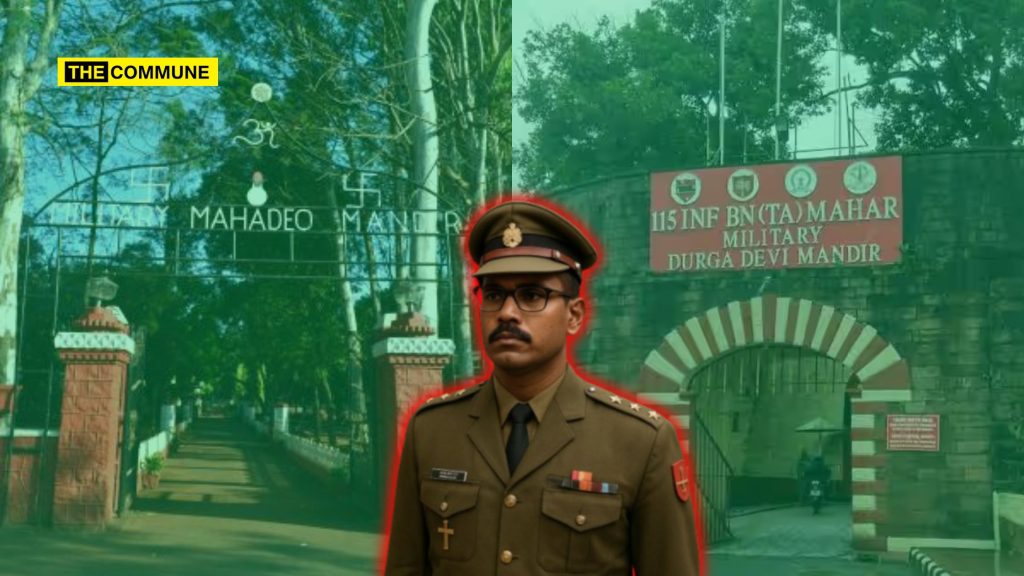
The Supreme Court is examining whether a Christian Army officer’s refusal to perform a temple ritual constitutes legitimate religious expression or an unforgivable breach of military protocol that warrants termination.
The case concerns Lieutenant Samuel Kamalesan, who was dismissed from service after he declined to enter the inner sanctum of his regiment’s temple to perform aarti during a ceremonial duty. The officer, attached to the 3rd Cavalry Regiment, argued that participating in the ritual would violate his monotheistic Christian faith.
The Troubling Precedent of Personal Belief Over Military Order
What makes this case particularly consequential is the challenge it poses to the fundamental principle of military hierarchy. The Delhi High Court, while upholding Kamalesan’s termination, delivered a stark warning: “Keeping one’s religion above a lawful command from a superior officer is an act of indiscipline.”
The military’s position is unambiguous – the Army cannot function as a democracy where soldiers pick and choose which orders to follow based on personal belief. Regimental rituals, whether religious or ceremonial, serve the crucial purpose of building unit cohesion and morale. When an officer distances himself from these practices, he risks alienating himself from the troops he must lead into battle.
Why This Case Should Concern Every Indian
This legal battle raises troubling questions about the future of military discipline in an increasingly individualistic society. The Armed Forces have historically operated on the principle that personal beliefs must yield to institutional requirements when national security is at stake.
The case reveals several alarming implications:
The Erosion of Command Authority: If soldiers can refuse orders based on religious grounds, it sets a dangerous precedent that could compromise operational effectiveness. As the High Court noted, hesitation in peace could become fatal hesitation in war.
Selective Obedience: The military functions on absolute obedience, not negotiated compliance. Today it’s a temple ritual; tomorrow it could be a soldier refusing to fire because his religion prohibits killing, or another refusing to handle certain equipment due to dietary restrictions.
Undermining Regimental Culture: Army regiments often draw strength from shared traditions and rituals. The 3rd Cavalry maintains both a temple and gurdwara, reflecting its composition of Sikh, Jat, and Rajput troops. Allowing individual exceptions could fragment this carefully maintained unity.
The Constitutional Dilemma
The Supreme Court, led by Justice Surya Kant, must balance Article 25’s guarantee of religious freedom against Article 33, which specifically allows Parliament to restrict fundamental rights of Armed Forces personnel to ensure proper discharge of duties and maintenance of discipline.
This isn’t merely about religious rights; it’s about whether any personal belief can override the military’s operational requirements. The Army’s argument is compelling: in uniform, the only deity is duty, and the only religion is service to the nation.
A Warning from Recent History
The timing of this case is particularly significant given the Indian military’s recent operational successes, including the spectacular triumph during Operation Sindoor. These victories were achieved precisely because of the unquestioning discipline and unity that characterizes our Armed Forces.
If the Supreme Court rules in favor of individual religious exceptions, it could fundamentally alter the character of the world’s second-largest standing army. The military’s strength has always lain in its ability to transcend individual differences in service of a common national purpose.
(With inputs from OpIndia)
Subscribe to our channels on Telegram, WhatsApp, and Instagram and get the best stories of the day delivered to you personally.