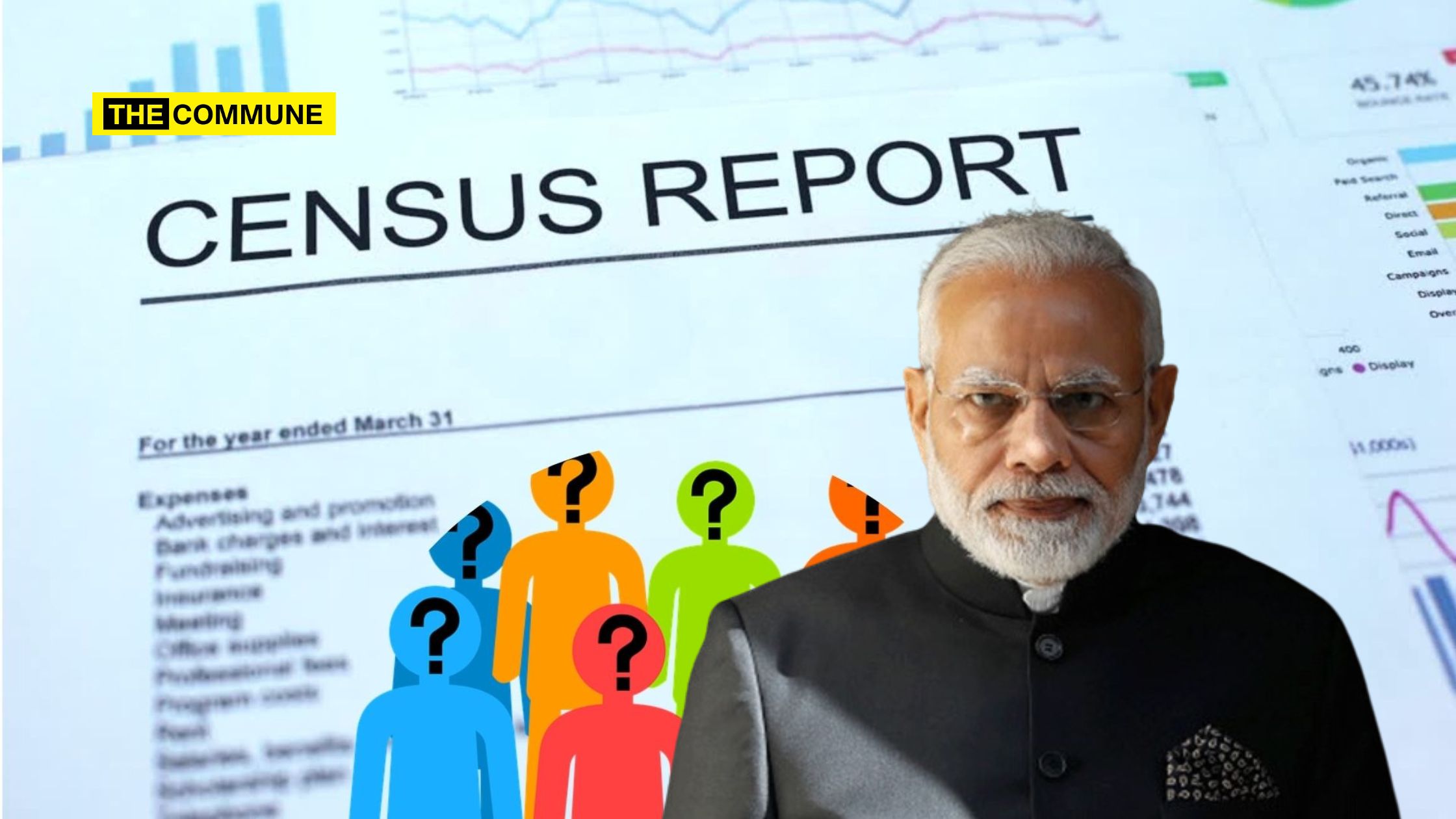
As the Modi government on Wednesday announced its decision to include caste enumeration in the upcoming national Census, an old letter from 2010 has resurfaced, showing that the BJP had already backed the idea of a caste census over a decade ago, when it was in opposition.
The letter, dated August 6, 2010, was written by the then Leader of Opposition in the Lok Sabha, Sushma Swaraj, to the then Finance Minister Pranab Mukherjee. In it, Swaraj clearly conveyed the BJP’s support for canvassing caste during the Census or National Population Register (NPR) exercise, as long as it did not affect the integrity of the headcount.
“The BJP had already clarified its stand in Lok Sabha,” Swaraj wrote. “The party reiterates that ‘caste’ can be canvassed in the ongoing Census/NPR exercise. We agree that the caste should be canvassed in such manner and at such stage so that it does not affect the integrity of the headcount.”
A letter from August 2010 shows that the BJP, while in opposition, had agreed to caste enumeration. However, the Congress failed to deliver. The Gandhis are inherently opposed to those from marginalised communities. Rajiv Gandhi’s longest speech in Parliament was against… pic.twitter.com/O39tNl5E1H
— Amit Malviya (@amitmalviya) April 30, 2025
The letter undercuts repeated claims by the Congress party that it is the sole advocate of caste enumeration and puts the spotlight on the Congress-led UPA government’s failure to deliver results from its own Socio Economic and Caste Census (SECC) conducted in 2011. While the data was collected during UPA-2’s tenure, it was never officially released in full, prompting criticism from across the political spectrum.
The fresh announcement by the Modi government removes a major talking point from the Congress, particularly from Rahul Gandhi, who had repeatedly accused the BJP of being afraid to reveal the true social composition of the country. Gandhi had often cited the SECC to press for a caste census, claiming that it was the key to ensuring “social justice” in governance.
Historically, India has only officially published caste data for Scheduled Castes and Scheduled Tribes since the first post-Independence census in 1951. Other caste data, particularly for OBCs and EBCs, has remained either unpublished or politically contentious.
The debate intensified after the Bihar government released the findings of its own caste survey in October 2023. The data revealed that Other Backward Classes (OBCs) and Extremely Backward Classes (EBCs) make up over 63% of the state’s population, with EBCs being the largest group at 36%.
The BJP’s longstanding but often overlooked support for caste enumeration now places it in a stronger position to claim continuity and legitimacy on this front, as it prepares to implement a nationwide caste census—a demand that has grown steadily louder from both regional and national parties.
Subscribe to our channels on Telegram, WhatsApp, and Instagram and get the best stories of the day delivered to you personally.