


DMK Minister Palanivel Thiagarajan (fashioned as PTR), recently penned an article in The Indian Express defending the state’s two language policy and opposing the National Education Policy’s (NEP) three-language formula.
Education is the beating heart of the Dravidian political philosophy, starting with the Justice Party Govt legislating compulsory education over a century ago. Tamil Nadu’s steadfast two-language policy is shaped by equity and validated by outcomes. The Union Government… pic.twitter.com/MBMc4CQtm2
— Dr P Thiaga Rajan (PTR) (@ptrmadurai) March 9, 2025
However, his article contains multiple fallacies, misrepresentations, and contradictions. Let us have a look at his claims and also compare them with data and logical analysis.
Claim: Dravidian Philosophy Removed Educational Exclusivity And Provided Equitable Access
Reality: Equitable education means fair access to quality education for all students. If Tamil Nadu’s two-language policy (Tamil and English) were truly equitable, it would apply uniformly across all schools. However, private schools often provide the choice to learn additional languages, while government schools strictly enforce the two-language formula. This creates a clear disparity between students in private institutions and those in government schools, effectively denying quality education to those who cannot afford private schooling.
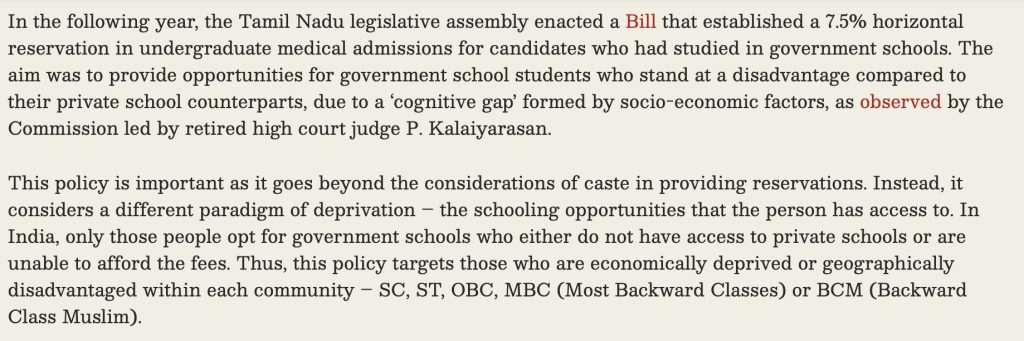

The Dravidian movement, which prides itself on being anti-Brahminical and claims to have dismantled educational barriers, ironically enforces language-based restrictions that limit students’ ability to learn additional languages. This contradicts their own stance on equitable education and opportunities.
Claim: Two-Language Formula Means Tamil + English
Reality: PTR presents the two-language formula as a long-standing policy, but the historical facts contradict this assertion:
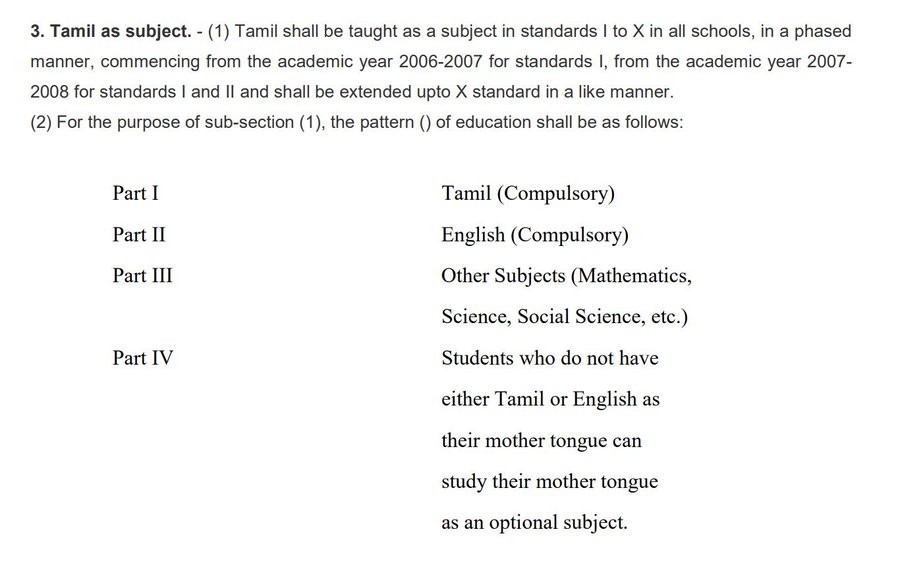
- Before 2006, it was possible to complete education in Tamil Nadu without learning Tamil.
- The Tamil Nadu Tamil Learning Act (2006) mandated Tamil learning in schools, while allowing an optional third language.

- The Supreme Court has ruled that mother-tongue education should be an option. This means that migrant children whose mother tongue is Hindi, Bengali, or another language should be provided the opportunity to learn their own language.
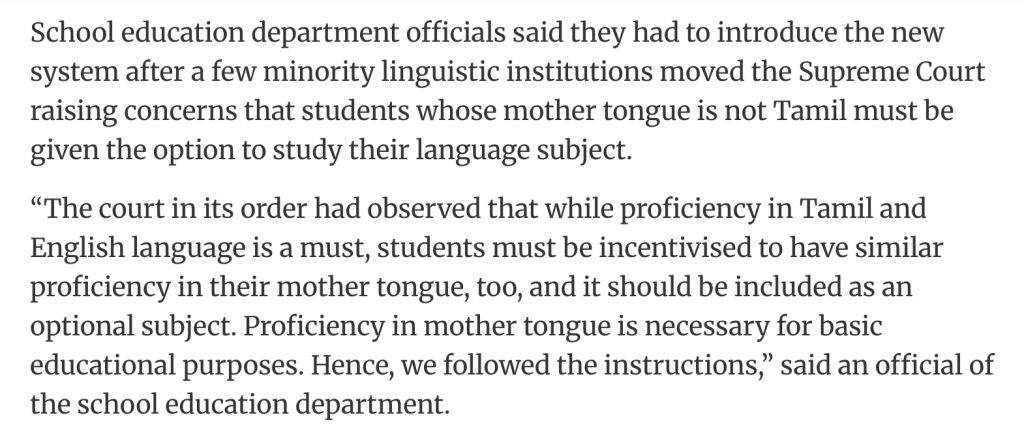

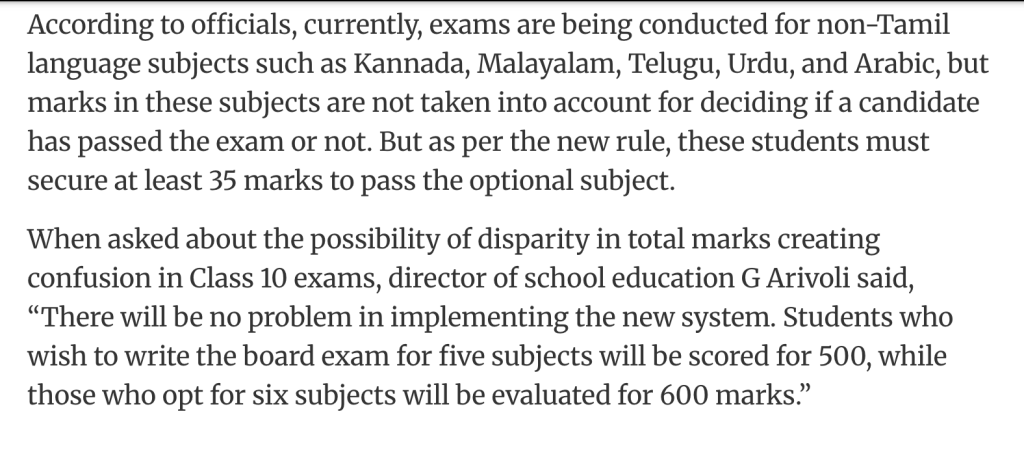

Thus, even without NEP, the problems PTR claims to oppose already exist within the current system. The Tamil Nadu government’s approach forces a rigid framework on students instead of ensuring real linguistic flexibility.
Claim: The Presence of Dakshin Bharat Hindi Prachar Sabha In Chennai Shows Language Freedom
Reality: PTR suggests that the mere presence of the Hindi Prachar Sabha in Chennai proves that Tamil Nadu encourages linguistic diversity. However, this ignores the active hostility faced by Hindi learners in the state:
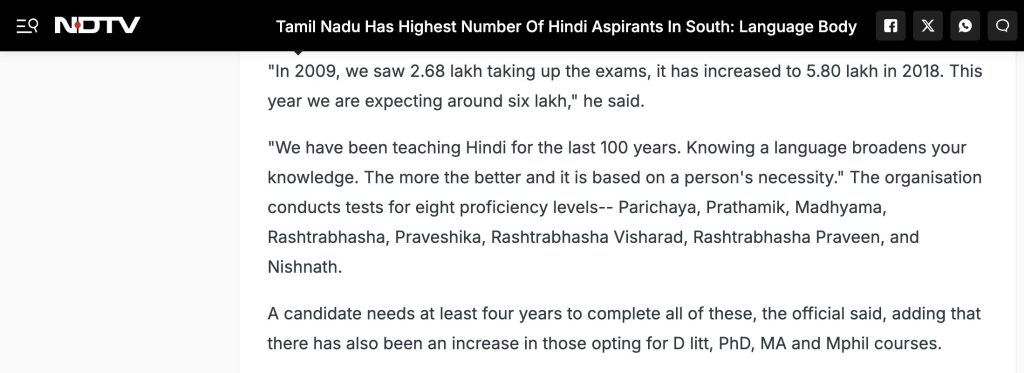
- Hindi Prachar Sabha’s data shows widespread interest in learning Hindi in Tamil Nadu.
- If Hindi were truly being imposed, as PTR suggests, people would not voluntarily sign up to learn it.
- Despite this, groups like WeDravidians actively organize protests against Hindi learning, discouraging linguistic diversity.
- The Tamil Nadu government has taken no action against such groups, further proving that language learning is restricted by political ideology rather than genuine student choice.

Claim: Tamil Nadu’s Education Model Produces Better English Proficiency
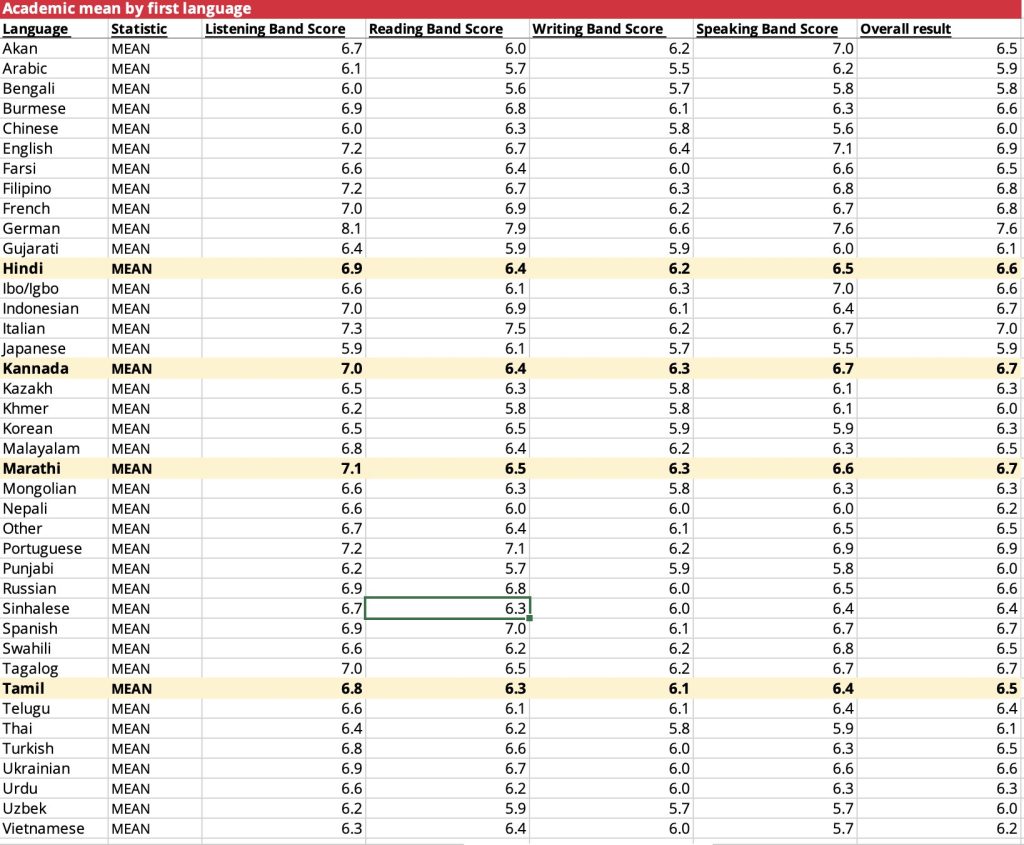
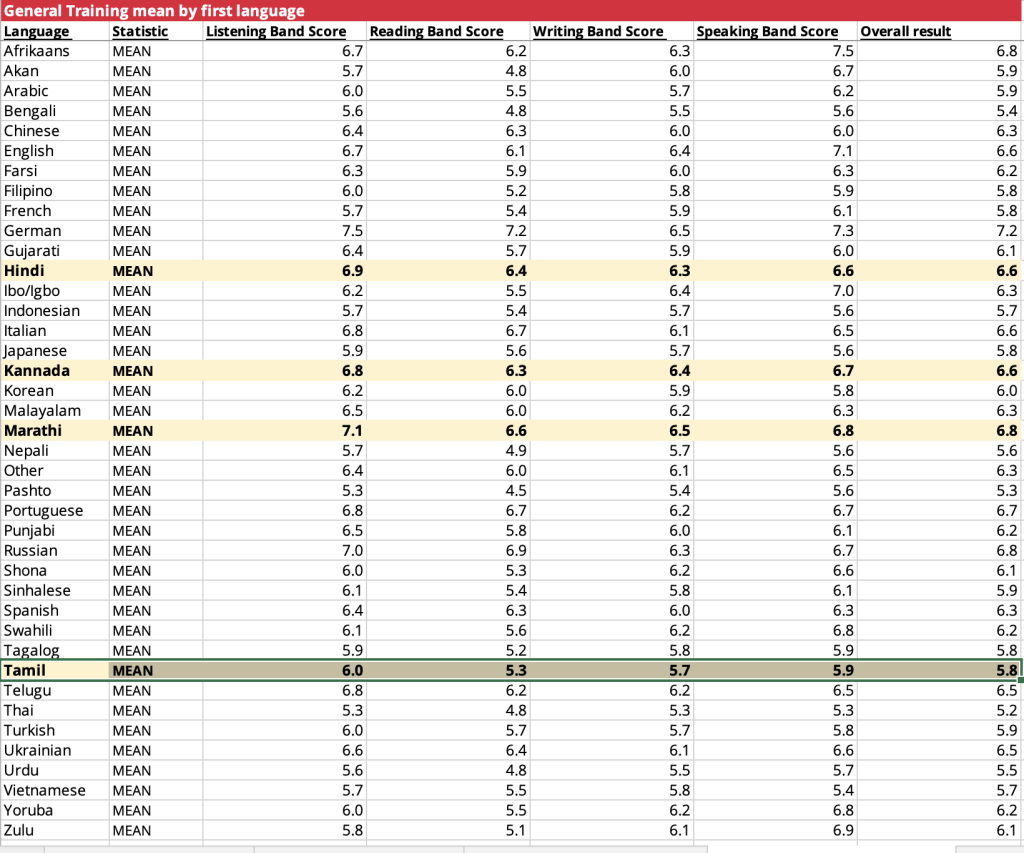
Reality: PTR argues that Tamil Nadu’s two-language formula has made its students more proficient in English than their counterparts from Hindi-speaking states. However, data from IELTS Academic and General Training Exams contradict this claim:
- Median scores for IELTS show that Hindi speakers perform better than Tamil speakers.
- Kannada and Marathi speakers also outperform Tamil speakers in English proficiency.


The Wheebox India Skills Report indicates that states like Karnataka, Uttar Pradesh, Telangana, and Maharashtra produce better English-speaking professionals than Tamil Nadu.
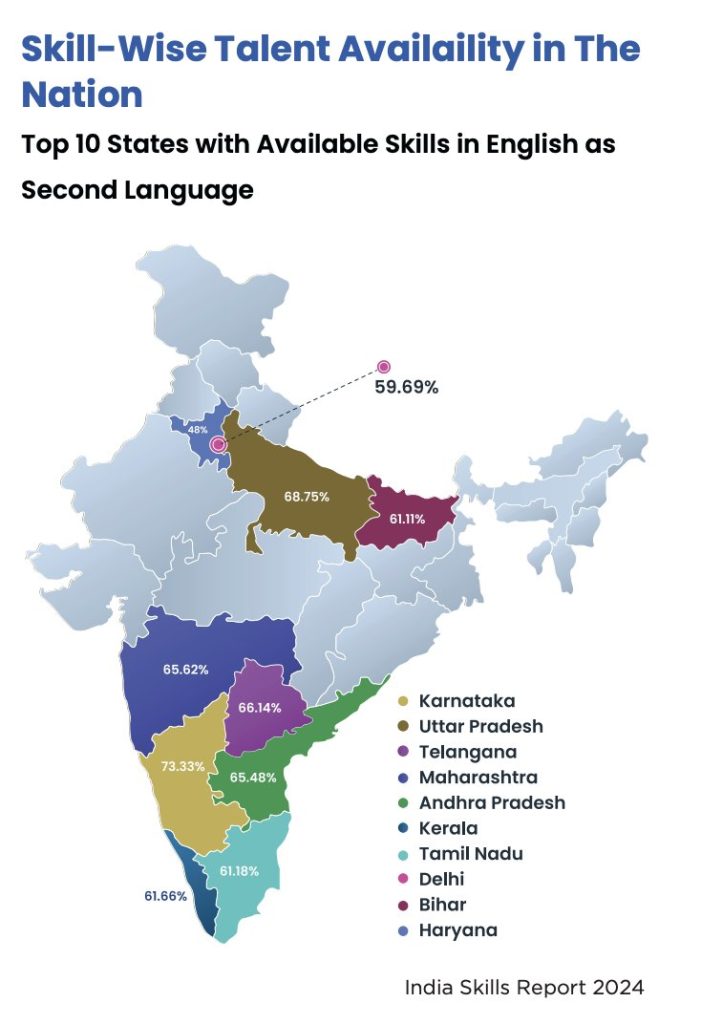

These statistics directly refute the notion that Tamil Nadu’s restrictive language policy leads to superior English proficiency. In fact, it may even be hindering English education.
Claim: Learning A Third Language Threatens Tamil’s Survival
Reality: PTR argues that introducing a third language will dilute Tamil and lead to its decline. However, this claim lacks historical basis:
- Tamil has survived and thrived despite centuries of royal patronage for Sanskrit.
- If Tamil has remained strong despite past influences, how can the addition of a third language suddenly cause its decline?
- Historically, banning a language does not make another stronger—it only limits students’ opportunities.
- Under Tamil Nadu’s language policy, many Tamilians completed schooling without learning Tamil at all. This was arguably more detrimental to Tamil than the inclusion of a third language.
DMK Ally Congress’ MP Chidambaram Talked About Promoting Hindi
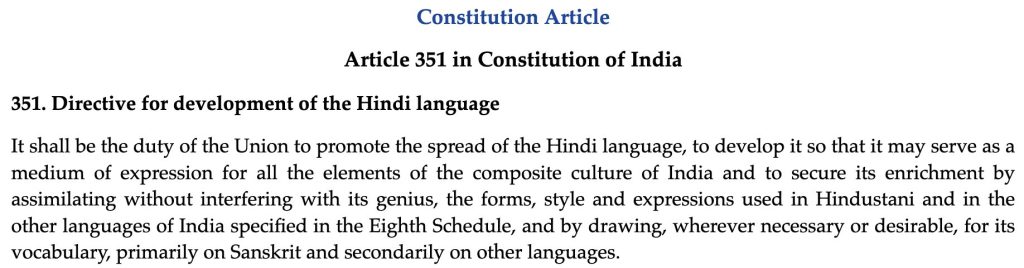
When the DMK was in alliance with the Congress at the centre, the then Minister Chidambaram called for promotion of Hindi in adherence to Article 351 of the Constitution.
There is an attempt to confuse the Home minister’s statement on fostering adoption of Hindi under Article 351 of Constitution with the three language formula.
When P Chidambaram was Home minister and DMK was part of the Government, he had talked about promoting Hindi. pic.twitter.com/FhofXrZ4ch
— Sreedharan K S (@SreedharanKs) March 16, 2025
Article 351 says, “It shall be the duty of the Union to promote the spread of the Hindi language, to develop it so that it may serve as a medium of expression for all the elements of the composite culture of India and to secure its enrichment by assimilating without interfering with its genius, the forms, style, and expressions used in Hindustani and in the other languages of India specified in the Eighth Schedule, and by drawing, wherever necessary or desirable, for its vocabulary, primarily on Sanskrit and secondarily on other languages.”

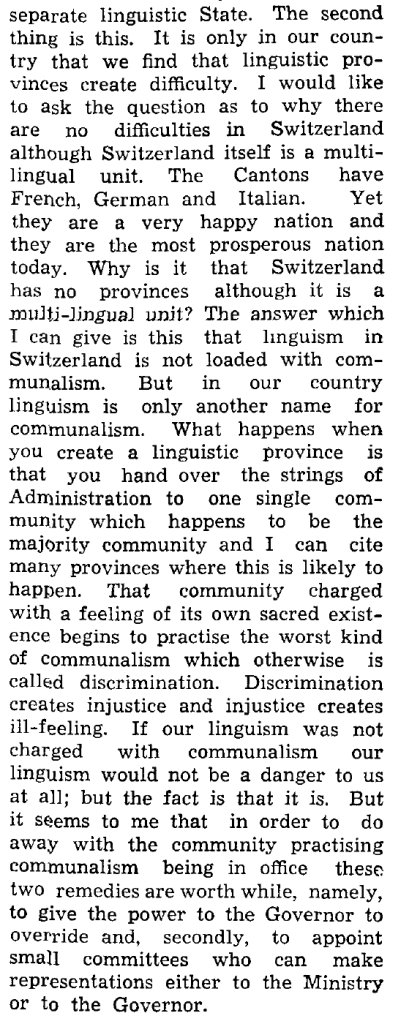
Dr. Ambedkar, during the Andhra Bill debate, observed that linguistic divisions in India were fueling communalism and discrimination. To counter this, he proposed strengthening the Governor’s authority as a potential solution.

The True Problem Lies In Political Fear, Not Educational Policy
PTR’s article relies on political rhetoric rather than factual analysis. His argument against the three-language formula falls apart under scrutiny, as:
- Tamil Nadu’s education policy is not truly equitable, as private schools offer more linguistic flexibility than government schools.
- The historical record contradicts the claim that Tamil + English was always the policy.
- The demand for Hindi learning in Tamil Nadu shows that people are interested, despite political hostility.
- Data from international exams and employment reports show Tamil Nadu’s restrictive language policy does not produce better English proficiency.
- The survival of Tamil does not depend on banning other languages but on nurturing its continued growth.
Instead of opposing linguistic diversity, Tamil Nadu’s government should focus on empowering students with choices. The NEP’s three-language formula does not force Hindi on Tamil Nadu—it simply allows students the freedom to choose an additional language. True progress lies in educational inclusivity, not linguistic imposition disguised as preservation.
(This article is based on an X thread by Sreedharan KS)
Subscribe to our channels on Telegram, WhatsApp, and Instagram and get the best stories of the day delivered to you personally.