


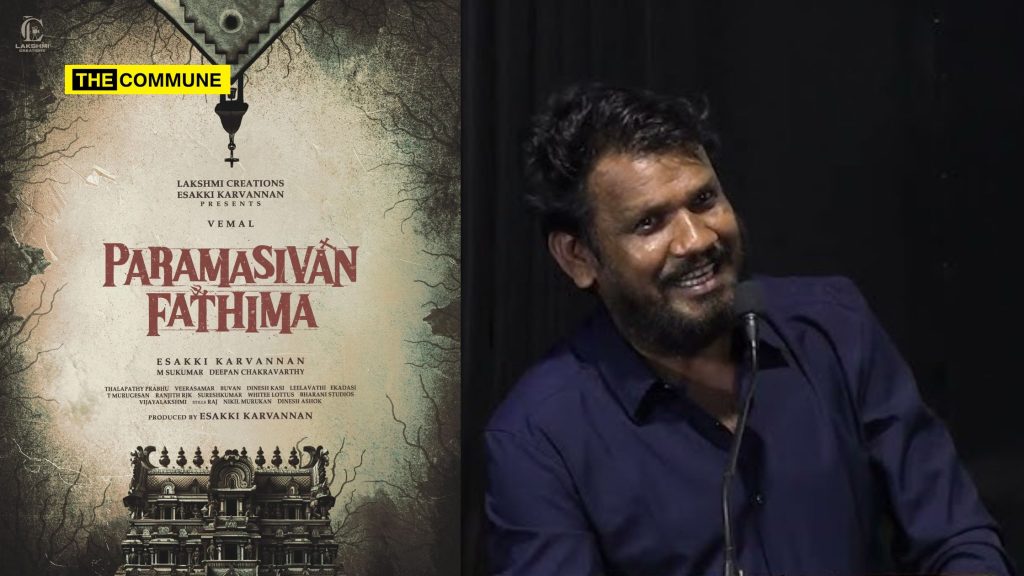
At a press meet for the controversial Tamil film “Paramasivan Fathima”, director Esakki Karvannan delivered an emotionally charged and impassioned defense of the film, reacting strongly to questions from journalists about the film’s alleged anti-Christian tone and its treatment of religious identity.
Speaking with rising intensity, the director rejected the claim that the film targeted any particular religion. “I’m not talking about religion here. I never mentioned religion. I’m talking about the identity rooted in my land,” the director began, visibly emotional. “You are calling it religion, but when I perform my rituals abroad — the way I live, the customs I follow — you see it as religion. I don’t. I see it as my land’s identity,” he said.
Rejects Religious Framing
Facing repeated questions from reporters, the director emphatically denied that the film had an anti-Christian bias. The filmmaker said, “This film may appear to be anti-Christian, but we never said that. We never said we are against that religion. If I were against Christianity, I should’ve supported Hinduism. Or Islam. But I haven’t. It’s just a story. A story based on my own life, what I lived and experienced.”
Referring to spiritual depictions in the film, he added: “You say ‘Karuppu Saami’ appears in the film. But what is a ‘Saami’? We just use the word to call our ancestors. Even if it’s Jesus, after death, we see him as a ‘Saami.’ So we view all of them as deities in our collective sense. That’s how we see it — with a secular lens. People will definitely accept this. This is my story. I lived this. From my childhood, all these events happened to me. I was affected. My identity was erased. My relationships were broken.”
He elaborated that the narrative depicts his own childhood and the trauma of identity erasure he faced. “My forefathers were turned into saints after death. Even Jesus, after his death, became a saint. That’s how people here see him. So don’t frame this film in religious binaries.”
On Tamil Identity and Indian Law
Responding to questions about whether the film disrespects Indian national symbols, the director flatly denied such allegations. He said, “The Indian tricolor or Tamil Nadu identity isn’t disrespected in any way. I respect this land. My argument is simple: why should anyone have to erase their Tamil identity for a foreign religious label?”
He further said, “There are many parts of our history and law that still need correction. Do you know how many amendments have come since independence? Why were they made if the original law was perfect? Ask the lawmakers — did they not know when they passed the first version? People are now waking up to their native identity. That’s why change is needed.”
Film’s Central Message
The director emphasized the thematic core of the movie: honoring ancestors and reclaiming indigenous identity. “In this film, I simply say that if you don’t worship your ancestors, you’re left calling them ghosts. That’s all. Where exactly are you finding fault?”
When asked about religious conversion, he issued a sharp rebuttal, “So now you’re asking — should people convert or not? I’m saying, don’t erase our identities.”
He elaborated further, “Again, you are seeing rituals as religion. I’m not. I view them as cultural. When I follow an Arab custom or some white man’s tradition, that remains his identity. But I’m a Tamil, I’m an Indian — and I want to retain my native identity. That’s what I’m saying. This film is not made to attack any other religion. It is to ask — why should religion stop two humans from loving and marrying?”
When asked about religious conversion and its portrayal in the film, he said, “You’re asking if converting is wrong. I’m asking why identities must be erased. When I go abroad, my rituals are seen as part of a religion—but I see them as part of my land, my soil.”
Critique Of Missionary Education
He launched into a detailed critique of Christian missionary schools, accusing them of co-opting state resources while propagating their religious identity. The most explosive part of the press meet came when the director turned his ire toward missionary-run schools in Tamil Nadu: “Tell me which school was built by Christians? We all call it Christian schools and that is their intention too. But even Christian schools got government support. I myself studied in one. Those schools were built on government land. Salaries came from public funds. The British didn’t bring land from London — it was given by our government. And taxes? All from us.” He further added, “Government is paying the salaries. I even put that as a dialogue in the film — that it’s not just for some, everyone’s salaries come from the government.”
He pointed out the irony in praising Christian missionary contributions while forgetting native ones: “Before independence, you say we had no schools? What about Pachaiyappa’s College? Who built it? Why was it built? Go research.”
Calls for Historical Reevaluation
The director also called for a re-examination of India’s educational and legal histories. “Why do we still cling to colonial amendments and laws that were passed without consulting native voices?” he asked.
He emphasized the need for societal introspection, he said, “We must ask ourselves: why were schools in Tamil Nadu lacking Tamil instruction before 1954? Why were missionary schools the norm, while native forms of education like the ‘gurukulam’ were dismissed?”
The fiery press meet ended with the director reiterating that Paramasivan Fathima is neither propaganda nor a religious attack. “This is a story rooted in my experience. It’s about reclaiming identity—not attacking others’. If that’s controversial, so be it,” he said.
மதம் மாறக்கூடாதா? கிறிஸ்தவர்களுக்கு எதிரான படத்தை எடுத்தது ஏன்? செய்தியாளர்களின் அடுக்கடுக்கான கேள்விகளுக்கு ‘பரமசிவன் பாத்திமா’ பட இயக்குனர் ஆவேசமாக கொடுத்த சர்ச்சை பதில்கள்.!#ActorVimal | #ParamasivanFathima | #EsakkiKarvannan | #PolimerNews pic.twitter.com/3TjUemyqqt
— Polimer News (@polimernews) June 5, 2025
Paramasivan Fathima – The Film
Paramasivan Fathima, directed by Esakki Karvannan and starring Vimal, Sayadevi, and MS Bhaskar, is a daring Tamil film that tackles themes of religious conflict, forced conversions, and missionary propaganda. Set in two contrasting villages—Hindu-majority Subramaniapuram and Christian-majority Yakobupuram—the film explores interfaith love, sectarian strife, and the tension triggered by conversion agendas. The trailer features bold dialogues and controversial scenes, including critiques of missionary education and depictions of state-enforced “social harmony.” With sharp exchanges like “The white man came here to beg,” the film positions itself as a rebuttal to narratives that glorify missionary influence. The film is expected to stir debate, challenging the Dravidianist tone prevalent in Tamil cinema. It marks a significant political and cinematic move for lead actor Vimal.
Subscribe to our channels on Telegram, WhatsApp, and Instagram and get the best stories of the day delivered to you personally.