The famed author, Michael Crichton, once said, “If you don’t know history, then you don’t know anything. You are leaf that doesn’t know it’s a part of the tree”. History is limited to the versions captured in the school textbooks, the narrative of which is set by the powers that may be. More often than not, some of the illustrious eras of the past get relegated to occasional passing mentions and don’t get the justice of being represented for what they are.
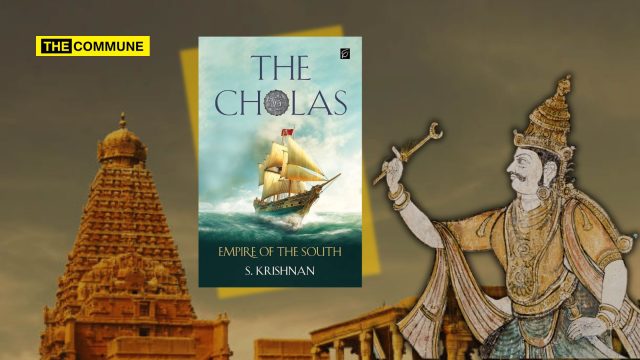
The land which we inhabit currently has been walked over by some very illustrious kingdoms of the past, whose accounts we know nothing of. This type of disservice is corrected by some good authors, who, with some painstaking research and years of toil, come up with a book that paints a vivid picture of a kingdom gone by. The book, The Cholas, is one such effort that portrays the lives and times of one of the most famous kingdoms of the past.
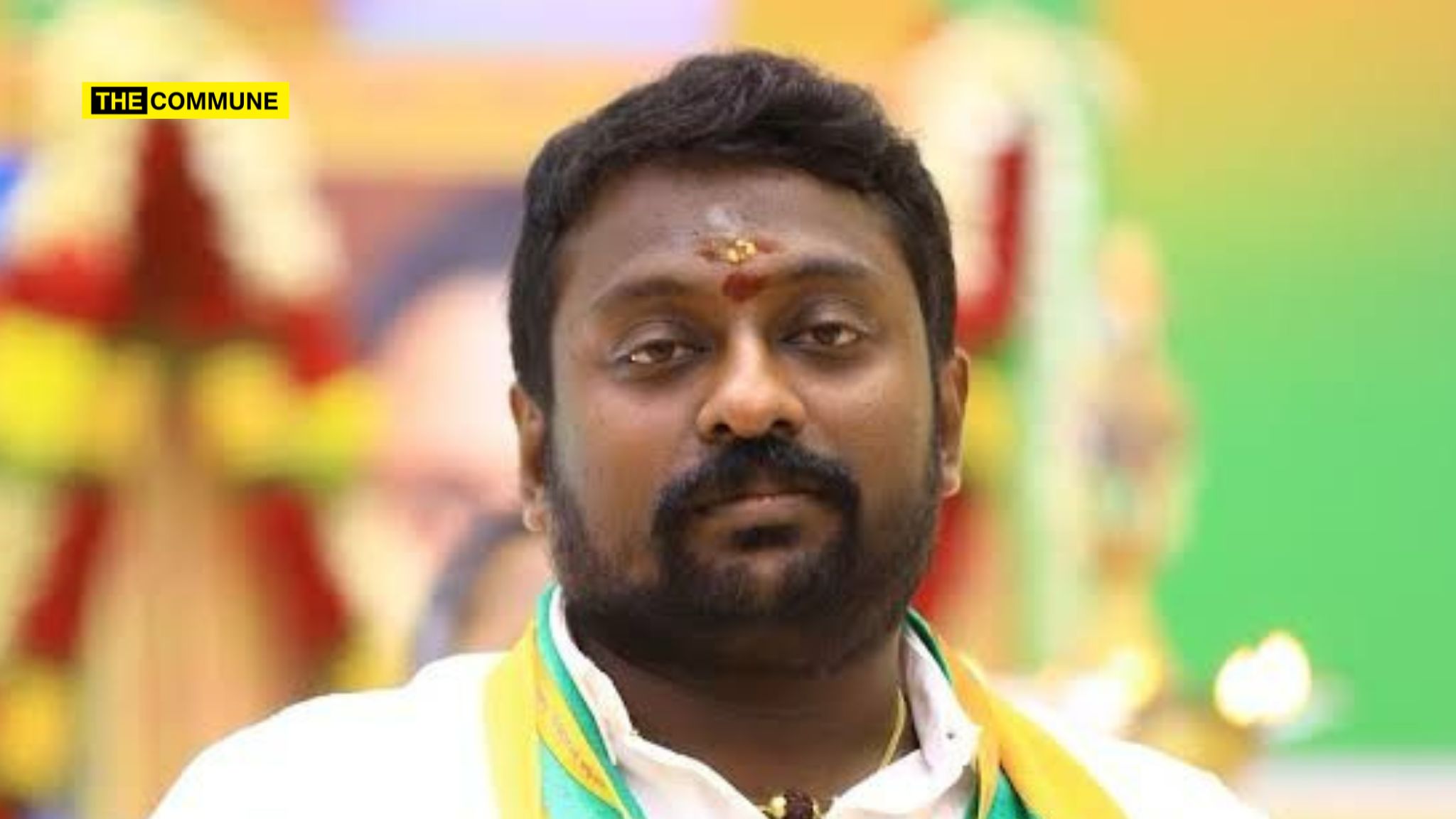
TS Krishnan is a prolific writer, evident to all those following him on the social media platform, X. The contribution of the Cholas in terms of law, administration, and the architectural and engineering marvels in the form of the famed temples that have stood the test of time has been a topic of interest and research for a long time.
The movie, Ponniyin Selvan, has piqued or rather reinvigorated an interest in the famed dynasty of the southern part of India, and naturally, there were a lot of expectations. At the onset, it needs to be highlighted that this book is an excellent one, which is backed by some solid research and cross-references across a multitude of works across various texts.
The book captures the evolution of the Cholas in 3 segments of time. Starting with their origins from Surya (Surya Vamsha) to their mention in the famed Sugreeva’s map (Ramayana) and being part of the Mahabharata, the author captures the early reign of Cholas through references from various Tamil and Sri Lankan works.
The Sangam era is the next part of the book, which captures the times of the Cholas during the Sangam period, followed by a few centuries of the Kalabhra Interregnum. Finally, the golden age of Cholas from the 9th Century CE to the 13th Century CE is presented with very rich details. The author’s research is quite evident in the form of the references from Ramayana (Sugreeva’s map) and Mahabharata (Drona Parva), as well as the famous Sri Lankan text, Mahavamsha.
The book records the times of the Sangam era with very rich and intricate details, while the Kalabhra Interregnum is also represented with vivid details, including the spread of Jainism and Buddhism during that era in this region. The author is quite clear in the details of some of the kings, whose accounts are lost to the tides of time. For example, in the revival period, the fate of Kannaradevan is quite clearly highlighted as unknown.
The book is quite an eye-opener to modern readers who are unfamiliar with the rich history of the land. Cholas were devout Sanatanis with a sound grounding in the Vedic culture. This is captured in vivid detail throughout the book, starting from the Hemagarbha and Tulabhara of Parantaka Chola.
One of the key aspects of the book is the vibrant detailing of the titles adorned by many Chola rulers over time. Another interesting anecdote is the inscription related to Raja Raja Chola’s ascension to the throne, where the word “Karkataka” is employed to denote the 4th month of the Hindu calendar (same as Adi in Tamil), as well as the word “Uttarayana Sankranthi”. These instances demonstrate the knowledge and widespread usage of the common Sanskrit-based words in the inscriptions.
The author has captured many “Meikeerthis” (true deeds) related to many Chola rulers of the modern era, which highlight the poetic elegance and exuberance of the citizens to sing the praises of their king. One of the interesting aspects captured in the book is the existence of “Chalais”, which served as a prestigious training school for the leadership, reminiscent of the modern LBSNAA located in Mussoorie, Uttarakhand.
The author highlights the various administrative reforms, like the extensive land survey, the taxation, etc, undertaken by each of the rulers. There is a dedicated section at the end of the book that captures this information in equally rich detail. Perhaps, there could have been cross-references to avoid some repetition and perhaps better compartmentalisation of the content to provide a better reading experience. The meticulous documentation of these famed kings is definitely one of the highlights of their reign during those illustrious years.
The architectural marvels of Brihadeeshwara (Rajarajeshwaram), Gangai Konda Cholapuram, Darasuram, and Tribhuvanam are brought out with such rich and vivid details. The author successfully transports the readers into the era of architectural and engineering excellence, along with the rich and deep cultural and religious impact of these rulers. For example, one learns about the first installation of Sarabha Murthy (a fierce form of Shiva) during Raja Raja II’s reign in Darasuram. These tiny, yet powerful details are clearly the highlights of this book.
One of the standout features of the book is the rich photographs of temples, murals, and bronze sculptures of that era. Spanning over 20 pages, these pictures give a rich insight into the deep impact of this famed kingdom of an era gone by. The page with pictures of Chola coins is equally rich and intriguing, with the inscriptions in Nagari, indicating the language of the Chola kings of that era.
Part II of the book, i.e., Glory and Governance of the Chola Era, is perhaps one of the best portions of the book, which in itself can become a booklet or an addendum to the school curriculum. The author brings out the various administrative, legal, and cultural reforms institutionalised by the Cholas across the reign of various rulers. These subsections are laden with rich details of the thought process of the kings in terms of centralised and localised administration of the various local bodies.
The division of the responsibility is quite an interesting read, considering the various conflicts being observed in modern society. This book, coupled with Dr R Nagasamy’s eternal book “Studies in Ancient Tamil Law and Society,” would be a very good read for those interested in these aspects of life and history.
There are some aspects of the book that I felt could have been better. For example, the author uses the word “Tamilakam” quite extensively in the book while referring to other regions as Andhra, Karnataka, etc. If this book were written in Tamil, it would be quite understandable. However, when the book is written in English, it would be expected that the regions are treated equitably, i.e., quoted with their historical names or referred to through modern boundaries. This perceived partial treatment is upsetting.
There is an account of Banas who ruled some parts of modern Andhra, Karnataka, and northern Tamil Nadu. The author quotes that they used the word “Maveli,” which is a Malayalam word. A reference to an inscription or copper plates for this could have been beneficial.
The author’s efforts at consolidating the information across various sources are quite commendable. However, this is laden with inherent challenges of collating related data. For example, if one considers the episode between Athi Rajendra and Kulottunga Chola (Pages 139, 141), there is some related information on both pages. I felt that the context of Page 139 was a rich foundation on which the additional details from Page 141 could have been added.
The author has highlighted many religious donations and activities undertaken by each of these famed rulers. In these sections, the author makes a distinction between Saivism, Vaishnavism, and Vedic rituals. This is quite appalling considering that all 3 paths are various forms of our own Sanatana Dharma. This kind of distinction can possibly fuel the fault lines that are being created in modern society. I wish that the author could have phrased these terms much better to avoid this kind of muddle.
Apart from these infractions, this book is very highly recommended to get a deeper insight into the times and lives of these illustrious royals of the past, The Cholas – A very highly recommended read.
Gee Vee is an engineer and avid fan of itihasas, puranas and books.
Subscribe to our channels on Telegram, WhatsApp, and Instagram and get the best stories of the day delivered to you personally.