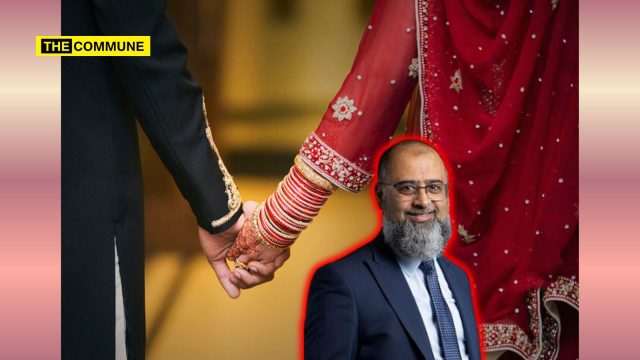
A proposed bill to ban marriages between first cousins triggered sharp debate in the UK Parliament in 2024. The Marriage (Prohibited Degrees of Relationship) Bill, introduced under the Ten Minute Rule by Conservative MP Richard Holden, seeks to prohibit marriages between first cousins due to health risks for children born from such unions. Holden, who represents Basildon and Billericay, argued that first-cousin marriages are linked to higher chances of birth defects.
He said that certain diaspora communities, including Irish Travellers and British Pakistanis, show particularly high prevalence of cousin marriages. “Between 20 to 40 per cent of marriages occur between first cousins,” Holden said, adding, “There is a worrying trend, as this rate has increased significantly from that of their grandparents’ age group. Although there have been some reports of the rate falling within the last decade as young people push back against the system, there remains an extraordinarily strong link.”
Citing research published in the Oxford Journal of Law and Religion, Holden told Parliament that cousin marriage is practiced by about 10 per cent of the global population, with highest prevalence in the Middle East, West Asia, and North Africa.
Not all lawmakers supported the bill. Iqbal Mohamed, an Indian-origin Independent MP with roots in Gujarat, said the legislation risked stigmatising communities that practice cousin marriage. Instead, he called for public health education and genetic counselling. A video of him placing his arguments supporting the bill have gone viral on social media now.
“An estimated 35 per cent to 50 per cent of all sub-Saharan African populations either prefer or accept cousin marriage, and it is extremely common in the Middle East and South Asia,” Mohamed said.
“The reason the practice is so common is that ordinary people see family intermarriage as something that is very positive overall; as something that helps to build family bonds and puts families on a more secure financial foothold,” he argued.
“However, as is well documented, it is not without health risks for the children of those relationships, some of whom will be born out of wedlock,” he added.
Mohamed maintained that instead of prohibition, the government should encourage advanced genetic test screening for prospective married couples and expand health education programs in affected communities.
MP lqbal Mohamed wants to make marriage between first cousins possible in the UK. They want to take UK back 1600 years. pic.twitter.com/R1lWUe7Yi4
— RadioGenoa (@RadioGenoa) September 21, 2025
The bill, formally titled Bill 146 2024-25 (as introduced), had its first reading in the House of Commons on 15 January 2025. It is scheduled for a second reading in mid-January 2025. But according to NDTV, its future remains uncertain as private members’ bills often require government backing to pass into law.
(With inputs from NDTV)
Subscribe to our channels on Telegram, WhatsApp, and Instagram and get the best stories of the day delivered to you personally.