


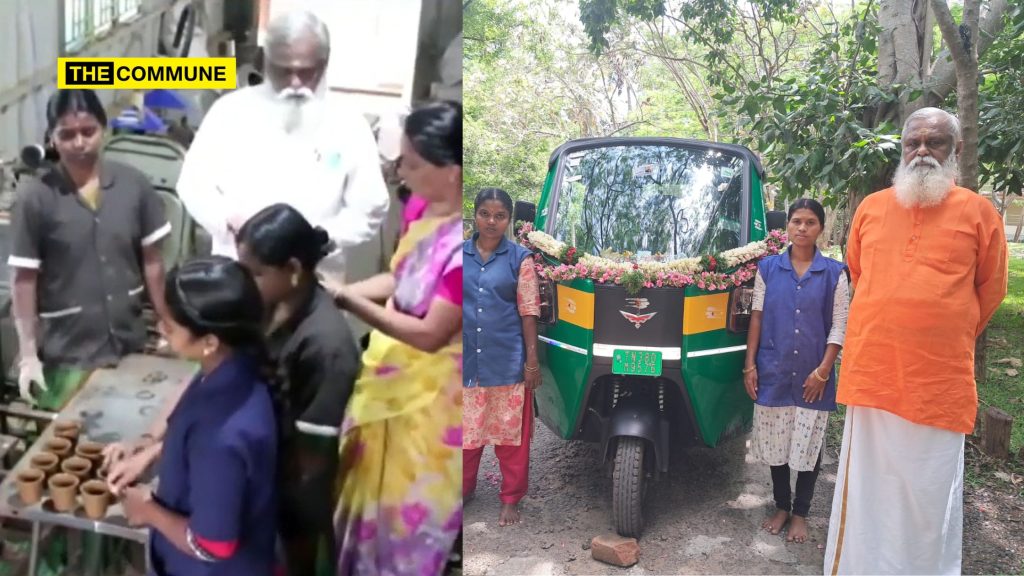
In the quiet hills of Anaikatti, along the Tamil Nadu–Kerala border, lives a man who once chased molecular perfection in global laboratories. Today, at 67, Dr Soundararajan is chasing something infinitely more human: dignity, self-reliance, and hope for the tribal women of these hills.
“I am broke, but not broken,” he says, “What I do here gives me love. Sometimes, I wonder if I am helping them, or if they are helping me. Doing seva is not optional, it is the duty of the intellectuals, the intellectuals have failed this country.”
From Chennai To The World – And Back
Born in Tiruvannamalai, Dr Soundararajan’s life began like many others from middle-class Tamil Brahmin families with a strong emphasis on studies. His father was the sole breadwinner for a large family of five children. “We had several ‘one meal’ days,” he recalls. “But we always gave importance to learning.”
His brilliance carried him from first grade through PhD entirely within Chennai, specializing in metallic chemistry. In 1987, he boarded a flight to the U.S. for postdoctoral research at the University of Oklahoma, later moving to Washington State University. He published in top journals like the Journal of the American Chemical Society and even discovered a reaction deemed superior to one that had won a Nobel Prize.
He built a respected career, got his green card, married, welcomed two children, but then chose something rare. In 1996, he walked away. “I wanted my children to grow up knowing our people, our culture. I missed my relatives. I was feeling distanced from my roots.”
It was a costly choice. A corporate U.S. salary of $70,000 a year became ₹7,000 a month in Chennai. “I couldn’t even support the family,” he says. He took tuitions for school students, slowly working his way into industry again, heading R&D departments and working for global pharma companies in India. But something deeper was stirring within him.
The Spiritual Turning Point
Coming from a family deeply rooted in spirituality, his interest in Vedanta grew with time. The shift began in 1985, at a lecture that led him to his guru, Dayananda Saraswati – a connection that would anchor him through decades of corporate life. “Every year in the U.S., I would visit him in Pennsylvania,” he says. “By 2012, I had had enough of corporate life. I told him I wanted to do something more meaningful.”
Swami Dayananda Saraswati offered him land near his ashram and told him: You do something here for the people. That became the seed.
Dr Soundararajan started small – making yoga mats and fabrics out of banana fibre, eco-friendly plates from areca palm, paper from banana pulp. At one point, he employed 20–25 adivasis, men and women. But businesses faltered, partners left, and losses mounted. He persisted.
While all this happened, COVID-19 also affected him and the progress. But he persevered. It was his guru’s aagna.
“My guru has said, “Aa sethu himachala vanagiri jana samrakshanaya kurusevamtwam, meaning from Rameswaram to the Himalayan mountains, we should serve the forest, mountain dwellers. I want everyone to think of have-nots more.”
Learning to Lead with Love
Working with tribal women at his Adivasi Penmanigal Vazhvadhara Maiyyam was unlike anything his corporate career had prepared him for. “They were too shy to even talk to me, face to face. They worked only for the money. My logical methods – log sheets, timing, accountability, these didn’t work.”
The breakthrough came when he stopped managing like an executive and started relating like a friend. “I had to understand them out of love and care. Then it worked miracles.” Women began opening up, taking on responsibility, and trusting him. Some of them who work with him have been there from the time he started in 2012. He says, “I primarily work with the adivasi women because the men are always indulging in alcohol, as you know how big a problem it is in Tamil Nadu. Some of them are widows, their husbands – victims of alcoholism. It is a male-dominated society here and since I employ only women, they feel safe working at our setup.”
Some stories still choke him up. One young woman, abused daily by her paternal uncle, was so withdrawn she wouldn’t look anyone in the eye. Dr Soundararajan helped her open a bank account, encouraged her to lead small tasks. When her family tried to bargain her away for land, he intervened, rescued her, and gave her work. Today she is married, saving money, and living with hope.
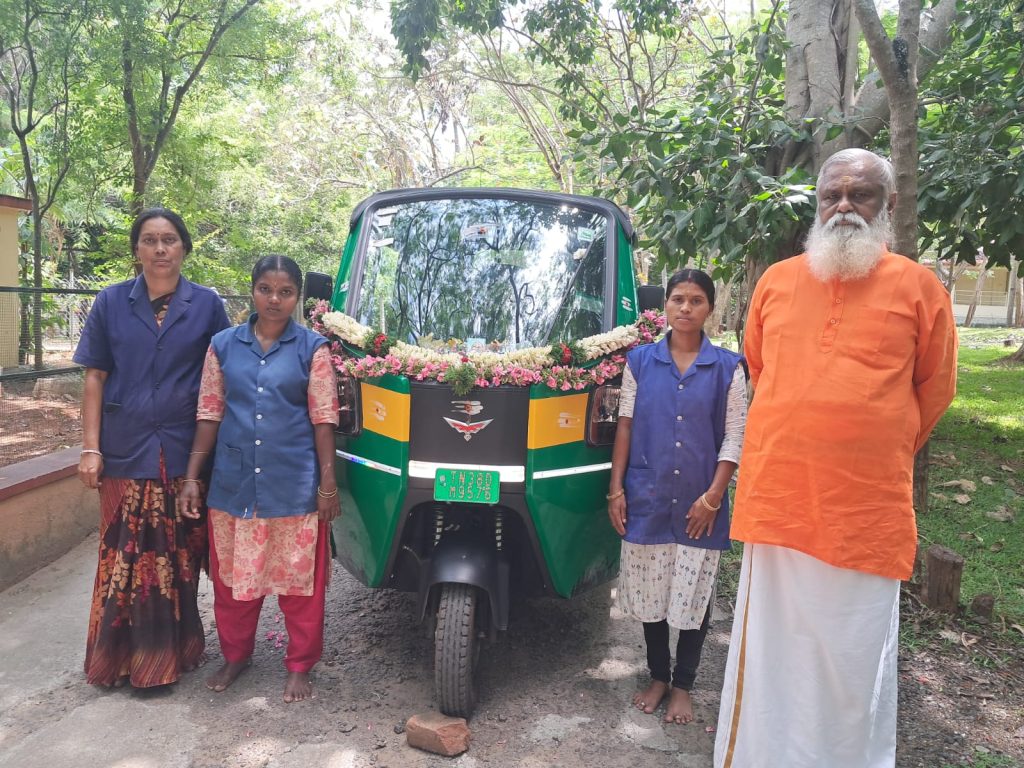
Another inspiring story is of women who barely knew to ride the cycle are today driving electric autos. Those who had refused to drive them started making a beeline for it seeing the other women taking it up. These women in the picture were trained and now drop off their colleagues and soon they will accept external passengers.

Why The Tribal “Infantry” Matters
Dr Soundararajan often uses a striking metaphor: “In a war, you may have air force and navy, but without infantry, you can’t win. Similarly in Ramayana also you can see the Vanaras, they play a crucial role. These people are at the bottom of the pyramid and they have national, cultural, societal integrity as well as their credentials are unique in those. We have left all that and moved into concrete buildings, they stayed back and are preservers of Indian culture. In society, the tribal communities are that infantry – the base. Without them, we are like a body without legs, without them we are motionless. We will sink without them.”
For him, helping the tribal people isn’t just charity; it’s civilization-preservation. “They keep alive old stories, old songs, and ways of living with nature. Even today, they will climb hills, live in stone homes, light fires the way our ancestors did. They may be poor in money, but they are rich in heritage.”
But their lives are hard: alcoholism is rampant, often both men and older women drink. Nutrition is poor; many don’t know how to cook a decent breakfast or read a thermometer. Government schemes often fail to reach them, siphoned off by middlemen. Many girls become mothers before 18.
He has seen entire villages with barely four men left because the rest drank themselves to death. “Sometimes, all they want is for me to come and sit with them for 10 minutes. That’s enough for them to feel cared for.”
He continues, “I have adopted three villages. By ‘adopted,’ I mean I give them moral, emotional, and intellectual support – more than just monetary help. I celebrate the Pongal festival with them. Whenever I visit, I take vethala paaku (betel leaves and nuts) for all the elderly women, and chocolates for the children. Over the past three years, these small gestures have made a difference. I can see the change in them.”
This year for Pongal, he gifted them a bunch of vegetables. Generally one ton of veggies are bought for distribution during Pongal at the adopted tribal villages.
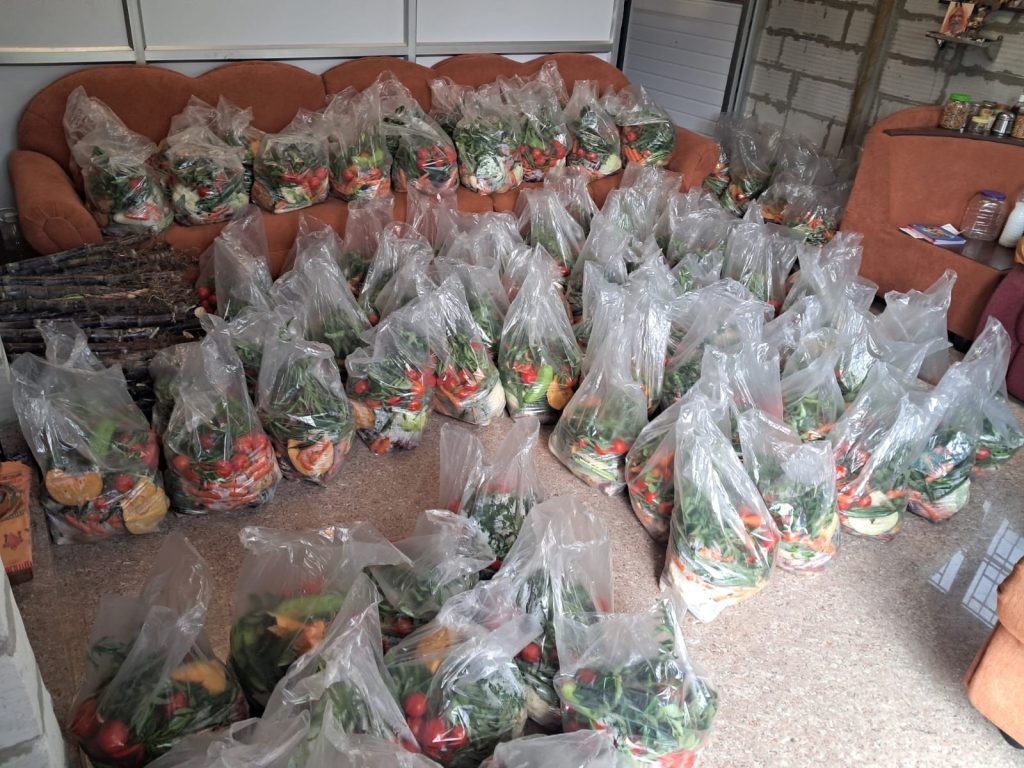
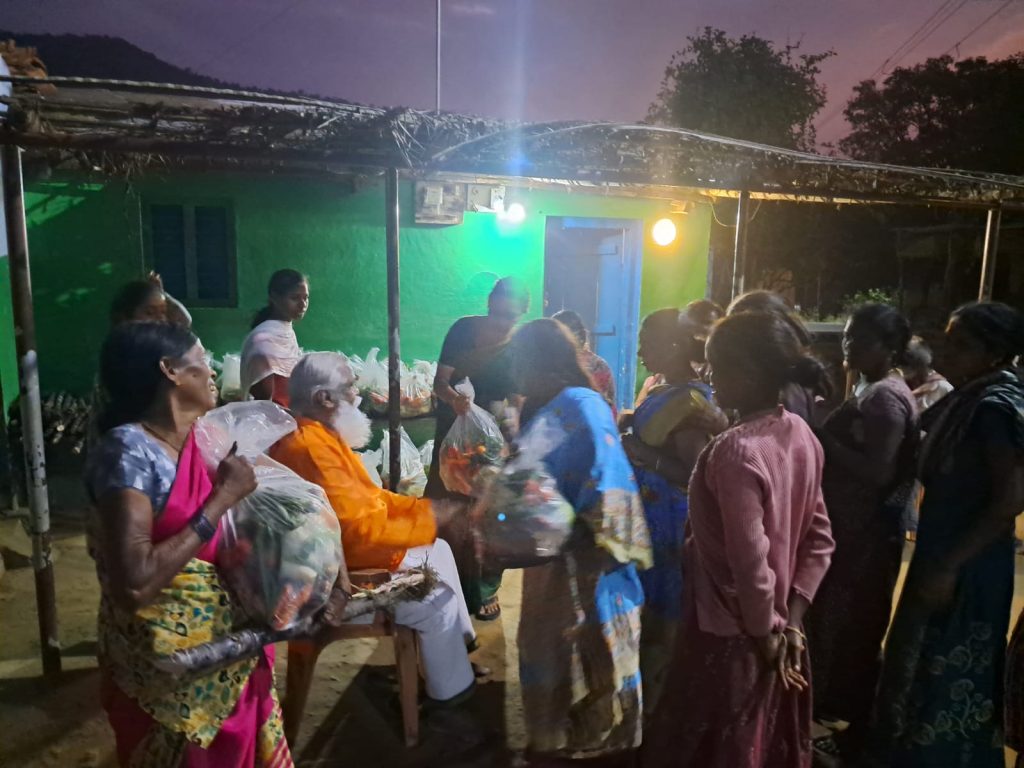
Here are some videos of him giving gifts to the women and children during various festivals such as Karthigai deepam, Deepavali etc.

Explaining why people from cities need to build relationships with the indigenous people, he said, “They want, they need, yet they lack emotional connection with the mainstream. They still see themselves as separate from it—even the children. Society has not helped. People donate money and walk away, without building any real relationship. Even when funding is available, there is no genuine engagement. In many cases, middlemen siphon off most of the funds. That is why I am here—to bridge the gap and ensure real integration, not just token gestures.”
He further said, “By saying all this, I want to stress that any society becomes a true society—woven into a proper fabric—only when emotional and intellectual well-being are nurtured. Without that, it becomes a societal problem. In earlier times, kings took care of all aspects of their people’s well-being. Today, in our hurried society, emotional well-being is neglected. People themselves often lack it, so they cannot give it to others. How many of us pause to talk to a stranger on the road, in the park, or in the lift? Very few. Unless we interact, people—especially these communities—will never know they belong.”
Taking pride in his team, he said, “In July 2025, they achieved their highest sales of Rs 1,30,000 all by themselves – without my support.
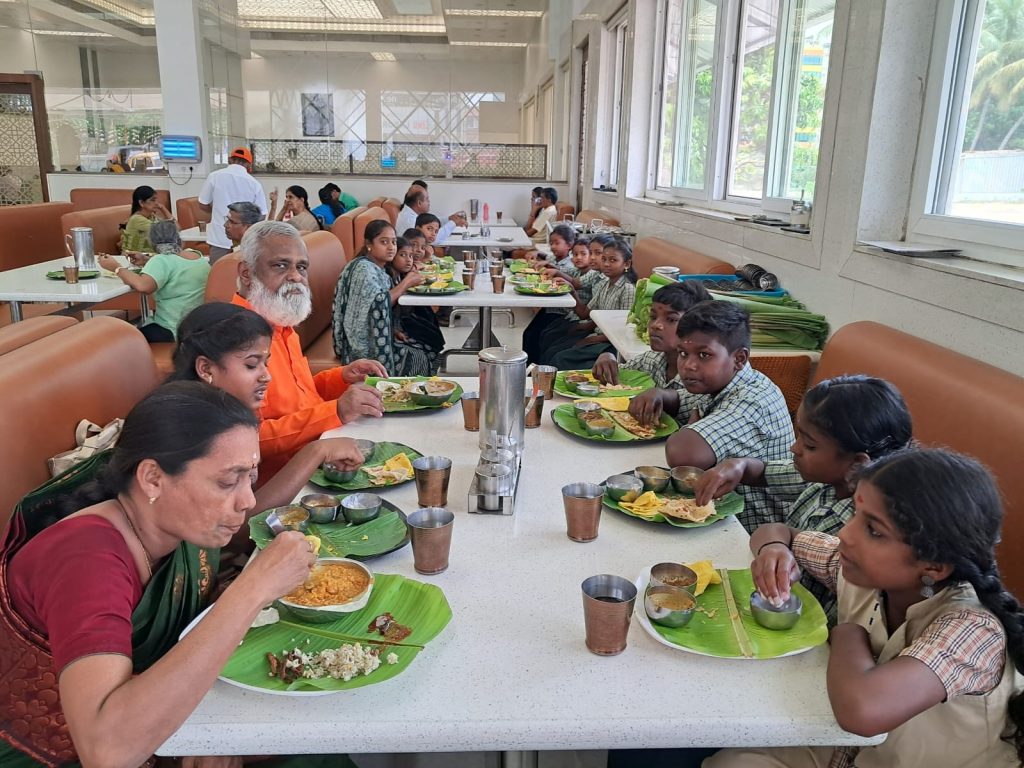
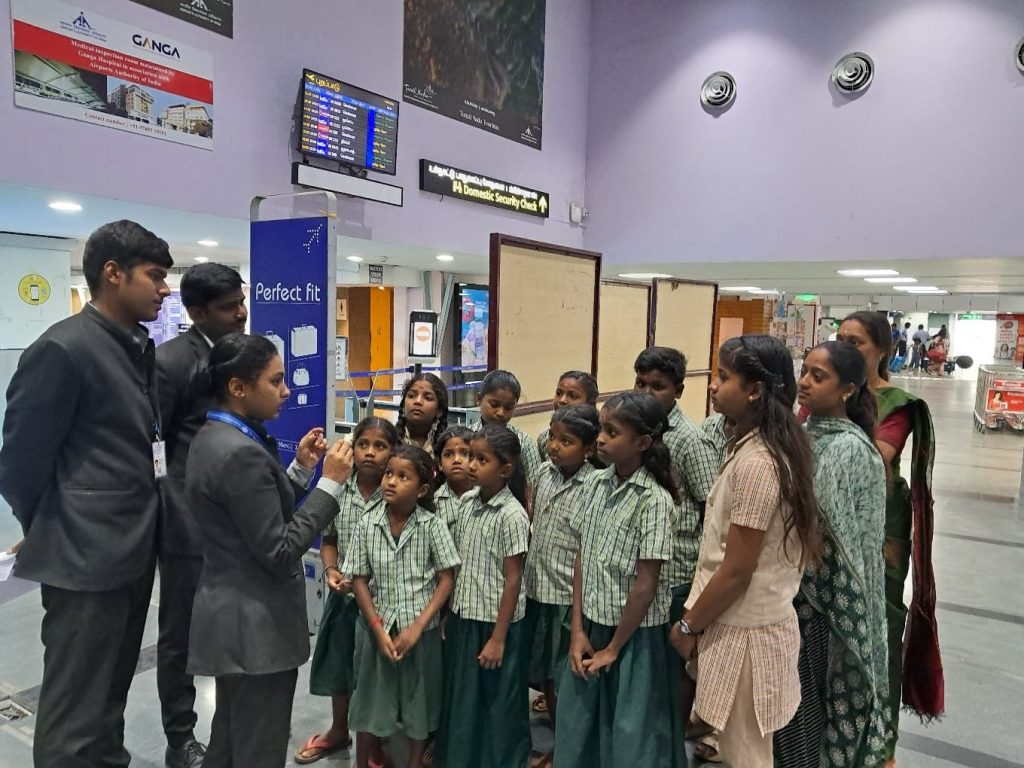
Some of the other gestures that Dr Soundararajan has indulged in include taking the tribal children to the airport, taking them for lunch in a city restaurant,
Practical Interventions, Cultural Preservation
Over the years, he has started cafeterias run by tribal women, trained them to make and sell herbal products, and introduced moringa soup to schoolchildren to fight anemia. He celebrates Pongal with sweets for the children and firewood for the elderly. He has taken tribal women on airplanes for the first time, changing how they see themselves forever.
He also urges them: Change your clothes, your house, your income… but don’t change the form of your heart, don’t change your ancestral feeling.
At weddings, he delights in their tradition: the groom in a hunter’s costume, bow and arrow in hand, facing east to shoot before being garlanded by the bride. “How many of us in cities remember such rituals?” he asks. Despite being in abject poverty, at one particular village he went to, the people asked him for a harmonium, dholak, ganjira so they could perform Harishchandra Katha.
An Invitation to All of Us
Dr Soundararajan’s vision extends far beyond Anaikatti. He dreams of 52 families — from India and abroad — each “adopting” a set of villages, spending a week a year there, living with the people, building real relationships. “It’s not the money alone,” he insists. “It’s the presence.”
His plea is heartfelt: “Please spend at least one week with a tribal village. The knowledge you gain will never come from books.”
Speaking about how all humans on this land are interwoven, he said, “Everyone should look at society as a fabric. A fabric is made of fibres, and its sheen, shine, strength, design, and beauty all depend on the weaving. The weaving is important. In society, we too must be interwoven for the societal fabric to be strong and sustainable. We cannot leave out or isolate any part of society. Nature shows us this truth; it accommodates everything. There is value in everything: from piglets to mosquitoes, from honeybees to rockets, from trees to anything else you can think of. Everything has a meaning and a purpose. The world today is in a hurry. People may call it speed, but speed without control is just haste. Speed with control – that is true speed.”
Living Simply, Giving Fully
Dr Soundararajan lives by example. He has given his eight-bedroom home in Chennai to his family, sleeps on the floor in a small room, owns only a veshti and shirt for daily use, and keeps no health insurance. “I submit everything to the Lord. My needs are minimal.”
His work costs him — over ₹1.5 lakh a month in salaries, electricity, welfare and food for those he supports. — but brings him immense returns in human affection. “They think of me more than I think of myself,” he says quietly.
Today, the venture My Tapas sells everything organic, from jams to herbal soup mixes to organic pickles, organic honey, spices, and terracotta kitchenware. The most recent offering is herbal teas. (insert pic) Marketing is almost non-existent; products sell only if someone chooses to support.
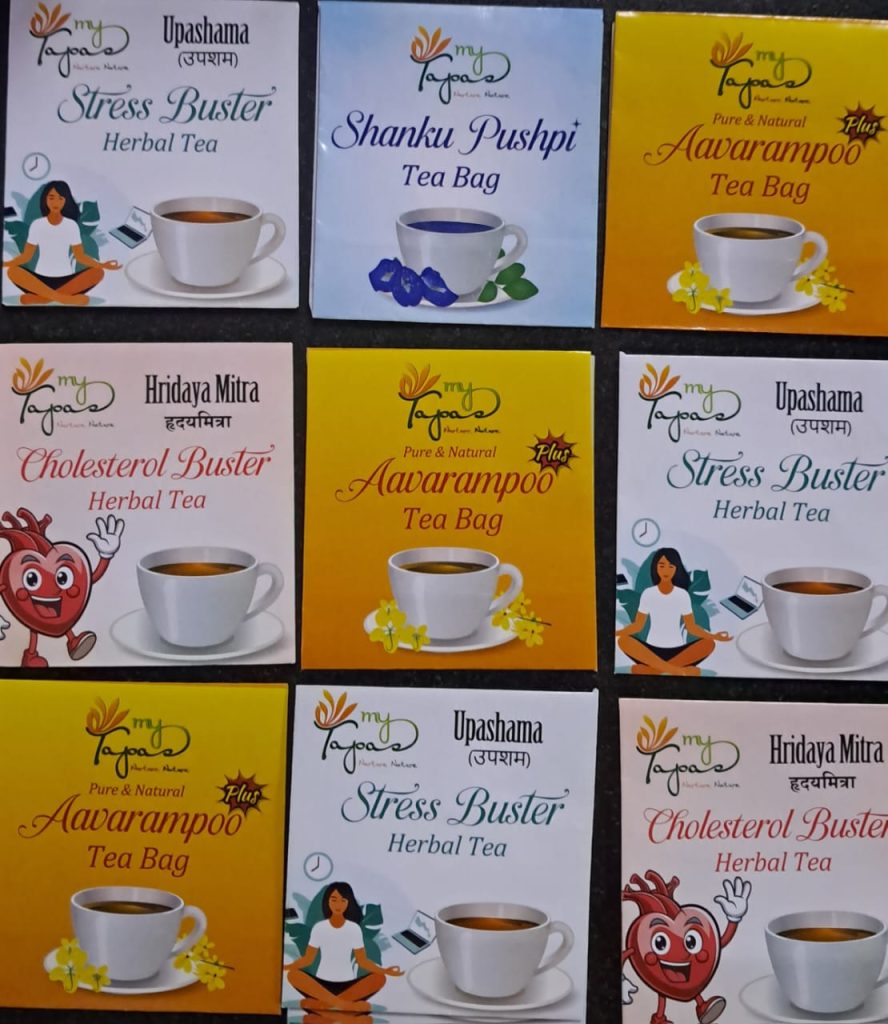

This venture and the women working there was mentioned by PM Modi in his Mann Ki Baat episode in October 2022. PM Modi praised how the women do all the work in the terracotta factory – handling every step from processing to final packaging themselves.
The Hindu Civilizational Connect
He also pointed at how the indigenous people are truly rooted to our Hindu culture. He says, “In the setup, I placed a picture of Perumal (Vishnu), and they now perform all the pujas themselves. On Fridays and Saturdays, there is Rama Nama chanting—not mandatory, but it creates a sense of connection. If we consider our epics, even hunters and boatmen were brought into society through such traditions. Society and leadership are vital. Rama himself can be seen in many ways – as a king, as God, and more. But here, these tribal people lack basic skills; they don’t know how to cook on a gas stove, only on traditional stoves, and often won’t use a gas stove even if given one. We have failed them as a society and must buck up.”
He further says, “In one place, the villagers have a small temple. When I first went there, it was completely dark. Inside, bricks were stacked one on top of another without even a little cement or coating. Within stood a stone, a Nandi, and a Ganesha. When asked what they want, they said they want a light for that temple. Imagine, in that poverty, I thought of how they longed for just one light in the temple. Despite their poverty, their torn clothes, their leaking houses, and having no clean place to sleep during the rains, they still felt bad that there was no light in the temple. How can my devotion ever match theirs? Their faith is so deep, and it makes me reflect on myself and how much these people truly value what matters. People should understand and relate to this.”
Why You Should Care
Dr Soundarajan wants his team, the tribal women, to be self-dependent or rather atmanirbhar – self-reliant like PM Modi advocates. When asked how relevant it is to the country and the peoples, in his own words, he says, “Country is nothing but people. People’s vision makes the country. Without values and care for others, it’s just landmass.”
Meeting Dr Soundararajan is to be reminded that one life — lived simply, given fully — can restore hope in many others. His work in Anaikatti is not just about rescuing individuals from poverty’s grip; it’s about weaving them back into the fabric of a society that has too long overlooked them. He also adds, “I was able to change the perspective and empower a village, if I could do that, many more able people can do wonders and reach a lot of these indigenous people. All they need is someone to listen to them, talk to them, and show that we care. Only if you celebrate the relationship, it’s a relationship. Otherwise, it’s just a formal relationship.”
And that is why this story ends not with applause, but with an ask. If you are moved, help him. Visit, mentor, fund a project, or spend a week in a village. Buy their products, spread word and stand with the women of Anaikatti as they reclaim their dignity and dreams – because in lifting them, we lift ourselves.
Subscribe to our channels on Telegram, WhatsApp, and Instagram and get the best stories of the day delivered to you personally.