


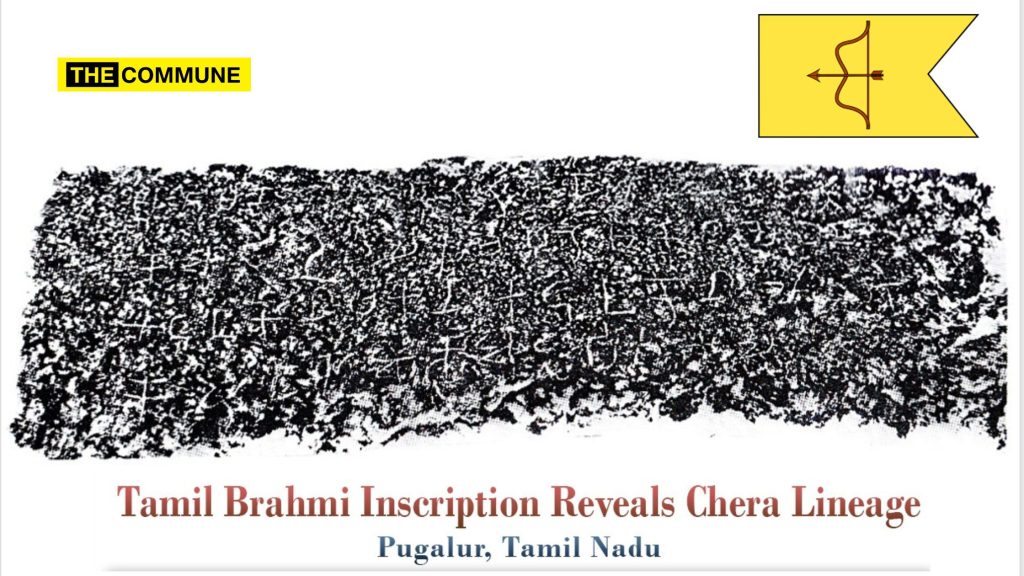
In a significant archaeological breakthrough, the Archaeological Survey of India (ASI) has uncovered a Tamil Brahmi inscription in Pugalur, located in Tamil Nadu’s Karur district, offering fresh insight into the royal lineage of the ancient Sangam-era Chera dynasty.
Dating back to the 2nd century CE, the inscription names Ilankatunkon, son of Perunkatunkon and grandson of Adan-Cel-Irumporai. It records the donation of a rock shelter to a Jain monk named Cenkayapan from Yarur, made on the occasion of Ilankatunkon being declared heir to the throne.
In Pugalur district of Tamil Nadu, a remarkable Tamil Brahmi inscription has been found that reveals the royal lineage of the Chera dynasty from the Sangam Age. This 2nd century CE inscription names Iḷankaṭunkon, son of Perunkaṭuṅkoṉ and grandson of Adan-Cel-Irumpoṟai. It… pic.twitter.com/bmZznc59nV
— Archaeological Survey of India (@ASIGoI) June 4, 2025
This inscription is particularly important as it aligns with names found in Sangam literature, especially those of three Chera rulers: Selvakatunkon Vazhi Athan (also known as Ko Athan Cellirumporai), Peruncheral Irumporai (Perunkatunkon), and Ilancheral Irumporai (Ilankatunkon). It reinforces the historical credibility of Sangam texts, suggesting they are more than just literary works—they are rooted in actual historical events.
For instance, Pathitrupathu, a classic Sangam anthology, dedicates ten verses in its seventh decade to King Selvakatunkon Vazhi Athan. It describes him as a devout follower of Mahavishnu and a generous patron of Brahmins. The text notes that his repeated donations, often accompanied by the ritual pouring of water, kept his palace courtyard perpetually soaked.
This newly found inscription adds to the growing body of evidence affirming the Sangam age as a historically verifiable era and offers deeper understanding of the Chera dynasty’s spiritual and cultural landscape.
This is a landmark inscription which corroborates with the names of Chera kings of the Sangam age, a clinching evidence that the Sangam age literature was in fact history.
Three Chera kings, Selvakatunkon Vazhi Athan (Ko Athan Cellirumporai), Peruncheral Irumporai… https://t.co/PK7AUjwStD
— 𑀓𑀺𑀭𑀼𑀱𑁆𑀡𑀷𑁆 🇮🇳 (@tskrishnan) June 5, 2025
What Is Tamil-Brahmi Script?
Tamil-Brahmi is an ancient script used to write the early form of the Tamil language, dating back to around the 3rd century BCE to the 3rd century CE. It is a regional adaptation of the Brahmi script, which was one of the earliest writing systems of the Indian subcontinent.
While Brahmi was used across India to write Prakrit and Sanskrit, the Tamil-speaking regions adapted it by adding diacritical marks to represent unique Tamil phonemes that weren’t present in Indo-Aryan languages. Tamil-Brahmi was used primarily for inscriptions on caves, potsherds, coins, and rock surfaces. These inscriptions often recorded: Names of donors and kings, Grants to Jain or Buddhist monks, Ownership marks on pottery, and Commercial and trade information
Historical Significance
The discovery of Tamil-Brahmi inscriptions has played a crucial role in confirming the antiquity of the Tamil language and validating the historical content found in Sangam literature. Many of these inscriptions have been found in archaeological sites such as:
- Adichanallur (Thoothukudi District)
- Kodumanal (Erode District)
- Keeladi (Sivagangai District)
- Pugalur (Karur District)
- Mangulam (Madurai District)
Some inscriptions date to as early as the 6th century BCE, based on recent stratigraphic and radiocarbon dating, suggesting that Tamil was one of the earliest recorded among Indian languages.
Subscribe to our channels on Telegram, WhatsApp, and Instagram and get the best stories of the day delivered to you personally.