Following New York mayoral candidate Zohran Mamdani’s recent remarks about “Muslim indignities” in America, he shared a nearly 7-minute video on his “dream for Muslims in New York City.”
Sharing the video on his social media handles, he wrote, “The dream of every Muslim is simply to be treated the same as any other New Yorker. And yet, for too long, we have been told to ask for less than that, and endure hatred and bigotry in the shadows. No more.”
In the video, Mamdani reflected on personal experiences of discrimination and criticized political opponents for spreading Islamophobic rhetoric during the campaign. Mamdani recalled advice he received early in his political career from a community elder who suggested he conceal his Muslim identity for safety. He described this as a lesson passed down through generations, that Muslims in New York could only find safety “in the shadows.” He said recent political attacks had revived that same fear, alleging that former governor Andrew Cuomo, radio hosts, and candidates Curtis Sliwa and Eric Adams had made or endorsed false claims linking him to terrorism. He referred to campaign advertisements and push polls that, according to him, portrayed him as a threat, mocked his religious practices, or depicted his candidacy as a plane heading toward the World Trade Center. He said such portrayals contributed to a climate in which anti-Muslim bigotry had become normalized. Speaking directly to Muslim New Yorkers, Mamdani invoked examples from his own life and those of his supporters, citing the fear experienced by Muslim women wearing hijab, profiling at airports, and harassment of mosque communities. He said that although he had been spared the most violent expressions of hate, “to be Muslim in New York is to expect indignity.” Mamdani said he initially sought to build a campaign of universality rather than one centered on faith, but concluded that remaining silent about discrimination risked sending the wrong message to young Muslims. He described Islamophobia as one of the few issues uniting politicians across party lines, saying it persisted as “a shared language of New York politics.”
He also accused elected officials of openly engaging in anti-Muslim speech without consequence, claiming that some had even sold merchandise calling for his deportation. He said more than a million Muslims in the city were made to feel like “guests in their own home.” Mamdani framed his campaign as a test of whether New York was ready to reject such attitudes, calling on residents to “step into the light” and reject political fearmongering. Mamdani concluded by saying he would not hide his identity, faith, or practices during the remaining days of the election campaign.
The dream of every Muslim is simply to be treated the same as any other New Yorker.
And yet, for too long, we have been told to ask for less than that, and endure hatred and bigotry in the shadows.
No more. pic.twitter.com/B7BWrifQ1f
— Zohran Kwame Mamdani (@ZohranKMamdani) October 25, 2025
In response, netizens in the US shared experiences of how non-Muslims were/are treated in Islamic countries. Lisa Cusack, Chair of the LAGOP Assembly District 44, responded to Mamdani’s speech by citing her own family’s history of discrimination in a Muslim-majority country. She said her father’s Christian family faced property confiscation, special taxes for being non-Muslim, exclusion from government jobs, and threats of mob violence. “None of this is done to Muslims in America, and everybody knows it,” she wrote on social media.
My father grew up Christian in a Muslim country.
Both sides of his family had their property confiscated, they paid a special tax for being non-Muslim, many jobs were not available to them—certainly in the government—and they lived under frequent threats of government sanctioned… https://t.co/b0MPMumraD— Lisa Cusack (@lisa_4_la) October 25, 2025
Historical records support such experiences. Coptic Christians in Egypt were required to pay the jizya tax from the 7th century until the mid-19th century—a levy imposed on non-Muslims as both a financial burden and a marker of subordination. While it granted limited protection, it institutionalized second-class status for religious minorities.
In Turkey, the 1942 Wealth Tax (Varlık Vergisi), enacted under the secular Republican People’s Party, targeted non-Muslim Armenians, Jews, and Greeks with taxes up to 232% of their declared assets, compared to just 4.94% for Muslims. Those unable to pay had their property seized and were sent to harsh labor camps where many perished. Historians describe it as an “economic genocide” that destroyed minority livelihoods and accelerated their mass exodus.
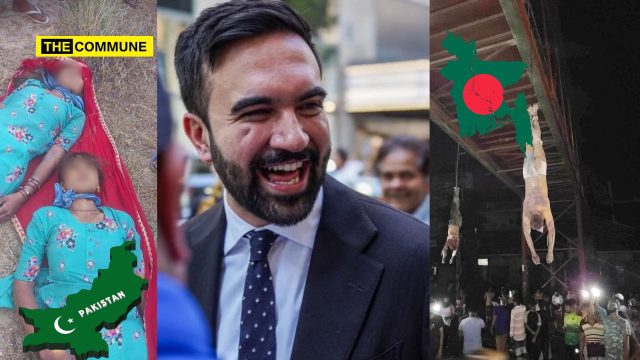
Beyond historical cases, persecution continues in several Muslim-majority countries. In Pakistan, Hindus and Christians frequently face forced conversions, blasphemy accusations, and targeted killings. According to rights groups, scores of underage Hindu girls are abducted each year, coerced into converting to Islam, and married to their captors. Temples and churches are periodically vandalized, and legal recourse for victims remains limited.
In Bangladesh, similar patterns have persisted. This was seen especially after the 2023 coup in the country when Hindu homes and temples were attacked during communal violence. This is seen especially following political unrest or rumors of alleged insults to Islam on social media. Human rights monitors report that intimidation and land-grabbing have forced thousands of Hindus to migrate or conceal their identity to avoid retaliation.
In Nigeria, Islamist militant groups such as Boko Haram and ISWAP have targeted Christian communities, killing and displacing thousands in a campaign of terror spanning more than a decade.
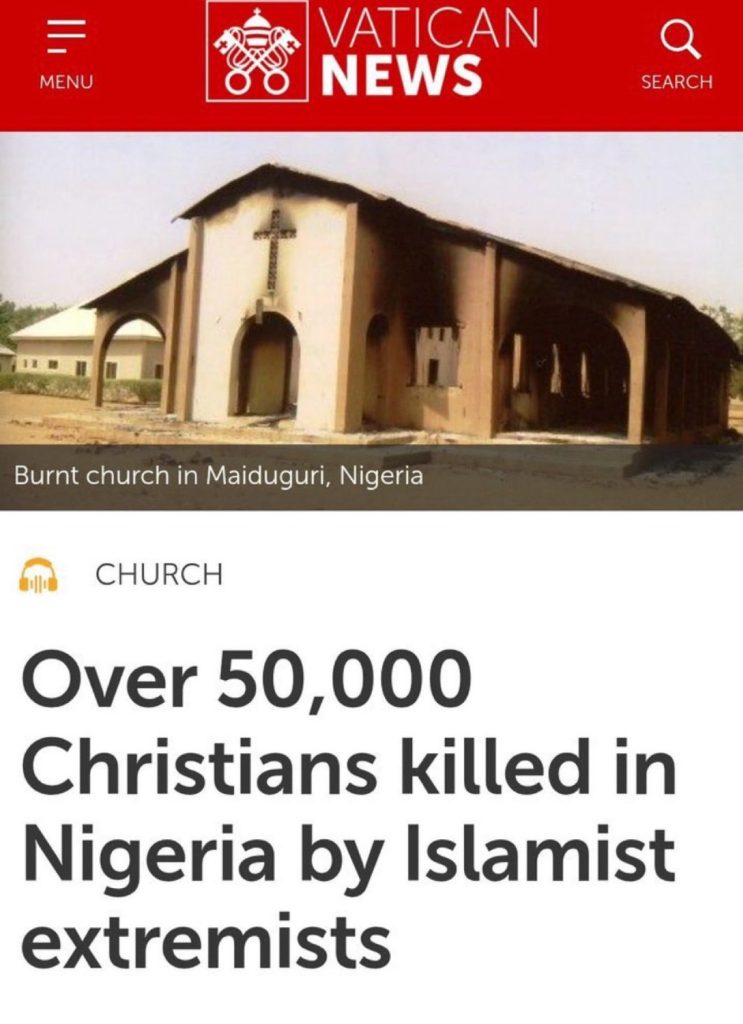
While Muslims like Zohran living in Western democracies enjoy full citizenship rights and constitutional protection, non-Muslim minorities in several Muslim-majority countries continue to face systemic discrimination, violence, and erasure.
And this Islamist terror supporter will never have the morality and honesty to talk about it.
Subscribe to our channels on WhatsApp, Telegram, Instagram and YouTube to get the best stories of the day delivered to you personally.