A major disruption unfolded in the Lok Sabha during the Budget Session on Monday after Leader of Opposition Rahul Gandhi attempted to quote from an article based on an unpublished memoir by former Army Chief MM Naravane, prompting strong objections from the Treasury benches and repeated interventions by senior ministers and the Speaker.
Rahul Gandhi began his speech by holding up a Caravan magazine article that discussed excerpts from Naravane’s unreleased memoir, Four Stars of Destiny, which reportedly contains details about the 2020 India–China military stand-off in eastern Ladakh.
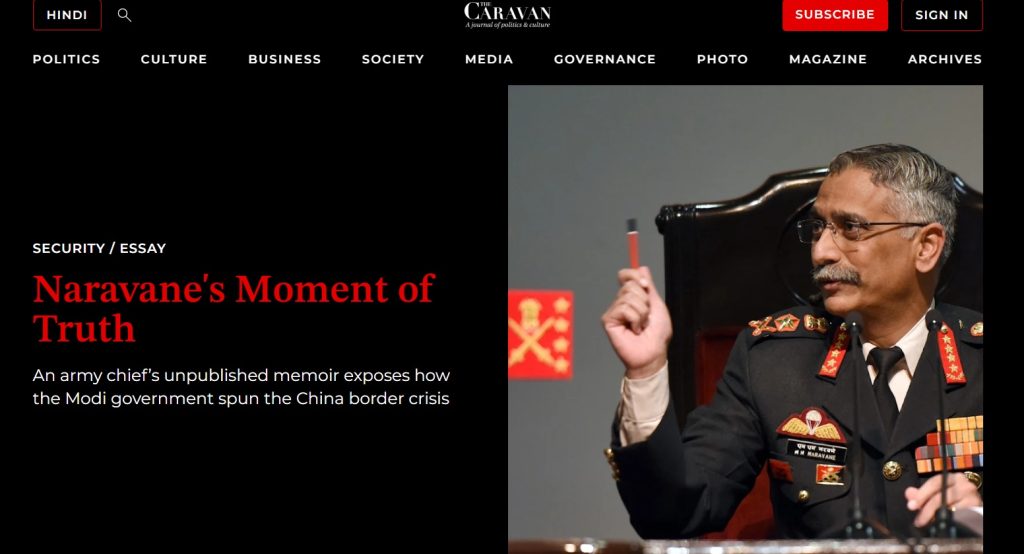
As Gandhi began referring to the contents of the article, Defence Minister Rajnath Singh immediately objected, stating that quoting from an unpublished book was against parliamentary rules.
“I want that LoP, Lok Sabha (Rahul Gandhi), should present before the House the book he is quoting from, because the book he is referring to has not been published,” Rajnath Singh said. He added, “I can say with confidence, the book has not been published.”
The eastern Ladakh standoff began on 5 May 2020, after violent clashes between Indian and Chinese troops near Pangong Lake. Naravane’s memoir reportedly discusses this period, and an essay based on the book’s typescript was published by The Caravan magazine.
Rahul Gandhi repeatedly attempted to continue referring to the article, including using the phrase “Chinese tanks,” which drew further objections from BJP members. Home Minister Amit Shah intervened, asking, “When the book has not even been published, how can he quote from it?”
Parliamentary Affairs Minister Kiren Rijiju went a step further, suggesting disciplinary action. “We should also discuss what should be done with a member who doesn’t obey the Speaker’s ruling in Lok Sabha,” he said.
Speaker Om Birla upheld the government’s objections, citing rules and conventions of the House. “Rules and conventions, too, say newspaper clippings, books, other such things that are not authentic cannot be cited in the House,” Birla said, directing Rahul Gandhi to continue his speech without referring to the article. Birla later added that even if a book is published, quoting from books unrelated to House proceedings is not permitted.
Support for Rahul Gandhi came from Samajwadi Party chief Akhilesh Yadav, who said, “The matter relating to China is very sensitive. LoP, Lok Sabha should be allowed to speak.”
As the exchange escalated, Rahul Gandhi questioned the government’s resistance. “What does it contain which is scaring them so much? If they are not scared, I should be allowed to read on,” he said. He insisted that the article and excerpts he was citing were “100% authentic” and claimed he was compelled to raise the issue after BJP MP Tejasvi Surya questioned the Congress party’s patriotism.
At one point, after being repeatedly stopped from mentioning China, Rahul Gandhi attempted to rephrase his remarks, saying, “Some country’s tanks were approaching…”. When interrupted again, he asked the Speaker, “You tell me, sir, what I should speak!” Birla responded sharply, “I am not your adviser! You should follow the rules. You are Leader of the Opposition. The country can decide if you are maintaining the dignity of the position.”
Rajnath Singh accused Gandhi of attempting to mislead the House. “This is an effort to mislead the House,” the Defence Minister said.
Rahul Gandhi:
“This clipping is from Gen. M. M. Naravane’s book.”
Amit Shah:
“The source of this clipping is demanded to be named here, on the floor of the House.”Rahul Gandhi: Stumped !!
Khangressi : Err….actually he is quoting from a magazine….Speaker : Hain ??? Are you… pic.twitter.com/07CLlYgvpg
— Dr Poornima 🇮🇳 (@PoornimaNimo) February 2, 2026
Showdown in Parliament: Rahul Gandhi interrupted by Rajnath Singh as Gandhi tries to quote article on former Army Chief Naravane’s unpublished memoir on the 2020 Galwan crisis with China pic.twitter.com/xysd57rWrw
— Shashank Mattoo (@MattooShashank) February 2, 2026
As BJP and Opposition members raised slogans and counter-slogans, Birla instructed Gandhi to confine his remarks to the President’s address, noting that it contained no reference to India–China relations. When the disorder continued even as the Speaker called the next speaker, the House was adjourned till 3 pm.
Status of Naravane’s Book
Four Stars of Destiny, General Naravane’s memoir detailing his tenure as Army Chief, including the Galwan clash, the Ladakh standoff, and the Agnipath scheme, remains unpublished as of February 2026. The book has reportedly been under review by the Ministry of Defence for over a year due to sensitive references to China and policy decisions related to national security.
The memoir was initially expected to be released in April 2024, but publication was delayed. Pre-orders reportedly listed earlier were later cancelled. In late 2025, Naravane had remarked that securing the necessary clearances was the publisher’s responsibility, describing the book as “maturing like aged wine.”
The book has never been made available for sale in physical or digital form. Excerpts that appeared in The Caravan magazine are believed to have originated from leaked typescripts, and these excerpts became the focal point of the confrontation in the Lok Sabha.
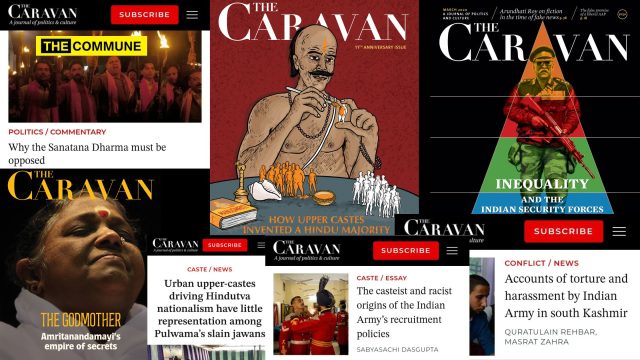
Not The First Time – Caravan Is Rabidly Anti-India/Anti-Hindu
This is not the first time that Caravan magazine has indulged in propaganda peddling or pushing fake news. Here is a list:
The Caravan magazine is a rabid anti-Hindu and anti-India magazine. The far-left rag has repeatedly indulged in biased reporting, plagiarism, and promoting misleading narratives, particularly against Hindus and Indian authorities.
Targeting Nambi Narayanan Following Film Rocketry: The Nambi Effect’s Success
Following the success of the film Rocketry: The Nambi Effect, The Caravan resurfaced its November 2020 article on ISRO scientist S. Nambi Narayanan, reviving baseless espionage allegations despite his full vindication by the CBI, Supreme Court, and National Human Rights Commission. The magazine questioned the integrity of the CBI probe, implied former Prime Minister P.V. Narasimha Rao obstructed it, and cast doubt on Narayanan’s professional competence, ignoring Supreme Court-appointed committee reports and FIRs against 18 Kerala police officers for framing him.
Accused Of Plagiarism
In March 2023, The Caravan was accused of plagiarizing artwork from Netherlands-based artist Ghostly_t for its cover attacking External Affairs Minister Dr S. Jaishankar, which criticized him for opposing George Soros’ alleged interference in India. Initially unresponsive, the magazine later admitted the plagiarism, claiming it had hired freelance artist Samyak Prajapati and was unaware of the copied work, subsequently crediting the original artist.
Nuh Violence Lies
In August 2023, the rag published a report on Nuh violence in Haryana, portraying Muslims as victims and largely blaming Hindus, particularly Bajrang Dal and VHP activists. The article selectively cited sources and old videos while omitting evidence of rioters attacking temples, police, home guards, and devotees, including the murder of Abhishek and other victims.
Downplayed Anti-Hindu Violence In Bangladesh
Additionally, in 2024 contributing editor Salil Tripathi downplayed anti-Hindu violence in Bangladesh. He framed attacks on temples, shops, and religious processions as matters only for Bangladeshis, diverted attention with images of Muslims “protecting” temples, and ignored widespread persecution, forced resignations, idol vandalism, and coercion under Jamaat-e-Islami. The Caravan consistently skews narratives, minimizes violence against Hindus, and amplifies leftist propaganda.
The Caravan Publishes ‘Casteist’ Article, Invites Complaint From Dalit Group
In 2020, the Dalit Positive Movement filed a complaint against The Caravan for publishing what it termed casteist and misleading content that demeaned Hindu faith and Dalit communities. The complaint objected to claims suggesting Dalits consider Mahishasur an ancestor and find Durga Puja offensive. Many Dalits criticised the portrayal as defamatory and a distortion of Hindu scriptures, with the article’s comments section reflecting widespread condemnation.
Caravan Revives Anti-Ramayana Narrative During Deepawali
During Deepawali celebrations in 2022, The Caravan republished content critical of Hindu beliefs, targeting the Ramayana. An article by Ushakiran Atram claimed Ravana was a Gond king “appropriated” by Aryans, relying on the widely disputed Aryan invasion theory. The piece further portrayed Ram and Lakshman as perpetrators of violence against Surpanakha, framing the episode through a feminist lens while ignoring its narrative context. The magazine also amplified commentary suggesting the Ramayana is inherently male-centric and dismissive of women’s experiences. Critics argue the article selectively uses linguistics and folklore while disregarding inscriptions, oral traditions and textual evidence that contradict its claims.
Peddled Lies About NSA Doval’s Son
A January 2019 Caravan article titled “The D-Companies” claimed that Vivek Doval, the son of National Security Advisor Ajit Doval, ran a Cayman Islands–based hedge fund, GNY Asia, which was registered shortly after the 2016 demonetisation exercise. This was further peddled by Congress leader Jairam Ramesh who had to apologise for the defamatory remarks following a case filing.
Published Hitjob On Veteran Carnatic Musician MS Subbulakshmi
Dravidianist supporter Carnatic singer TM Krishna wrote a hitjob piece on the revered carnatic singer Bharat Ratna MS Subbulakshmi for rabidly leftist rag The Caravan. This piece reeked of the typical the leftist-Dravidianist narrative, scrutinizing a revered figure’s private life based on hearsay by repeating her Devadasi origin and her alleged “Brahminization” for social acceptance, which is a derogatory attack on both MS Amma and her heritage. The hitjob followed the standard leftist template by invoking phrases and concepts such as patriarchy, feminism, and overdrive of “Brahminical superiority”, suggesting an agenda-driven approach
Published Article Alleging “Indian Army Torturing & Killing” Civilians in J&K
In 2024, Caravan published an article alleging that the Indian Army tortured and killed civilians.
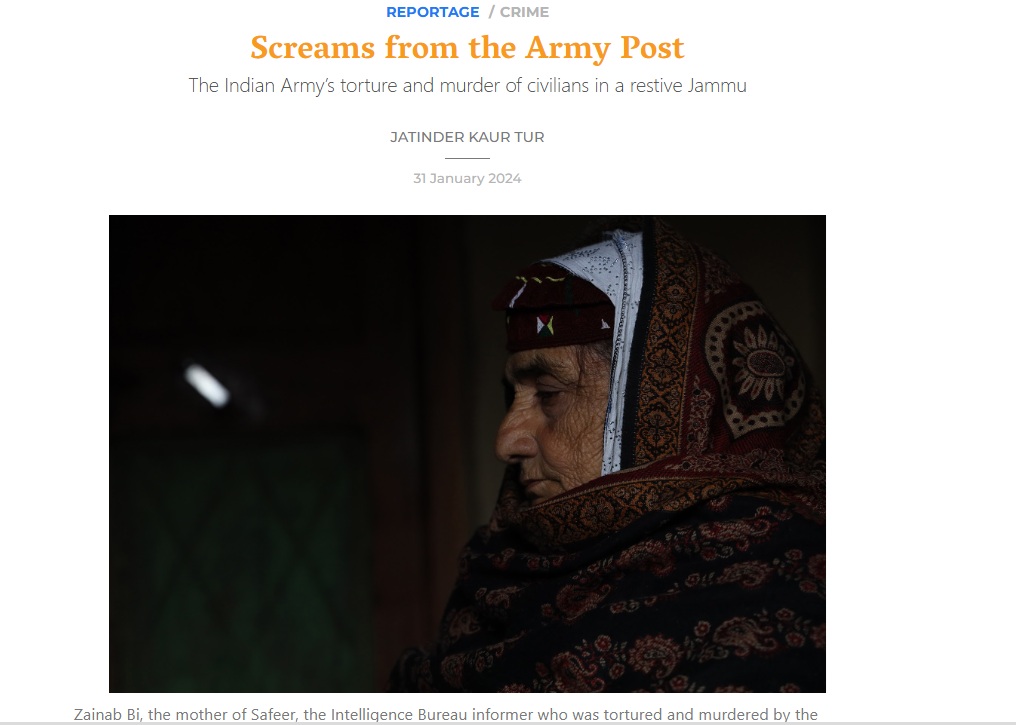
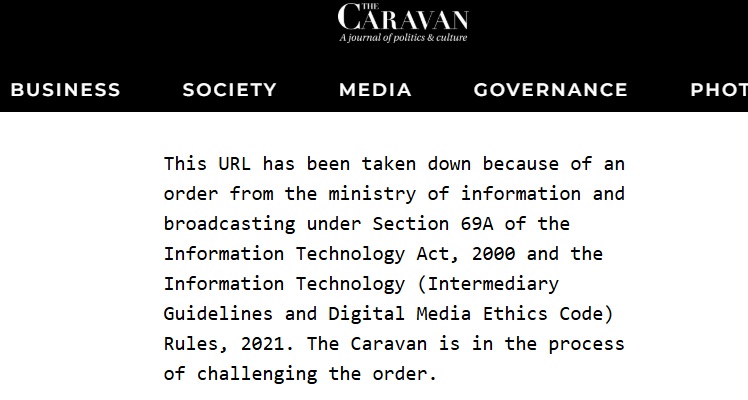
The article used terminology that mirrored Islamabad’s lexicon. The article was later taken down after government action.
Caravan Amplifies UN Narrative Against India’s Counter-Terror Operations
Following the Pahalgam terror attack, The Caravan magazine cited a joint statement by UN Special Rapporteurs to validate its earlier reporting that accused Indian security forces of human rights violations in Jammu and Kashmir. In a June article, The Caravan alleged custodial killings, arbitrary detentions and demolitions, portraying counter-terror actions as collective punishment against Muslims. It humanised terror-linked individuals while downplaying their links to outfits like Hizbul Mujahideen. Despite evidence-based arrests and targeted demolitions of proven terrorists’ homes, The Caravan framed standard counter-terrorism measures as state excesses, reinforcing a narrative of Muslim victimhood and maligning Indian security forces.
Caravan Pushes ‘Another Babri’ Narrative Over Kashi Corridor
After the Supreme Court’s Ram Janmabhoomi verdict in 2019, The Caravan published an article and video alleging that the Kashi Vishwanath Corridor project was laying the groundwork for a “Babri-like” demolition of the Gyanvapi mosque. In its April piece, the magazine claimed that attempts to bury a Nandi idol near the mosque were meant to “indicate Hindu historicity” and drew parallels with events preceding the Babri demolition.
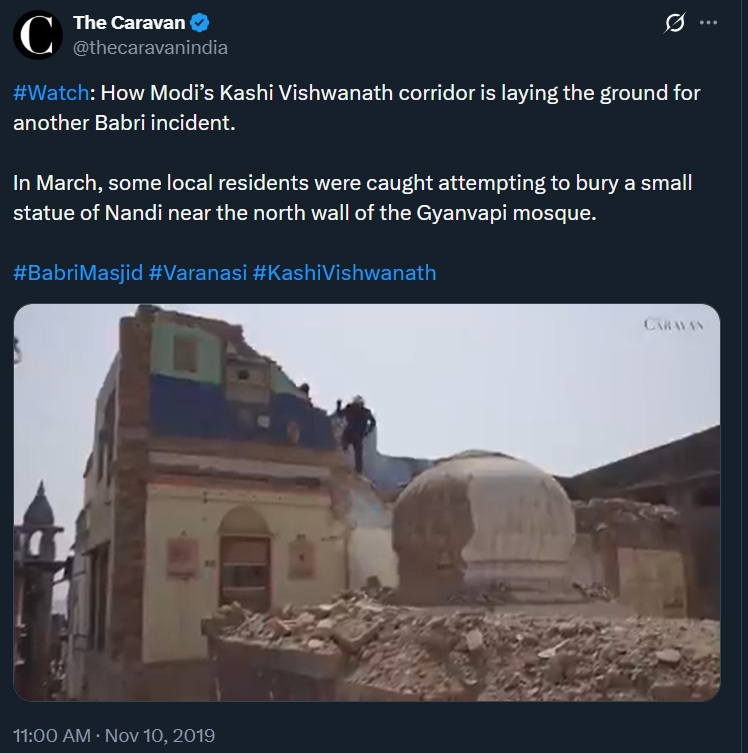
The report suggested Hindus were manufacturing evidence, despite well-documented historical records and visible remnants showing the mosque was built over a demolished Kashi Vishwanath temple.
Published Article Detailing Castes Of Pulwama Martyrs
Following the Pulwama terror attack that killed 40 CRPF personnel, The Caravan published an article that divided the fallen soldiers along caste lines.
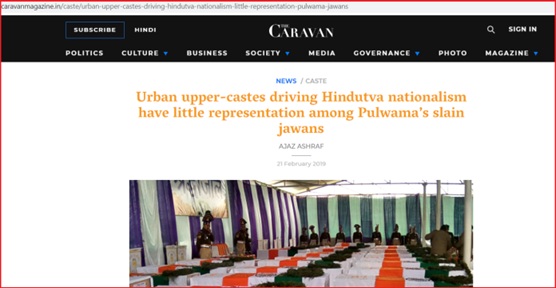
At a time when the country was united in grief and anger, the magazine chose to focus not on the sacrifice of the jawans but on identifying their caste backgrounds. The report involved contacting grieving families to ask about caste, turning a national tragedy into a tool for social division. The article drew widespread outrage for its insensitivity, with critics calling it a shameful attempt to fracture unity and politicise martyrdom in the aftermath of terrorism.
Caravan Claims Govt Sidestepped Experts on Lockdown, ICMR Pushes Back
In 2020, The Caravan claimed that the Modi government extended the nationwide COVID-19 lockdown and approved private laboratory testing without consulting the ICMR-appointed COVID-19 Task Force.
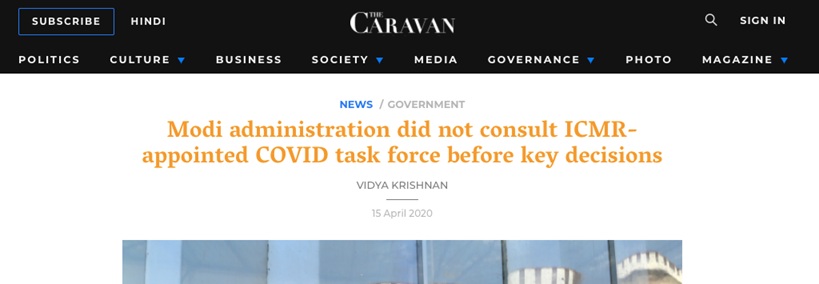
In its article, the magazine cited unnamed task force members to allege that the panel had not met before the decision and was kept out of the loop. The report suggested that key public health measures were taken without expert input. The Indian Council of Medical Research later rejected these claims, stating that the task force met frequently and was involved in all major COVID-19 decisions.
Caravan Article Names Individuals, Alleges Army Role in ‘Staged’ Protests
In 2022, The Caravan published an article titled “False Flags: The Indian Army’s secretive role in hyper-nationalist protests in Kashmir”, claiming that the Indian Army was using local “power brokers” to stage nationalist protests in the Valley to influence public perception and media narratives.
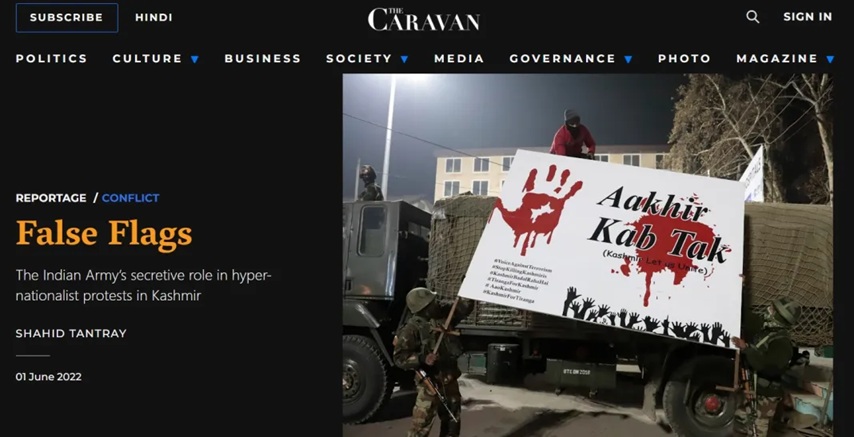
The report named serving and retired officials, BJP-linked figures and journalists, alleging their involvement in these activities. Following complaints from those named, who said the article endangered their lives by effectively giving targets to terror groups, Srinagar Police later initiated a probe into the report and its author.
Romanticising the UPA, Demonising Modi and the BJP
The Caravan’s ideological bias is most visible in its contrasting treatment of the UPA and the BJP. While the UPA era was widely acknowledged—even by neutral observers—as corrupt, dysfunctional and policy-paralysed, Caravan writers went out of their way to sanitise and romanticise it. Shiv Vishvanathan famously described the UPA as “legendary,” portraying it as a benevolent social experiment that merely failed due to political compulsions and unruly allies. Corruption scandals were reframed as unfortunate side-effects rather than systemic rot.
In contrast, Narendra Modi and the BJP were subjected to relentless hostility long before 2014. Vinod K Jose’s sprawling hit-piece, The Emperor Uncrowned, recycled every familiar secular trope, denying Gujarat’s development, exaggerating malnutrition data, and insinuating culpability in riots, while downplaying the Godhra massacre of Hindus.
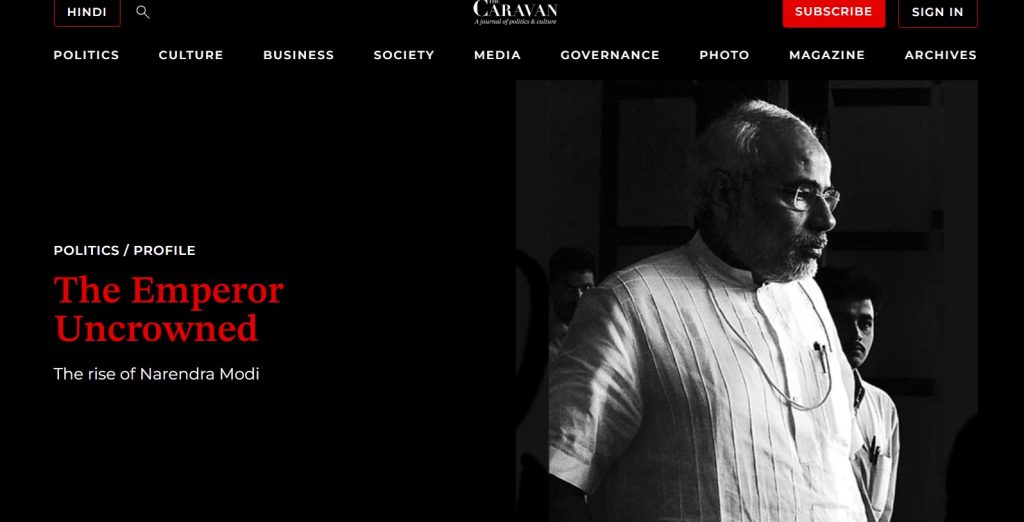
This asymmetry reveals not journalism, but ideological allegiance.
Kashmir: Separatism, Fantasy, and Demonising the Indian Army
On Kashmir, The Caravan’s editorial line consistently mirrors separatist talking points. The magazine platforms writers who describe Kashmir as an “occupied” or “disputed” territory while ignoring Pakistan’s role and the ethnic cleansing of Kashmiri Pandits. Contributors like Basharat Peer, Mehboob Jelani and Wazahat Ahmed portray Islamic terrorists as “disillusioned militants” and frame stone-pelting mobs as peaceful protesters.
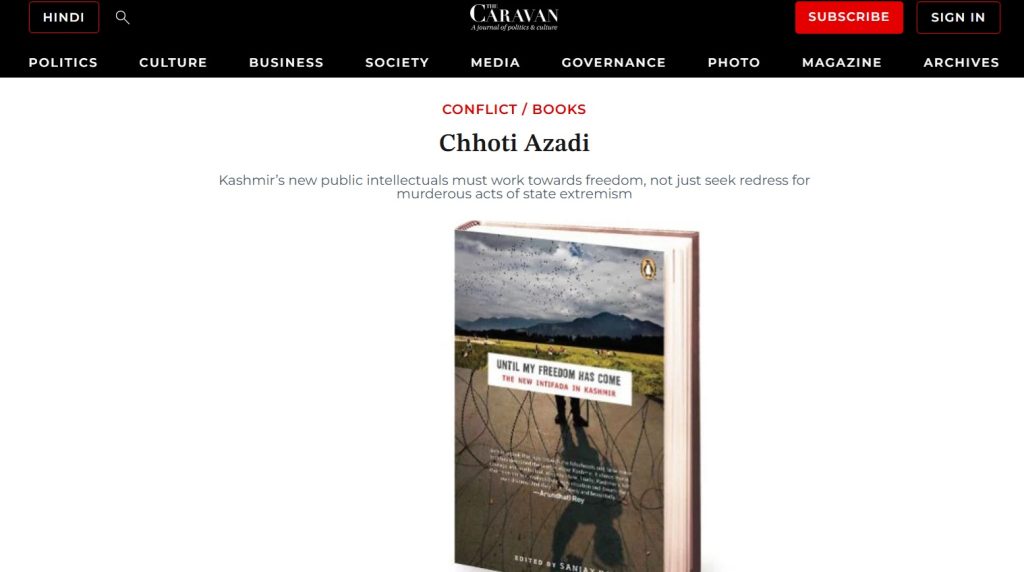
The most extreme example is Sanjay Kak’s 2013 article alleging cannibalism and mass sexual violence by Hindu soldiers, claims so absurd that even Kak admits they are apocryphal, yet treats them as moral truth.
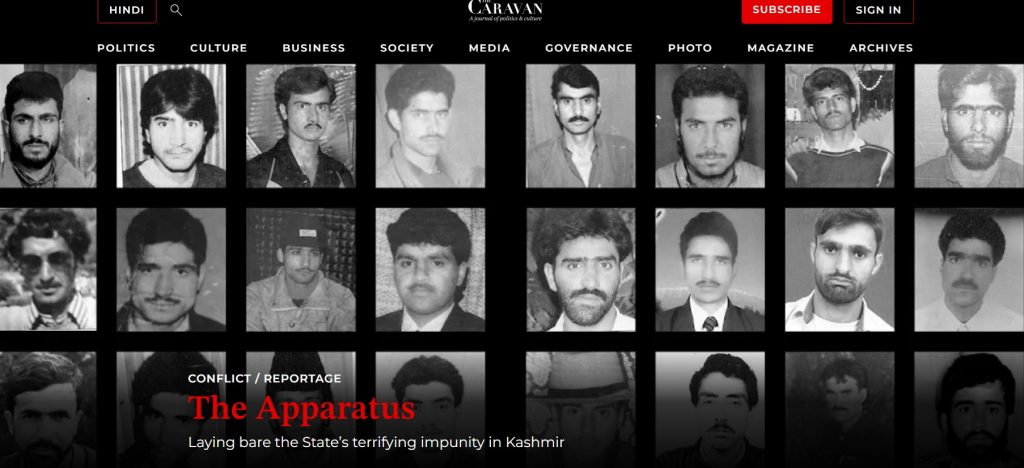
This grotesque caricaturing of the Indian Army, combined with total silence on jihadist brutality or Pakistani abuses, exposes Caravan’s Kashmir coverage as ideological fiction, not reportage.
Gujarat Violence: Erasing Godhra, Absolving Islamist Mobs
The Caravan’s treatment of the 2002 Gujarat violence follows a rigid script: Hindus are aggressors, Muslims are passive victims, and the BJP state machinery is criminally complicit. Articles routinely describe the violence as “one-sided,” omitting or minimising the Godhra train burning in which Hindu pilgrims were burned alive. Writers like Aakar Patel openly suggest state-sponsored conspiracy while dismissing Islamist violence as either provoked or irrelevant.
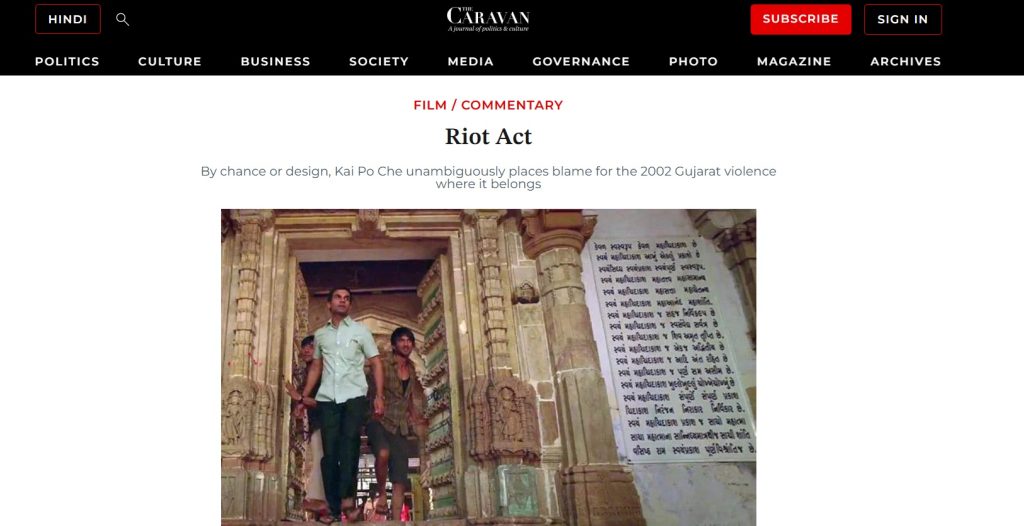
By reframing Godhra as accidental or suspicious, and portraying Hindu response as uniquely barbaric, Caravan erases context and moral complexity. This selective outrage is not accidental—it fits a larger narrative where Hindu suffering is disposable, while Muslim victimhood is absolute and unquestionable.
Ayodhya and Ram Janmabhoomi: Whitewashing Temple Destruction
On Ayodhya, The Caravan adheres strictly to secularist orthodoxy while ignoring decades of archaeological, textual and historical scholarship. Writers like Christophe Jaffrelot frame the Ram Janmabhoomi movement as majoritarian vandalism, carefully sidestepping evidence of temple destruction and Islamic iconoclasm.
Notably, Caravan avoids engaging with the works of Koenraad Elst or later Meenakshi Jain, whose research dismantles the “myth” narrative around Ayodhya. Instead, it amplifies voices hostile to Hindu claims while portraying organisations like the RSS and VHP as inherently violent. This selective scholarship betrays an agenda: delegitimising Hindu civilisational memory while shielding Islamic conquest from scrutiny.
Hinduphobia Disguised as ‘Rationalism’ and ‘Science’
The Caravan routinely frames Hindu practices as irrational, regressive or pseudo-scientific while extending cultural relativism to other faiths. Rahul Bhatia’s attack on Baba Ramdev ridicules yoga and Ayurveda as “abdication of science,” ignoring global medical acceptance and UN recognition of yoga.
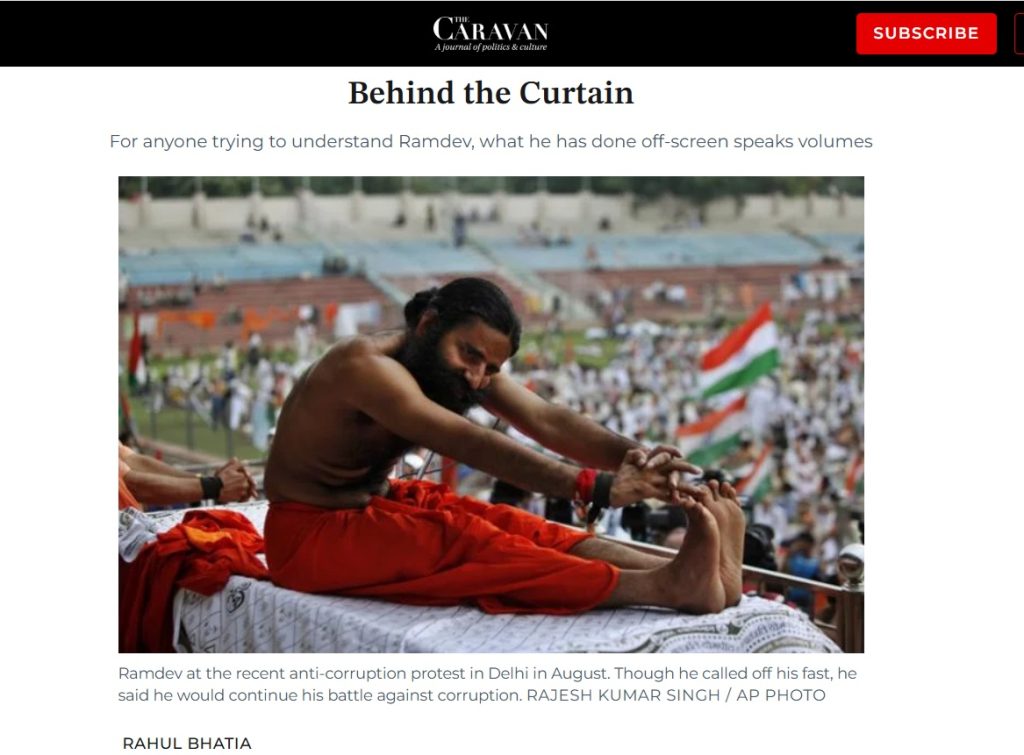
Strikingly, this scepticism never extends to Islamic clerics, madrassas or regressive fatwas. The magazine does not question the scientific or ethical implications of religious extremism elsewhere. Rationalism is selectively deployed, only against Hindu traditions. This asymmetry reveals Hinduphobia masquerading as intellectual critique.
Beef Politics: Cultural Mockery and Selective ‘Freedom’
The Caravan’s obsession with promoting beef consumption is less about food freedom and more about mocking Hindu sensibilities. Writers repeatedly claim that “all Indians eat beef,” cherry-picking obscure anecdotes while ignoring overwhelming cultural taboos. Vinod K. Jose’s articles demean Hindu care for cows while recycling discredited claims about beef-eating in the Vedas.
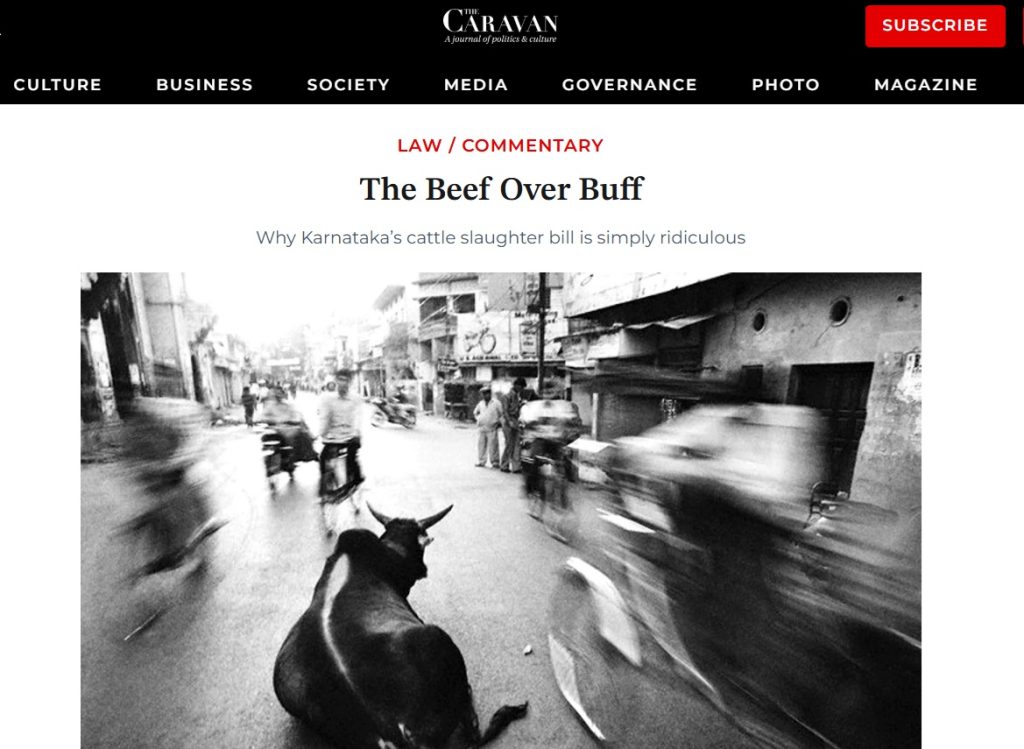
Yet, this supposed commitment to food freedom never challenges Islamic dietary taboos. Caravan never urges Muslims to eat pork or critiques clerical bans on “haram” foods. Freedom, ecology, and nutrition matter only when Hindu beliefs are in question. The message is clear: Hindu practices are fair game for ridicule; others are protected.
Islamophilia: Excusing Extremism, Sanitising Orthodoxy
Complementing its Hinduphobia is The Caravan’s consistent Islamophilia. The magazine portrays the burqa as a symbol of feminist resistance, justifies madrassa education while ignoring radicalisation, and sanitises Islamist violence through euphemisms. Crimes committed in the name of Islam are contextualised, explained away, or reframed as reactions to state oppression.
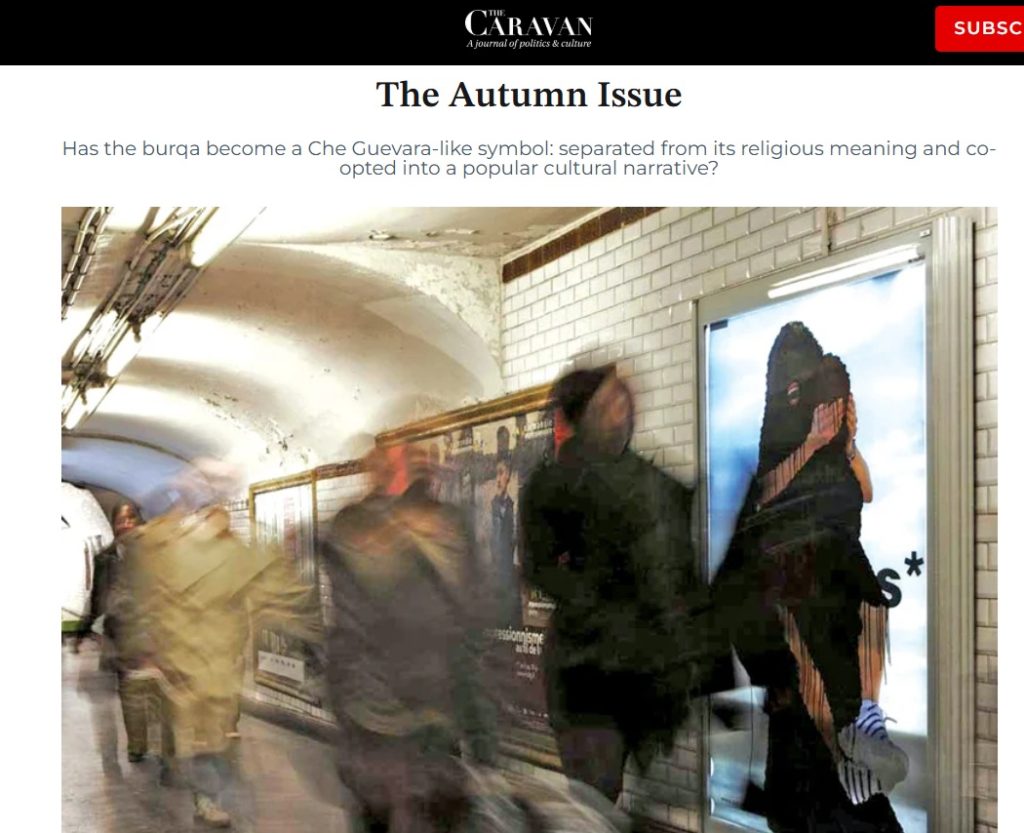
Meanwhile, Sanskrit institutions are labelled “majoritarian,” and Hindu cultural assertion is framed as fascistic. Riot narratives consistently depict Hindus as aggressors and Muslims as victims, even when evidence suggests otherwise. This ideological imbalance completes the picture: The Caravan is not merely anti-Hindu, but actively apologetic toward Islamist structures.
View this post on Instagram
Conclusion
The latest Lok Sabha disruption over an unpublished memoir once again places The Caravan at the centre of controversy, not merely as a passive source but as an active trigger for political confrontation. Over the years, the magazine has repeatedly published reports that critics say rely on leaks, anonymous claims, selective framing and ideologically driven narratives, often targeting Indian institutions, security forces and Hindu society. From Pulwama to Kashmir, COVID governance to temple heritage, a consistent pattern emerges – provocative claims first, rebuttals and damage control later.
Subscribe to our channels on WhatsApp, Telegram, Instagram and YouTube to get the best stories of the day delivered to you personally.