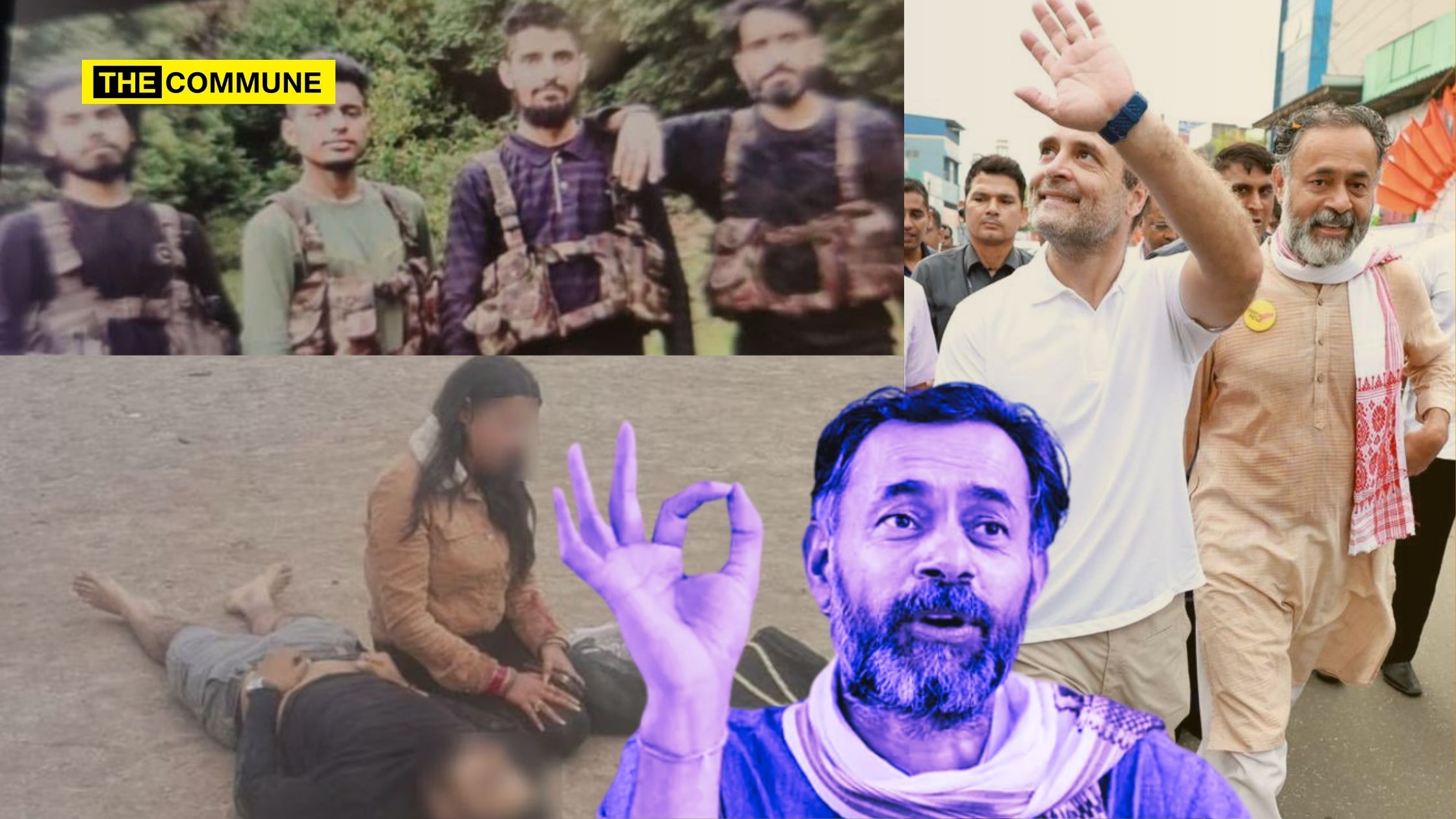
In the aftermath of the Pahalgam terror attack, where innocent lives were lost in a gruesome assault that shook the nation, alleged psephologist Yogendra Yadav—once again—took to X not to condemn the terrorists or demand justice, but to lecture Indians on what not to do. His post, masquerading as a message of peace, was in reality a masterclass in moral grandstanding, tone-deaf deflection, and insidious whitewashing of terror.
While India mourned, Yadav sermonized. His message to the nation? Don’t blame anyone. Don’t demand accountability. Don’t see the terrorists’ ideology. Don’t even name the religion of the attackers—because, according to him, that would make us like them. In a country still grappling with the brutal pain of lives lost to jihadist violence, Yadav’s response read less like a call for unity and more like a PR exercise for the perpetrators.
On his X handle, he wrote, “In this hour of national mourning, it should be the duty of every Indian to avoid the four reactions that the Pahalgam terrorists would have wanted from us: 1. Don’t blame. This is the time to stand with the grieving families, not for blame games and media trials. 2. Do not put pressure on the government to take immediate retaliatory action. Give the military, security agencies and diplomats the opportunity to respond in a timely manner and in their own way. 3. Do not consider the people of Kashmir to be involved in the brutality of foreign terrorists. They are also victims of this incident. Thousands of families have lost their jobs. They need our help, our love. 4. Do not identify a person by his religion. This is what the terrorists did, assuming that we will all imitate them. Taking a pledge of Hindu Muslim unity is the most effective answer to the terrorists. Jai Hind!”
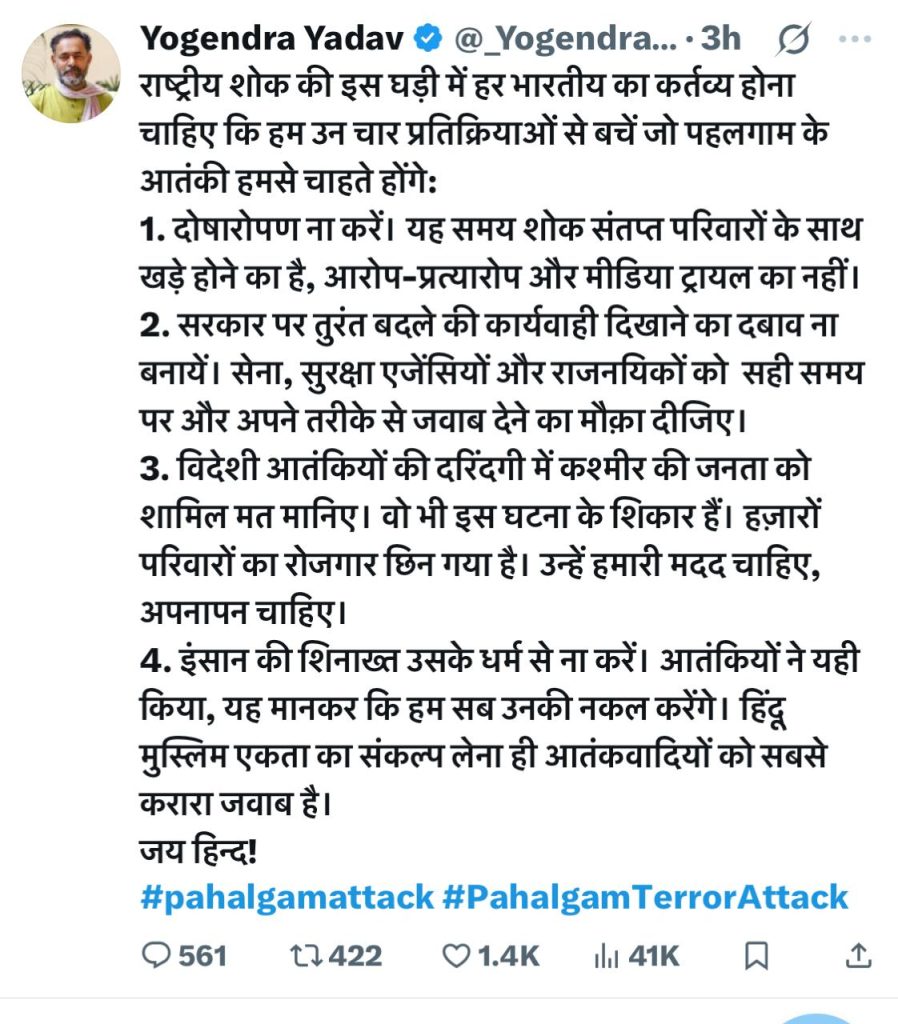
Yogendra Yadav – The Saint Of Selective Outrage
Yadav’s four-point prescription for national mourning reveals his true colors. First, he implores Indians not to “blame,” a clever euphemism for discouraging any serious examination of the jihadist ideology behind the attack. This from a man who has never hesitated to blame the Indian state, majority community, or Prime Minister Modi for every real and imagined grievance.
Second, he cautions against pressuring the government for retaliation, a curious demand coming from someone whose entire career has been built on pressuring governments through protests often bordering on violent unrest. The irony is palpable—when Yadav’s ideological fellow travelers riot in the streets, it’s “democratic dissent”; when Hindus demand action against terrorists, it’s “jingoism.”
Third, his plea to not associate ordinary Kashmiris with terrorism deliberately conflates the valley’s innocent civilians with its entrenched ecosystem of terror sympathizers. No serious counterterrorism strategy can afford this false equivalence, yet Yadav pushes it relentlessly.
Finally, his admonition against identifying attackers by their religion would be laughable if it weren’t so dangerous. The terrorists didn’t shoot pilgrims at random—they targeted Hindus specifically. Yet Yadav, who has built his career on identity politics, suddenly discovers the virtues of colorblindness when Islamic extremists are the perpetrators.
Yogendra Yadav’s History Of Siding With Anti-India Forces
This is not an isolated episode. Yogendra Yadav’s record is littered with instances where he has aligned himself with radical and anti-India elements. In 2020, his name appeared in the Delhi Police chargesheet on the anti-CAA riots, where he was identified as a co-conspirator. He allegedly attended a meeting alongside Umar Khalid and Sharjeel Imam where plans to instigate violent protests were laid out. According to the police, this meeting was the genesis of the DPSG WhatsApp group, which coordinated the violent outbreaks during President Trump’s visit.
And yet, in media circles, Yadav continues to masquerade as a scholar, a peace-monger, a “man of the people.” His association with the Sambhaavnaa Institute—funded by Internews, a USAID-backed organization accused of pushing foreign narratives in India—further reveals how deep his ties are with global networks that aim to destabilize India through soft power and social manipulation.
The Dangerous Cost Of Moral Cowardice
Yogendra Yadav represents a section of India’s intelligentsia that refuses to acknowledge the ideological roots of jihadist violence. By constantly shifting the burden of morality onto victims and shielding the attackers behind flowery platitudes, Yadav and his ilk are enabling a culture where terrorism is depoliticized, deradicalized, and ultimately normalized.
India deserves better. The victims of terror deserve justice, not lectures. And the country deserves commentators who call out the truth, not career activists who twist tragedy into an opportunity for ideological posturing.
Yadav’s words are not calls for peace—they’re camouflage for terror.
Subscribe to our channels on Telegram, WhatsApp, and Instagram and get the best stories of the day delivered to you personally.