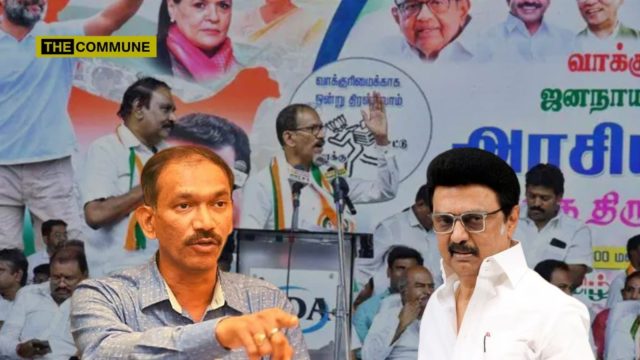
Fresh tensions have surfaced within the DMK–Congress alliance ahead of the 2026 Tamil Nadu Assembly elections after remarks by Tamil Nadu Congress in-charge Girish Chodankar on power-sharing triggered political ripples, even as both parties publicly maintained that the partnership remains intact.
The Congress has been pressing for a larger share of Assembly seats in the upcoming polls. Having contested 41 constituencies in 2016 before its tally was reduced to 25 in 2021, the party is now understood to be seeking between 39 and 41 seats, viewing the demand as a restoration of its earlier position. The DMK, however, is reportedly inclined to increase the Congress quota only marginally, by two or three seats at most, citing the need to accommodate a broader alliance.
According to sources, the DMK has conveyed to the Congress that it is prepared to allot only 25 Assembly constituencies — the same number given in 2021 — despite the Congress seeking at least 38 seats. The Congress leadership has indicated that it is not willing to be restricted to 25 seats this time and is pressing for a higher allocation.
Reports suggest the DMK leadership is particularly upset that details of the ongoing alliance negotiations were discussed publicly by Chodankar. Party sources indicated that the remarks caused discomfort within the DMK, which prefers that seat-sharing discussions remain confidential during negotiations.
During the initial round of talks, the Congress is said to have submitted a list of more than 75 constituencies where it believes it has electoral prospects and urged the DMK to allot at least one seat in each of Tamil Nadu’s 38 districts. The DMK, however, has maintained that it cannot increase the Congress quota beyond 25 seats, citing the need to accommodate a larger number of alliance partners in the upcoming election.
Reports indicated that the Congress high command is also keen on securing DMK support for a Rajya Sabha berth in order to protect its claim to the Leader of Opposition post in the Upper House, currently held by party chief Mallikarjun Kharge. The Congress presently has 27 members in the Rajya Sabha, just two above the required strength of 25 to retain the LoP position. The terms of eight Congress MPs, including Kharge, are due to expire between April and June this year, adding urgency to the party’s efforts to shore up numbers.
Against this backdrop, Chodankar stated in a recent interview that discussions on power-sharing, particularly at the grassroots level covering panchayats, municipalities and corporations, had formed part of high-level talks between leaders in Delhi and Chennai. He indicated that meetings, including one between Congress general secretary (organisation) K.C. Venugopal and Chief Minister M.K. Stalin, had touched upon these issues. He further suggested that, in principle, the DMK had not expressed objections to power-sharing at the local body level.
On the broader question of seeking power, Chodankar remarked that every political party naturally aspired to political authority and noted that the Congress was focused on strengthening its organisational position in Tamil Nadu.
He also referred to actor Vijay’s Tamizhaga Vetri Kazhagam (TVK), observing that the new party was gaining traction among youth and had shown interest in working with the Congress at the grassroots level. However, he clarified that formal negotiations were currently underway only with the DMK, the Congress’s long-time ally.
The remarks triggered controversy within political circles, prompting senior Congress leaders, including state president K. Selvaperunthagai, to play down the comments as either misinterpretations or personal views rather than the party’s official stand. Selvaperunthagai strongly defended the DMK–Congress partnership, describing it as ideological and natural, and asserted that the alliance remained firm.
Political observers noted that while earlier interactions between the two parties had appeared smooth following Venugopal’s visit and Chief Minister Stalin’s dismissal of power-sharing talk as a conspiracy, Chodankar’s comments had once again stirred unease. Analysts emphasised the need for message discipline within the Congress during sensitive negotiations, even as they pointed out that the alliance has historically benefited both parties electorally.
Selvaperunthagai later reiterated that seat-sharing discussions were progressing smoothly, stating that the first round of talks had concluded and that the next round at the DMK headquarters, Anna Arivalayam, was expected shortly. He maintained that there were no serious issues in the negotiations.
On the Rajya Sabha question, indications have emerged that the DMK leadership may be open to accommodating the Congress, though not without reservations. Senior DMK figures were reported to have expressed dissatisfaction with the idea of allocating a Rajya Sabha seat to an “outsider” from the Congress, reflecting internal reluctance to nominate a non–Tamil Nadu figure. However, reports suggested the DMK high command could reconsider if the proposed nominee is from Tamil Nadu, a move that may ease alliance tensions.
View this post on Instagram
Source: The Federal
Subscribe to our channels on Telegram, WhatsApp, and Instagram and get the best stories of the day delivered to you personally.