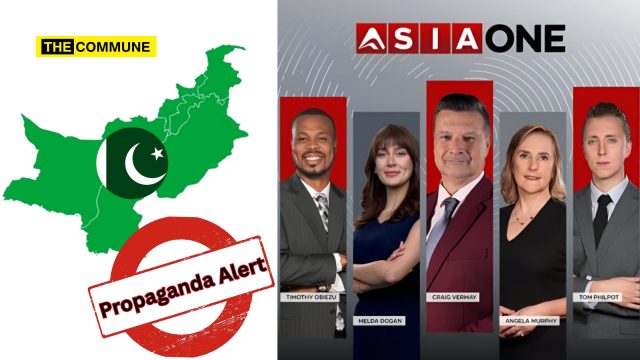
In the wake of setbacks on multiple fronts diplomatic, economic, and reputational – Pakistan appears to have intensified its propaganda strategy against India. Following Operation Sindoor, Pakistan has now ventured into international media with the launch of AsiaOne, a satellite-based English news channel, aimed at shaping global narratives in its favor.
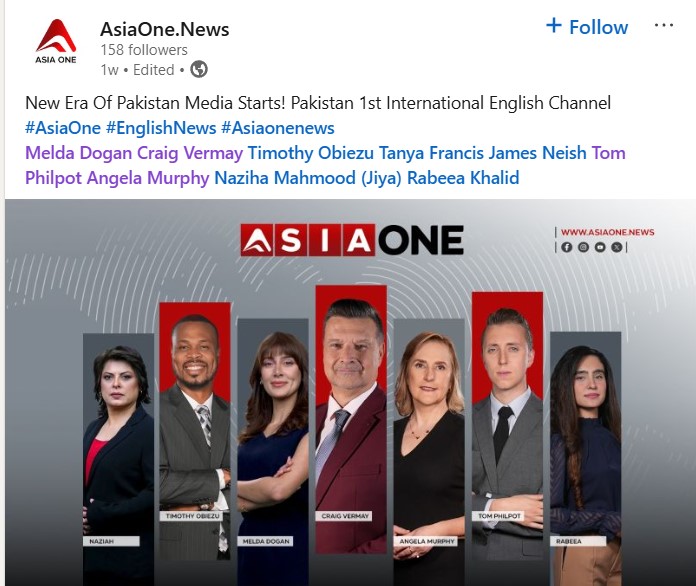
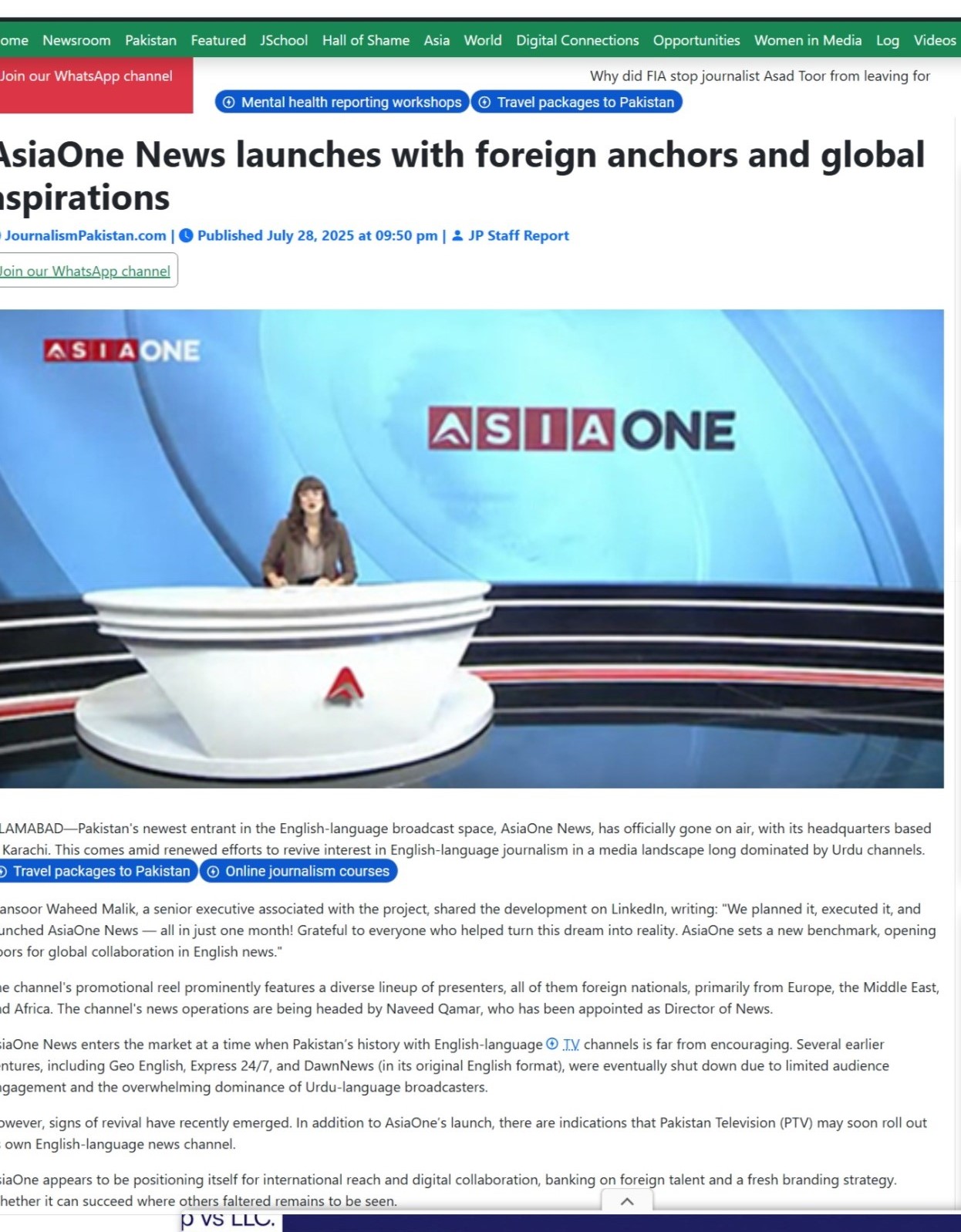
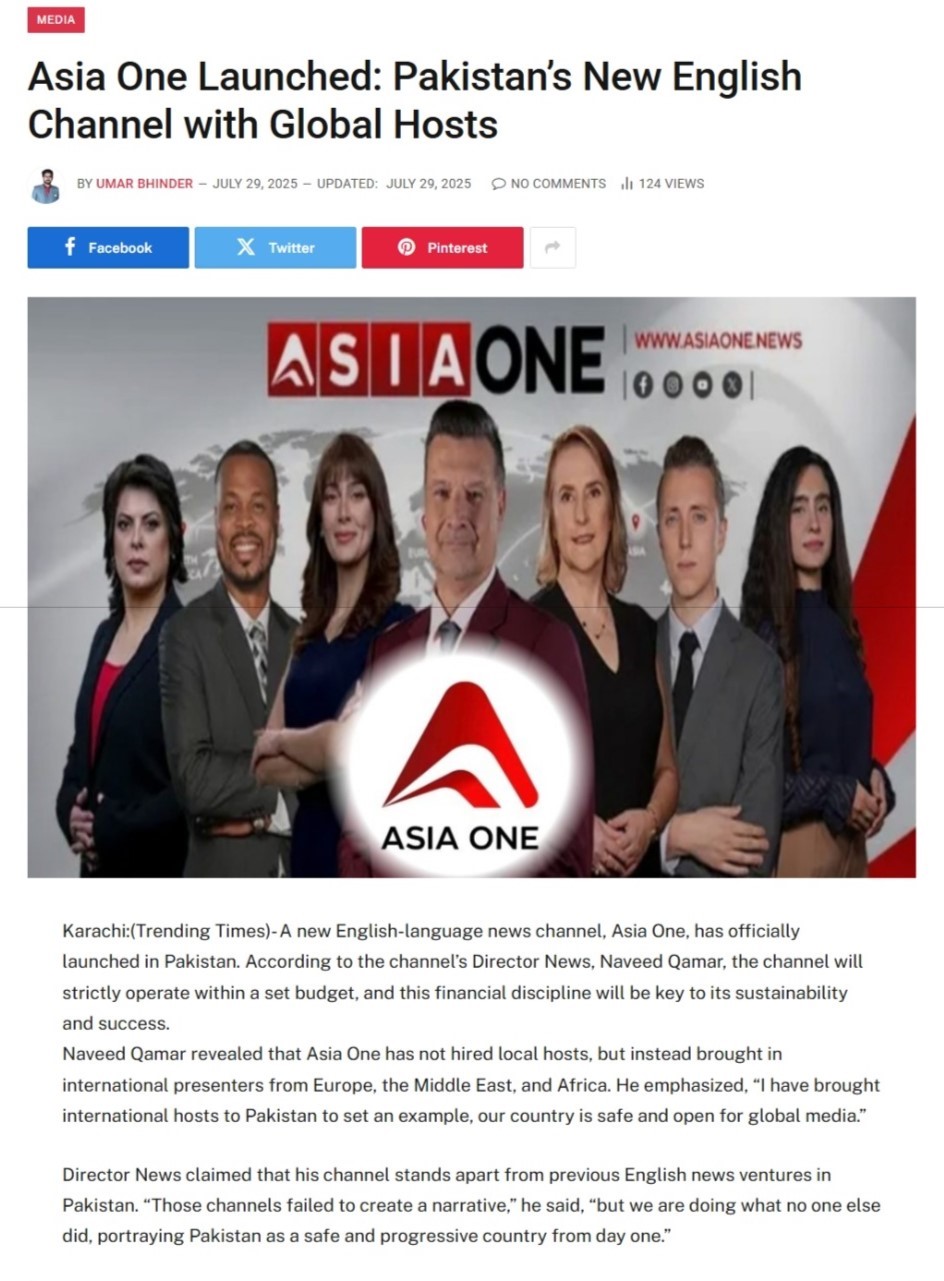
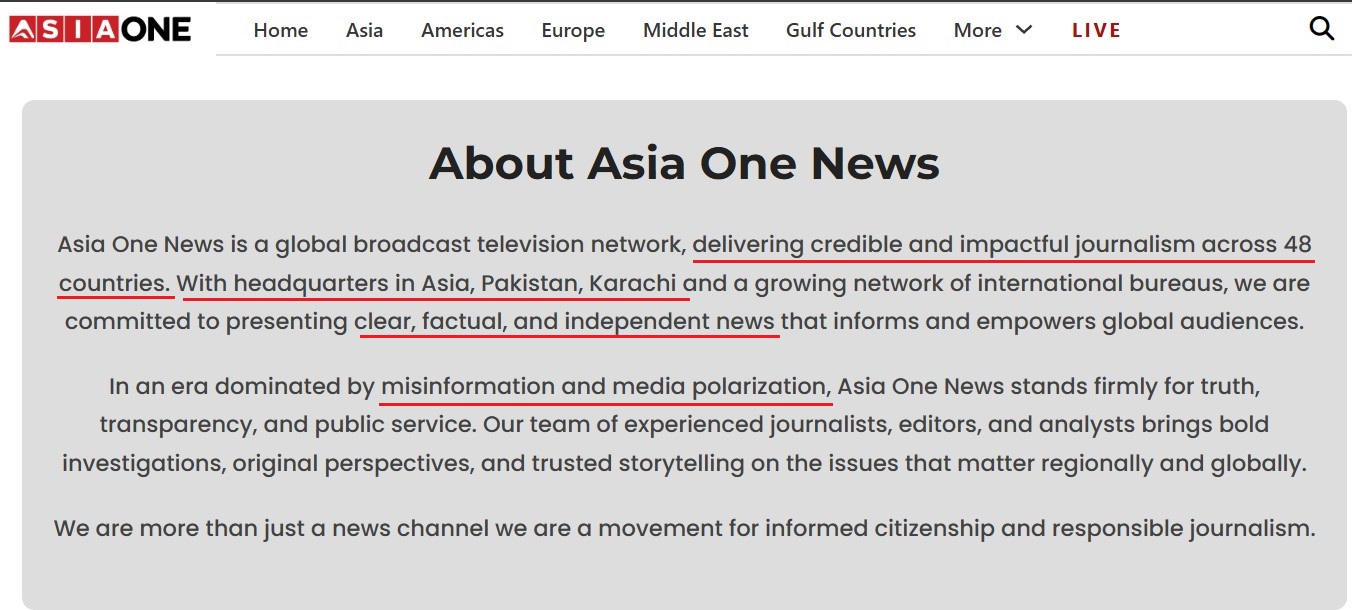
Rather than confronting the root of its global image problem terrorism originating from within its borders Pakistan seems intent on countering facts with fiction. The new channel, launched by Pakistan365 Media Group, is headquartered in Korangi, Karachi. Despite the scale of the project, mainstream Pakistani and international media have largely ignored the development. Coverage of the launch has been limited to a few digital blogs and third-party sources.
Inside the Launch of AsiaOne
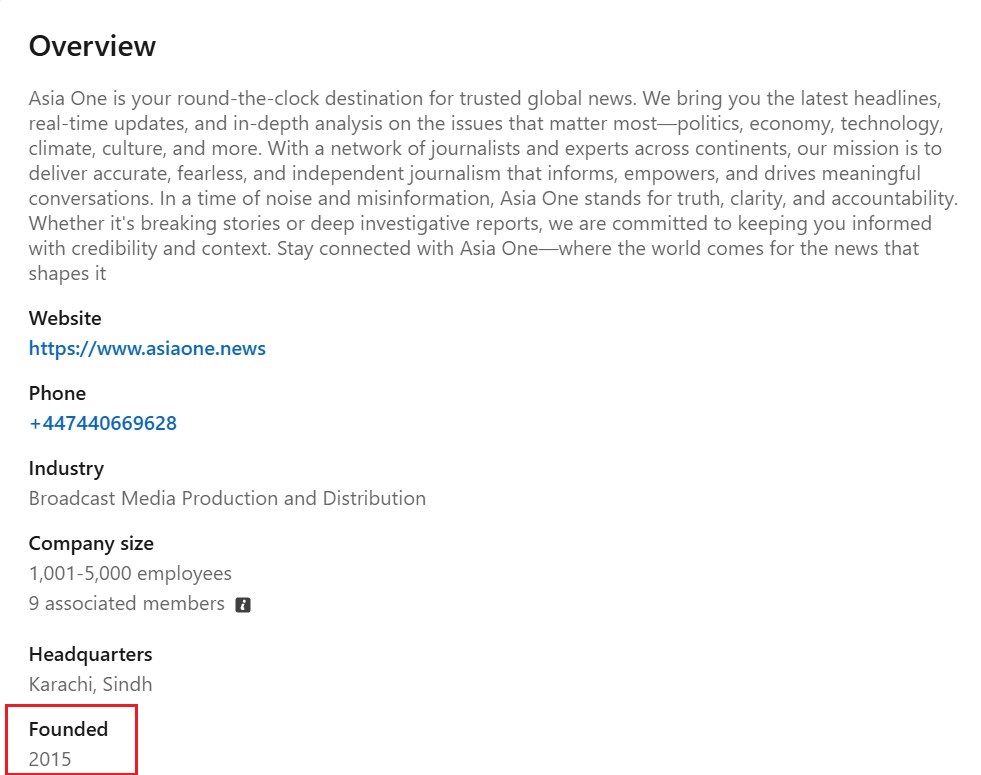
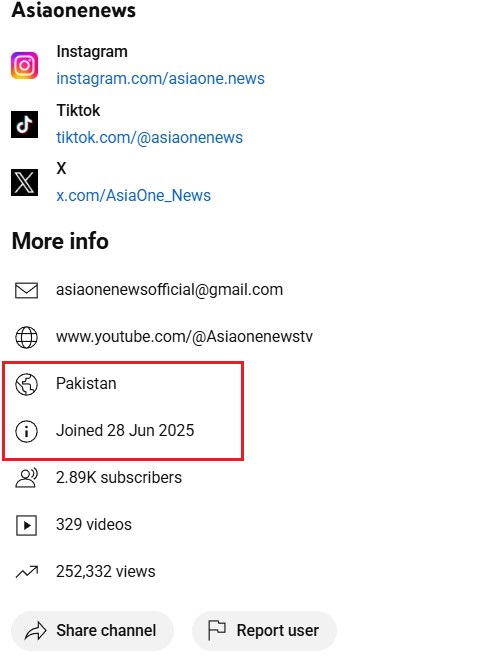
According to their LinkedIn page, AsiaOne was founded in 2015, though their YouTube bio lists the creation date as 28 June 2025.
The channel claims to be Pakistan’s first English-language international satellite news outlet and is staffed by a mix of foreign presenters, mainly from Europe, the Middle East, and Africa.
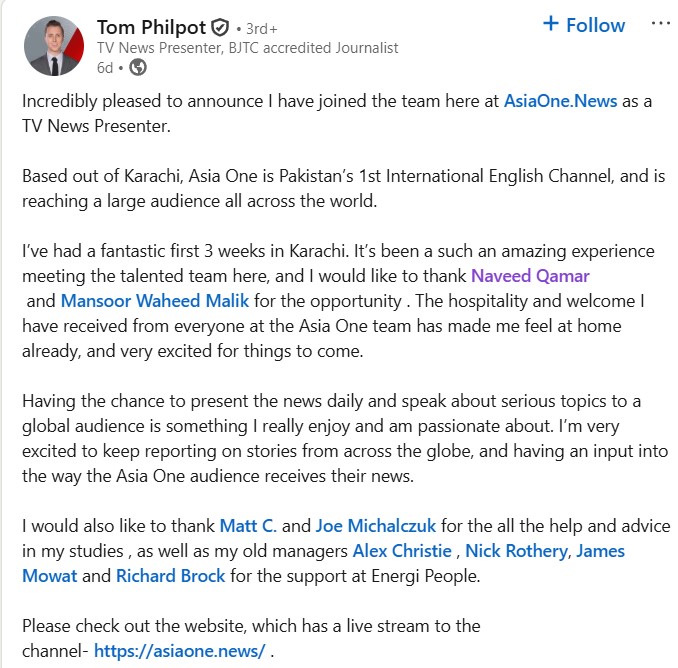
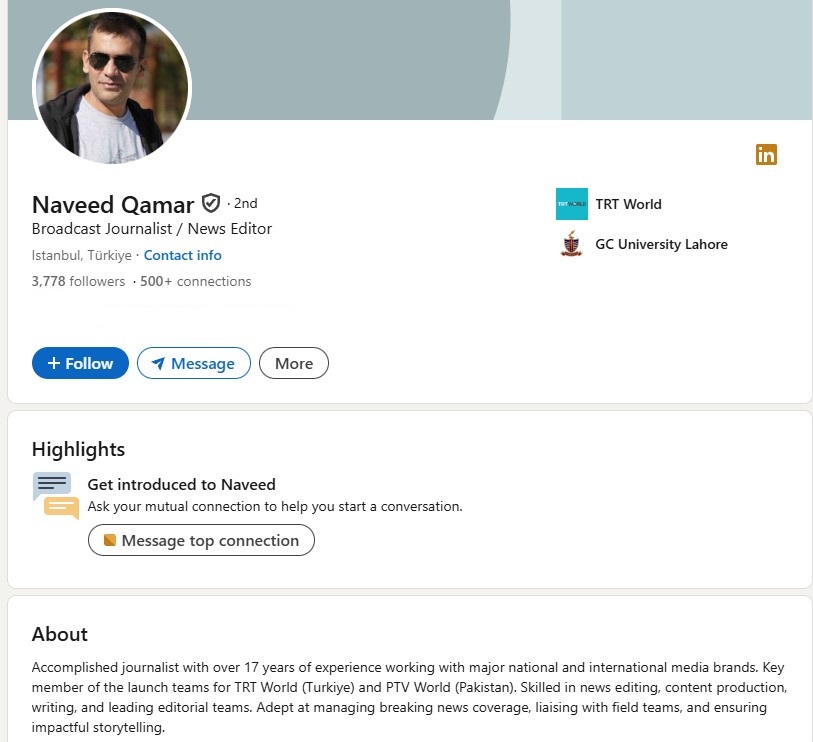
Key personnel include:
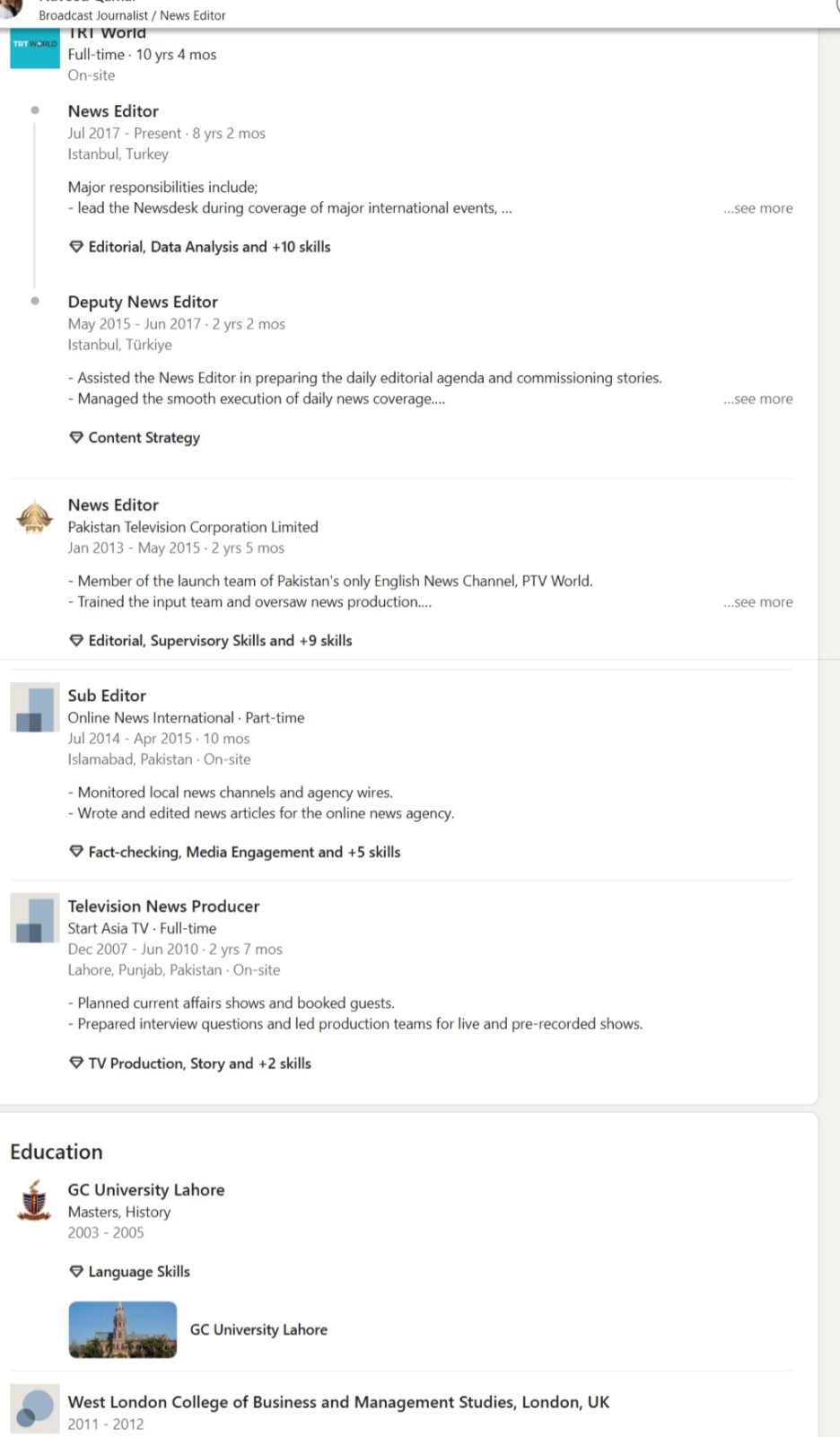
- Naveed Qamar as News Director, formerly with TRT World
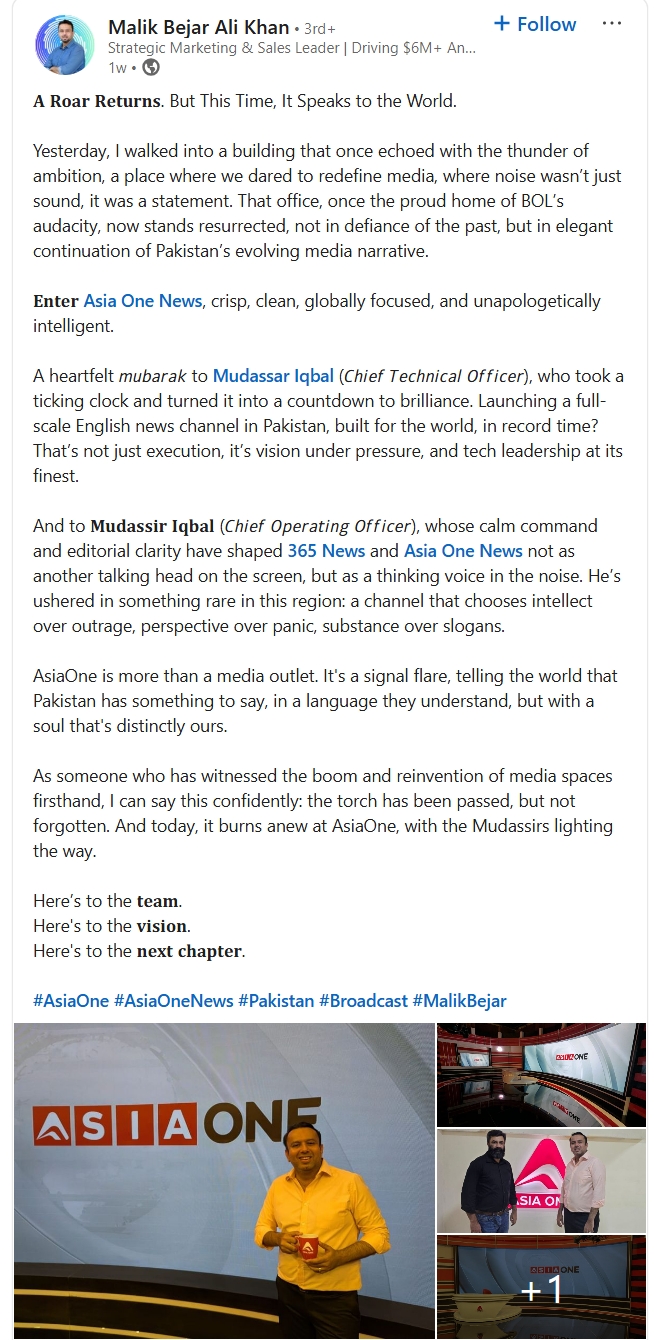
- Mudassar Iqbal as Chief Technical Officer
Currently, AsiaOne operates out of a single office in Karachi, with no immediate plans to expand. The emphasis, they claim, is on “quality journalism” within a tight budget.
Narrative Building Through Media
Media analyst Imran Malik, in an interview with Media Bites, candidly outlined the motivation behind the channel. Though not directly referencing Operation Sindoor, he implied that global media representation of Pakistan’s stance has been poor. He emphasized the lack of English-language news channels in the country that could deliver Pakistan’s viewpoint on international platforms.
Malik explained that previous attempts like Dawn News, Express 24/7, Indus News, and PTV World all failed due to poor planning, lack of funds, and unprofessionalism. With AsiaOne, he believes a fresh attempt is being made to challenge India’s dominance in the global English-language media space. He also suggested that the channel could benefit figures like Bilawal Bhutto Zardari, who are fluent in English and well-positioned to promote their narratives to a global audience. Malik praised the visual quality and international staffing of the new channel, calling it a step forward for Pakistan’s media ambitions.
He said, “Recently, in Pakistan and internationally, there have been some incidents where Pakistan’s narrative has not been presented in a very good light to the world. And there have always been complaints about it that all the news channels in Pakistan are Urdu news channels. There are no English news channels that can present Pakistan’s narrative on an international forum. In comparison, if we look at our neighboring country, there are many such channels that are in English and their narrative is easily accepted throughout the world. So, it was felt that there should be English channels in Pakistan because earlier too, English channels were launched in Pakistan. Dawn News, which is Pakistan’s biggest newspaper, launched a channel. We thought that it would be a successful model for an English news channel, but the channel that was launched in 2010 had to be shut down after only three years, and the series of English news channels once again came to an end. After that, an experiment was done by Express News, they launched a channel, and that channel also ran for about one and a half years, and after that, it was also shut down. After that, some circles tried to show Pakistan’s narrative internationally, and they tried Indus News, and PTV World, to show English transmission in other countries. There was a lack of professionalism, there were no budgets, and there was no proper planning, so they were not successful. Now, two days ago, we saw a new addition. 365 News, that channel is going to launch. Asia One English News channel has been launched, and its transmission also looks very good. Its picture is very good, and its anchors and news casters are not only from Pakistan but have also been brought from international forums. Overall, it’s a good presentation because 365 is said to be owned by a certain group, so that same group is also launching this English channel. Bilawal will benefit from this because it’s a channel of his own group, so for him, it will be a very good platform to use it because he presents his narrative in English very well throughout the world. We extend our congratulations to Asia News, Asia One.”
Imran Malik, Editor of Media Bites, explains the objective behind the launch of AsiaOne. Listen carefully to the reason why they need to start this network. He indirectly refers to Operation Sindoor (some events) and states that Pakistan's Narrative has been lacking in the World… pic.twitter.com/YyFk6WjKUj
— Sougat Chakraborty (@sougat18) August 10, 2025
Anti-India Propaganda: A Common Thread
Since its launch, AsiaOne appears to have wasted no time pushing a biased, anti-India narrative under the guise of journalism. Several news segments broadcasted by the channel have been alarmingly slanted
Example 1: “Modi’s India Stands Isolated”
In one program, the channel alleged that Indian Prime Minister Narendra Modi is facing a major diplomatic crisis, claiming he has been “publicly sidelined” by former US President Donald Trump. The segment revisits historical India-China border tensions and criticizes Modi’s outreach to the US, portraying him as strategically stranded and internationally isolated. The report also distorts Trump’s past comments to suggest strained US-India ties and claims India is reverting to a policy of “strategic autonomy” after supposed diplomatic failures.
The news segment peddles, “Indian Prime Minister Narendra Modi finds himself navigating one of the toughest foreign policy tests of his tenure. Once quartered by both Beijing and Washington, Modi is now recalibrating in his position after being publicly sidelined by US President Donald Trump and cautiously reopening channels with China. It began with a warm embrace. In 2014, Modi personally hosted Chinese President Xi Jinping symbolizing hopes of economic partnership. But even as they smiled for the cameras, Chinese troops clashed with Indian forces at the border. A humiliation that left New Delhi reeling and heavily militarized in the Himalayas. Then came the United States. Modi put his political capital on the line, even campaigning alongside Donald Trump in Texas. But that bonhomie was short-lived. Now in his second term, President Trump has imposed a 50% tariff on Indian goods, citing India’s continued oil imports from Russia and calling India’s economy “dead”. He’s also equated India’s arch-rival Pakistan with New Delhi in his push for a South Asia ceasefire sparking backlash among Modi’s supporters. For Modi, the strategic gamble with the US has backfired, forcing India to look inward and once again revive an old foreign policy mantra: strategic autonomy. In other words, India is on its own. In the past week alone, Modi has spoken with Russian President Vladimir Putin, Brazil’s Lula, and is preparing for his first visit to China in 7 years. Officials say relations may never fully recover with Washington, and that India must learn to hedge its bets.”
Propaganda against India: Example 1
Headline: Modi's India Stands Isolated! Modi Publicly Sidelined By President Trump pic.twitter.com/BXEOeUF1eE— Sougat Chakraborty (@sougat18) August 10, 2025
Example 2: “Air Crafts Shot Down”
Another segment attacked the credibility of the Indian Air Force, accusing it of fabricating claims about shooting down six Pakistani aircraft during a brief conflict in May. The report criticizes Indian Air Chief Marshal A.P. Singh for providing “no evidence” and paints Pakistan’s narrative as more credible, even alleging the downing of an Indian Rafale jet a claim India has never confirmed and no independent source has validated.
Propaganda against India: Example 2
Headline: India's False Claim pic.twitter.com/z21El5hnX0— Sougat Chakraborty (@sougat18) August 10, 2025
Example 3: “India Faces Tariffs”
A third report focuses on the economic front, alleging that steep U.S. tariffs on Indian goods imposed due to India’s oil trade with Russia are crippling key sectors like textiles and auto parts. The channel frames this as a failure of Indian diplomacy and manufacturing strategy, quoting unnamed industry insiders to paint a bleak picture of India’s economic prospects.
It went on to say, “Now Trump’s steep 50 tariffs on Indian imports threaten key sectors including textiles, jewelry and auto components. The move, aimed at penalizing India’s purchase of Russian oil, could severely disrupt India’s export growth and manufacturing ambitions. So nowadays tariff comes so is mainly affecting our manufacturing division because the tariff issue comes the cost is more than 50% increases. So the buyer demands to decrease the price and rough prices also increased. So they can mainly effect to survive the industry. It’s very difficult to run nowadays.”
Propaganda against India: Example 3
Headline: India Faces Tariffs As Export Growth Is Disrupted pic.twitter.com/ToF34hXOrx— Sougat Chakraborty (@sougat18) August 10, 2025
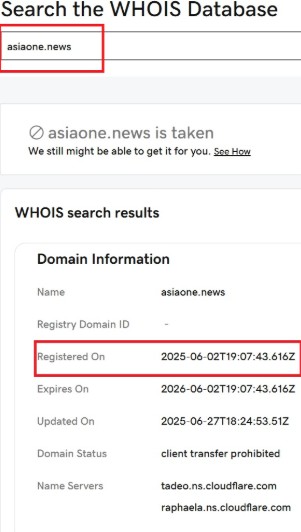
AsiaOne’s domain was registered on 2 June 2025. The media outlet has launched official social media accounts on platforms such as Facebook, Instagram, and TikTok, notably excluding YouTube. This digital push suggests an intent to engage younger and global audiences through viral, short-form content.
With its new English-language satellite channel, Pakistan is making a calculated entry into global media warfare. While the effort is being dressed up as an attempt to amplify underrepresented narratives, early indicators suggest AsiaOne is less about objective reporting and more about promoting state-friendly, anti-India propaganda.
By mixing polished visuals with unverified claims and selective storytelling, the channel risks becoming a mouthpiece for geopolitical narrative manipulation rather than a legitimate media voice. As disinformation continues to rise in global conflict zones, AsiaOne may become just another cog in Pakistan’s expanding propaganda machinery, replacing accountability with narrative warfare.
(This article is based on an X Thread By Sougat Chakraborty)
Subscribe to our channels on Telegram, WhatsApp, and Instagram and get the best stories of the day delivered to you personally.