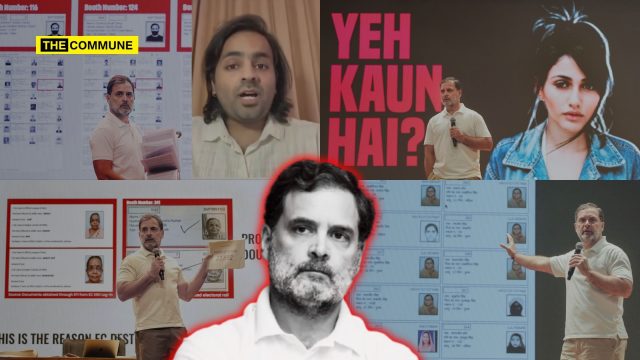
Every time Rahul Gandhi drops one of his damp-squib “hydrogen bombs” against the BJP-led government, it’s his credibility that takes the hit. In his desperation to push a false narrative, he ends up endangering innocent civilians — all to conceal his own failures.
After a series of “vote chori” presentations, touted as exposés of alleged electoral fraud, what has instead been found were multiple factual inaccuracies and serious breaches of individual privacy. From displaying citizens’ personal data to projecting a foreign model’s image as evidence of voter ID manipulation, the dynast’s propaganda campaign has been recklessly endangering ordinary people while attempting to deflect from his political failures.
The Brazilian Model Incident: A Global Embarrassment
The latest controversy erupted when Gandhi, during a press conference on alleged voter ID duplication in Haryana, displayed a photograph of a woman purportedly appearing on 22 voter cards across 10 polling booths. “Who is this lady? What is her name? Where does she come from? But she voted 22 times in Haryana,” Gandhi declared dramatically.
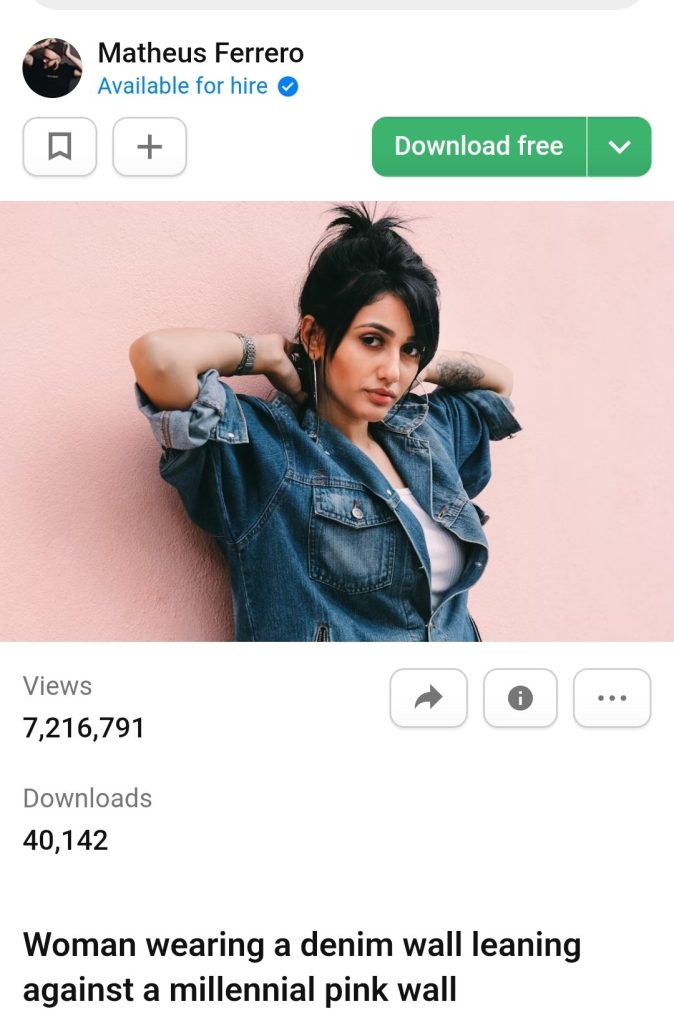
Within hours, fact-checkers identified the image as belonging to Larissa Nery, a Brazilian model and presently a hairdresser from Minas Gerais. The photo, taken by photographer Matheus Ferrero for a 2017 portrait series, had long been available on free stock photo platforms such as Unsplash and Pexels.
Larissa herself soon released a video, speaking in Portuguese, expressing shock and distress that her image was used in an Indian political event.
In a video message posted online, translated from Portuguese, she said, “Folks, let me tell you the gossip. You’re laughing too much, aren’t you? I’m going to tell the gossip. Folks, they are using an old photo of mine. My photo is old, okay? Look, I was very young in the photo. [I must have been] about 20 years old, 18 years old.”
She further said, “They are using a photo of mine to run, I don’t know if it’s an election, something where you have to vote. And in India, they are portraying me as an Indian woman to scam others, folks.”
“Then a reporter called me wanting to know about this thing. [He] called the salon where I work, wanting to talk to me for an interview. So I didn’t answer… The guy found my Instagram, called me on Instagram,” she added, clearly unsettled by the incident.
The name of the Brazilian Model seen in @RahulGandhi‘s press conference is Larissa. Here’s her reaction after her old photograph went viral. pic.twitter.com/K4xSibA2OP
— Mohammed Zubair (@zoo_bear) November 5, 2025
Larissa said she had been inundated with messages after the controversy broke out and even received the viral image from a friend living in another city.
Overwhelmed by the sudden attention, Larissa has reportedly made her social media account private.
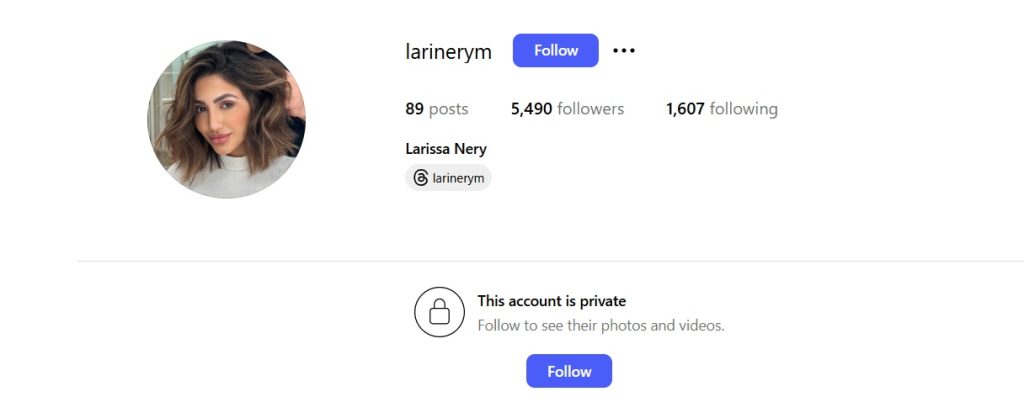
Following the uproar, the photographer Ferrero reported that his accounts had been hacked and taken down due to harassment. “There were a lot of strange people saying all sorts of things,” he told Brazilian outlet Aos Fatos. Both Larissa and Ferrero have since made their social media accounts private.
The Election Commission later confirmed that Rahul Gandhi’s allegations were baseless, noting that his party’s polling agents had raised no objections during the Haryana polls. An investigation by The Indian Express found no evidence of widespread voter ID duplication.
Pattern Of Privacy Violations
This was not an isolated lapse. Over the past year, Rahul Gandhi’s “vote chori” campaign has repeatedly resulted in showcasing individuals’ private details – names, photos, voter IDs, and even phone numbers on national television and social media, and thereby harassment, confusion, and distress for those wrongly implicated.
Take a look at the individuals impacted by Rahul Gandhi’s recklessness.
Anjani Mishra (Prayagraj, UP): Rahul Gandhi displayed Mishra’s phone number and photograph during a presentation on alleged voter roll deletions. Mishra said he was “harassed by hundreds of calls” from strangers and had no knowledge of any such deletion. “My privacy was violated for politics,” he told reporters.
Pinky Juginder Kaushik (Haryana): Featured in the same presentation as Larissa’s supposed duplicates, Kaushik clarified to CNN-News18 that she had voted herself and that the wrong photo had been used on her ID due to clerical error. “No one forced me to vote,” she said. “I was shocked to see my name on TV.”
Gurkirat Singh Dang (Bengaluru): Rahul Gandhi publicly displayed Dang’s voter ID, address, and family details, alleging “duplicate votes.” Dang later issued a statement refuting the claims, explaining that a technical glitch during re-registration caused multiple entries.
Claim vs Reality ⬇️
❌ Claim: Gurkirat Singh Dang appears in the voter list 4 times.
✅ Reality: A technical glitch created 4 IDs, which are already under cancellation process. pic.twitter.com/lwGjJn2DtQ
— The Analyzer (News Updates🗞️) (@Indian_Analyzer) August 16, 2025
“My family is being harassed,” he said, adding that journalists had camped outside his home and he was forced to deactivate his social media accounts. His sister also condemned the “invasion of privacy and public humiliation.”
View this post on Instagram
Ranju Devi (Bihar) and Subodh Kumar (Nawada): Both were presented as “victims” of voter deletion, but later admitted their names were never missing from rolls. The unwarranted attention subjected them to public embarrassment and calls from political workers seeking clarification.
Saddam Hussain’s family (Malikpur): Their voter details were shown during another “vote chori” event. Family members reported social stigma and harassment from neighbors after being portrayed as fraudulent voters.
Aditya Srivastava: He was named as allegedly voting in three states. He went public to clarify he simply updated his voter ID after shifting cities for work, and the publicity led to confusion and people contacting him for explanations.
The repeated misuse of personal data including names, photographs, and voter credentials has raised serious concerns about Gandhi’s disregard for privacy laws and ethics in political campaigning.
Innocent People Become Collateral Damage In Rahul Gandhi’s Politics
The collateral damage of Rahul Gandhi’s “vote chori” campaign extended far beyond press rooms and social media. It is noteworthy that following each exposé, mainstream and regional channels including News18, India TV, and several vernacular media, rushed in packs to the doors of civilians whom Rahul Gandhi had displayed on his so-called expose.
The people whose privacy was violated such as Pinky Kaushik, Gurkirat Singh Dang, Aditya Srivastava, and Anjani Mishra recounted reporters suddenly appearing outside their homes, grilling them about political conspiracy theories, and even questioning their neighbors about personal details.
After Rahul Gandhi’s public declarations, ordinary citizens were often “left to fend for themselves” against the onslaught of unwanted phone calls, media attention, and online trolling. The bytes and exposés became instant fodder for viral broadcasts, with private addresses and phone numbers being flashed by some local channels for sensational coverage.
One particularly chilling aspect was the speed at which privacy violations escalated, sometimes within hours of Gandhi’s statements, news teams arrived at people’s residences, demanding explanations or interviews, their lives thrown under a spotlight for national spectacle. These households faced several days of continuous intrusion, social stigma, and emotional distress – essentially being made collateral casualties in a political performance.
So, each time Rahul Gandhi claimed to “drop a bombshell,” what followed was not a revelation of wrongdoing, but a distressing media circus, invading ordinary lives and exposing people to real-world harm and humiliation, as even foreign platforms like NYT and Al Jazeera uncritically amplified the baseless claims.
Rahul Gandhi’s “vote chori” campaign appears less a genuine crusade for electoral integrity and more a desperate political tool. Faced with persistent electoral setbacks, the campaign serves to create a convenient scapegoat: a supposedly rigged system, rather than a failure to connect with the electorate.
The true cost of this narrative, however, is paid by the Anjanis, Pinkys, Gurkirats, and even a model from Brazil. Their privacy, their peace, and their reputations have been sacrificed at the altar of Rahul Gandhi’s political theatrics. By weaponizing personal data without verification and causing real-world harm to innocent people.
Subscribe to our channels on WhatsApp, Telegram, Instagram and YouTube to get the best stories of the day delivered to you personally.