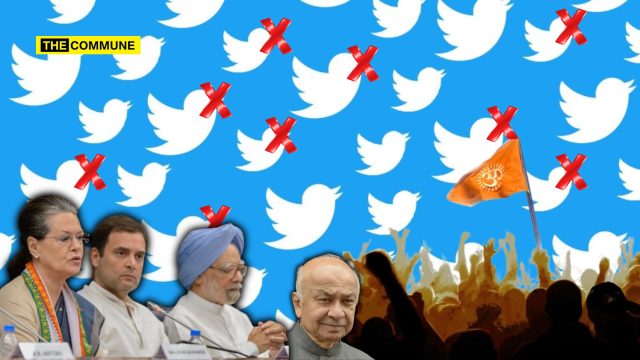
Looking back to August 2012, India saw one of its first major confrontations between government power and social media, when the UPA‑II regime ordered a sweeping block on Twitter handles and web links, including those of journalists and right‑wing groups, even as then Home Minister Sushilkumar Shinde insisted nothing more than “objectionable” content was being targeted.
The Night The Handles Went Dark
Between August 18 and 21, 2012, internet service providers quietly received directions from the Centre to block roughly 250–300 URLs: individual tweets, images, videos and several full Twitter accounts. The stated trigger was the exodus of people from the North-East after Assam violence, which the government blamed on morphed images and incendiary rumours circulating online.
In the dragnet fell accounts of journalists and commentators such as Kanchan Gupta and Shiv Aroor, along with right‑wing websites and handles associated with Sangh‑Parivar circles and portals like Haindava Keralam. Economic Times’ headline captured the mood: “Government blocks Twitter handles of journalists, right-wing groups.”
The Home Minister himself briefed on banning journalists, with right-wing voices labeling them all objectionable and yes, that list included Shiv Aroor.
Today, they talk about morality. Sit down, Canglu. https://t.co/8ICgnnY4J4 pic.twitter.com/rnVu8TTbMz
— Anurag (@Jhunjhunuwala_) April 6, 2026
Shinde’s Defence: ‘Only Objectionable Accounts Blocked’
As outrage grew over what many saw as a digital gag order, Sushilkumar Shinde stepped out to calm tempers. His line of defence has since become part of India’s free‑speech folklore: “Only those social media accounts which have posted objectionable and inflammatory content are being blocked.”
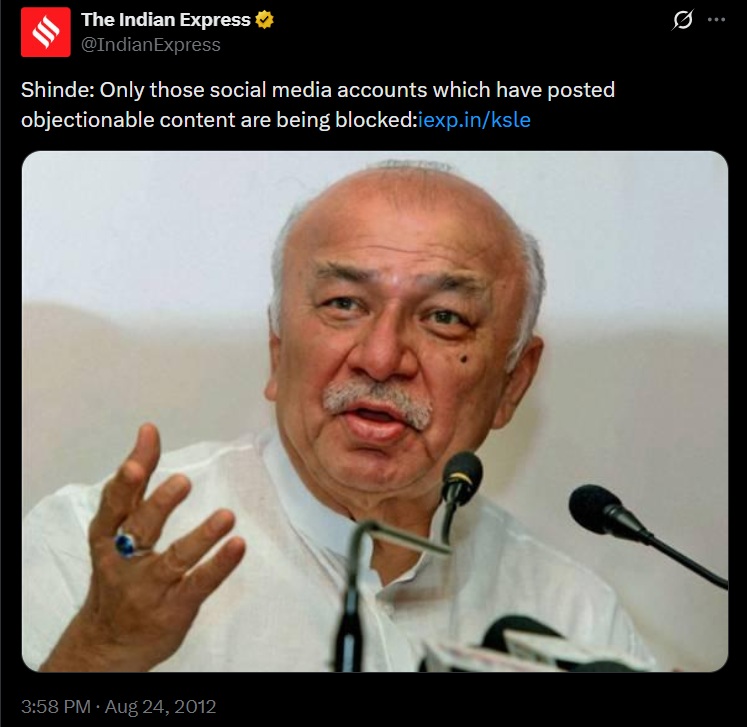
Shinde insisted there was “no censorship at all”, arguing that the state was merely acting against rumours and provocative posts using doctored images from Myanmar and elsewhere to inflame tensions in India. Ordinary users, he said, had nothing to fear if they were not spreading hate.
Opposition parties like the BJP condemned the move as “Emergency‑style” suppression and demanded restoration of journalists’ accounts. Digital‑rights groups pointed out that entire accounts, not just specific tweets, had been blocked, and that many directives did not clearly cite the legal grounds under the IT Act.
And today, the Congress cries that there is no ‘freedom of expression’ – irony died a million deaths.
Subscribe to our channels on WhatsApp, Telegram, Instagram and YouTube to get the best stories of the day delivered to you personally.