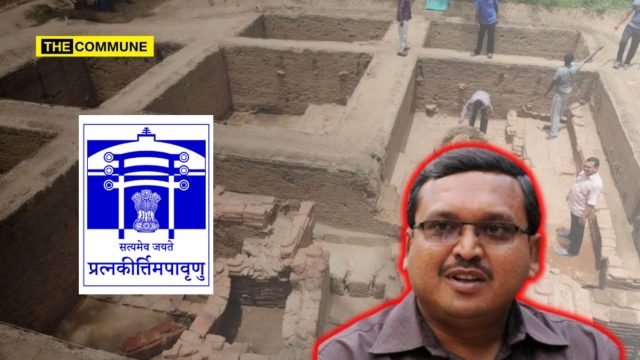
A fresh dispute has emerged over the Keeladi excavation report, with the Archaeological Survey of India directing National Mission on Monuments and Antiquities director K. Amarnath Ramakrishna to incorporate revisions suggested by its internal committee.
The development marks a continuation of the ongoing exchange between the two sides over the findings and interpretation of the Keeladi excavations in Tamil Nadu.
Ramakrishna, who led the first two phases of the excavation between 2014 and 2016, had reported evidence of an early urban Tamil civilisation dating back to 800-500 BCE. However, following a review, the ASI described his report as “ambiguous, incomplete and underdeveloped.”
Responding to the assessment earlier this year, Ramakrishna had stated that the evaluation was “unprecedented” and alleged that it was influenced by AI-assisted analysis. In a subsequent communication dated March 27, the ASI asked him to reconsider his response and carry out the required improvements to the excavation report.
ASI’s Director (Exploration and Excavation), Hemsagar A. Naik, stated that Ramakrishna, as a government official, was duty-bound to comply with the directive and submit a compliance report. However, Ramakrishna maintained that the findings and conclusions in his report should be treated as final, arguing that there was no justification to alter the chronology of the site.
The dispute intensified after the ASI issued a notice to Ramakrishna on March 17, citing “willful disobedience, dereliction of duty and misconduct.” The notice stated that he had failed to attend a scheduled briefing meeting related to parliamentary questions without prior intimation to senior officials.
According to the memo, Ramakrishna’s actions amounted to “willful insubordination, gross negligence, and failure to maintain devotion to duty,” and were in violation of established conduct rules. The ASI further stated that such non-compliance, particularly in matters linked to parliamentary work, constituted serious administrative misconduct and could invite action under the Central Civil Services (Classification, Control and Appeal) Rules, 1965.
The notice sought an explanation from Ramakrishna within seven days, warning that failure to respond would result in further action being initiated.
In an earlier communication dated 23 May 2025, Ramakrishna had defended his methodology, stating that the chronology of the Keeladi excavation was reconstructed based on primary evidence, including cultural deposits, stratigraphic sequences and material findings, in accordance with established ASI principles and methods.
The Keeladi excavation has been a subject of significant academic and political interest, particularly for its implications regarding the antiquity and urban characteristics of early Tamil civilisation.
Good to see the ASI taking a firm and methodical stand. While the news item’s title appears misleading, the core message is clear—either provide the necessary evidence to support the report or revise it in line with verifiable proof.
This is precisely how scientific excavation… pic.twitter.com/OZrRUSwJP9
— 𑀓𑀺𑀭𑀼𑀱𑁆𑀡𑀷𑁆 🇮🇳 (@tskrishnan) March 30, 2026
Subscribe to our channels on WhatsApp, Telegram, Instagram and YouTube to get the best stories of the day delivered to you personally.