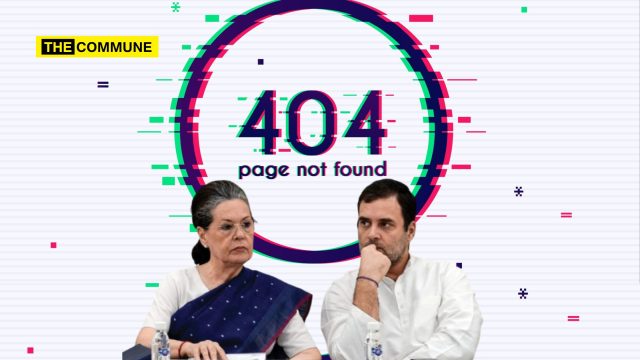
A growing controversy has emerged over the disappearance of several mainstream media articles from the UPA era, with users reporting widespread “404 errors” while attempting to access archived reports.
Cowards. https://t.co/3rWscDOGr4 pic.twitter.com/SDyou5Z5Vc
— Darshan Pathak (@darshanpathak) March 26, 2026
Interesting that this page now gives a 404 error. Why has it been deleted, @ndtv ? https://t.co/1mE48tBYm1
— Arun Krishnan 🇮🇳 (@ArunKrishnan_) March 26, 2026
Now that you are in position to answer
What would be the reason for error 404 @ShivAroor 👇🏼 pic.twitter.com/R2gcAwGJaW
— Telangana Maata (@TelanganaMaata) March 28, 2026
The issue gained traction following renewed public interest triggered by the film Dhurandhar 2: The Revenge, which prompted social media users to revisit news coverage from the early 2010s. As older reports began circulating online, users claimed that multiple links from established publications were no longer accessible, raising concerns about the integrity of the public record.
What makes this controversy impossible to dismiss as a technical glitch is the nature of the content going dark. The inaccessible links do not belong to small blogs or defunct news portals — they trace back to established national media organisations including Hindustan Times and NDTV. These are platforms with dedicated IT infrastructure and institutional memory. Server errors do not selectively target UPA-era political reporting.
The pattern is too consistent to be coincidental. Article after article covering on-record statements by senior Congress leaders are now returning 404 errors. These are not niche footnotes. These are mainstream, widely read reports that shaped public discourse during the UPA’s decade in power.
The timing is the tell. This digital housecleaning has accelerated precisely when Dhurandhar: The Revenge reignited mass curiosity about Congress’s governance record. Netizens began connecting past statements to present accountability, the corresponding documentation began vanishing. That is not coincidence – that is damage control.
The unavoidable question is: who benefits? The BJP has every political incentive to keep this content alive and circulating. The Congress has every incentive to ensure it does not. When the party that stands to lose the most from historical documentation is also the one with the deepest connections to India’s English-language media establishment, the “speculation” about deliberate removal stops being speculation and starts being the only rational explanation.
Subscribe to our channels on WhatsApp, Telegram, Instagram and YouTube to get the best stories of the day delivered to you personally.